コンテンツへスキップ
Atlas Anatolia
ニュースIce Age teeth in Sulawesi push betel-nut use back as far as 25,000 yearsRoman mosaic and Eros head uncovered in the basilica at Pompeiopolis, Kastamonu
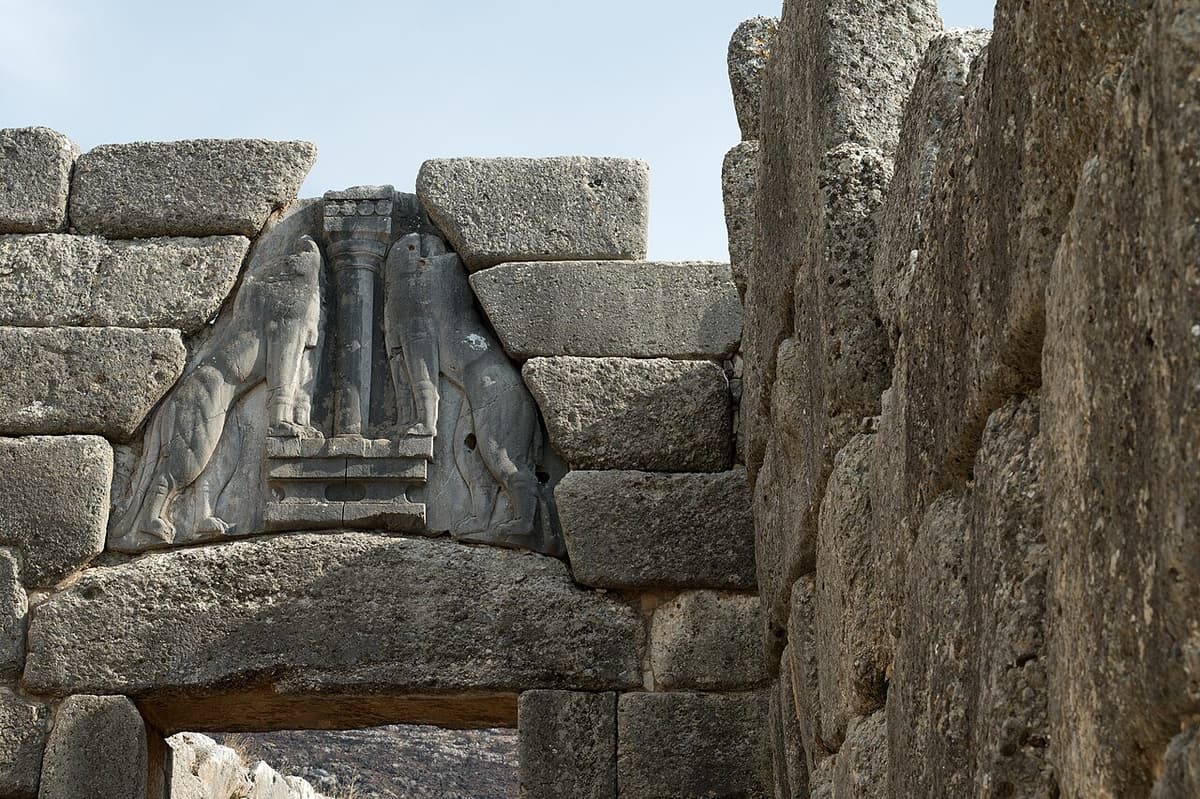
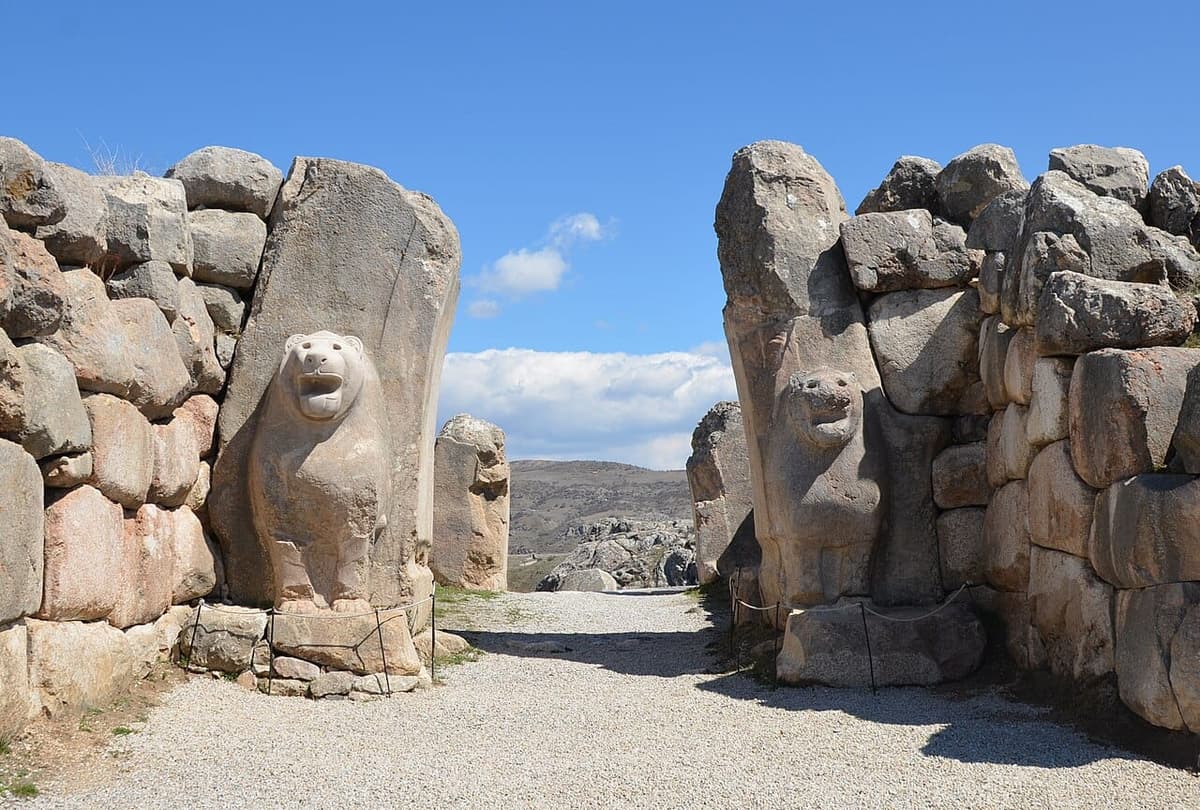
Lion gate sculpture at Karatepe-Aslantas open-air museum

Wikimedia Commons (CC BY-SA)

Country Record

Oldest Fortress in Türkiye

要塞

Karatepe-Aslantas

Seyfi Cem Baskin

800 紀元前 – 600 紀元前

A Neo-Hittite fortress guarding the Cilician Gates whose bilingual inscription in Phoenician and Hieroglyphic Luwian provided the key to deciphering the Luwian script — the Rosetta Stone of Anatolian archaeology.

321
関心 44

所在地

Osmaniye · Mediterranean · トルコ

37.26°N · 36.25°E · アジア

Key Discovery

Bilingual inscription (Phoenician + Luwian)

Builder

King Azatiwata (8th century BCE)

Significance

Rosetta Stone of Anatolian archaeology

Open-Air Museum

Established 1960

Architectural Features

Two monumental gate complexes (north and south) with orthostat reliefs and guardian statues, built using a rubble core faced with ashlar masonry.

Primary Excavator

Helmuth Theodor Bossert (University of Istanbul), who led the excavations from 1947 until his death in 1961.

Graphite pencil sketch banner of Karatepe-Aslantas

“Karatepe-Aslantas is to Hittite studies what the Rosetta Stone is to Egyptology.”

Wikipediaより

Karatepe is a Neo-Hittite fortress in southern Turkey, famous for its bilingual inscription that enabled the decipherment of Hieroglyphic Luwian.

Wikipediaで全文を読む →

所在地

概要

Karatepe-Aslantas is a Neo-Hittite fortified palace on the Ceyhan River in the Taurus foothills of Osmaniye Province. Built in the late 8th century BCE by King Azatiwata of the Danunians, it guards the strategic pass connecting Cilicia to the Anatolian interior.

The site's world importance lies in its bilingual inscription — a lengthy text carved in both Phoenician script and Hieroglyphic Luwian (the script of the late Hittite successor states). Discovered in 1946 by Helmuth Bossert, this inscription was the key that unlocked the decipherment of Hieroglyphic Luwian, much as the Rosetta Stone enabled the decipherment of Egyptian hieroglyphs. The inscription records Azatiwata's achievements in building the city, securing peace, and establishing prosperity for his people.

"I built this fortress and gave it the name Azatiwataya. May the Storm God and the gods of Azatiwataya protect it."
— Azatiwada (King of Adanawa), Karatepe bilingual inscription, c. 8th century BCE

The fortress gates are flanked by monumental stone reliefs and sculptures featuring lions, sphinxes, warriors, banquet scenes, and mythological figures in a distinctive Neo-Hittite style that blends Hittite, Phoenician, and Aramaean artistic traditions. The reliefs are displayed in situ in an open-air museum established in 1960, one of Turkey's first.

The site provides exceptional evidence for the political organization of the Neo-Hittite kingdoms that emerged after the collapse of the Hittite Empire around 1180 BCE, bridging the gap between Bronze Age Anatolia and the Iron Age.
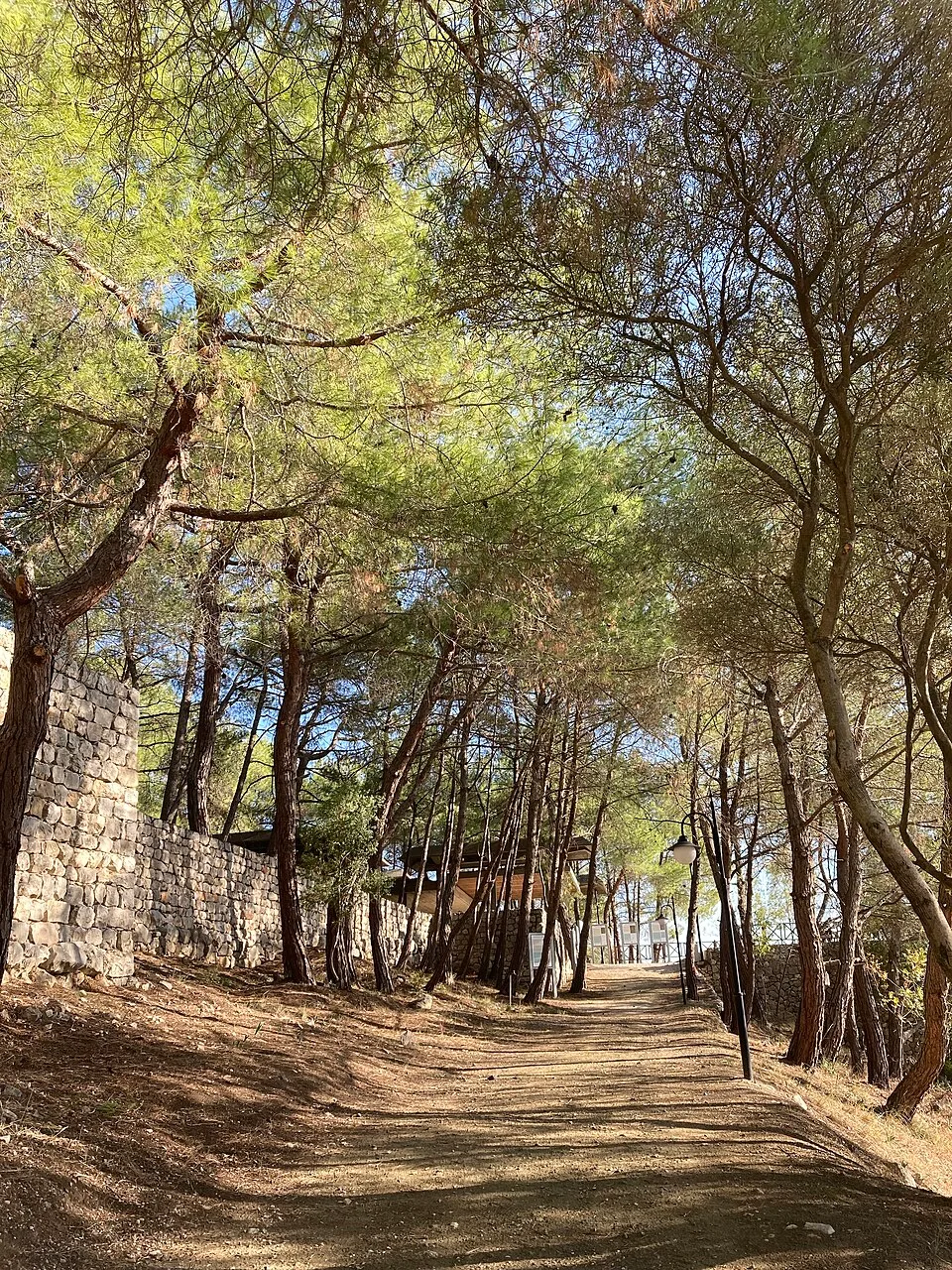
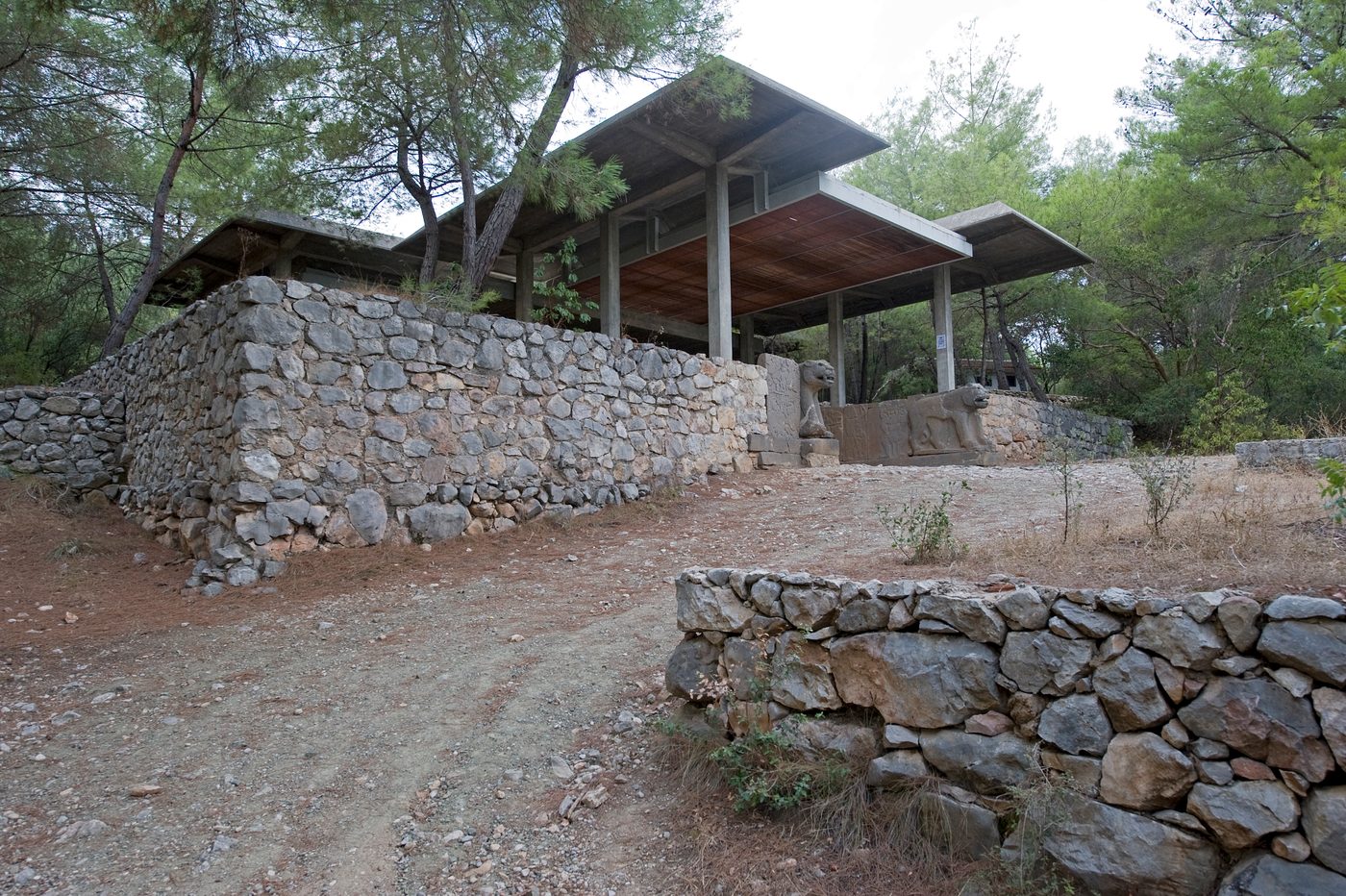
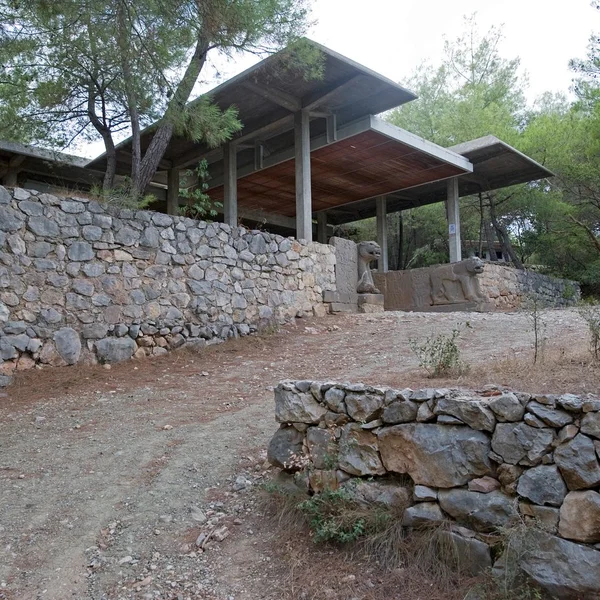
Karatepe-Aslantaş National Park with the trees
Karatepe-Aslantaş National Park with the trees | Nur Çağlar (CC BY-SA 4.0)

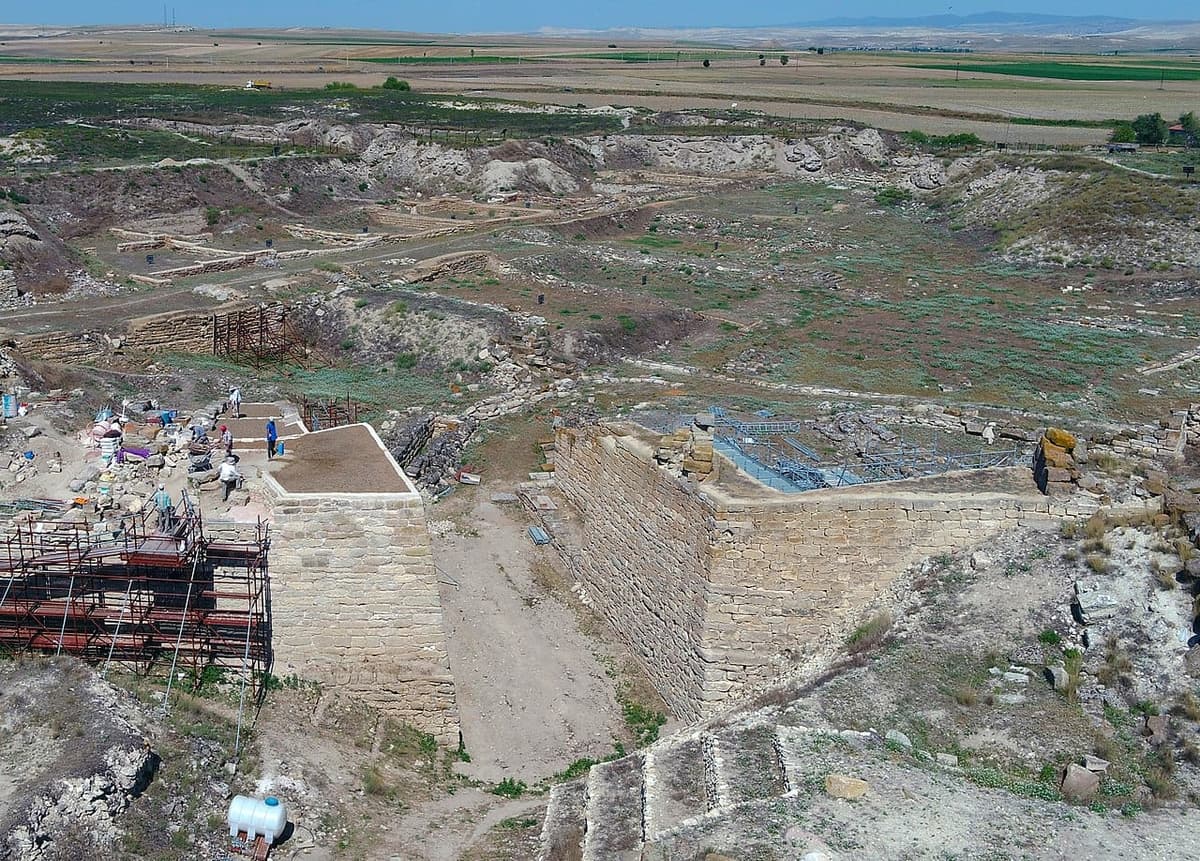
The fortress architecture is a hallmark of Neo-Hittite military engineering. Its massive walls, constructed with large, roughly dressed stones (cyclopean masonry), were punctuated by fortified gates. The most famous are the South and North Gates, flanked by monumental basalt and limestone orthostats carved with intricate reliefs. These depict not only mythological guardians like sphinxes and lions but also vivid scenes of royal feasting, hunting, and processions, offering a glimpse into courtly life and state propaganda.

Archaeological finds within the citadel, including pottery, metal tools, and loom weights, suggest a thriving community engaged in agriculture, animal husbandry, and craft production. The site's strategic position allowed it to control the movement of goods, likely including metals from the Taurus Mountains and timber from the Amanus range, linking the Anatolian plateau to the Mediterranean Sea. The fortress appears to have been destroyed by fire, possibly during the campaigns of the Assyrian king Esarhaddon or his successor Ashurbanipal in the early 7th century BCE, leading to its abandonment and subsequent preservation beneath the soil.
重要性

Karatepe-Aslantas is to Hittite studies what the Rosetta Stone is to Egyptology. The bilingual inscription discovered here enabled the full decipherment of Hieroglyphic Luwian, opening an entire civilization's written records to scholarly understanding. The site illuminates the poorly understood "dark age" between the fall of the Hittite Empire (c. 1180 BCE) and the rise of the classical world. The Neo-Hittite kingdoms preserved elements of Hittite culture, religion, and language for centuries after the empire's collapse, and Karatepe provides the most detailed first-person royal text from this transitional period.

証拠と解釈

確立された事実と議論が続く事柄を区別する。

確立された事実

3
  • The bilingual inscription in Phoenician and Hieroglyphic Luwian provided the key to the full decipherment of the Luwian hieroglyphic script.
  • The inscription identifies the builder as Azatiwata, king or governor of the Danunians, who claims to have established the fortress to protect the Adana plain.
  • The gate reliefs depict banquet scenes, warriors, mythological figures, and protective lions/sphinxes in a style that blends Hittite, Phoenician, and North Syrian artistic traditions.

学術的推論

2
  • The fortress controlled a strategic crossing of the Ceyhan River on the route between the Cilician coast and the Anatolian interior.
  • The fortress was likely destroyed by the Assyrian Empire, possibly during the campaigns of Esarhaddon (681–669 BCE) or Ashurbanipal (669–631 BCE), based on the violent destruction layer and the historical context of Assyrian expansion into the region.

議論のある解釈

1
  • The identity of the "Danunians" — whether they are connected to the Homeric Danaans/Greeks or represent a local Anatolian population — remains debated among scholars.

発見と発掘調査

1946

Discovery of bilingual inscription

指揮 Helmuth Bossert & Halet Cambel

Helmuth Bossert and Halet Cambel discovered the bilingual Phoenician-Luwian inscription at the fortress gate.

1947–1957

Systematic excavations

指揮 Halet Cambel

Halet Cambel led extensive excavations revealing the fortress gates, reliefs, and palace complex.

1960

Open-air museum established

The reliefs were preserved in situ and an open-air museum was created around the fortress gates.

1998

UNESCO inscription

Karatepe-Aslantas inscribed as a UNESCO World Heritage Site as part of the broader nomination.

コミュニティ写真

あなたの体験を共有する

この遺跡を訪れたことがありますか?写真をアップロードして魅力を共有しましょう。

関連記事

このページの引用方法

Atlas Anatolia. (800). Karatepe-Aslantas. Atlas Anatolia. https://atlasanatolia.com/ja/site/karatepe-aslantas

コンテンツはCC BY-SA 4.0ライセンスの下で提供されています — 再利用の際は出典表示が必要です。

グラフ

関連する遺跡やストーリーへのつながり。

出典

  • Karatepe-Aslantas: Die Bildwerke — Halet Cambel (1999)
  • The Luwians: Handbook of Oriental Studies — H. Craig Melchert (2003)
  • UNESCO World Heritage — Karatepe-Aslantasリンク

よくある質問

Karatepe-Aslantasはどこにありますか?

Karatepe-AslantasはOsmaniye, Mediterranean, Türkiyeに位置しています。

Karatepe-Aslantasの年代はいつ頃ですか?

Karatepe-Aslantasはおよそ800 紀元前 – 600 紀元前のものとされています。

Karatepe-Aslantasはどの文明に関連していますか?

Karatepe-AslantasはHittite, Neo-Hittite文明に関連しています。

Karatepe-Aslantasが重要な理由は何ですか?

Karatepe-Aslantas is to Hittite studies what the Rosetta Stone is to Egyptology.

Karatepe-Aslantasはユネスコ世界遺産ですか?

Karatepe-Aslantasは現在ユネスコ世界遺産には登録されていません。