
コンテンツへスキップ
Atlas Anatolia
ニュースIce Age teeth in Sulawesi push betel-nut use back as far as 25,000 yearsRoman mosaic and Eros head uncovered in the basilica at Pompeiopolis, Kastamonu
Lycian rock-cut tombs at Kaunos visible from Dalyan river

Wikimedia Commons (CC BY-SA)

都市

Kaunos

Seyfi Cem Baskin

900 紀元前 – 400 西暦

An ancient harbor city famous for its magnificent Lycian rock-cut tombs carved into cliff faces above the Dalyan River — one of the most iconic archaeological vistas in Turkey.

312
関心 50

所在地

Mugla · Aegean · トルコ

36.83°N · 28.62°E · アジア

Rock Tombs

Lycian-style temple tombs (4th century BCE)

Cultural Border

At the boundary of ancient Caria and Lycia

Ancient Harbor

Now silted into Iztuzu Lake

Modern Protection

Dalyan Delta — Caretta caretta turtle sanctuary

Notable Finds

A 4th-century BCE honorific decree for the Carian dynast Mausolus, inscribed on a limestone block, found in the city center.

Dating Method

Ceramic and coin evidence from the acropolis indicates the earliest settlement phases date to the 9th century BCE.

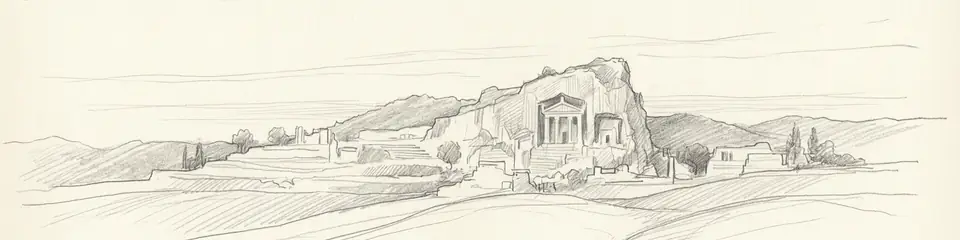
Graphite pencil sketch banner of Kaunos

“Kaunos sits at a cultural crossroads — neither fully Carian nor fully Lycian, it illustrates how ancient identities were fluid and negotiated rather than fixed.”

Wikipediaより

Kaunos is an ancient city near Dalyan in southwestern Turkey, famous for its Lycian rock-cut tombs carved into cliffs above the Dalyan River.

Wikipediaで全文を読む →

所在地

概要

Kaunos lies on the border between ancient Caria and Lycia, a position that gave the city a distinctive mixed cultural identity reflected in its art, architecture, and burial practices. The city was founded around the 9th century BCE and grew into an important harbor town controlling trade between the Aegean coast and the interior.

The most famous feature of Kaunos is the row of Lycian-style rock-cut temple tombs carved into the sheer cliff face overlooking the Dalyan River. These tombs, dating from the 4th century BCE, feature Ionic column facades and are visible from great distances — an enduring symbol of the ancient city's grandeur. Though the tomb style is Lycian, they were carved in Carian territory, reflecting the cultural hybridization that defined this borderland.

"Kaunos is a city of Caria, not far from the sea, with a harbor that can be closed."
— Strabo, Geography (c. 7 BCE - 23 CE)

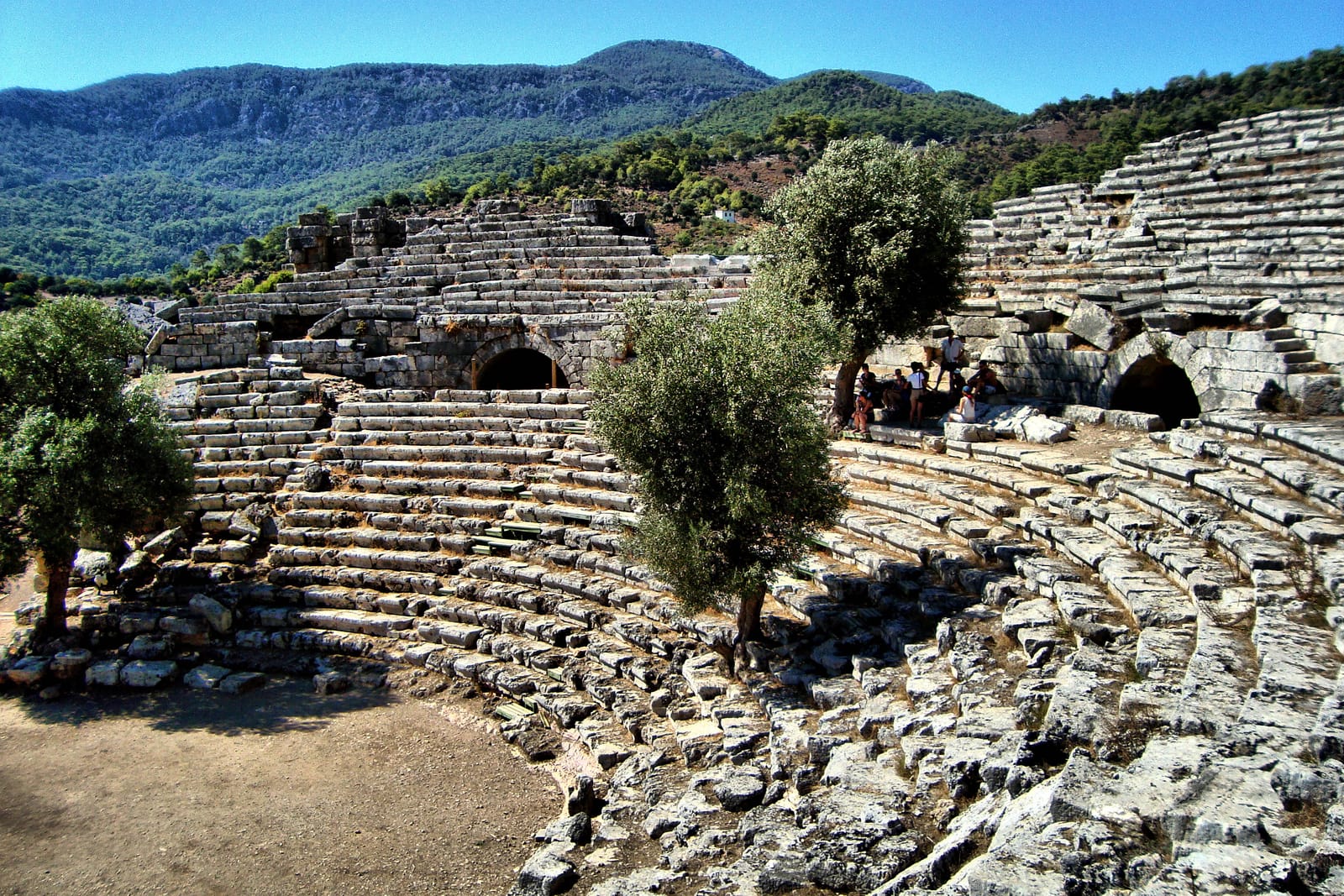
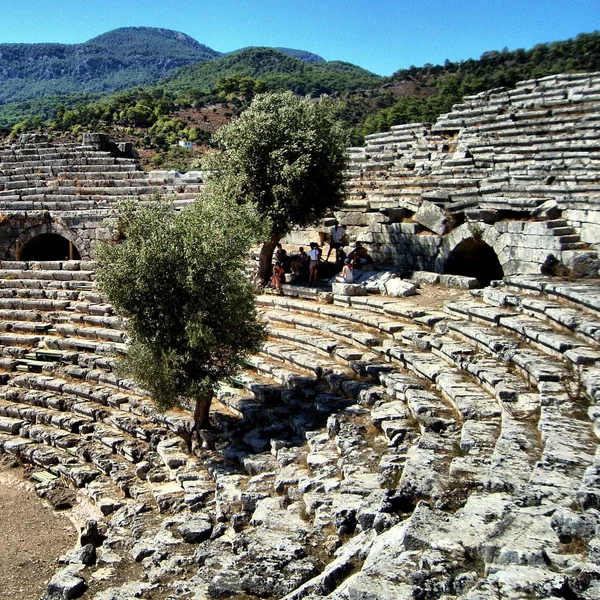
The city preserves a well-defined urban plan including a theatre, Roman baths, a basilica, temples, and an agora. The ancient harbor — now silted up and transformed into Iztuzu Lake — was once a thriving port. Herodotus noted that the inhabitants of Kaunos, despite speaking a language related to Carian, considered themselves originally from Crete.

The surrounding landscape is remarkable: the Dalyan Delta is now a protected area for loggerhead sea turtles (Caretta caretta), and boat trips from Dalyan to the site pass through reed-lined channels with the tombs rising dramatically above.
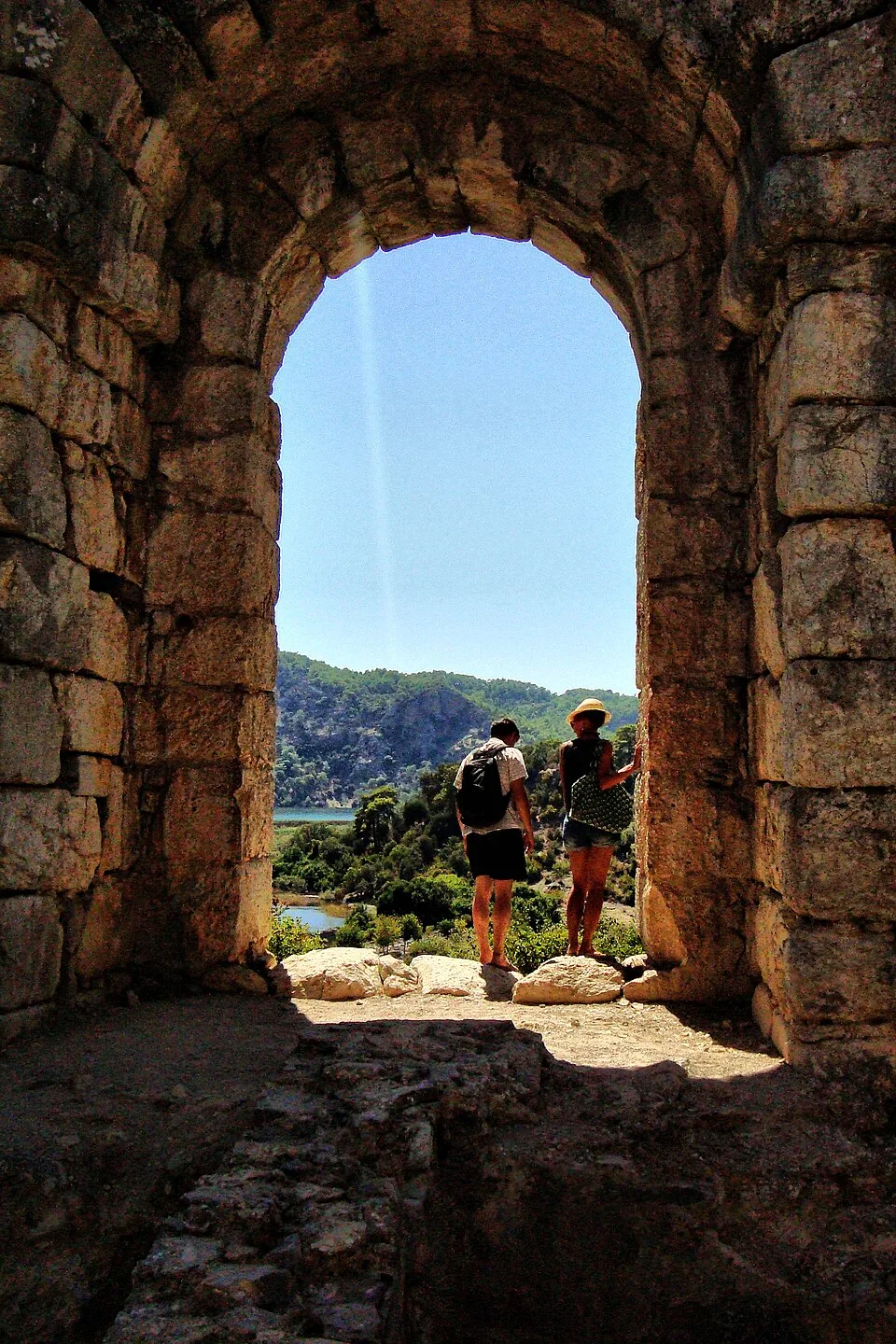
DALYAN-KAUNOS-TURKEY - panoramio
DALYAN-KAUNOS-TURKEY - panoramio | Haluk Comertel (CC BY 3.0)

Beyond the iconic tombs, the city's urban fabric reveals its prosperity and cosmopolitan nature. Excavations have uncovered a well-preserved Hellenistic theater with a capacity for 5,000 spectators, a large agora flanked by stoas, and a monumental Roman bath complex. The city center was protected by a substantial Carian fortification wall, later expanded. Daily life is evidenced by finds of imported Attic pottery, local coinage, and inscriptions detailing civic decrees and trade regulations. Kaunos was a significant exporter of salt, dried fish, and figs, with trade links across the Aegean. Its decline was a protracted process. While the silting harbor crippled its maritime economy from the late Roman period, the city remained inhabited into the early Byzantine era, as shown by a basilica built within the former temple precinct. It was eventually abandoned, likely due to a combination of economic stagnation, malaria from the marshes, and shifting regional power centers.

重要性

Kaunos sits at a cultural crossroads — neither fully Carian nor fully Lycian, it illustrates how ancient identities were fluid and negotiated rather than fixed. The rock tombs blending Lycian architectural forms with Carian territory challenge simplistic ethnic boundaries in the ancient world. The site's environmental setting — where archaeology meets protected natural habitat — makes it a model for integrating cultural heritage with ecological conservation. The silted harbor vividly demonstrates how coastline changes over millennia can transform maritime cities into inland ruins.

証拠と解釈

確立された事実と議論が続く事柄を区別する。

確立された事実

3
  • Herodotus (Histories 1.172) describes the Kaunians as speaking a language distinct from Carian and claims they migrated from Crete.
  • The rock-cut tombs employ Lycian architectural forms (Ionic temple facades) despite Kaunos being geographically in Caria, evidencing cultural exchange.
  • The city's fortification walls, with Hellenistic masonry styles, were extensively rebuilt in the 3rd century BCE, as confirmed by stratigraphy and inscriptions.

学術的推論

1
  • The silting of the harbor, which transformed the ancient coastline into an inland lake, likely contributed to the city's decline from the Roman period onward.

議論のある解釈

2
  • Whether the Kaunians spoke a unique language or a dialect of Carian, as Herodotus suggests, remains debated among linguists.
  • The function of the large, rectangular 'Palaestra' structure near the harbor is debated, with interpretations ranging from a gymnasium to a commercial agora or storage complex.

発見と発掘調査

1966–1972

First systematic excavations

指揮 Baki Oguen

Baki Oguen began the first archaeological excavations at Kaunos, uncovering the theatre and harbour area.

1988–2020

Long-term Turkish excavations

指揮 Cengiz Isik

Cengiz Isik of Mugla University led sustained excavations revealing the agora, basilica, and defensive walls.

2004

Acropolis Temple Excavations

指揮 Prof. Dr. Cengiz Işık

Excavations on the acropolis uncovered the foundations of a Doric temple, likely dedicated to Apollo, and associated votive offerings.

2009

Harbour silting study

Geoarchaeological research documented the progressive silting of the ancient harbor over two millennia.

コミュニティ写真

あなたの体験を共有する

この遺跡を訪れたことがありますか?写真をアップロードして魅力を共有しましょう。

このページの引用方法

Atlas Anatolia. (900). Kaunos. Atlas Anatolia. https://atlasanatolia.com/ja/site/kaunos

コンテンツはCC BY-SA 4.0ライセンスの下で提供されています — 再利用の際は出典表示が必要です。

World History Encyclopediaで全文を読む
World History Encyclopedia · CC BY-NC-SA

出典

  • Kaunos: The Results of the Excavations — Cengiz Isik (2015)
  • The Lycian-Carian Borderland: Cultural Interaction and Identity — Koray Konuk (2013)
  • Wikipedia — Kaunosリンク

よくある質問

Kaunosはどこにありますか?

KaunosはMugla, Aegean, Türkiyeに位置しています。

Kaunosの年代はいつ頃ですか?

Kaunosはおよそ900 紀元前 – 400 西暦のものとされています。

Kaunosはどの文明に関連していますか?

KaunosはCarian, Lycian, Greek, Roman文明に関連しています。

Kaunosが重要な理由は何ですか?

Kaunos sits at a cultural crossroads — neither fully Carian nor fully Lycian, it illustrates how ancient identities were fluid and negotiated rather than fixed.

Kaunosはユネスコ世界遺産ですか?

Kaunosは現在ユネスコ世界遺産には登録されていません。