コンテンツへスキップ
Atlas Anatolia
ニュースIce Age teeth in Sulawesi push betel-nut use back as far as 25,000 yearsRoman mosaic and Eros head uncovered in the basilica at Pompeiopolis, Kastamonu
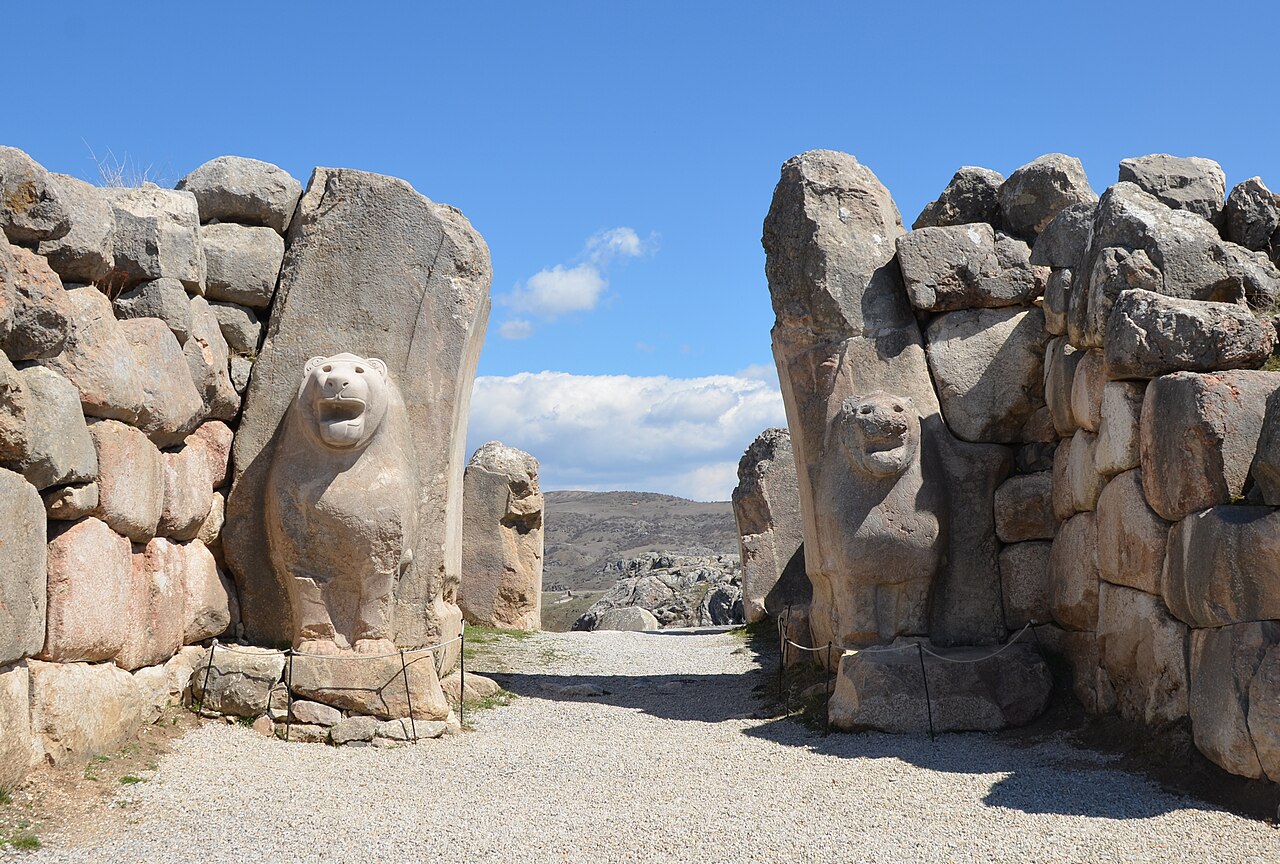
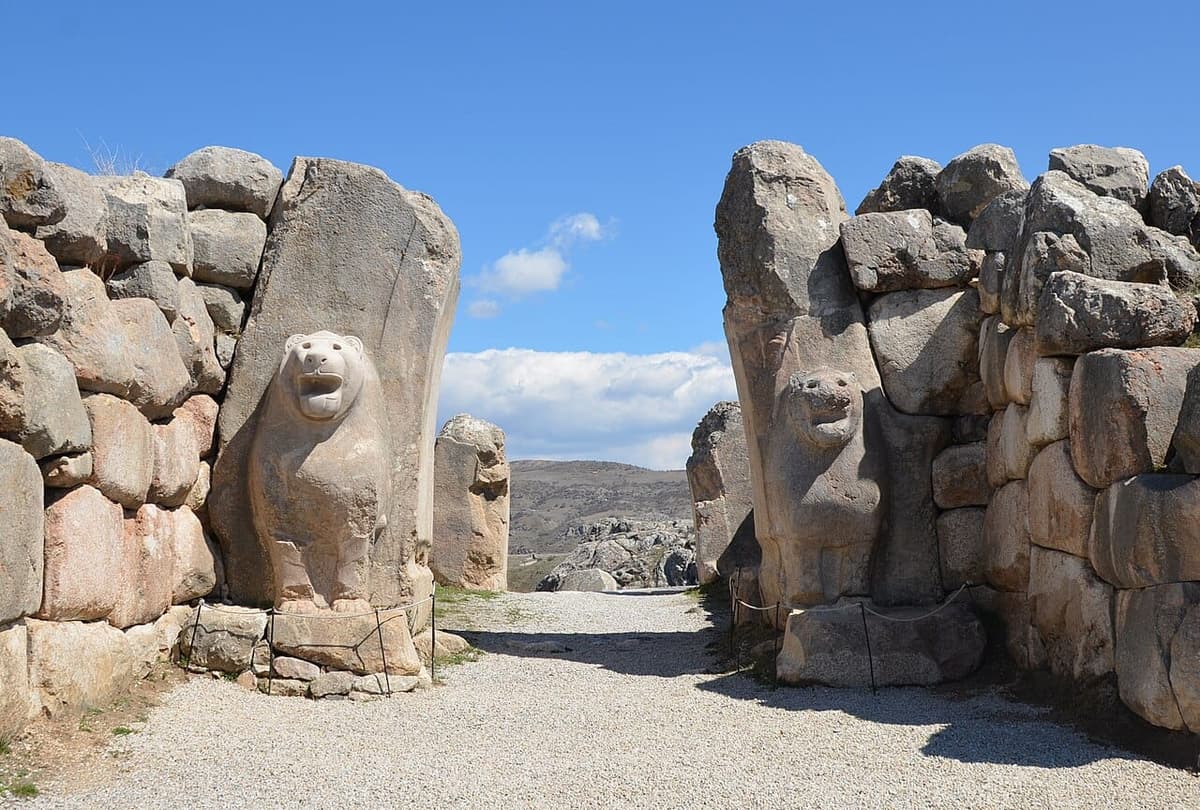
The Lion Gate at Hattusha, capital of the Hittite Empire

Wikimedia Commons (CC BY-SA)

都市UNESCO注目

Hattusha

Seyfi Cem Baskin

Hattuşa1650 紀元前 – 1178 紀元前

Capital of the Hittite Empire, one of the great powers of the Late Bronze Age. Features massive fortifications, monumental gates with lion and sphinx sculptures, and the Great Temple.

411
関心 65

所在地

Çorum · Central Anatolia · トルコ

40.02°N · 34.62°E · アジア

Date Range

c. 1650–1178 BCE

City Area

~1.8 km²

UNESCO Status

World Heritage Site (1986)

Key Find

Royal cuneiform archives

Water Reservoir Capacity

Approximately 2,200 cubic meters in the Great Temple complex reservoir

Number of Cuneiform Tablets Found

Over 30,000 fragments, reconstructed into about 13,000 tablets

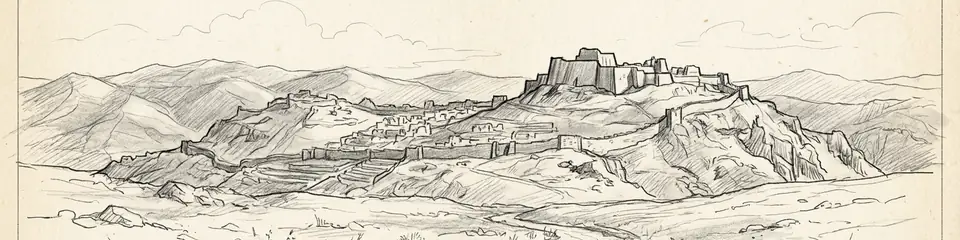
Graphite pencil sketch banner of Hattusha

“Hattusha was the center of the Hittite Empire, one of the most powerful states of the Late Bronze Age alongside Egypt and Assyria.”

Wikipediaより

Hattusa was the capital of the Hittite Empire in the late Bronze Age. Its ruins lie near modern Boğazkale, Turkey, within the great loop of the Kızılırmak River. The city was at its peak during the mid-14th century BC, when it was one of the largest urban centers in the Near East.

Wikipediaで全文を読む →

所在地

概要

Hattusha, located near the modern village of Boğazkale in Çorum Province, was the capital of the Hittite Empire from roughly 1650 to 1178 BCE. At its height, the city covered approximately 1.8 square kilometers and was enclosed by more than 6 kilometers of fortification walls.

The city's most recognizable features include the Lion Gate, the Sphinx Gate, and the King's Gate — monumental entrances adorned with carved reliefs. The Great Temple (Temple I), dedicated to the storm god and the sun goddess of Arinna, is the largest known Hittite temple.

"The Sun-goddess of Arinna is queen of all lands. In the land of Hatti she bears the name Sun-goddess of Arinna."
— Hittite Prayer Text, c. 1400 BCE

In 1906, thousands of cuneiform clay tablets were discovered at the site, constituting the royal archives of the Hittite Empire. These tablets, written in Hittite, Akkadian, and several other languages, provide an extraordinary record of Hittite diplomacy, religion, law, and daily life. Among them is one of the earliest known peace treaties — between Hittite King Hattusili III and Egyptian Pharaoh Ramesses II.

The site has been extensively excavated since 1906, primarily by German archaeological teams.
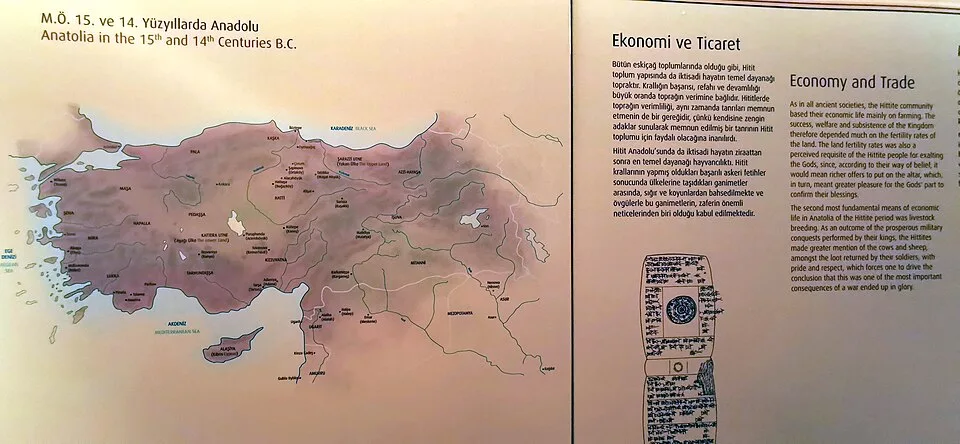
Museum Hattusa - Boğazköy Museum, Boğazköy, Çorum, Turkey 16
Museum Hattusa - Boğazköy Museum, Boğazköy, Çorum, Turkey 16 | Murat Özsoy 1958 (CC BY-SA 4.0)

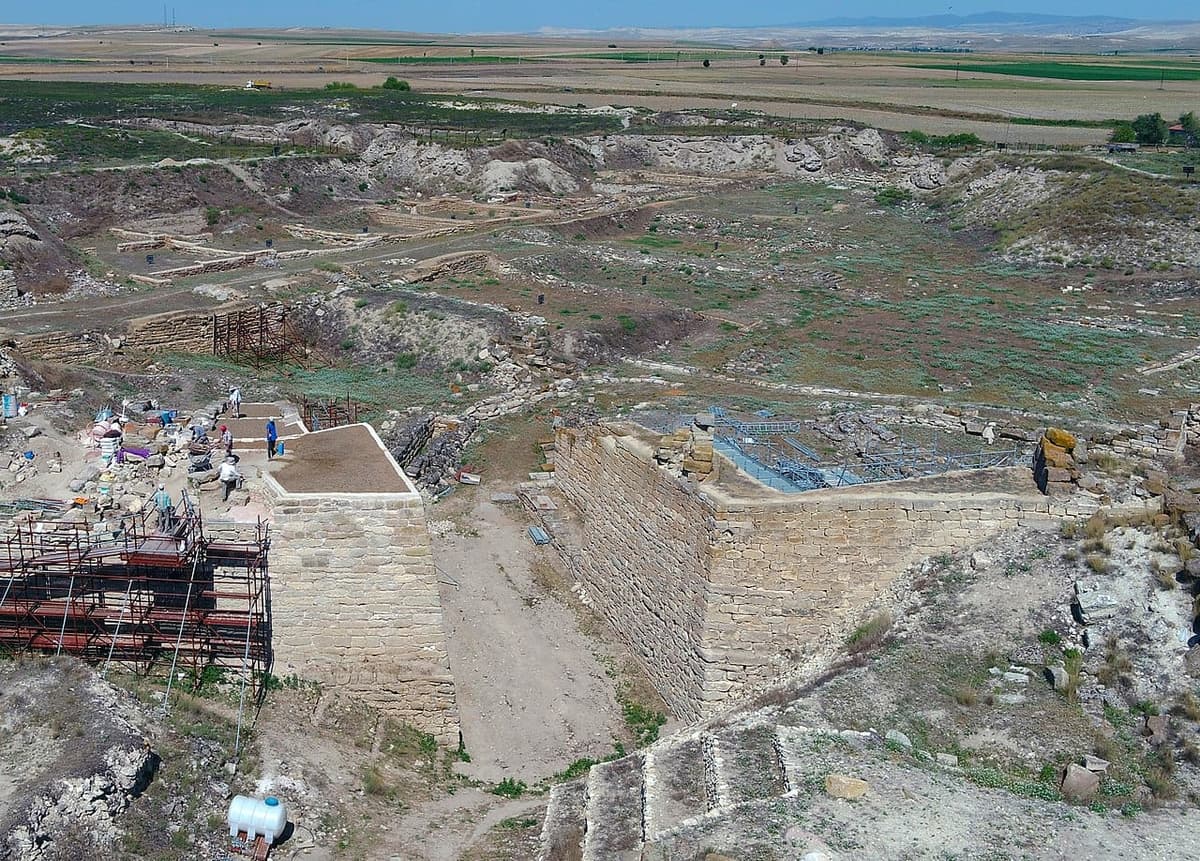
Beyond its monumental gates and temples, Hattusha's urban landscape reveals sophisticated infrastructure. The city featured an extensive network of subterranean passages, most notably the 71-meter-long Yerkapı postern tunnel, and large artificial ponds for water storage. Residential quarters, such as those excavated on Büyükkaya, show a mix of large, multi-roomed houses and smaller dwellings, indicating social stratification. Artifacts like spindle whorls, loom weights, and imported items like Egyptian scarabs and Mycenaean pottery attest to a vibrant daily life of craft production and long-distance trade connections across the Mediterranean and Near East. The city's final destruction around 1178 BCE was comprehensive, with evidence of intense fire across the Upper City. While often linked to the broader Late Bronze Age Collapse, the precise agents—whether the so-called Sea Peoples, internal rebellion, or a combination of factors—remain a subject of scholarly investigation. The site was not reoccupied as a major urban center, preserving its Hittite strata for modern archaeology.
重要性

Hattusha was the center of the Hittite Empire, one of the most powerful states of the Late Bronze Age alongside Egypt and Assyria. The discovery of the royal archives revolutionized understanding of ancient Near Eastern history, diplomacy, and linguistics. The Hittite-Egyptian peace treaty found here is one of the earliest known international peace agreements and is commemorated at the United Nations headquarters. Hattusha was inscribed as a UNESCO World Heritage Site in 1986.

証拠と解釈

確立された事実と議論が続く事柄を区別する。

確立された事実

4
  • Thousands of cuneiform tablets document Hittite law, diplomacy, religion, and administration.
  • The city was protected by massive fortification walls with monumental gates.
  • The Hittite-Egyptian peace treaty (Treaty of Kadesh) was found among the archives.
  • The city's fortifications included a postern tunnel, over 70 meters long, constructed through the rampart near the Sphinx Gate.

学術的推論

1
  • The city's destruction around 1178 BCE is linked to the broader Late Bronze Age Collapse.

議論のある解釈

1
  • The exact causes and sequence of Hattusha's abandonment and destruction remain under study.

発見と発掘調査

1834

First European visit

指揮 Charles Texier

French explorer Charles Texier visited the ruins and published descriptions.

1906

Discovery of cuneiform archives

指揮 Hugo Winckler

Hugo Winckler discovered thousands of cuneiform tablets constituting the Hittite royal archives.

1931

Systematic German excavations begin

指揮 Kurt Bittel / German Archaeological Institute

Kurt Bittel led long-term excavations that revealed the full extent of the city.

1993

Discovery of the Südburg Inscription

指揮 Jürgen Seeher (German Archaeological Institute)

Excavation revealed a rock-cut hieroglyphic Luwian inscription detailing the military achievements of Suppiluliuma II, the last known Hittite king.

コミュニティ写真

あなたの体験を共有する

この遺跡を訪れたことがありますか?写真をアップロードして魅力を共有しましょう。

関連記事

このページの引用方法

Atlas Anatolia. (1650). Hattusha. Atlas Anatolia. https://atlasanatolia.com/ja/site/hattusha

コンテンツはCC BY-SA 4.0ライセンスの下で提供されています — 再利用の際は出典表示が必要です。

グラフ

関連する遺跡やストーリーへのつながり。

World History Encyclopediaで全文を読む
World History Encyclopedia · CC BY-NC-SA

出典

  • The Hittites and Their World — Billie Jean Collins (2007)
  • UNESCO World Heritage — Hattushaリンク

よくある質問

Hattushaはどこにありますか?

HattushaはÇorum, Central Anatolia, Türkiyeに位置しています。

Hattushaの年代はいつ頃ですか?

Hattushaはおよそ1650 紀元前 – 1178 紀元前のものとされています。

Hattushaはどの文明に関連していますか?

HattushaはHittite文明に関連しています。

Hattushaが重要な理由は何ですか?

Hattusha was the center of the Hittite Empire, one of the most powerful states of the Late Bronze Age alongside Egypt and Assyria.

Hattushaはユネスコ世界遺産ですか?

はい — Hattushaはユネスコ世界遺産に登録されています。