
コンテンツへスキップ
Atlas Anatolia
ニュースIce Age teeth in Sulawesi push betel-nut use back as far as 25,000 yearsRoman mosaic and Eros head uncovered in the basilica at Pompeiopolis, Kastamonu
A naturalistic bronze head from Ile-Ife, Nigeria, cast using the lost-wax technique, c. 12th–15th century CE

Wikimedia Commons

Country Record

Longest Continuously Occupied Site in Nigeria

都市

Ile-Ife

Seyfi Cem Baskin

Ilé-Ifẹ̀500 西暦 – 1500 西暦

Regarded by the Yoruba people as the spiritual birthplace of humanity and the sacred origin city of Yoruba civilization — a major West African urban centre that produced, between roughly the 12th and 15th centuries CE, some of the most technically accomplished bronze and terracotta portrait sculptures in world art. Their naturalism was so unexpected to early 20th-century European observers that it briefly spawned a discredited theory attributing them to a lost "Atlantean" or Greek colony rather than African artists.

311
関心 59

所在地

Osun State · Nigeria

7.47°N · 4.57°E · アフリカ

Significance

Sacred origin city of the Yoruba people in Oduduwa creation tradition

Classical age

c. 1000–1500 CE — peak of Ife's urban and artistic development

Bronzes

Life-sized lost-wax cast heads of extraordinary naturalism, 12th–15th century CE

Frobenius controversy

1910 "Atlantis" theory, since thoroughly discredited

Legacy

Yoruba tradition credits Ife with originating the Benin Kingdom's bronze-casting art

Graphite pencil sketch banner of Ile-Ife

“Ile-Ife's bronze and terracotta sculptures permanently disproved one of the most damaging myths in the history of African archaeology: the colonial-era assumption that sophisticated naturalistic art required external, non-African origins.”

所在地

概要

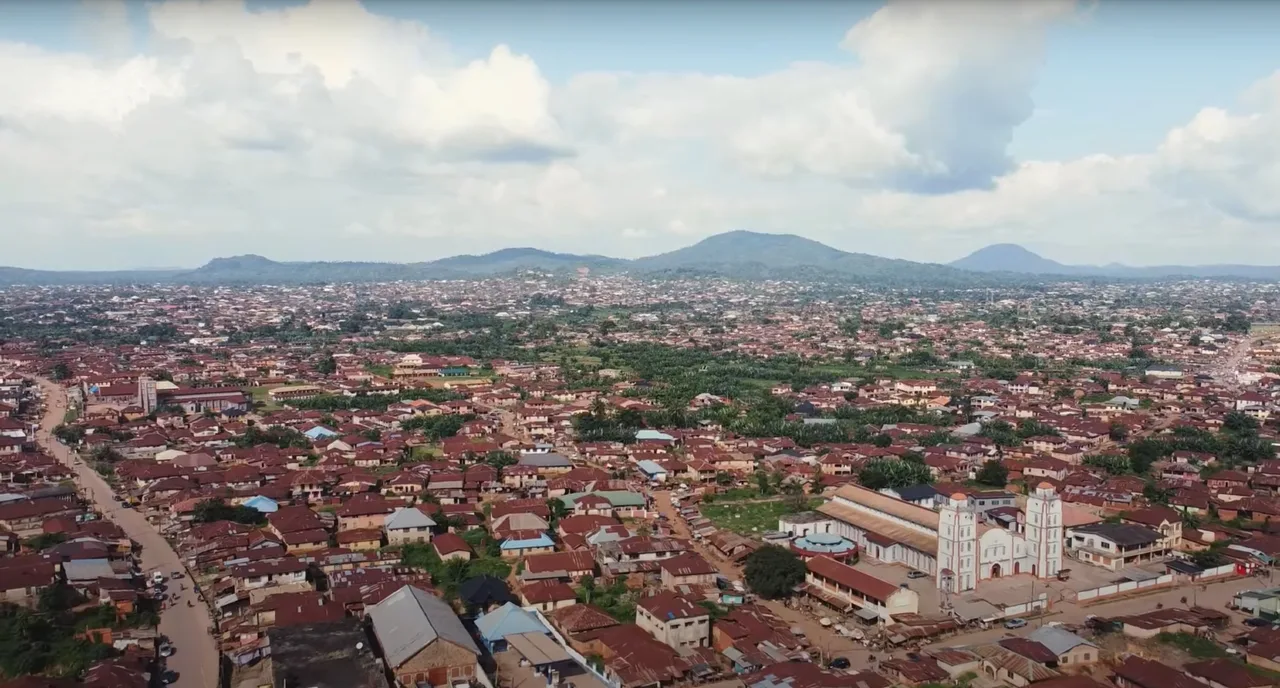
Ile-Ife lies in present-day Osun State, southwestern Nigeria, and holds a foundational place in Yoruba cosmology as Ilé-Ifẹ̀, the site where the deity Oduduwa is said to have descended from the heavens to create dry land and human beings — making it, in Yoruba religious tradition, not merely an ancient city but the literal point of origin of the world. This sacred status has anchored Ife's political and spiritual authority among Yoruba city-states for centuries; its ruler, the Ooni of Ife, continues to hold a paramount position of ritual seniority within Yoruba traditional government today.

Archaeologically, Ile-Ife emerged as a significant urban centre by around 500–800 CE and reached its artistic and political height between approximately 1000 and 1500 CE, a period sometimes referred to as its classical age. The city was encircled by extensive earthen walls, and excavations have revealed sophisticated urban planning, including potsherd-paved courtyards and streets. Ife's economy and craft production, particularly in glass beadmaking, connected it to long-distance trade networks extending across West Africa.

Ife's global art-historical reputation rests overwhelmingly on a remarkable body of sculpture produced during this classical period: life-sized and near-life-sized heads and figures cast in leaded bronze and brass using the lost-wax technique, alongside terracotta heads of comparable sophistication. These works depict individualised human faces — believed to represent kings (Ooni), queens, and other elite figures — with a naturalism, anatomical precision, and formal refinement that was, at the time of their rediscovery, unmatched by anything previously documented from sub-Saharan Africa in Western scholarship.

When German ethnologist Leo Frobenius encountered Ife bronzes during a 1910 expedition, he controversially proposed they were evidence of a lost colony of the mythical sunken civilization of Atlantis, or otherwise the work of ancient Greek settlers — a theory rooted in the racist assumption that West African societies could not have independently developed such technical and artistic sophistication. This claim was thoroughly discredited by subsequent archaeological and art-historical research, which firmly established the bronzes as an indigenous Yoruba achievement, technically and stylistically continuous with, and likely ancestral to, the later, equally celebrated bronze-casting tradition of the neighbouring Benin Kingdom, whose oral traditions credit Ife with sending the first master bronze-caster to Benin.

Major excavations by Frank Willett and other archaeologists from the 1950s onward, along with the chance 1938 discovery of eighteen additional bronze heads during building work (the Wunmonije Compound find), have substantially expanded the known corpus and refined the chronology of Ife art. Many of the finest works are held at the Ife Museum of Antiquities and the National Museum in Lagos, with others dispersed to international collections, some of which remain the subject of restitution discussions.

重要性

Ile-Ife's bronze and terracotta sculptures permanently disproved one of the most damaging myths in the history of African archaeology: the colonial-era assumption that sophisticated naturalistic art required external, non-African origins. The Frobenius "Atlantis" episode is now taught as a cautionary case study in how racial prejudice can distort scientific and art-historical interpretation even in the face of clear evidence. The technical sophistication of Ife's lost-wax bronze casting — achieving a level of anatomical naturalism that would not be matched in European sculpture again until the Renaissance — demonstrates an independently developed metallurgical and artistic tradition of the first rank, produced centuries before sustained European contact with the region. As the acknowledged spiritual and artistic wellspring for the later, more internationally famous Benin bronzes, Ife anchors the deep indigenous history of a West African artistic tradition whose looted 19th- and 20th-century artefacts remain at the centre of some of the most prominent restitution debates in museums worldwide today.

証拠と解釈

確立された事実と議論が続く事柄を区別する。

確立された事実

3
  • Metallurgical and stylistic analysis of the Ife bronzes confirms indigenous West African lost-wax casting technique and leaded-bronze/brass alloy composition, refuting any external origin.
  • The 1938 Wunmonije Compound discovery of eighteen bronze heads, combined with subsequent controlled excavations by Frank Willett and others, established a stratigraphic and stylistic chronology placing the classical bronze-casting period at approximately the 12th–15th centuries CE.
  • Archaeological excavation has documented extensive potsherd-paved courtyards and streets and substantial earthen city walls, confirming sophisticated urban planning at Ife during its classical period.

学術的推論

1
  • The identification of specific bronze heads as portraits of individual named Ooni (kings) is inferred from Yoruba oral tradition and iconographic conventions rather than confirmed by contemporary inscriptions, since the works themselves bear no identifying text.

議論のある解釈

1
  • Leo Frobenius's 1910 proposal that the bronzes derived from a lost Atlantean or Greek colony was a discredited, ideologically motivated theory rather than a genuine scholarly debate; it is documented here as a significant historiographical episode rather than a live scientific question.

発見と発掘調査

1910

Leo Frobenius expedition

First major European documentation of Ife bronzes, accompanied by the since-discredited "Atlantis" origin theory.

1938

Wunmonije Compound discovery

Chance discovery of eighteen bronze heads during building foundation work, substantially expanding the known corpus of Ife art.

1957–1963

Frank Willett systematic excavations

Controlled stratigraphic excavation establishing the chronological framework for Ife's urban development and classical art period still used today.

コミュニティ写真

あなたの体験を共有する

この遺跡を訪れたことがありますか?写真をアップロードして魅力を共有しましょう。

このページの引用方法

Atlas Anatolia. (500). Ile-Ife. Atlas Anatolia. https://atlasanatolia.com/ja/site/ile-ife

コンテンツはCC BY-SA 4.0ライセンスの下で提供されています — 再利用の際は出典表示が必要です。

出典

  • Ife in the History of West African Sculpture — Willett, Frank (1967)
  • Dynasty and Divinity: Ife Art in Ancient Nigeria — Drewal, Henry John and Schildkrout, Enid (2009)
  • Treasures of Ancient Nigeria — Eyo, Ekpo and Willett, Frank (1980)

よくある質問

Ile-Ifeはどこにありますか?

Ile-IfeはOsun State, Nigeriaに位置しています。

Ile-Ifeの年代はいつ頃ですか?

Ile-Ifeはおよそ500 西暦 – 1500 西暦のものとされています。

Ile-Ifeはどの文明に関連していますか?

Ile-IfeはYoruba文明に関連しています。

Ile-Ifeが重要な理由は何ですか?

Ile-Ife's bronze and terracotta sculptures permanently disproved one of the most damaging myths in the history of African archaeology: the colonial-era assumption that sophisticated naturalistic art required external, non-African origins.

Ile-Ifeはユネスコ世界遺産ですか?

Ile-Ifeは現在ユネスコ世界遺産には登録されていません。