
コンテンツへスキップ
Atlas Anatolia
ニュースIce Age teeth in Sulawesi push betel-nut use back as far as 25,000 yearsRoman mosaic and Eros head uncovered in the basilica at Pompeiopolis, Kastamonu
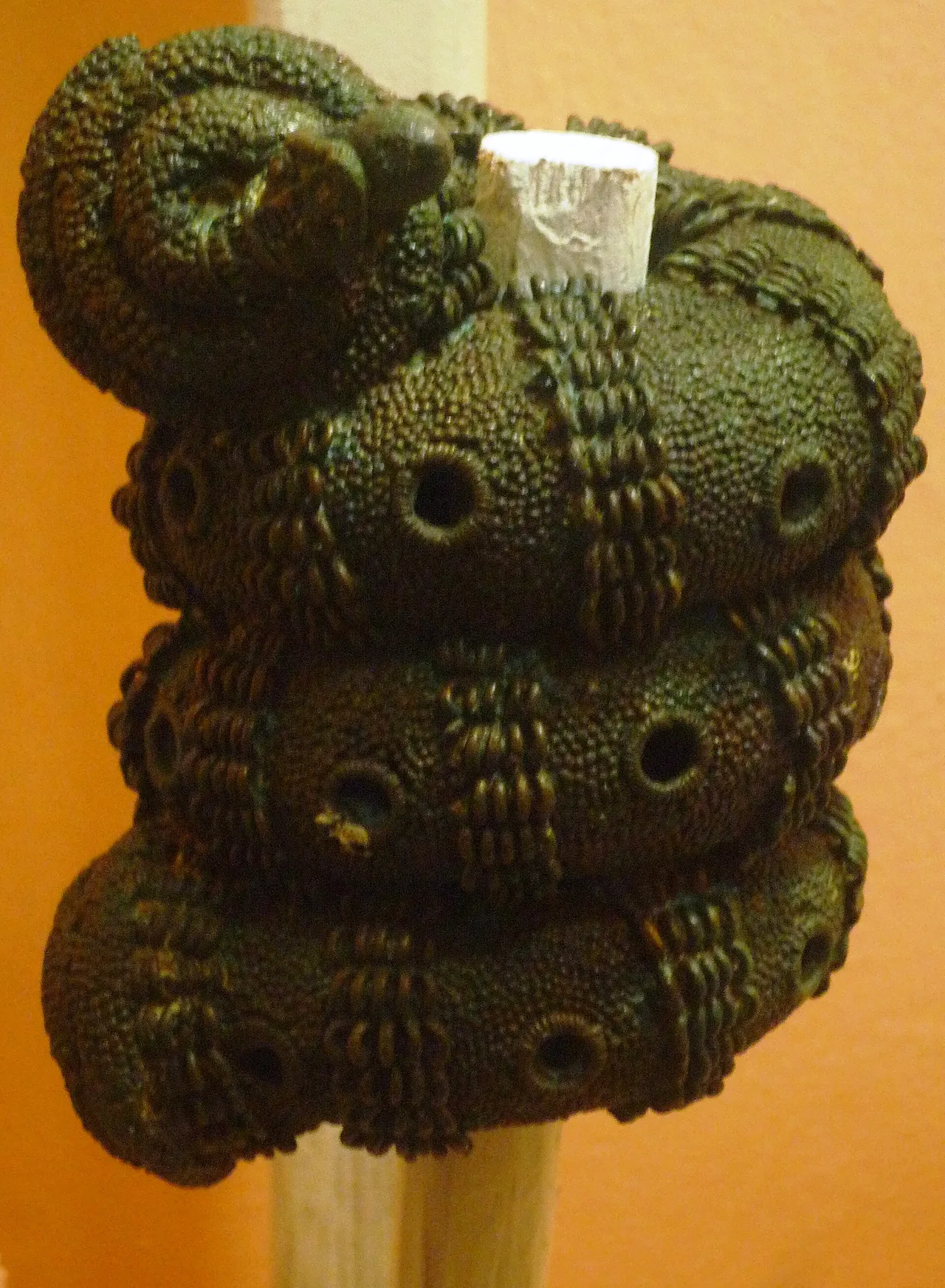
Bronze ceremonial vessel cast in the form of a knotted rope from Igbo-Ukwu, Nigeria, c. 9th century CE

Wikimedia Commons

Country Record

Known by the Most Names in Nigeria

複合体

Igbo-Ukwu

Seyfi Cem Baskin

800 西暦 – 1000 西暦

A cluster of three archaeological sites in southeastern Nigeria that revealed one of the earliest and most technically extraordinary bronze-casting traditions anywhere in sub-Saharan Africa — ceremonial and burial objects radiocarbon dated to the 9th century CE, centuries earlier than the celebrated bronzes of nearby Ile-Ife. A single burial chamber held an elite individual interred with royal regalia and thousands of imported glass beads, evidence of long-distance trade networks reaching West Africa far earlier than commonly assumed.

311
関心 51

所在地

Anambra State · Nigeria

6.02°N · 6.93°E · アフリカ

Three sites

Igbo Isaiah (shrine/storehouse), Igbo Richard (burial), Igbo Jonah

Date

c. 9th century CE — centuries earlier than the famous Ife bronzes

Burial

Igbo Richard: elite burial with regalia and c. 165,000 glass/stone beads

Roped pot

Bronze vessel cast to replicate a knotted rope with startling naturalism

Excavator

Thurstan Shaw, 1959–1964

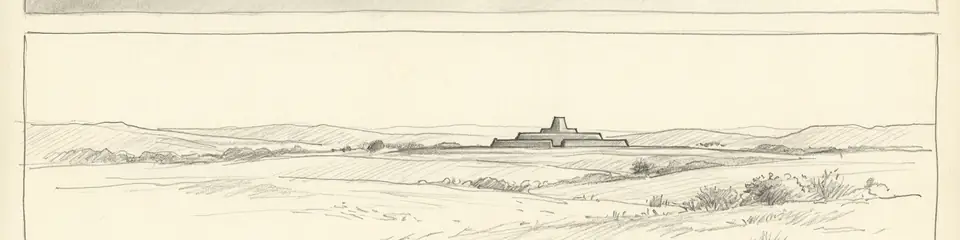
Graphite pencil sketch banner of Igbo-Ukwu

“Igbo-Ukwu pushed the confirmed history of sophisticated African metallurgy back by several centuries relative to what was previously documented, demonstrating that the technical mastery seen in the later, more famous Ife and Benin bronze traditions had deep local roots rather than emerging suddenly or through external introduction — directly reinforcing the same point Ile-Ife's own bronzes make against colonial-era assumptions of African artistic incapacity, but doing so several centuries earlier in the archaeological record.”

所在地

概要

Igbo-Ukwu lies in Anambra State, southeastern Nigeria, in the Igbo-speaking heartland of the lower Niger region. The name refers to a town, but the archaeological significance centres on three distinct find-sites within it — Igbo Isaiah, Igbo Richard, and Igbo Jonah — each uncovered through different circumstances and revealing different facets of an early, highly sophisticated bronze-casting culture.

Igbo Isaiah, discovered in 1938 when a local resident digging a cistern struck buried objects, proved to be a shrine or ritual storehouse containing several hundred bronze, copper, and iron objects of remarkable intricacy: ceremonial vessels, staff ornaments, pendants, and crowns, cast using the lost-wax technique with a level of detail and technical control — including a famous vessel cast in the form of a knotted rope, its surface texture replicating actual cord with startling naturalism — that places Igbo-Ukwu bronze-casters among the most accomplished metalworkers of the early medieval world, in any region.

Igbo Richard, excavated in 1959, proved to be a burial chamber: an elite individual, seated on a stool with legs crossed, was interred wearing an elaborate beaded costume, holding a fly-whisk and ceremonial staff, and surrounded by tens of thousands of glass and stone beads along with bronze regalia — one of the richest single burials documented anywhere in sub-Saharan Africa from this period, strongly suggestive of a figure of high political or religious authority, possibly an early precursor to the priest-king (Eze Nri) tradition later associated with the Nri Kingdom of Igbo political and religious history.

Igbo Jonah, a smaller associated deposit, added further bronze and ceramic material to the corpus. Together, the three sites were systematically excavated by British archaeologist Thurstan Shaw between 1959 and 1964, whose radiocarbon dating placed the material firmly in the 9th century CE — a date initially met with considerable scholarly skepticism, since it implied a sophisticated bronze-casting tradition in this specific part of West Africa predating the famous Ife bronzes by roughly three to five centuries. Subsequent dating studies have broadly confirmed Shaw's original chronology.

The sheer quantity of glass beads recovered — an estimated 165,000 at Igbo Richard alone — has driven extensive compositional analysis aimed at determining their origin, since glass beadmaking was not a locally established craft at Igbo-Ukwu at this date. Various studies have proposed sourcing from North Africa, Egypt, the Islamic world, and even further afield via trans-Saharan trade networks, though the exact routes and trading partners remain a matter of ongoing research and some disagreement. Whatever their precise origin, the beads confirm that Igbo-Ukwu was integrated into long-distance exchange networks reaching well beyond West Africa considerably earlier than the trans-Saharan gold trade most commonly associated with medieval West African wealth.

重要性

Igbo-Ukwu pushed the confirmed history of sophisticated African metallurgy back by several centuries relative to what was previously documented, demonstrating that the technical mastery seen in the later, more famous Ife and Benin bronze traditions had deep local roots rather than emerging suddenly or through external introduction — directly reinforcing the same point Ile-Ife's own bronzes make against colonial-era assumptions of African artistic incapacity, but doing so several centuries earlier in the archaeological record. The astonishing quantity and quality of the burial goods at Igbo Richard provide rare, direct material evidence for the existence of a wealthy, ritually significant elite class in the lower Niger region in the 9th century CE — long before written records exist for this specific society, and centuries before the historically documented Nri Kingdom with which Igbo-Ukwu's priestly regalia may share cultural roots. The presence of tens of thousands of non-locally produced glass beads is powerful physical evidence that West African societies were embedded in long-distance trade networks — whether trans-Saharan, transcontinental, or otherwise — far earlier than the conventional historical narrative built primarily around later, better-documented gold and salt trade routes.

証拠と解釈

確立された事実と議論が続く事柄を区別する。

確立された事実

3
  • Radiocarbon dating conducted by Thurstan Shaw and confirmed by later studies places the Igbo-Ukwu material firmly in the 9th century CE, centuries earlier than initially expected by contemporary scholarship.
  • Metallurgical analysis confirms the bronze and copper-alloy objects were produced using the lost-wax casting technique, executed with a level of technical control including surface texture replication (the "roped pot") rarely matched elsewhere in the period.
  • Excavation at Igbo Richard documented an intact elite burial with the individual seated upright, associated with bronze regalia and an estimated 165,000 glass and stone beads, one of the richest single burials recorded in sub-Saharan Africa from this period.

学術的推論

1
  • The identification of the Igbo Richard burial as a religious or political authority figure, possibly related to the later historically documented Nri priest-kingship tradition, is inferred from the regalia and burial context rather than confirmed by any contemporary textual source.

議論のある解釈

1
  • The precise geographic origin and trade route by which the tens of thousands of glass beads reached Igbo-Ukwu remains debated, with proposed sources including North Africa, Egypt, and the wider Islamic world via trans-Saharan networks, none conclusively confirmed.

発見と発掘調査

1938

Discovery of Igbo Isaiah

Chance discovery of a bronze-filled shrine deposit during cistern digging by a local resident.

1959–1964

Thurstan Shaw systematic excavation

Full-scale excavation of all three Igbo-Ukwu sites, establishing radiocarbon chronology and the complete corpus of bronze, bead, and burial evidence.

コミュニティ写真

あなたの体験を共有する

この遺跡を訪れたことがありますか?写真をアップロードして魅力を共有しましょう。

このページの引用方法

Atlas Anatolia. (800). Igbo-Ukwu. Atlas Anatolia. https://atlasanatolia.com/ja/site/igbo-ukwu

コンテンツはCC BY-SA 4.0ライセンスの下で提供されています — 再利用の際は出典表示が必要です。

出典

  • Igbo-Ukwu: An Account of Archaeological Discoveries in Eastern Nigeria — Shaw, Thurstan (1970)
  • Gao and Igbo-Ukwu: Beads, Interregional Trade, and Beyond — Insoll, Timothy and Shaw, Thurstan (1997)
  • Nigerian Sources of Copper, Lead, and Tin for the Igbo-Ukwu Bronzes — Chikwendu, V.E. et al. (1989)

よくある質問

Igbo-Ukwuはどこにありますか?

Igbo-UkwuはAnambra State, Nigeriaに位置しています。

Igbo-Ukwuの年代はいつ頃ですか?

Igbo-Ukwuはおよそ800 西暦 – 1000 西暦のものとされています。

Igbo-Ukwuはどの文明に関連していますか?

Igbo-UkwuはIgbo-Ukwu Culture文明に関連しています。

Igbo-Ukwuが重要な理由は何ですか?

Igbo-Ukwu pushed the confirmed history of sophisticated African metallurgy back by several centuries relative to what was previously documented, demonstrating that the technical mastery seen in the later, more famous Ife and Benin bronze traditions had deep local roots rather than emerging suddenly or through external introduction — directly reinforcing the same point Ile-Ife's own bronzes make against colonial-era assumptions of African artistic incapacity, but doing so several centuries earlier in the archaeological record.

Igbo-Ukwuはユネスコ世界遺産ですか?

Igbo-Ukwuは現在ユネスコ世界遺産には登録されていません。