
コンテンツへスキップ
Atlas Anatolia
ニュースIce Age teeth in Sulawesi push betel-nut use back as far as 25,000 yearsRoman mosaic and Eros head uncovered in the basilica at Pompeiopolis, Kastamonu
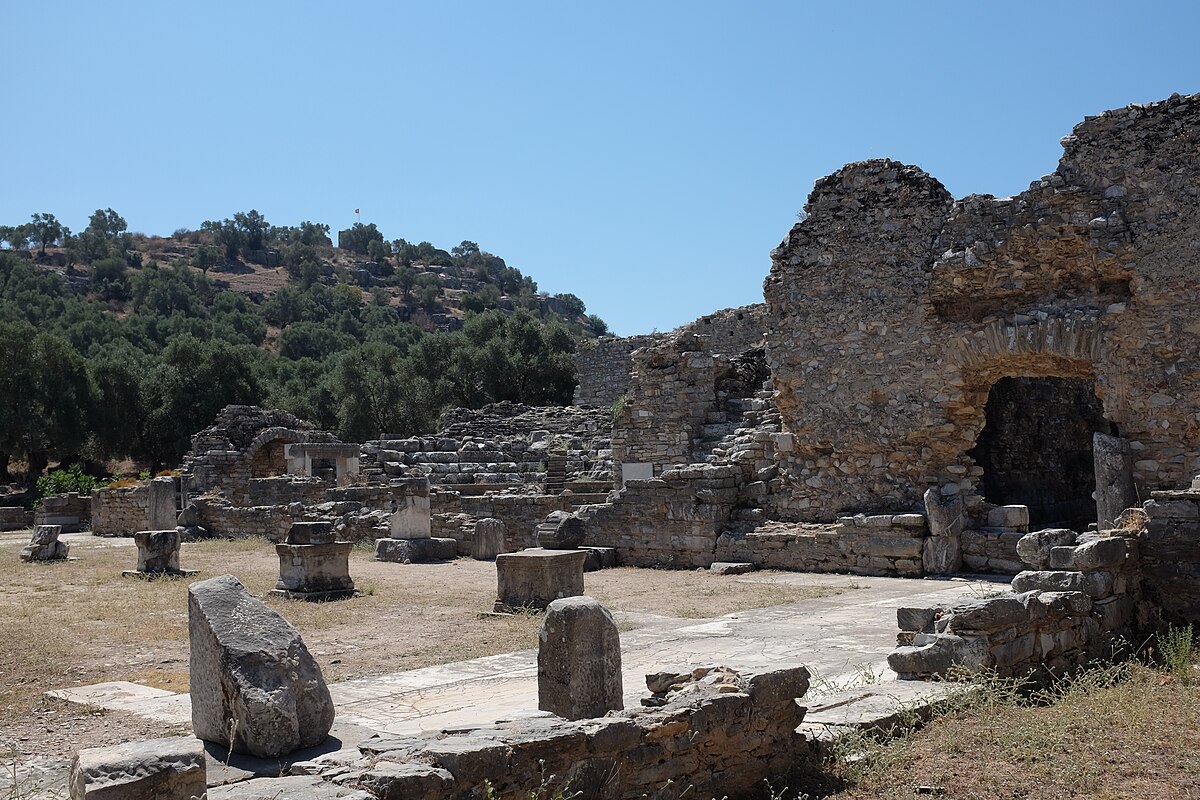
Ruins of Iasus on the Aegean coast

Wikimedia Commons (CC BY-SA)

都市

Iasus

Seyfi Cem Baskin

Kıyıkışlacık1500 紀元前 – 600 西暦

A Carian fishing city on a fortified peninsula jutting into the Gulf of Güllük, famous in antiquity for its abundant fish and red marble, with a well-preserved Roman agora and evidence of settlement stretching back to the Bronze Age.

321
関心 44

所在地

Muğla · Aegean · トルコ

37.28°N · 27.59°E · アジア

Geography

Fortified peninsula with double harbor in the Gulf of Güllük

Fish

Famous fishing city — audience abandoned a concert for a fish delivery

Marble

Source of prized rosso antico red marble exported across the Roman Empire

Minoan

Bronze Age painting in Minoan style found in early levels

Agora

Well-preserved Roman agora with surrounding stoas

Excavation

Continuous Italian archaeological work since the 1960s

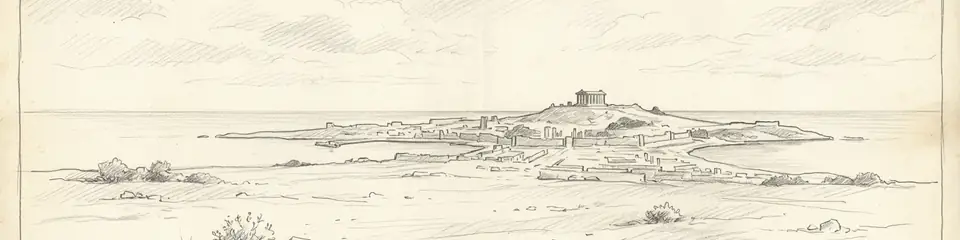
Graphite pencil sketch banner of Iasus

“Iasus offers a rare long-duration archaeological sequence from the Bronze Age through Byzantium on the Carian coast, allowing scholars to trace the transformation of a single community across nearly three millennia.”

Wikipediaより

Iasus was a Carian fishing city on a peninsula in the Gulf of Güllük, famous for its fish and red marble, with settlement from the Bronze Age through the Byzantine period.

Wikipediaで全文を読む →

所在地

概要

Iasus occupies a narrow peninsula projecting into the Gulf of Güllük (ancient Gulf of Iasus) on the Carian coast of southwestern Turkey. The site's geography — a defensible promontory with sheltered harbors on both sides — made it an ideal settlement location, and archaeological evidence documents occupation from the Middle Bronze Age (around 1500 BCE) through the Byzantine period.

In antiquity, Iasus was famous for two things: fish and red marble. Ancient writers including Athenaeus devoted pages to the city's obsession with fishing, recording an anecdote that when a musician was performing in the theater, the audience abandoned him mid-performance when someone announced a fish delivery. Whether true or not, the story captures the city's identity as a fishing community where the sea was the source of both livelihood and culture. Archaeological finds confirm the importance of fishing, with fish processing installations and underwater harbor infrastructure documented around the peninsula.

"Iasus is a small town on an island, connected to the mainland by a narrow causeway. It is said to have been founded by Argives."
— Strabo, Geography (c. 7 BCE - 23 CE)

The red marble (known as rosso antico or Africano) quarried near Iasus was one of the most prized decorative stones in the Roman world. This distinctive mottled red-and-white marble was exported across the Mediterranean for use in imperial buildings, temples, and luxury villas. The quarries, located a few kilometers from the city, operated from the Hellenistic through Late Roman periods and represent one of Caria's most important economic assets.

The excavated city center features a well-preserved Roman agora surrounded by stoas, a bouleuterion (council house), a Roman-period fish market, and a theater carved into the hillside. The fortification walls encircle the peninsula, incorporating towers and gates that document the city's defensive concerns across multiple periods. Italian archaeological teams have worked at the site since the 1960s, producing detailed documentation of the urban development from its Bronze Age origins through its Byzantine decline.
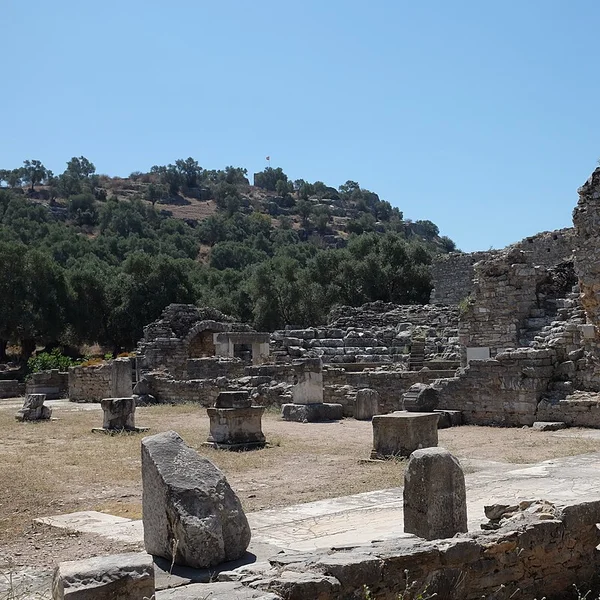
Interior of the ancient bouleuterion at Iasus on the Carian coast
AlexanderVanLoon / Wikimedia Commons (CC BY-SA 4.0)

A remarkable Minoan-style painting discovered in a Bronze Age context at Iasus suggests connections between this coast and the Aegean civilizations of Crete and the Cyclades, pointing to long-distance maritime networks that predated the better-known Greek colonial period by centuries.

重要性

Iasus offers a rare long-duration archaeological sequence from the Bronze Age through Byzantium on the Carian coast, allowing scholars to trace the transformation of a single community across nearly three millennia. The Minoan-style painting challenges assumptions about the geographic boundaries of Aegean Bronze Age culture. The city's twin economic pillars — fishing and marble quarrying — provide an unusually detailed picture of how a small coastal community sustained itself through natural resource exploitation. The Roman red marble trade connected Iasus to building projects across the empire, demonstrating how even modest cities could participate in global economic networks.

証拠と解釈

確立された事実と議論が続く事柄を区別する。

確立された事実

3
  • Athenaeus (Deipnosophistae 1.3d) recounts the famous anecdote of the Iasian audience abandoning a musical performance upon hearing of a fish delivery, establishing the city's reputation as a fishing community.
  • Red marble quarries near Iasus have been archaeologically documented, with the distinctive rosso antico stone identified in Roman buildings across the Mediterranean.
  • A wall painting in Minoan style, dating to the Middle Bronze Age, was discovered in early occupation levels, demonstrating Aegean artistic connections predating Greek colonization.

学術的推論

2
  • The fish processing installations and underwater harbor features suggest that fishing was an organized commercial industry, not merely subsistence, supporting the literary accounts of the city's maritime economy.
  • The city's continuous occupation from ca. 1500 BCE through 600 CE suggests the peninsula location provided sufficient natural advantages to sustain settlement through multiple political and economic transitions.

議論のある解釈

1
  • Whether the Minoan-style painting represents direct Cretan contact, trade connections, or the work of a traveling artist remains debated among Bronze Age specialists.

発見と発掘調査

1960–2020

Italian archaeological mission

指揮 Doro Levi / Fede Berti

Continuous excavation by Italian teams has documented the full urban development of Iasus from Bronze Age origins through Byzantine decline, producing one of the most complete site sequences on the Carian coast.

1970

Bronze Age discoveries

Excavations in deep levels uncovered Middle Bronze Age pottery and a remarkable wall painting in Minoan style, establishing maritime connections between Caria and Aegean civilizations.

1985

Agora excavations

Clearance and study of the Roman agora complex documented its stoas, fish market, and commercial infrastructure.

2000

Marble quarry survey

Archaeological and geological survey of the nearby red marble quarries documented extraction techniques and the scale of the Roman-period quarrying operation.

2015

Underwater harbor survey

Marine archaeological investigation of both harbors documented ancient breakwaters, mooring installations, and fish processing infrastructure.

コミュニティ写真

あなたの体験を共有する

この遺跡を訪れたことがありますか?写真をアップロードして魅力を共有しましょう。

このページの引用方法

Atlas Anatolia. (1500). Iasus. Atlas Anatolia. https://atlasanatolia.com/ja/site/iasus

コンテンツはCC BY-SA 4.0ライセンスの下で提供されています — 再利用の際は出典表示が必要です。

出典

  • Iasos: Archaeological Discoveries 1960-2000 — Fede Berti (2003)
  • Ancient Quarries and Building Sites in Asia Minor — Pierre Pensabene (1998)
  • Wikipedia — Iasusリンク

よくある質問

Iasusはどこにありますか?

IasusはMuğla, Aegean, Türkiyeに位置しています。

Iasusの年代はいつ頃ですか?

Iasusはおよそ1500 紀元前 – 600 西暦のものとされています。

Iasusはどの文明に関連していますか?

IasusはCarian, Greek, Roman文明に関連しています。

Iasusが重要な理由は何ですか?

Iasus offers a rare long-duration archaeological sequence from the Bronze Age through Byzantium on the Carian coast, allowing scholars to trace the transformation of a single community across nearly three millennia.

Iasusはユネスコ世界遺産ですか?

Iasusは現在ユネスコ世界遺産には登録されていません。