
コンテンツへスキップ
Atlas Anatolia
ニュースIce Age teeth in Sulawesi push betel-nut use back as far as 25,000 yearsRoman mosaic and Eros head uncovered in the basilica at Pompeiopolis, Kastamonu
Aerial view of Pueblo Bonito, the largest great house at Chaco Canyon

Wikimedia Commons

Country Record

Known by the Most Names in United States

複合体UNESCO

Chaco Canyon

Seyfi Cem Baskin

850 西暦 – 1150 西暦

The ceremonial and architectural center of Ancestral Puebloan civilization between 850 and 1150 CE — Pueblo Bonito, with 650 rooms and 40 kivas, was the largest building in North America for six hundred years, aligned precisely with solar and lunar cycles.

31
関心 71

所在地

United States

36.06°N · 107.96°W · 北アメリカ

Pueblo Bonito size

650+ rooms, 40 kivas, 5 stories, D-shaped plan

Road network

400+ km of 9-m-wide straight roads connecting outlier sites

Peak period

850–1150 CE; abandoned by c. 1150 CE

Astronomical alignment

Solstice/equinox alignments in kiva doorways and the Sun Dagger site

UNESCO

World Heritage Site since 1987

Territory covered

~60,000 km² of road-connected Ancestral Puebloan sites

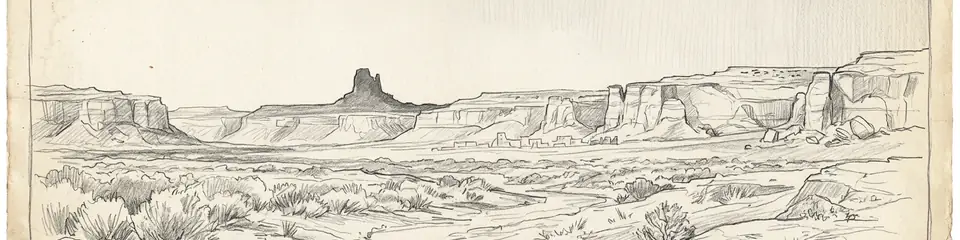
Graphite pencil sketch banner of Chaco Canyon

“Chaco Canyon is where Ancestral Puebloan civilization built on the largest scale.”

所在地

概要

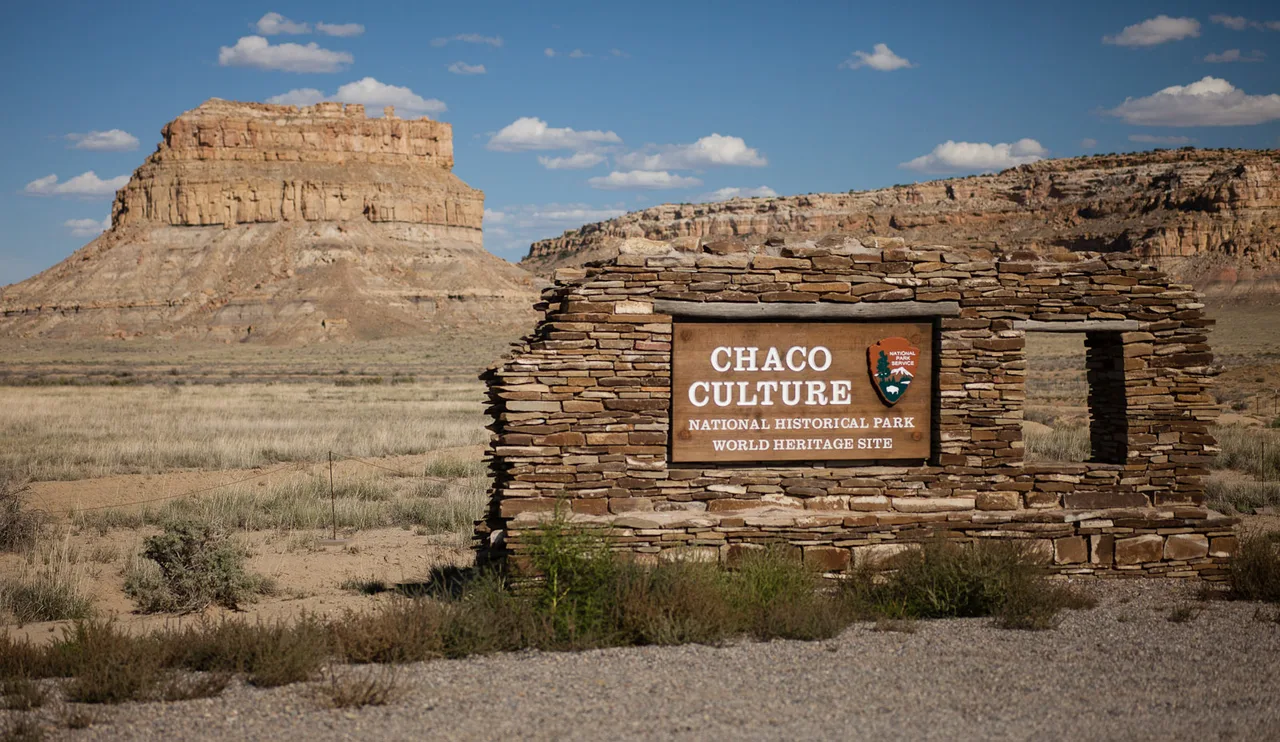
Chaco Canyon cuts through the San Juan Basin of northwestern New Mexico, an arid plateau at 1,900 m elevation surrounded by desert. Between approximately 850 and 1150 CE it functioned as the political, ceremonial, and redistribution center of a culture archaeologists call the Ancestral Puebloans — the ancestors of the modern Pueblo peoples of Arizona and New Mexico.

The canyon contains twelve major 'great houses' — monumental masonry structures of five or more stories, containing hundreds of rooms and multiple kivas (circular ceremonial chambers). Pueblo Bonito, the largest, was planned from the outset as a single integrated structure: a D-shaped building, 162 m across, containing approximately 650 rooms arranged in a rising crescent of masonry terraces, 2–5 stories high, with 40 circular kivas including two great kivas over 20 m in diameter. It was constructed over roughly 300 years (850–1150 CE) and was the largest building in North America until the 19th century. Chetro Ketl, Pueblo del Arroyo, and the other great houses follow similar architectural principles: massive core-and-veneer sandstone masonry, a D- or C-shaped plan, regular room arrangements, and elaborate kivas.

What makes Chaco exceptional beyond its architecture is its relationship to the wider landscape. More than 400 km of prehistoric roads radiate from the canyon to outlier great houses across a 60,000 km² territory, connecting communities as far as 150 km away. These roads — 9 m wide, dead-straight, often cut into bedrock — served as communication and redistribution channels for turquoise, ceramics, and food.

The solar and lunar alignments built into Chacoan architecture are among the most precisely documented in prehistoric North America. The main facade of Pueblo Bonito faces due south; great kiva doorways are aligned with solstice sunrises; the Sun Dagger site on Fajada Butte uses a slotted rock to cast a dagger of light on spiral petroglyphs at solstices and equinoxes. The canyon was largely abandoned by 1150 CE, possibly due to drought, social fragmentation, or the shift of power to new regional centers.

重要性

Chaco Canyon is where Ancestral Puebloan civilization built on the largest scale. The great houses are not merely large — they are precisely planned, astronomically aligned, and connected to a continent-spanning road network. Understanding Chaco means reconsidering what North American civilizations were before European contact: complex, centralized, architecturally ambitious, and capable of organizing labor and materials across vast distances. The turquoise trade evidence at Chaco — hundreds of thousands of worked turquoise pieces from mines in New Mexico and Colorado — shows an economic network of a scale not seen again in the American Southwest until after Spanish colonization. Modern Pueblo peoples maintain direct oral and cultural connections to Chaco, making the site simultaneously an archaeological record and a living ancestral homeland.

証拠と解釈

確立された事実と議論が続く事柄を区別する。

確立された事実

3
  • Tree-ring dating (dendrochronology) from Pueblo Bonito's roof timbers provides one of the most precise construction chronologies in North American archaeology: building began c. 850 CE and continued in discrete phases to c. 1130 CE, with a major expansion between 1020 and 1050 CE.
  • Isotopic analysis of macaw bones found at Chaco shows the birds were imported from breeding facilities in northern Mexico, confirming a long-distance exchange network extending more than 1,000 km south.
  • Over 200,000 worked turquoise pieces — beads, pendants, inlay — have been recovered from Chaco; isotopic source-matching links them to mines at Cerrillos (60 km south of Santa Fe) and other sources across the Colorado Plateau.

議論のある解釈

1
  • Whether Chaco functioned as a ceremonial pilgrimage center (receiving periodic influxes of visitors from outlier communities), a permanent political capital (with a ruling elite resident year-round), or primarily a storage and redistribution node for the basin's agricultural surplus is actively debated.

コミュニティ写真

あなたの体験を共有する

この遺跡を訪れたことがありますか?写真をアップロードして魅力を共有しましょう。

このページの引用方法

Atlas Anatolia. (850). Chaco Canyon. Atlas Anatolia. https://atlasanatolia.com/ja/site/chaco-canyon

コンテンツはCC BY-SA 4.0ライセンスの下で提供されています — 再利用の際は出典表示が必要です。

出典

  • In Search of Chaco: New Approaches to an Archaeological Enigma — David Grant Noble (ed.) (2004)
  • Chaco's Northern Prodigies: Salmon, Aztec, and the Ascendancy of the Middle San Juan — Paul Reed (ed.) (2008)
  • Chaco Culture NHP — National Park Serviceリンク

よくある質問

Chaco Canyonはどこにありますか?

Chaco CanyonはUnited Statesに位置しています。

Chaco Canyonの年代はいつ頃ですか?

Chaco Canyonはおよそ850 西暦 – 1150 西暦のものとされています。

Chaco Canyonはどの文明に関連していますか?

Chaco CanyonはAncestral Puebloan文明に関連しています。

Chaco Canyonが重要な理由は何ですか?

Chaco Canyon is where Ancestral Puebloan civilization built on the largest scale.

Chaco Canyonはユネスコ世界遺産ですか?

はい — Chaco Canyonはユネスコ世界遺産に登録されています。