
コンテンツへスキップ
Atlas Anatolia
ニュースIce Age teeth in Sulawesi push betel-nut use back as far as 25,000 yearsRoman mosaic and Eros head uncovered in the basilica at Pompeiopolis, Kastamonu
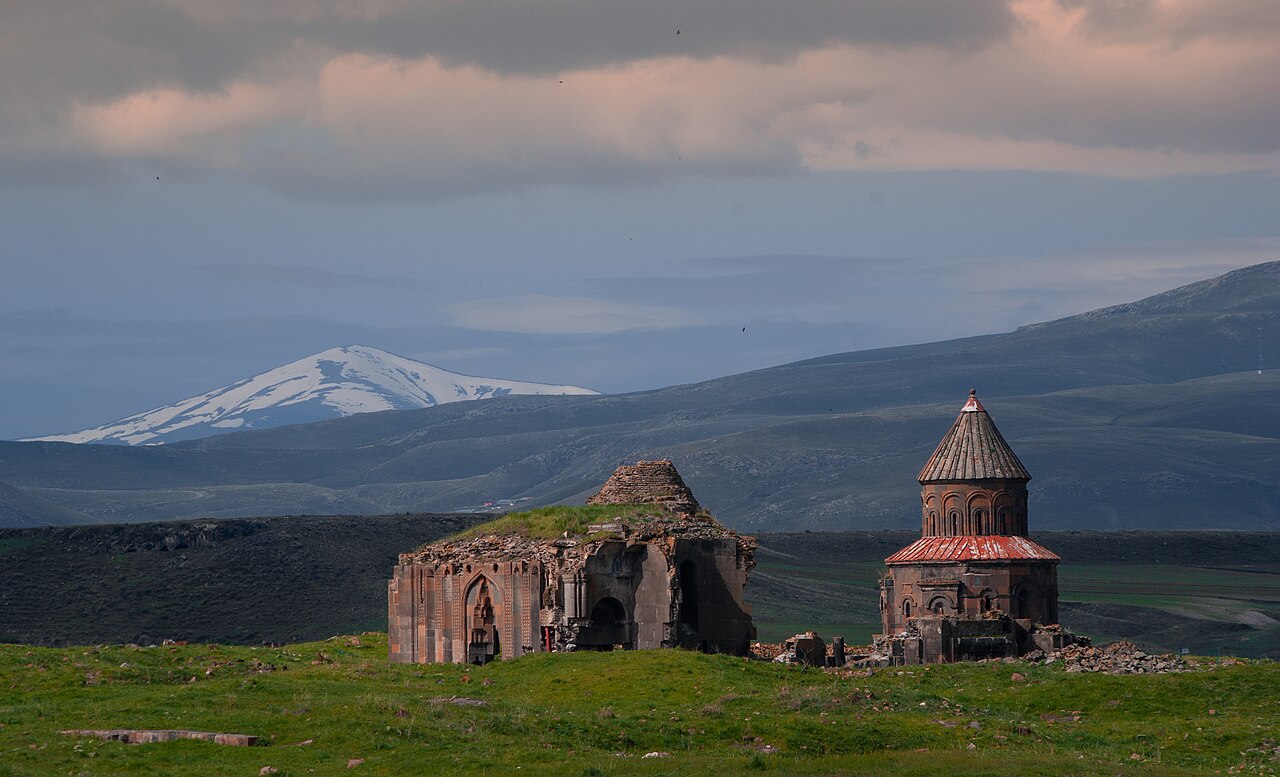
Ruins of the medieval city of Ani

Wikimedia Commons (CC BY-SA)

都市UNESCO注目

Ani

Seyfi Cem Baskin

500 西暦 – 1400 西暦

A medieval Armenian capital on the Turkish-Armenian border, once home to over 100,000 people. Its ruins include magnificent churches, mosques, and fortifications spanning centuries of multicultural history.

312
関心 72

所在地

Kars · Eastern Anatolia · トルコ

40.51°N · 43.57°E · アジア

Peak Population

~100,000+

Known As

City of 1001 Churches

UNESCO Status

World Heritage Site (2016)

Date Range

c. 500–1400 CE

Primary Construction Material

Local volcanic basalt and tuff stone

Major Historical Event

Sack of Ani by the Mongols under Ilkhanate commander Tamerlane in 1239 CE

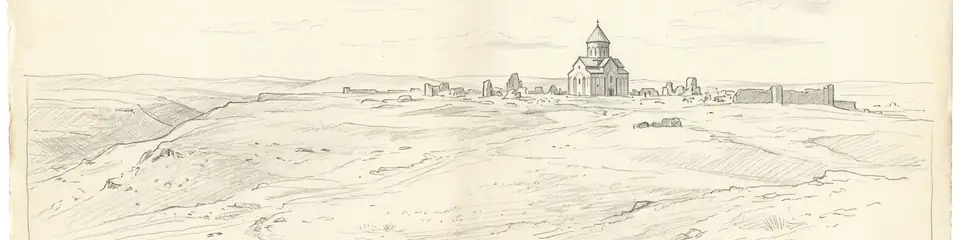
Graphite pencil sketch banner of Ani

“Ani represents a remarkable example of medieval urban planning, religious architecture, and cultural exchange.”

Wikipediaより

Ani is a ruined medieval Armenian city situated in Turkey's province of Kars, next to the closed border with Armenia. At its height around 1050 CE, the city may have had a population exceeding 100,000, rivaling Constantinople. It was known as the "City of 1001 Churches."

Wikipediaで全文を読む →

所在地

概要

Ani is located in Kars Province, on a triangular plateau above the Akhurian River gorge that now forms part of the Turkish-Armenian border. In the 10th and 11th centuries, Ani was the capital of the Bagratid Armenian Kingdom and one of the most prosperous cities in the world.

At its height around 1050 CE, Ani may have had a population exceeding 100,000, rivaling the size of Constantinople. The city was known as the "City of 1001 Churches" and was a major center of Armenian culture, architecture, and commerce along the Silk Road.

"Ani is a great city, the capital of Armenia, with impregnable walls and a thousand churches."
— Ibn al-Athir (c. 1160–1233), Arab historian

The site contains the ruins of numerous churches (including the Cathedral of Ani, built 989–1001), mosques, a Seljuk palace, defensive walls, and a citadel. The Church of the Redeemer (1035) and the Church of St. Gregory of Tigran Honents (1215), with its remarkable frescoes, are among the most notable structures.

Ani changed hands between Armenian, Byzantine, Seljuk, Georgian, and Ottoman rulers before being largely abandoned after Tamerlane's invasion in 1319 and a devastating earthquake in 1319.
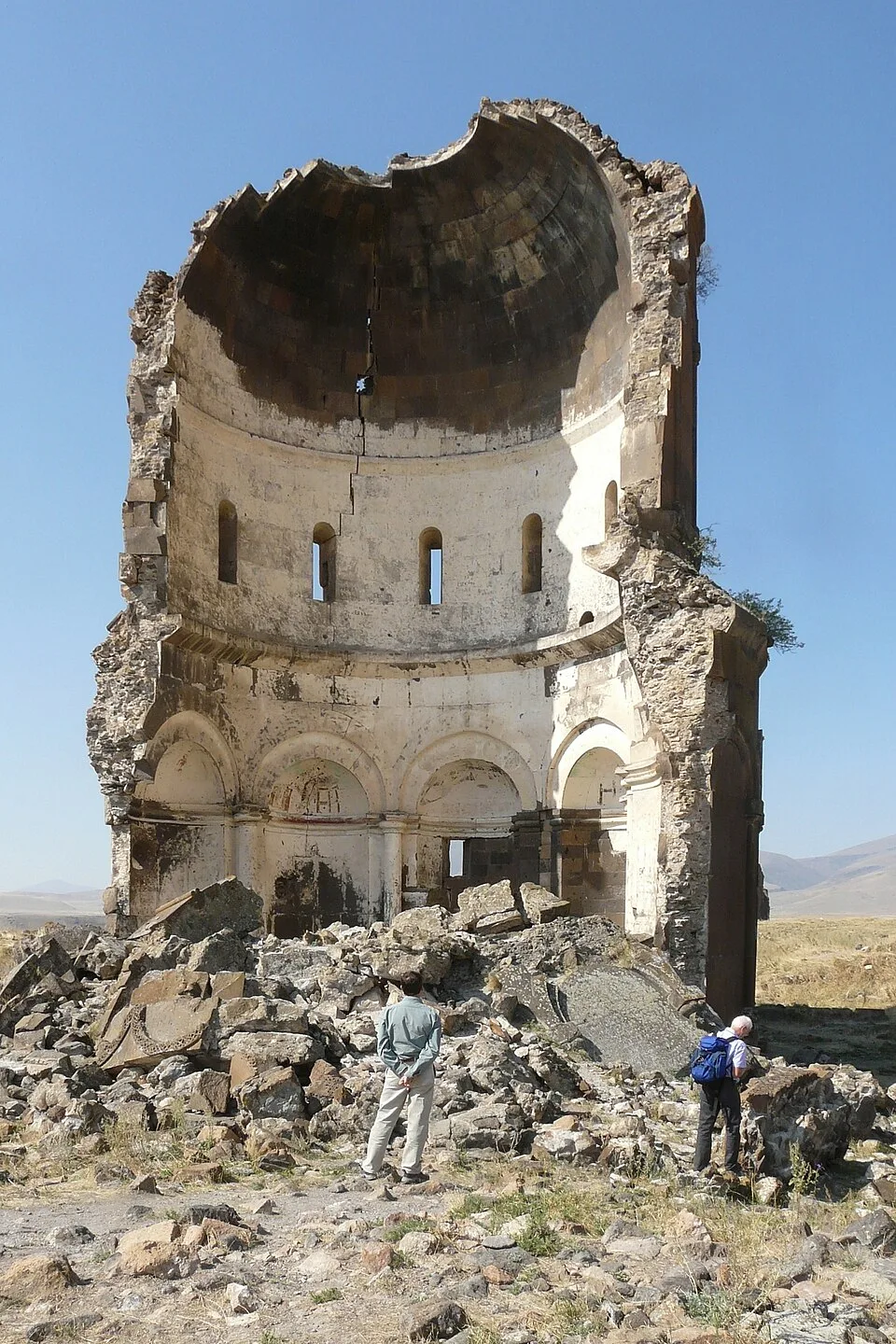
Türkei, historische Stadt Ani, Erlöserkirche
Türkei, historische Stadt Ani, Erlöserkirche | Feldstein (CC BY-SA 4.0)

The city's formidable double walls, constructed under King Smbat II (977–989 CE), featured numerous semicircular towers and elaborate gates, demonstrating advanced military engineering. Within these defenses, archaeological evidence points to a thriving urban economy. Excavations have revealed workshops for metalworking, pottery, and glass production, alongside caravanserais that serviced Ani's role as a key node on east-west trade routes linking the Byzantine Empire, the Caucasus, and Persia.

Ani's decline was a protracted process. Following its capture by the Seljuk Turks in 1064 CE, it remained an important center but suffered from successive changes in rule, including the Georgian Kingdom, local Kurdish emirs, and the Mongols. The devastating sack by Tamerlane's forces in 1386, combined with a major earthquake in 1319 and the gradual shift of trade routes, led to the city's abandonment by the 18th century. Its ruins, preserved by the remote location, offer a poignant snapshot of a vanished medieval metropolis.
重要性

Ani represents a remarkable example of medieval urban planning, religious architecture, and cultural exchange. Its churches demonstrate the sophistication of Armenian architecture, which influenced both Byzantine and later European building traditions. The city's multicultural history — with Armenian, Seljuk, Georgian, and Ottoman layers — makes it a powerful symbol of Anatolia's diverse heritage. UNESCO inscribed Ani as a World Heritage Site in 2016.

証拠と解釈

確立された事実と議論が続く事柄を区別する。

確立された事実

3
  • The Cathedral of Ani was completed in 1001 CE by architect Trdat, who also repaired the Hagia Sophia dome.
  • The city served as the capital of the Bagratid Armenian Kingdom in the 10th–11th centuries.
  • The Church of St. Gregory of Tigran Honents (1215) retains extensive interior frescoes.

学術的推論

1
  • Ani's population may have reached or exceeded 100,000 at its peak, based on the extent of its ruins and historical sources.

議論のある解釈

2
  • The relative contributions of earthquake damage versus deliberate destruction to Ani's decline are debated.
  • The original function of the structure known as the 'Church of the Shepherd' (Çoban Kilisesi) is debated, with some scholars suggesting it may have been a palace or civic building.

発見と発掘調査

1892

First excavations

指揮 Nikolai Marr

Nikolai Marr began systematic archaeological study of Ani.

1904–1917

Major Russian excavations

指揮 Nikolai Marr

Extensive excavations during the Russian imperial period.

1965

Turkish Survey and Excavations

指揮 Kemal Balkan and the Turkish Historical Society

A series of surveys and limited excavations were conducted by a Turkish team, focusing on documentation and clearing of major monuments.

2012

Turkish conservation project

指揮 Turkish Ministry of Culture

Turkey began a major conservation and restoration program at the site.

コミュニティ写真

あなたの体験を共有する

この遺跡を訪れたことがありますか?写真をアップロードして魅力を共有しましょう。

関連記事

このページの引用方法

Atlas Anatolia. (500). Ani. Atlas Anatolia. https://atlasanatolia.com/ja/site/ani

コンテンツはCC BY-SA 4.0ライセンスの下で提供されています — 再利用の際は出典表示が必要です。

グラフ

関連する遺跡やストーリーへのつながり。

World History Encyclopediaで全文を読む
World History Encyclopedia · CC BY-NC-SA

出典

  • Ani: World Architectural Heritage of a Medieval Armenian Capital — Seta Dadoyan (2015)
  • UNESCO World Heritage — Aniリンク

よくある質問

Aniはどこにありますか?

AniはKars, Eastern Anatolia, Türkiyeに位置しています。

Aniの年代はいつ頃ですか?

Aniはおよそ500 西暦 – 1400 西暦のものとされています。

Aniはどの文明に関連していますか?

AniはByzantine, Armenian, Seljuk文明に関連しています。

Aniが重要な理由は何ですか?

Ani represents a remarkable example of medieval urban planning, religious architecture, and cultural exchange.

Aniはユネスコ世界遺産ですか?

はい — Aniはユネスコ世界遺産に登録されています。