コンテンツへスキップ
Atlas Anatolia
ニュースIce Age teeth in Sulawesi push betel-nut use back as far as 25,000 yearsRoman mosaic and Eros head uncovered in the basilica at Pompeiopolis, Kastamonu
Temple of Concordia in the Valley of the Temples, Agrigento

Wikimedia Commons (CC BY-SA 3.0)

Country Record

Known by the Most Names in Italy

聖域UNESCO注目

Valley of the Temples

Seyfi Cem Baskin

Valle dei Templi580 紀元前 – 200 紀元前

The Doric ridge of ancient Akragas — Concordia, Juno, Heracles, and Zeus among the best-preserved Greek temples outside the Aegean — is Sicily’s premier classical archaeological landscape.

21
関心 49

所在地

イタリア

37.29°N · 13.59°E · ヨーロッパ

Founded

c. 580 BCE (Geloan colony)

Signature temple

Concordia — among best-preserved Doric

Olympieion

Unfinished temple of Zeus with atlases

UNESCO

Inscribed 1997

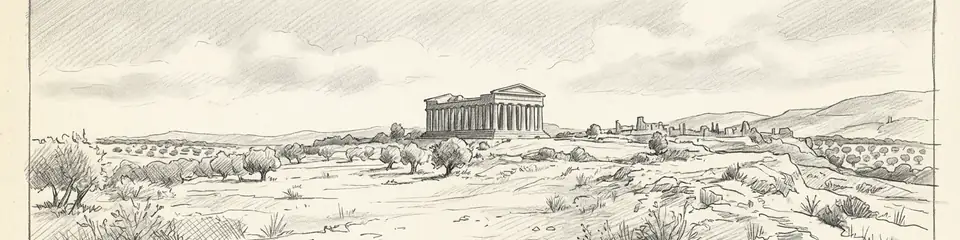
Graphite pencil sketch banner of Valley of the Temples

“Agrigento concentrates western Greek monumental religion at a scale unmatched elsewhere in Sicily and rare even in mainland Greece.”

所在地

概要

The Valley of the Temples occupies a sandstone ridge south of modern Agrigento (ancient Akragas / Agrigentum) on Sicily’s southern coast. Founded by Geloan colonists c. 580 BCE, Akragas became one of the richest Greek cities of the west. In the 5th century BCE its tyrants and citizens raised a line of monumental Doric temples along the city’s southern wall — today named for Concordia, Juno Lacinia, Heracles, Olympian Zeus (the unfinished Olympieion with giant atlas figures), Castor and Pollux, and Vulcan.

The Temple of Concordia is among the best-preserved Doric temples anywhere, owing to its medieval conversion into a church. Excavation and anastylosis from the 18th century onward, and the modern archaeological park, make the ridge a continuous outdoor museum. UNESCO inscribed the area in 1997. Pair with Paestum and the Acropolis of Athens for complementary Doric sacred landscapes.
重要性

Agrigento concentrates western Greek monumental religion at a scale unmatched elsewhere in Sicily and rare even in mainland Greece. Concordia’s survival and the Olympieion’s atlases are textbook cases of Doric design, patronage, and later Christian reuse.

証拠と解釈

確立された事実と議論が続く事柄を区別する。

確立された事実

2
  • Standing Doric temples, dated architectural sculpture, and city-wall archaeology document the 5th-century BCE monumental programme of Akragas.
  • Medieval conversion of Concordia into a church explains its exceptional column-and-entablature survival.

学術的推論

1
  • The Olympieion’s giant atlas figures advertised tyrannical and civic ambition after victories over Carthage.

コミュニティ写真

あなたの体験を共有する

この遺跡を訪れたことがありますか?写真をアップロードして魅力を共有しましょう。

関連記事

このページの引用方法

Atlas Anatolia. (580). Valley of the Temples. Atlas Anatolia. https://atlasanatolia.com/ja/site/agrigento

コンテンツはCC BY-SA 4.0ライセンスの下で提供されています — 再利用の際は出典表示が必要です。

グラフ

関連する遺跡やストーリーへのつながり。

出典

  • Agrigento — De Miro, Ernesto (2000)
  • UNESCO — Archaeological Area of Agrigentoリンク

よくある質問

Valley of the Templesはどこにありますか?

Valley of the TemplesはItalyに位置しています。

Valley of the Templesの年代はいつ頃ですか?

Valley of the Templesはおよそ580 紀元前 – 200 紀元前のものとされています。

Valley of the Templesはどの文明に関連していますか?

Valley of the TemplesはGreek文明に関連しています。

Valley of the Templesが重要な理由は何ですか?

Agrigento concentrates western Greek monumental religion at a scale unmatched elsewhere in Sicily and rare even in mainland Greece.

Valley of the Templesはユネスコ世界遺産ですか?

はい — Valley of the Templesはユネスコ世界遺産に登録されています。