
コンテンツへスキップ
Atlas Anatolia
ニュースIce Age teeth in Sulawesi push betel-nut use back as far as 25,000 yearsRoman mosaic and Eros head uncovered in the basilica at Pompeiopolis, Kastamonu
Valley of the Kings — Egypt

Wikimedia Commons (CC BY-SA)

Country Record

Oldest Necropolis in Egypt

ネクロポリスUNESCO注目

Valley of the Kings

Seyfi Cem Baskin

وادي الملوك1539 紀元前 – 1075 紀元前

The Valley of the Kings, ancient Egypt's primary royal necropolis during the New Kingdom (c. 1539–1075 BCE), conceals over 60 elaborately decorated tombs, including that of Tutankhamun, revealing profound insights into pharaonic afterlife beliefs and funerary practices.

322
関心 79

所在地

Luxor Governorate · Upper Egypt · エジプト

25.74°N · 32.60°E · アフリカ

Period

New Kingdom, c. 1539–1075 BCE

Civilization

Ancient Egyptian (18th–20th Dynasties)

Function

Royal necropolis for pharaohs and select nobles

Number of Tombs

Over 60 identified, numbered KV1–KV65

Discovered

Known since antiquity; modern exploration began 18th century; most famous discovery 1922 by Howard Carter

Status

UNESCO World Heritage Site (part of Ancient Thebes with its Necropolis, listed 1979)

Graphite pencil sketch banner of Valley of the Kings

“As the final resting place of Egypt's New Kingdom pharaohs, the Valley of the Kings encapsulates the zenith of imperial power, religious expression, and artistic achievement.”

所在地

概要

Historical Context

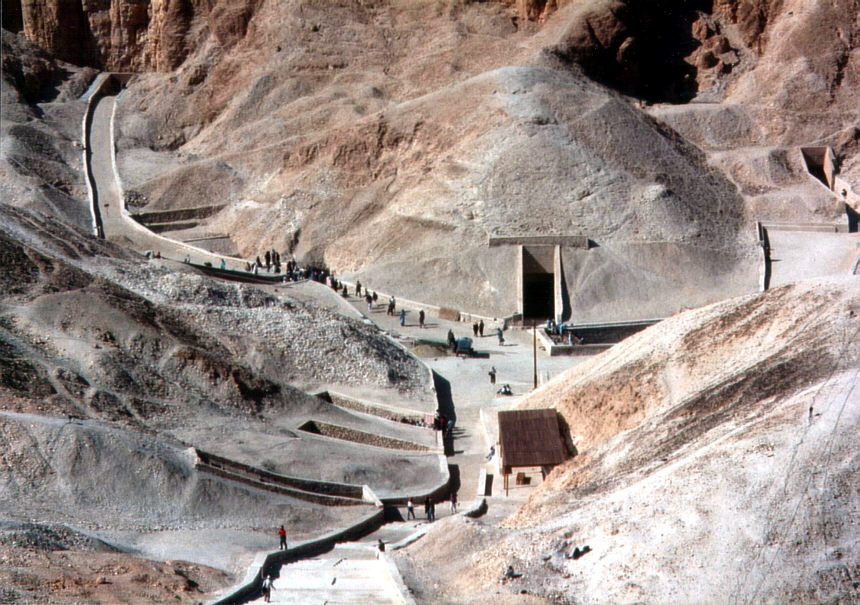
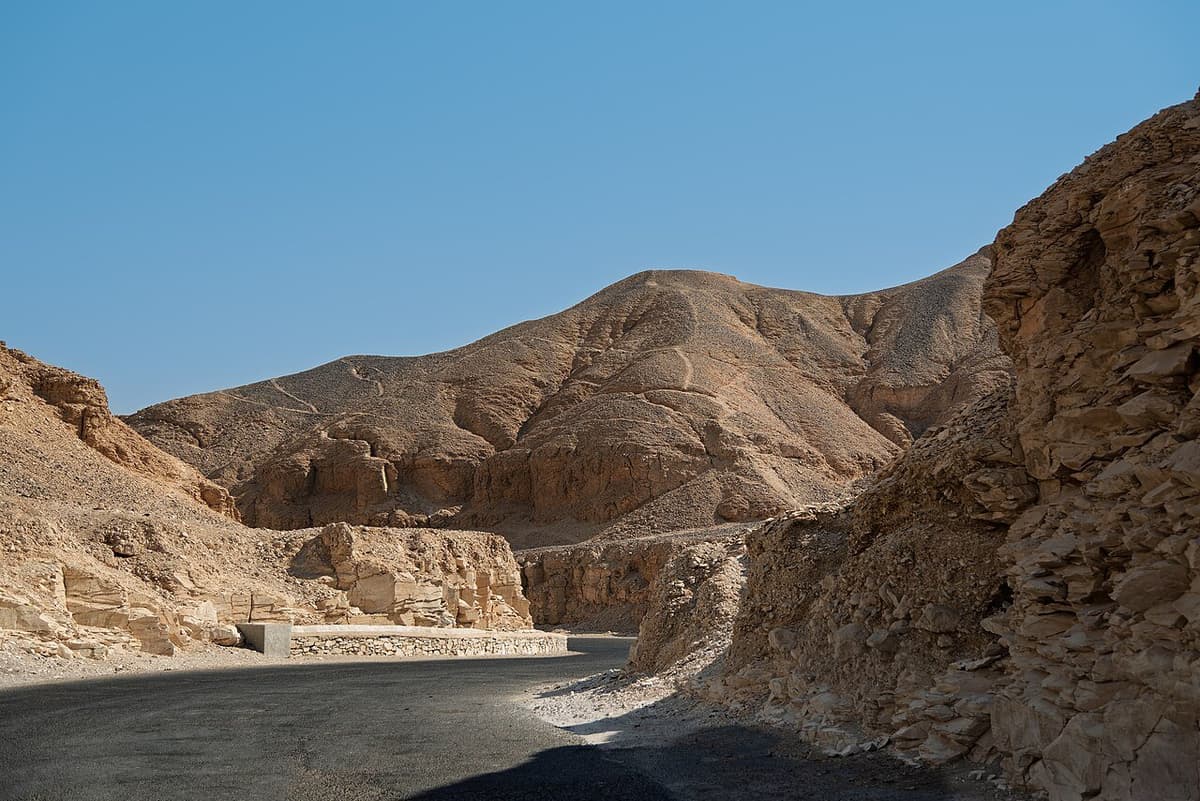
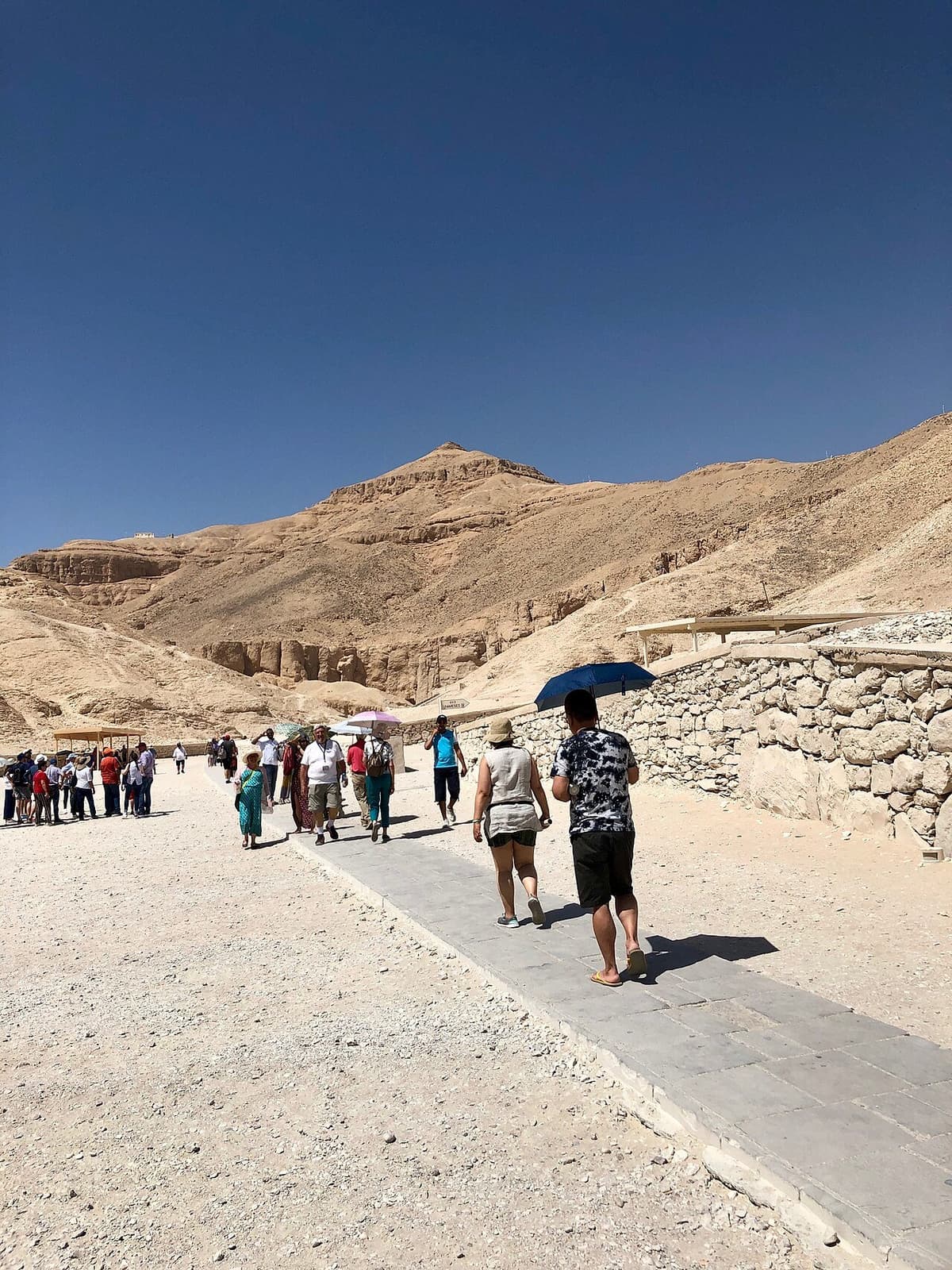
The Valley of the Kings (Wadi al-Muluk) served as the burial ground for pharaohs and powerful nobles of the New Kingdom (18th–20th Dynasties, c. 1539–1075 BCE). Located on the west bank of the Nile opposite Thebes (modern Luxor), the site was selected for its secluded, pyramid-shaped mountain, al-Qurn, which may have symbolised the primeval mound of creation. The shift from pyramid complexes to hidden rock-cut tombs likely reflected concerns about tomb robbery and the evolving theology of the sun god Ra’s nocturnal journey through the underworld.

Architecture and Layout

The tombs are carved deep into the limestone cliffs, typically comprising a series of corridors, chambers, and a burial hall, with walls adorned with intricate reliefs and paintings from funerary texts such as the Amduat and the Book of Gates. The earliest tombs, like that of Thutmose III (KV34), feature a cartouche-shaped burial chamber, while later Ramesside tombs, such as Seti I’s (KV17), are more extensive, with vaulted ceilings and painted astronomical scenes. The subtle variations in design reflect dynastic changes and individual preferences, though all aim to guide the deceased king through the afterlife.
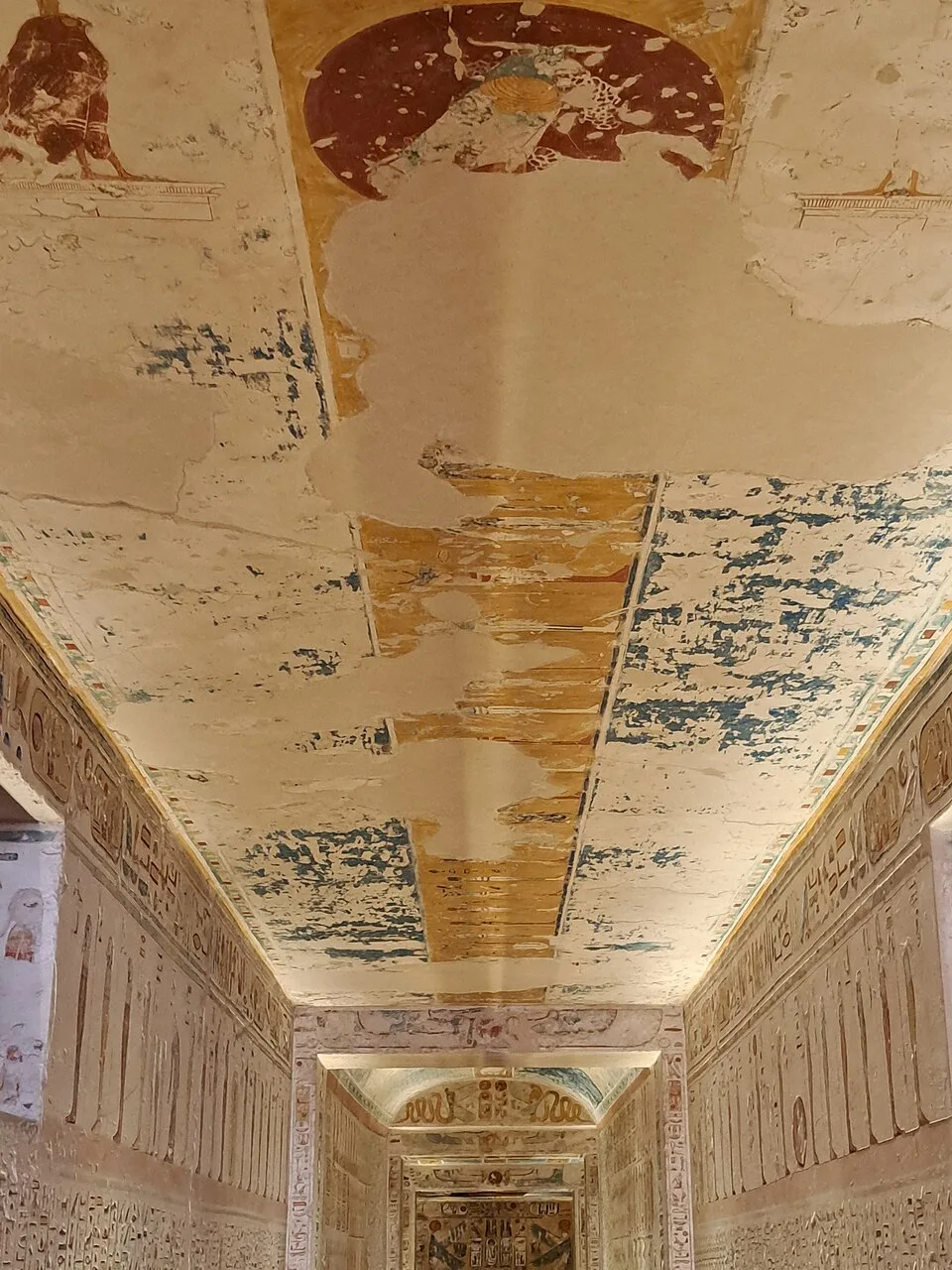
Entrance of Ramses IV tomb in the Valley of the Kings (KV2)
Entrance of Ramses IV tomb in the Valley of the Kings (KV2) | Strike28 (CC BY-SA 4.0)
"At first I could see nothing, the hot air escaping from the chamber causing the candle flames to flicker. Presently, as my eyes grew accustomed to the light, details of the room within emerged slowly from the mist, strange animals, statues, and gold — everywhere the glint of gold."
— Howard Carter, on opening Tutankhamun's tomb (KV62), 26 November 1922

Discovery and Excavation

Though known locally since antiquity, systematic exploration began with early 19th-century figures like Giovanni Belzoni, who cleared several tombs including that of Seti I. The valley’s most celebrated discovery, the virtually intact tomb of Tutankhamun (KV62), was made by Howard Carter in 1922, revolutionising Egyptology with its wealth of grave goods. Subsequent work by Theodore Davis and the Theban Mapping Project has expanded the corpus, most notably with the excavation of KV5, the massive tomb for the sons of Ramesses II, a project led by Kent Weeks from 1995 onward.
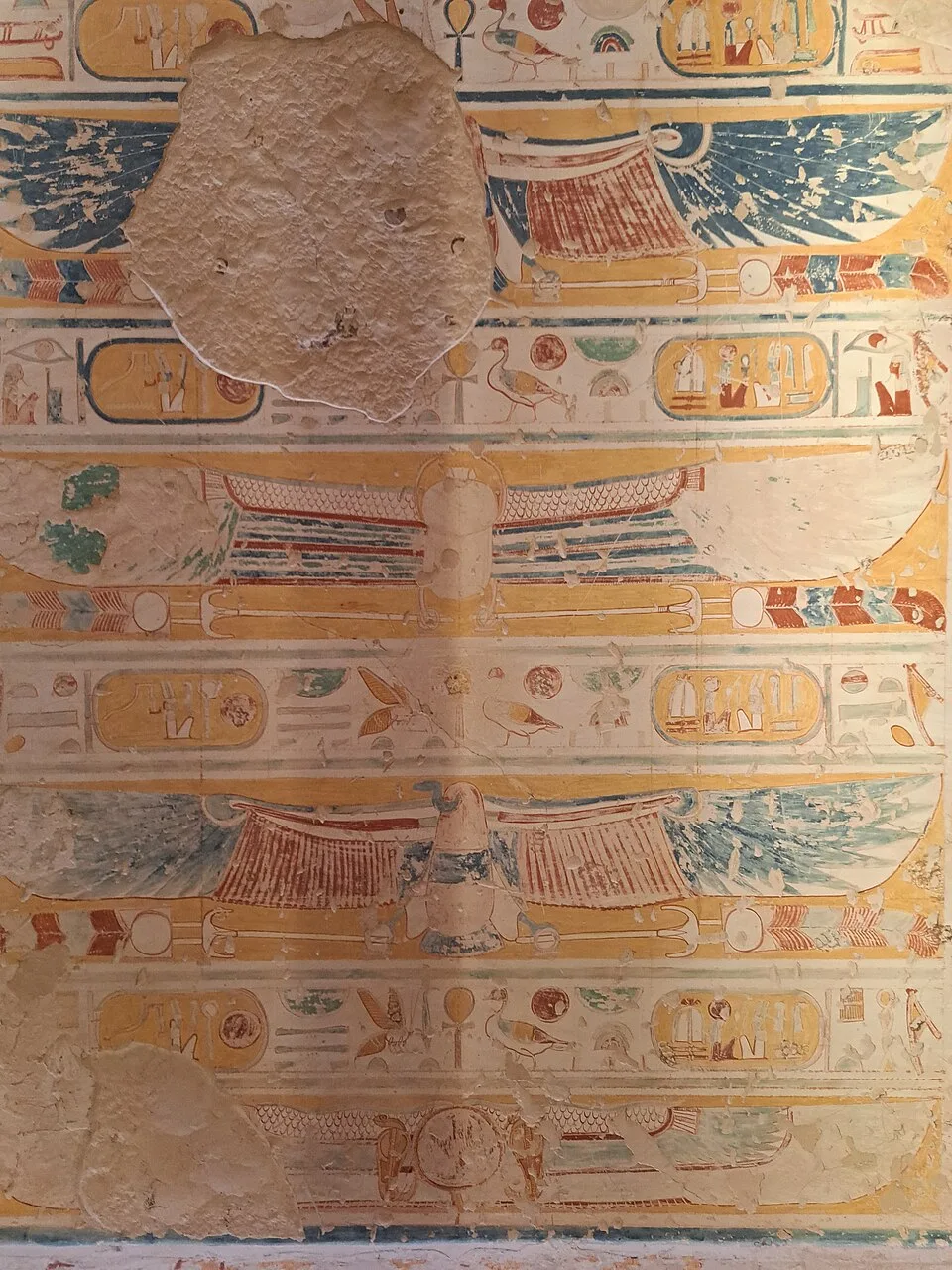
Entrance wall of Ramses IV tomb in the Valley of the Kings (KV2)
Entrance wall of Ramses IV tomb in the Valley of the Kings (KV2) | Strike28 (CC BY-SA 4.0)

Significance

The Valley of the Kings provides an unparalleled window into the mortuary ideology, artistic conventions, and political history of ancient Egypt’s most prosperous era. The preserved texts and depictions detail the dangerous solar barque journey and the weighing of the heart ceremony, offering direct evidence of royal afterlife beliefs. Ongoing research, including remote sensing studies and conservation efforts, continues to refine our understanding, while the valley remains a focal point for debates on chronology, genealogy, and the possibility of undiscovered tombs.
重要性

As the final resting place of Egypt's New Kingdom pharaohs, the Valley of the Kings encapsulates the zenith of imperial power, religious expression, and artistic achievement. Its tombs, rich with textual and iconographic data, are foundational for reconstructing ancient Egyptian cosmology, royal succession, and international relations. The site's enduring allure drives both scholarly inquiry and global cultural heritage preservation.

証拠と解釈

確立された事実と議論が続く事柄を区別する。

確立された事実

3
  • The valley was used for royal burials from the early 18th Dynasty (Thutmose I) until the late 20th Dynasty (Ramesses XI).
  • Tomb KV62, belonging to Tutankhamun, contained over 5,000 intact artifacts, including a solid gold funerary mask.
  • The tomb of Seti I (KV17) extends over 137 meters and includes a unique ‘astronomical’ ceiling depicting the night sky.

学術的推論

2
  • The valley’s isolation and hidden entrances likely aimed to deter tomb robbers, though most tombs were looted in antiquity.
  • The selection of the location was influenced by the natural pyramid-shaped peak of al-Qurn, associated with the solar cult.

議論のある解釈

2
  • The identity of the individual interred in KV55 remains disputed, with hypotheses ranging from Akhenaten to Smenkhkare.
  • The existence of additional undiscovered tombs, such as that of Ramesses VIII or Nefertiti, is subject to ongoing geophysical investigation.

発見と発掘調査

Conservation and documentation programs

指揮 Egyptian Ministry of Antiquities and international teams

Ongoing efforts by the Egyptian Ministry of Antiquities, international partners, and initiatives such as the Theban Mapping Project focus on stabilising structures, managing tourism, and digitally recording wall paintings and inscriptions for posterity.

1817–1820

Belzoni's explorations

指揮 Giovanni Belzoni

Giovanni Belzoni uncovered several major tombs, including those of Seti I (KV17) and Ramesses I (KV16), using hydraulic pumps and brute force.

1902–1914

Theodore Davis's concessions

指揮 Theodore M. Davis

Theodore M. Davis held the concession for the Valley of the Kings and discovered several tombs, notably KV46 (Yuya and Tjuyu) and KV55, though his methods were often hasty.

1922–1932

Carter's excavation of KV62

指揮 Howard Carter

Howard Carter’s systematic clearance of Tutankhamun’s tomb revealed the only largely intact royal burial, yielding thousands of artifacts and a wealth of information on New Kingdom funerary practices.

1995

Rediscovery and excavation of KV5

指揮 Kent R. Weeks (Theban Mapping Project)

Kent R. Weeks and the Theban Mapping Project rediscovered KV5, the massive tomb for the sons of Ramesses II, uncovering over 120 corridors and chambers in the largest tomb in the valley.

コミュニティ写真

あなたの体験を共有する

この遺跡を訪れたことがありますか?写真をアップロードして魅力を共有しましょう。

関連記事

このページの引用方法

Atlas Anatolia. (1539). Valley of the Kings. Atlas Anatolia. https://atlasanatolia.com/ja/site/valley-of-the-kings

コンテンツはCC BY-SA 4.0ライセンスの下で提供されています — 再利用の際は出典表示が必要です。

グラフ

関連する遺跡やストーリーへのつながり。

出典

  • Reeves, N. and Wilkinson, R.H. (1996), The Complete Valley of the Kings — Nicholas Reeves and Richard H. Wilkinson (1996)
  • Dodson, A. (2016), The Royal Tombs of Ancient Egypt — Aidan Dodson (2016)
  • Reeves, N. (2015), 'The Burial of Nefertiti?' Amarna Royal Tombs Project — Nicholas Reeves (2015)
  • Weeks, K.R. (2000), 'KV5: A Preliminary Report on the Excavation of the Tomb of the Sons of Ramesses II', Annales du Service des Antiquités de l'Égypte — Kent R. Weeks (2000)
  • UNESCO World Heritage List, 'Ancient Thebes with its Necropolis' — UNESCOリンク
  • Theban Mapping Project, 'Valley of the Kings' — Theban Mapping Projectリンク

よくある質問

Valley of the Kingsはどこにありますか?

Valley of the KingsはLuxor Governorate, Upper Egypt, Egyptに位置しています。

Valley of the Kingsの年代はいつ頃ですか?

Valley of the Kingsはおよそ1539 紀元前 – 1075 紀元前のものとされています。

Valley of the Kingsはどの文明に関連していますか?

Valley of the KingsはAncient Egyptian文明に関連しています。

Valley of the Kingsが重要な理由は何ですか?

As the final resting place of Egypt's New Kingdom pharaohs, the Valley of the Kings encapsulates the zenith of imperial power, religious expression, and artistic achievement.

Valley of the Kingsはユネスコ世界遺産ですか?

はい — Valley of the Kingsはユネスコ世界遺産に登録されています。