
Vai al contenuto
Atlas Anatolia
NotizieIce Age teeth in Sulawesi push betel-nut use back as far as 25,000 yearsRoman mosaic and Eros head uncovered in the basilica at Pompeiopolis, Kastamonu
Sandstone cave temples in the cliff above Agastya Lake at Badami, Karnataka

Wikimedia Commons (CC BY-SA 4.0)

Complesso

Badami Cave Temples

Seyfi Cem Baskin

ಬಾದಾಮಿ ಗುಹಾಲಯಗಳು540 d.C. – 700 d.C.

Four sandstone cave temples cut above Agastya Lake at Badami (ancient Vatapi), the Early Chalukya capital in Karnataka. Cave 3 carries a 578 CE inscription of Mangalesha.

21
Interesse 58

Posizione

India

15.92°N · 75.68°E · Asia

Caves

Four numbered excavations: Shaiva, Vaishnava, Jain

Cave 3 date

Mangalesha inscription, Shaka 500 / 578 CE

Capital

Early Chalukya Vatapi, Bagalkot district

Material

Sandstone cliff above Agastya Lake

Badami is the dated rock-cut capital of the Early Chalukyas — Cave 3’s 578 CE record is a rare absolute date in Deccan cave sculpture.”

Posizione

Panoramica

Badami, the Early Chalukya capital known in inscriptions as Vatapi, sits in a sandstone gorge in Bagalkot district, Karnataka. Four numbered caves open in the western cliff above the Bhutanatha tank (Agastya Lake): Cave 1 Shaiva, Caves 2 and 3 Vaishnava, Cave 4 Jain. Pillars, bracket figures, and ceiling reliefs of Vishnu, Shiva, and Jinas are cut from the living rock rather than assembled as structural temples.

Cave 3 is historically pinned: an inscription of Mangalesha, brother of Kirtivarman I, records a Vaishnava excavation in Shaka 500 (578 CE). James Burgess and later the ASI documented the caves; the Bhutanatha group on the opposite shore is structural, not cave-cut, and belongs in the same landscape file. The capital also yields the Kappe Arabhatta inscription in early Kannada.
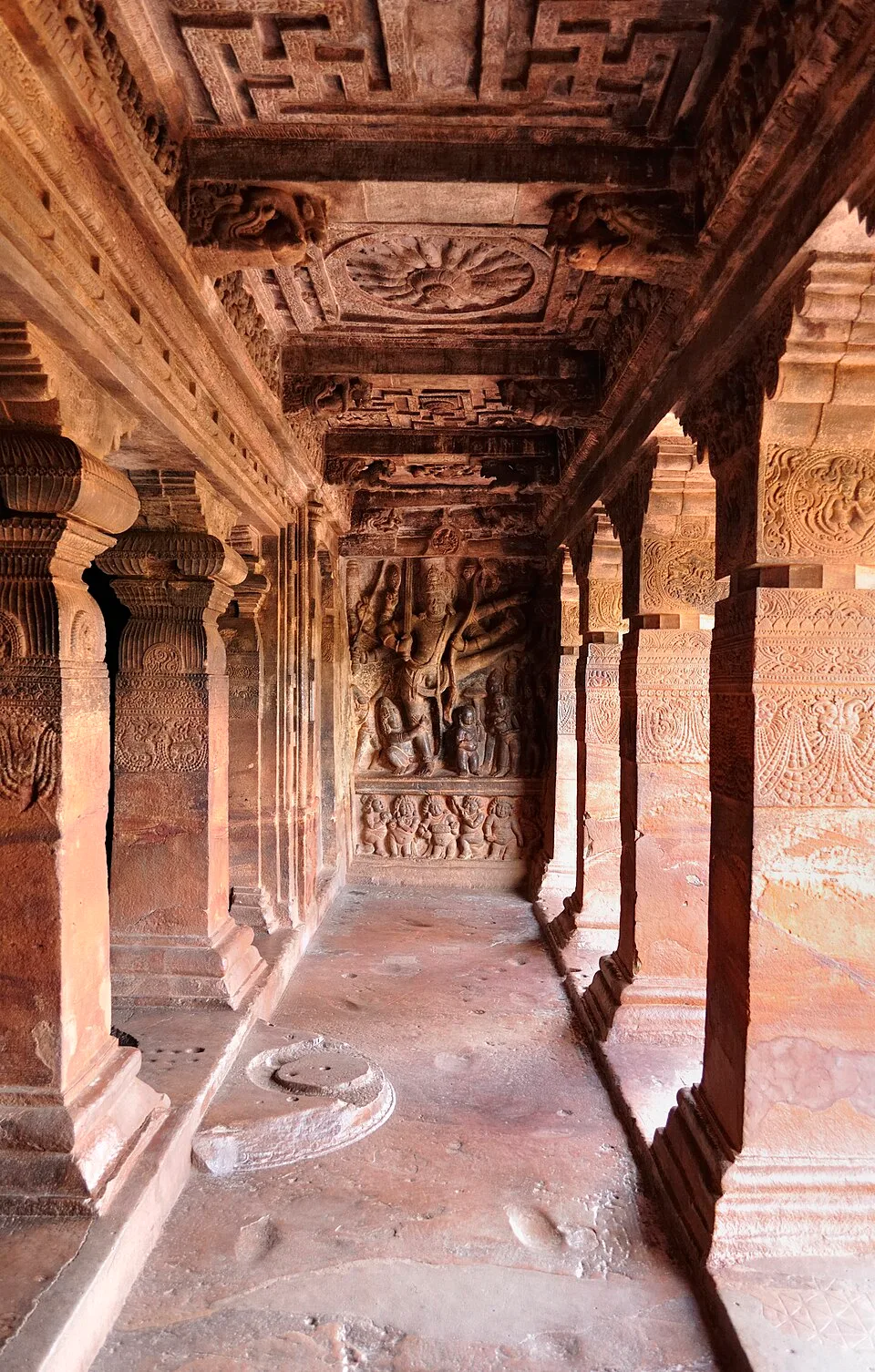
Rock cut Cave 2, Badami
Rock cut Cave 2, Badami | Dey.sandip (CC BY 3.0)
"In the 500th year of the Saka kings, this Vaishnava cave was caused to be excavated by Mangalesha, beloved younger brother of Kirtivarman, in the rock of Vatapi."
— Mangalesha inscription, Badami Cave 3, Shaka 500 / 578 CE (Burgess/Fleet tradition)

Badami is not separately inscribed by UNESCO; it is grouped with Aihole and Pattadakal on India’s tentative “Evolution of Temple Architecture” list. Pair the gorge with Aihole for structural experiments and Pattadakal for the 8th-century coronation ensemble, and with Elephanta Caves for related Deccan Shaiva rock-cut sculpture.
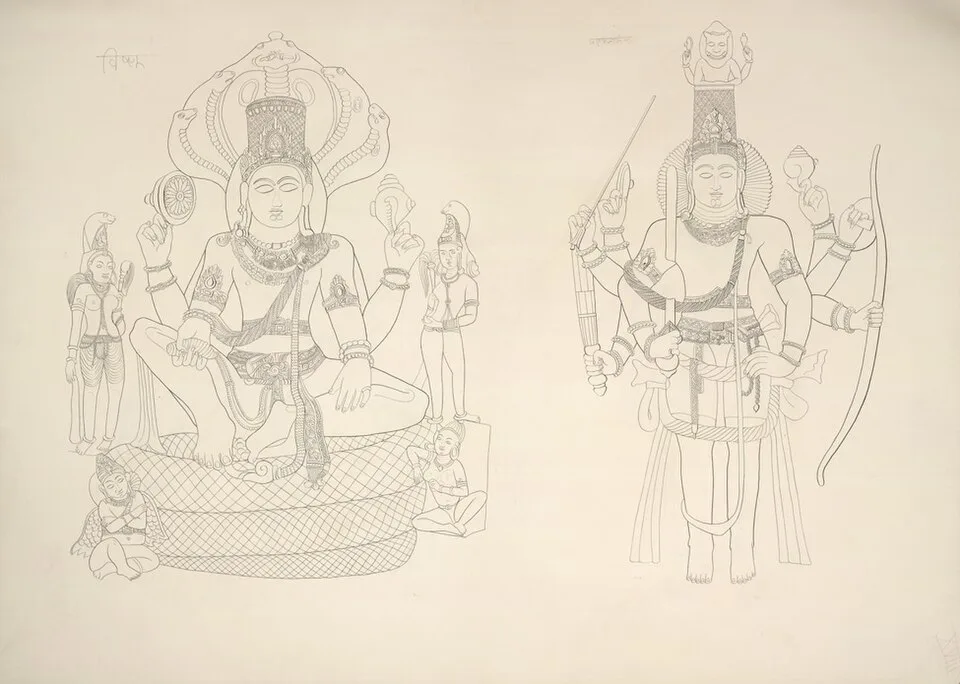
An 1853 sketch of Vaikuntha Vishnu left and Ashtabhuja Vishnu at Cave 3, Badami Hindu Cave Temple Karnataka
An 1853 sketch of Vaikuntha Vishnu left and Ashtabhuja Vishnu at Cave 3, Badami Hindu Cave Temple Karnataka | Unknown 1853 (Public domain)

The climb is a short stair from the tank. Cave 3’s dated inscription is the chronological anchor for the whole Early Chalukya cave series, not a caption for every relief in Caves 1–4.

Perché è importante

Badami is the dated rock-cut capital of the Early Chalukyas — Cave 3’s 578 CE record is a rare absolute date in Deccan cave sculpture. It also shows Hindu and Jain programmes sharing one cliff, so “the caves” are a sequence of commissions, not a single shrine.

Evidenze e interpretazione

Distinguere ciò che è ben consolidato da ciò che rimane dibattuto.

Fatti ben consolidati

2
  • The Cave 3 inscription of Mangalesha dates a major Vaishnava excavation to 578 CE.
  • Plans and iconography distinguish Shaiva, Vaishnava, and Jain programmes on the same cliff.

Deduzioni accademiche

1
  • The caves belong to a capital landscape with the tank, Bhutanatha temples, and hill forts rather than an isolated hermitage.

Foto della comunità

Condividi la tua esperienza

Hai visitato questo sito? Carica le tue foto per aiutare gli altri a scoprirlo.

Come citare questa pagina

Atlas Anatolia. (540). Badami Cave Temples. Atlas Anatolia. https://atlasanatolia.com/it/site/badami-cave-temples

Contenuto con licenza CC BY-SA 4.0 — è richiesta l'attribuzione in caso di riutilizzo.

Fonti

  • Report on the Elura Cave Temples and the Brahmanical and Jaina Caves in Western IndiaBurgess, James (1883)
  • Temple Architecture and Art of the Early ChalukyasMichell, George (2014)

Domande frequenti

Dove si trova Badami Cave Temples?

Badami Cave Temples si trova in India.

A quando risale Badami Cave Temples?

Badami Cave Temples risale all'incirca al 540 d.C. – 700 d.C..

Quali civiltà sono associate a Badami Cave Temples?

Badami Cave Temples è associato alla civiltà Chalukya.

Perché Badami Cave Temples è importante?

Badami is the dated rock-cut capital of the Early Chalukyas — Cave 3’s 578 CE record is a rare absolute date in Deccan cave sculpture.

Badami Cave Temples è un sito Patrimonio Mondiale dell'UNESCO?

Badami Cave Temples non è attualmente iscritto nella lista del Patrimonio Mondiale dell'UNESCO.