
Vai al contenuto
Atlas Anatolia
NotizieIce Age teeth in Sulawesi push betel-nut use back as far as 25,000 yearsRoman mosaic and Eros head uncovered in the basilica at Pompeiopolis, Kastamonu
Apsidal Durga temple at Aihole, Karnataka, with peristyle and shikhara

Wikimedia Commons (CC BY-SA 4.0)

Tempio

Aihole

Seyfi Cem Baskin

ಐಹೊಳೆ500 d.C. – 800 d.C.

An Early Chalukya temple town on the Malaprabha in Karnataka, with more than a hundred shrines including the apsidal Durga temple — a field school for 6th–8th century Deccan architecture.

21
Interesse 55

Posizione

India

16.02°N · 75.88°E · Asia

Temples

100+ shrines in Malaprabha clusters, 6th–8th centuries CE

Durga temple

Apsidal hall with peristyle; name refers to a later fort wall

Meguti

Jain temple inscribed 634 CE under Pulakeshin II

Status

ASI protected; tentative UNESCO with Badami–Pattadakal

Aihole is where Early Chalukya builders tried plan types that later harden into “north” and “south” Indian temple languages.”

Posizione

Panoramica

Aihole (Aivalli) occupies a bend of the Malaprabha in Bagalkot district, about 13 km from Pattadakal. The Early Chalukyas of Badami developed the settlement as a workshop of temple types from the 6th through the 8th centuries CE. Henry Cousens counted well over a hundred structures; later ASI surveys treat clusters rather than a single “temple city” street.

The Durga temple — named for a later fortification (durga), not necessarily the goddess — is an apsidal hall with a peristyle, often read as a stone translation of Buddhist chaitya plans into a Hindu programme. Nearby, the Lad Khan temple, Ravana Phadi cave, Meguti Jain temple (inscribed 634 CE under Pulakeshin II), and Kontigudi group show experiments in mandapa, tower, and rock-cut shrine. James Fergusson and Cousens published 19th-century plans; George Michell’s later studies remain the standard walking archaeology.
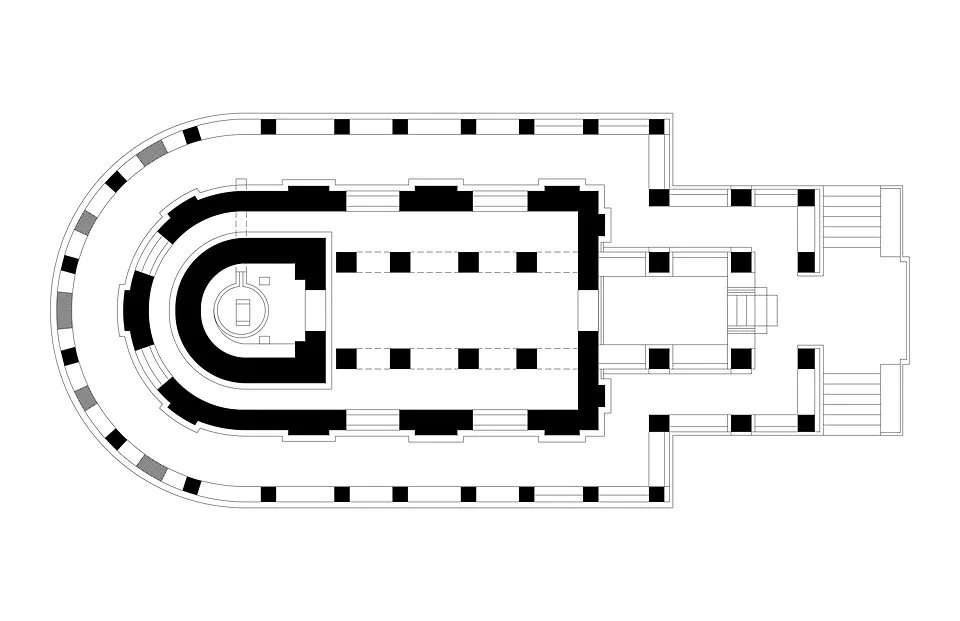
Durga temple, Aihole Karnataka
Durga temple, Aihole Karnataka | Ms Sarah Welch (CC0)
"The beloved son of the glorious Pulakeshin, whose horses drank the water of the Ganga and Yamuna, whose fame is sung by the dwellers of the three worlds, caused this temple of Jinendra to be built."
— Ravikirti, Meguti temple inscription at Aihole, 634 CE (Fleet, Indian Antiquary; public-domain tradition)

Aihole is an ASI protected landscape, not a UNESCO World Heritage property on its own. It sits on India’s tentative list with Badami and Pattadakal as “Evolution of Temple Architecture.” Walk it with Pattadakal for the commemorative ensemble and the Badami Cave Temples for the sandstone capital gorge.
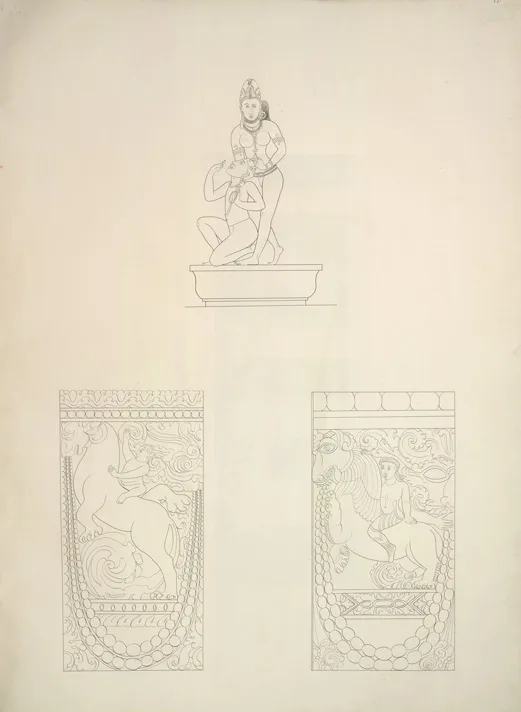
An 1853 sketch of 7th century sculpture in Durga temple Aihole Karnataka
An 1853 sketch of 7th century sculpture in Durga temple Aihole Karnataka | Unknown 1853 (Public domain)

Visitor paths concentrate on the Durga–Lad Khan core; many outlying shrines remain unstaffed, so the published count of temples is larger than the circuit most people walk.

Perché è importante

Aihole is where Early Chalukya builders tried plan types that later harden into “north” and “south” Indian temple languages. The Meguti inscription of 634 CE also fixes Pulakeshin II in a dated architectural landscape, not only in copper-plate genealogy.

Evidenze e interpretazione

Distinguere ciò che è ben consolidato da ciò che rimane dibattuto.

Fatti ben consolidati

2
  • The Meguti temple inscription of 634 CE dates a standing Jain shrine to Pulakeshin II’s reign.
  • Measured plans of the Durga, Lad Khan, and cave groups document a dense Early Chalukya temple landscape on the Malaprabha.

Interpretazioni dibattute

1
  • Whether the Durga temple’s apse copies Buddhist chaityas directly, or restates a broader apsidal shrine tradition, remains argued.

Foto della comunità

Condividi la tua esperienza

Hai visitato questo sito? Carica le tue foto per aiutare gli altri a scoprirlo.

Come citare questa pagina

Atlas Anatolia. (500). Aihole. Atlas Anatolia. https://atlasanatolia.com/it/site/aihole

Contenuto con licenza CC BY-SA 4.0 — è richiesta l'attribuzione in caso di riutilizzo.

Fonti

  • The Chalukyan Architecture of the Kanarese DistrictsCousens, Henry (1926)
  • Temple Architecture and Art of the Early ChalukyasMichell, George (2014)

Domande frequenti

Dove si trova Aihole?

Aihole si trova in India.

A quando risale Aihole?

Aihole risale all'incirca al 500 d.C. – 800 d.C..

Quali civiltà sono associate a Aihole?

Aihole è associato alla civiltà Chalukya.

Perché Aihole è importante?

Aihole is where Early Chalukya builders tried plan types that later harden into “north” and “south” Indian temple languages.

Aihole è un sito Patrimonio Mondiale dell'UNESCO?

Aihole non è attualmente iscritto nella lista del Patrimonio Mondiale dell'UNESCO.