

Overview
Pattadakal (Pattadakallu) sits on the Malaprabha in Bagalkot district, Karnataka, downstream from the Early Chalukya centres at Aihole and Badami. The main group — Virupaksha, Mallikarjuna, Sangameshwara, Galaganatha, and neighbours — was a royal commemorative landscape in the 7th–8th centuries CE. Queen Lokamahadevi’s Virupaksha temple (c. 740) celebrates Vikramaditya II’s victories; its inscriptions name architects from the southern tradition.
The site is famous for placing nagara (curvilinear northern) and dravida (pyramidal southern) shikharas in one compound, so students can walk the two languages of Indian temple elevation in a single morning. A Jaina temple stands slightly apart. George Michell and the ASI published plans and conservation notes; UNESCO listed the Group of Monuments at Pattadakal in 1987 (ref. 239).
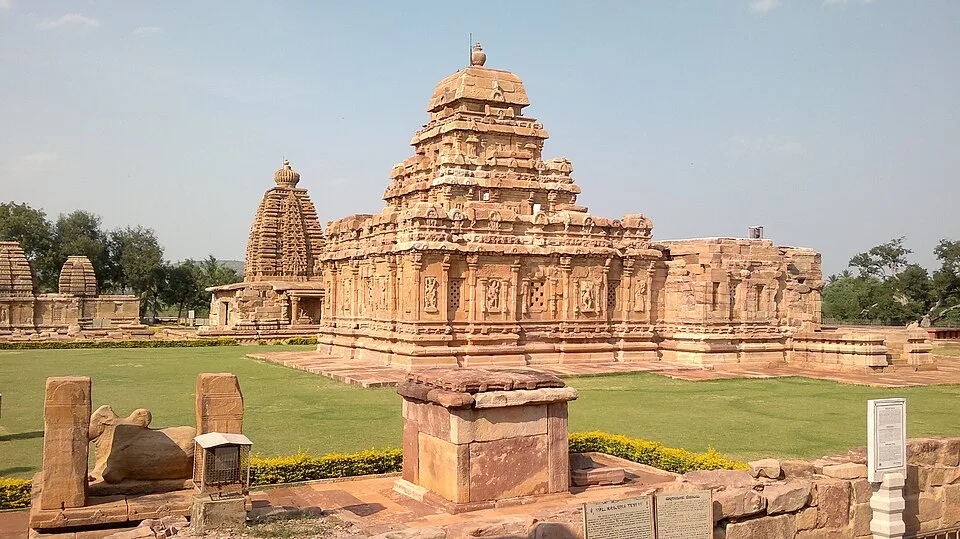
"Pattadakal represents the high point of an eclectic art which, in the 7th and 8th centuries under the Chalukya dynasty, achieved a harmonious blend of architectural forms from northern and southern India."
— UNESCO, Group of Monuments at Pattadakal (World Heritage List, 1987)
Read with Aihole and the Badami Cave Temples for the rest of the Early Chalukya river circuit, and with Hampi for a later Vijayanagara sacred landscape in the same state.
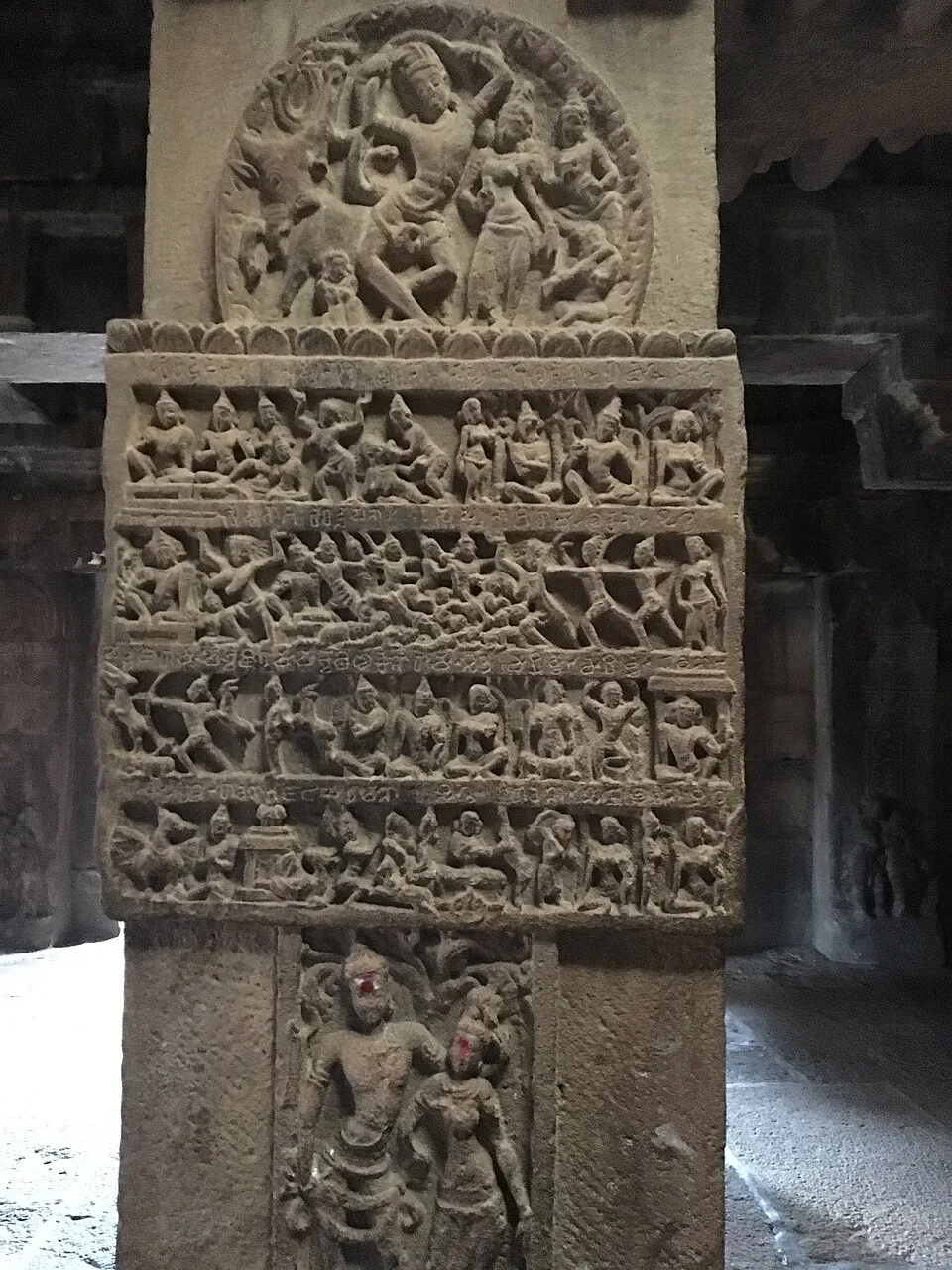
Aihole and Badami complete the Early Chalukya circuit; Pattadakal is the commemorative middle term, not an isolated “style museum.”