
Skip to content
Atlas AnatoliaAtlas Anatolia
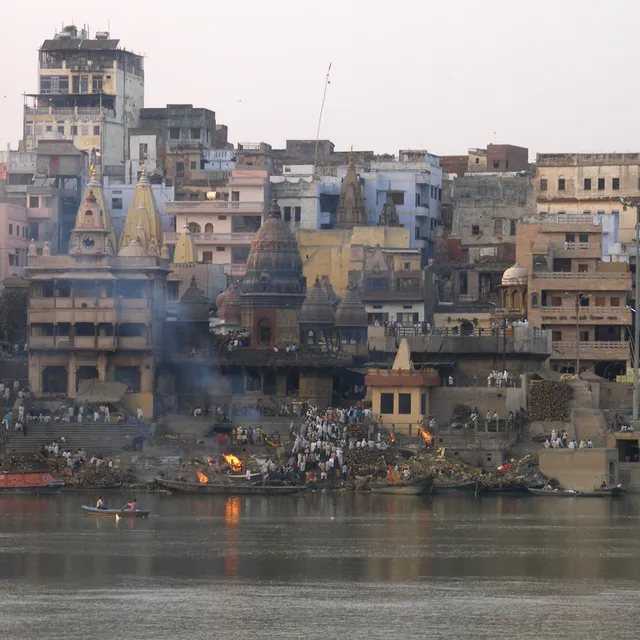
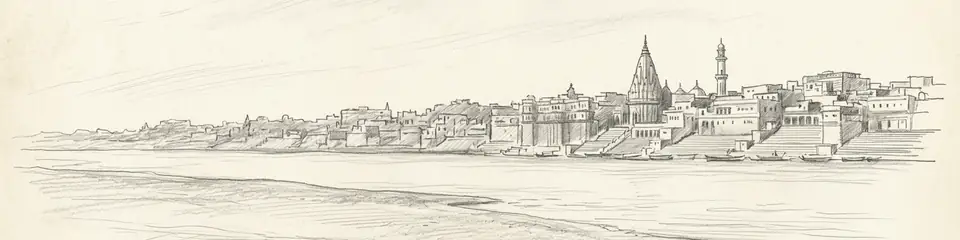
The stone ghats and Ganges riverfront at Varanasi at dawn

Country Record

Longest Continuously Occupied Site in India

Varanasi

वाराणसी1200 BCE – 1900 CE

Ancient names

Kashi, Banaras — "oldest living city" tradition

Ghats

~80 stone steps along the Ganges riverfront

Sarnath

Buddha's first sermon preached ~8 km northeast

Kashi Vishwanath

Major Shiva temple; current shrine largely 18th century

Varanasi is the living heart of Hindu sacred geography — a city where ancient ritual, death, and river worship continue uninterrupted in urban form.”

Location

Overview

Varanasi (Kashi, "City of Light") lies on the left bank of the Ganges River in Uttar Pradesh, northern India. Textual and archaeological evidence suggests settlement from the Iron Age onward; the city is central to Hindu cosmology as a tirtha where bathing in the Ganges grants spiritual merit and death within the city offers moksha (liberation). Buddha preached his first sermon at nearby Sarnath, linking Varanasi to Buddhist origins as well.

The riverfront ghats — stone steps and platforms numbering around 80 — structure urban life: Dashashwamedh Ghat for daily Ganga Aarti, Assi Ghat at the southern end, Manikarnika and Harishchandra Ghats for cremation. The Kashi Vishwanath Temple (rebuilt repeatedly, current shrine largely 18th century under the Maratha queen Ahilyabai Holkar) honours Shiva as Vishwanath, "Lord of the Universe." Narrow lanes (galis) behind the ghats preserve dense temple and residential fabric.

Varanasi has been a centre of Sanskrit learning, music (Benares gharana), and silk weaving. While not a single UNESCO monument, the living city is inscribed in intangible and cultural heritage discussions and ranks among the most visited destinations in India for both pilgrims and international travellers.
Why It Matters

Varanasi is the living heart of Hindu sacred geography — a city where ancient ritual, death, and river worship continue uninterrupted in urban form. Its ghats and proximity to Sarnath link the origins of Buddhism to the oldest traditions of the Ganges plain.

Stay curious

New stories and sites, once a month. No spam.

Evidence & Interpretation

Distinguishing what is well-established from what remains debated.

Well-Established Facts

2
  • Archaeological excavations at Rajghat and nearby sites recover Iron Age and early historic pottery and structures.
  • Sarnath Ashokan pillar and Buddhist monuments document the city's role in early Buddhism from the 3rd century BCE.

Scholarly Inferences

1
  • Continuous urban occupation since the 1st millennium BCE is widely argued but difficult to prove uninterrupted across the entire ghats zone.

Debated Interpretations

1
  • Claims of Varanasi as the "oldest continuously inhabited city" depend on definition of continuity and comparison with Jericho, Damascus, and other candidates.

More Photos

Museum Artifacts

Community Photos

Share your experience

Have you visited this site? Upload your photos to help others discover it.

How to cite this page

Atlas Anatolia. (1200). Varanasi. Atlas Anatolia. https://atlasanatolia.com/site/varanasi

Content licensed CC BY-SA 4.0 — attribution required when reusing.

Knowledge Graph

Connections to related sites and stories.

Sources

  • Banaras: City of LightEck, Diana L. (1982)
  • Banaras: Making of India's Heritage CitySingh, Rana P. B. (2009)

Research Papers

Frequently Asked Questions

Where is Varanasi located?

Varanasi is located in India.

How old is Varanasi?

Varanasi dates to approximately 1200 BCE – 1900 CE.

Which civilizations are associated with Varanasi?

Varanasi is associated with the Vedic Indian, Mauryan, Gupta, Mughal.

Why is Varanasi important?

Varanasi is the living heart of Hindu sacred geography — a city where ancient ritual, death, and river worship continue uninterrupted in urban form.

Is Varanasi a UNESCO World Heritage Site?

Varanasi is not currently inscribed on the UNESCO World Heritage List.