

Aller au contenu
Atlas Anatolia
ActualitésIce Age teeth in Sulawesi push betel-nut use back as far as 25,000 yearsRoman mosaic and Eros head uncovered in the basilica at Pompeiopolis, Kastamonu
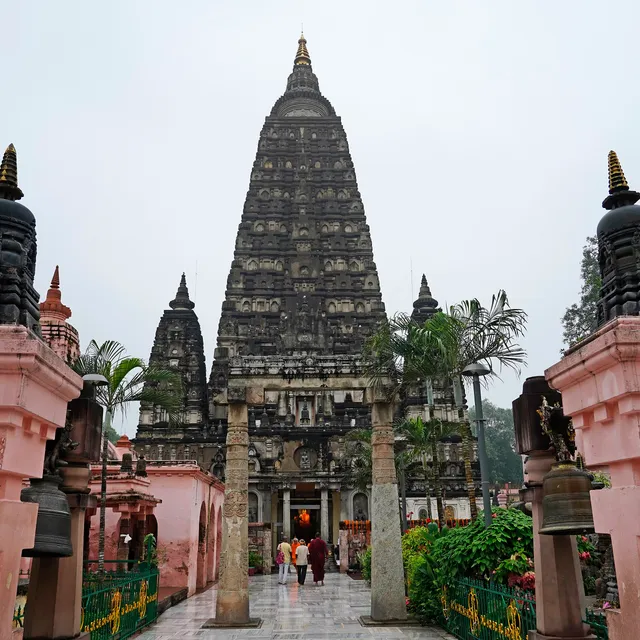
The Mahabodhi Temple at Bodh Gaya, Bihar, India

Wikimedia Commons

Country Record

Oldest Temple in India

TempleUNESCOEn vedette

Bodh Gaya

Seyfi Cem Baskin

बोधगया500 av. J.-C. – 1900 apr. J.-C.

The place where Siddhartha Gautama attained enlightenment under the Bodhi tree — marked by the soaring Mahabodhi Temple in Bihar, India — the holiest pilgrimage site in Buddhism and a UNESCO World Heritage monument drawing devotees from across Asia.

21
Intérêt 73

Localisation

Inde

24.70°N · 84.99°E · Asie

Event

Traditional site of the Buddha's enlightenment, c. 5th century BCE

Ashoka

3rd-century BCE shrine tradition; Vajrasana slab attributed to his period

Temple height

Mahabodhi tower ~55 m, mainly Gupta-period fabric

UNESCO

Mahabodhi Temple Complex (2002)

Graphite pencil sketch banner of Bodh Gaya

“Bodh Gaya is the geographic anchor of the Buddhist world — every major Buddhist tradition traces its origin narrative to this spot.”

Localisation

Aperçu

Bodh Gaya stands on the bank of the Niranjana (Lilajan) River in Gaya district, Bihar, northeastern India. Buddhist tradition locates here the Bodhi tree under which Siddhartha Gautama meditated and awakened as the Buddha, circa 5th century BCE. Emperor Ashoka is credited with founding a shrine at the site in the 3rd century BCE; the present Mahabodhi Temple — a pyramidal brick tower rising about 55 metres — largely dates to the Gupta period (5th–6th centuries CE) with later restorations by Burmese, Sinhalese, and British-era archaeologists.

The Vajrasana (Diamond Throne) red sandstone slab marks the traditional spot of enlightenment inside the sanctum. Surrounding the main temple are smaller shrines, the Bodhi tree (a descendant of the original), monasteries built by Buddhist nations (Thai, Japanese, Bhutanese, Tibetan), and the Great Buddha statue (21st century). The Archaeological Survey of India manages the core complex; UNESCO listed the Mahabodhi Temple in 2002.

Bodh Gaya hosts major festivals including Buddha Purnima and attracts hundreds of thousands of pilgrims annually, making it among the most significant living religious archaeological sites in the world.
Pourquoi c'est important

Bodh Gaya is the geographic anchor of the Buddhist world — every major Buddhist tradition traces its origin narrative to this spot. The Mahabodhi Temple is one of the earliest surviving brick temples in India and a key document of Gupta-period sacred architecture.

Preuves et interprétation

Distinguer ce qui est bien établi de ce qui reste débattu.

Faits bien établis

2
  • Ashokan pillar fragments and epigraphic references document royal patronage at Bodh Gaya in the 3rd century BCE.
  • Architectural and inscriptional evidence dates the core Mahabodhi Temple tower to the Gupta period with documented later restorations.

Inférences savantes

1
  • The identification of the exact Bodhi tree lineage is traditional; botanical descent is plausible but not provable across 2,500 years.

Photos de la communauté

Partagez votre expérience

Avez-vous visité ce site ? Téléchargez vos photos pour aider les autres à le découvrir.

Récits liés

Comment citer cette page

Atlas Anatolia. (500). Bodh Gaya. Atlas Anatolia. https://atlasanatolia.com/fr/site/bodh-gaya

Contenu sous licence CC BY-SA 4.0 — attribution requise en cas de réutilisation.

Graphique

Connexions avec des sites et récits associés.

Sources

  • Sacred Traces: British Explorations of Buddhism in South Asia — Leoshko, Janice (2003)
  • UNESCO — Mahabodhi TempleLien

Questions fréquentes

Où se trouve Bodh Gaya ?

Bodh Gaya est situé à/en India.

De quand date Bodh Gaya ?

Bodh Gaya remonte approximativement à 500 av. J.-C. – 1900 apr. J.-C..

Quelles civilisations sont associées à Bodh Gaya ?

Bodh Gaya est associé à la civilisation Mauryan, Gupta.

Pourquoi Bodh Gaya est-il important ?

Bodh Gaya is the geographic anchor of the Buddhist world — every major Buddhist tradition traces its origin narrative to this spot.

Bodh Gaya est-il inscrit au patrimoine mondial de l'UNESCO ?

Oui — Bodh Gaya est inscrit sur la liste du patrimoine mondial de l'UNESCO.