Skip to content
Atlas Anatolia
News
Classical Antiquity
2,800-year-old bone flute and Early Bronze Age idol uncovered at Troy
First Hellenistic mosaic floor in 78 years of excavations discovered at Kültepe-Kanesh
🎓Aligned with AP World History, IB Humanities & University Survey Curricula

Ancient Egypt — Classroom Pack

Five key Nile Valley monuments, one comparative dossier, one classroom set — for world history and ancient civilization units.

Target Audience:World history, ancient civilizations, AP/IB humanities (ages 14–18) and introductory Egyptology surveys.
Ancient Egypt5 Sites
Pyramids of Giza
Saqqara
Karnak Temple Complex
Valley of the Kings
Abydos
c. 3100 BCE – 100 CE2–4 Classroom Sessions or Independent Module
Launch Side-by-Side Compare

Core Learning Objectives

Key competencies, historiographical debates, and analytical skills targeted in this unit.

Goal 01

Compare Old Kingdom stone monumentalism (Giza, Saqqara) with New Kingdom imperial complexes (Karnak, Valley of the Kings).

Goal 02

Examine the hydrological role of the Nile flood basin in state formation and labor mobilization.

Goal 03

Use evidence ratings to deconstruct pop-culture myths regarding pyramid construction and tomb curses.

Goal 04

Build scholarly bibliographies utilizing peer-reviewed excavation reports and UNESCO citation tools.

🏛️Archaeological Dossiers

Featured Sites in this Unit

Every site card connects to primary excavation field reports, confirmed stratigraphy, and verified coordinates.

Compare All Sites in this Unit→
Pyramids of Giza
📍 EgyptUNESCO

Ancient Egypt (Old Kingdom)

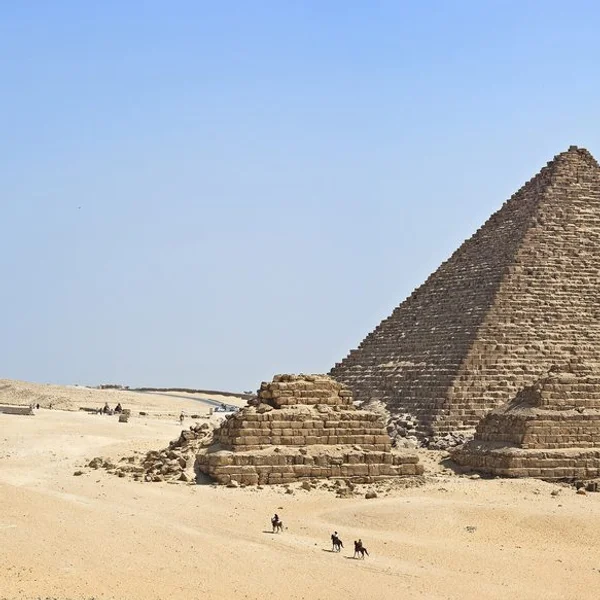
Pyramids of Giza

c. 2580 – 2510 BCE29.98°N, 31.13°E

Peak of 4th Dynasty stone engineering (Khufu, Khafre, Menkaure). Mark Lehner & Zahi Hawass excavations at the Lost City of the Pyramid Builders confirm an organized, well-nourished domestic labor force rather than enslaved populations.

Tura limestone casing remnantsKhufu solar boat pitsCauseway harbor terminals
Saqqara
📍 EgyptUNESCO

Ancient Egypt (Early Dynastic to Late Period)

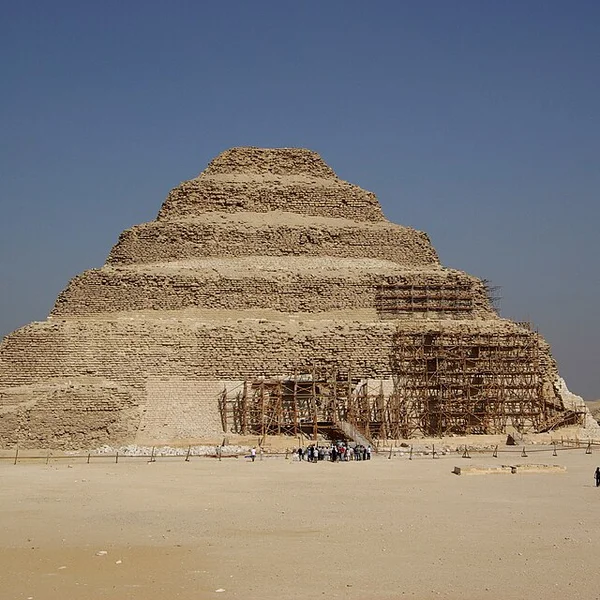
Saqqara

c. 3100 BCE – 600 CE29.87°N, 31.22°E

Evolutionary hinge of Egyptian monumentalism: Imhotep’s Step Pyramid of Djoser (3rd Dynasty) stacked stone mastabas into the earliest pyramid complex. Also preserves the Serapeum bull vaults and Unas Pyramid Texts.

Step Pyramid of Djoser (c. 2650 BCE)Serapeum subterranean granite sarcophagiUnas Pyramid Texts in hieroglyphs
Karnak Temple Complex
📍 EgyptUNESCO

Ancient Egypt (Middle to Ptolemaic Kingdom)

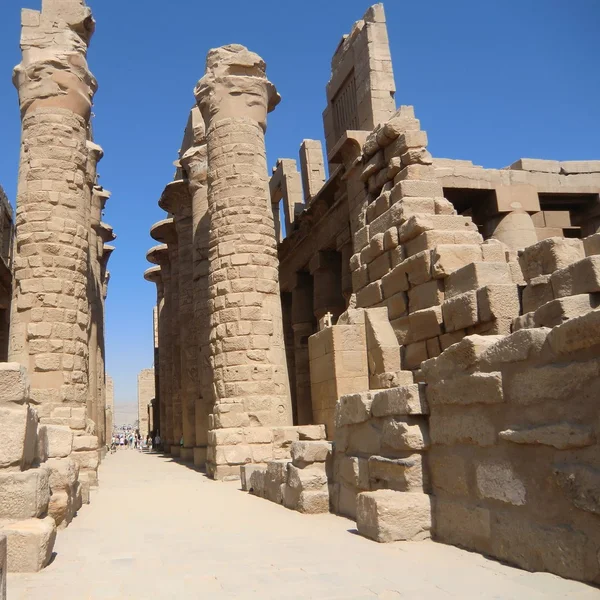
Karnak Temple Complex

c. 2055 – 100 BCE25.72°N, 32.66°E

The largest religious stone sanctuary of antiquity. Spanning over 1,500 years of pharaonic accretion, its Great Hypostyle Hall (134 sandstone columns) embodies New Kingdom imperial wealth and the political power of the Amun priesthood.

Great Hypostyle Hall (Seti I & Ramesses II)Hatshepsut & Thutmose I obelisksSacred Lake and scarab sanctuary
Valley of the Kings
📍 EgyptUNESCO

Ancient Egypt (New Kingdom)

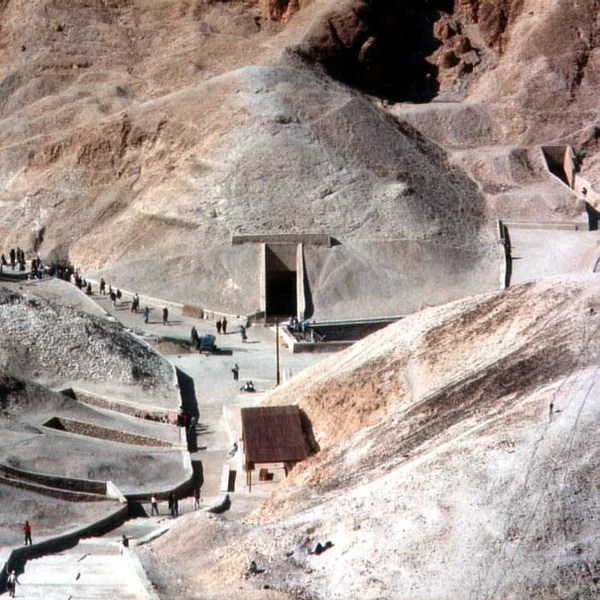
Valley of the Kings

c. 1539 – 1075 BCE25.74°N, 32.60°E

Radical paradigm shift in funerary security: New Kingdom pharaohs abandoned conspicuous pyramid markers in favor of deep, concealed rock-cut hypogea carved beneath the natural pyramid-shaped peak of al-Qurn.

Tomb of Tutankhamun (KV62, Howard Carter 1922)Seti I vaulted astronomical ceiling (KV17)Sons of Ramesses II labyrinth (KV5)
Abydos
📍 Egypt

Ancient Egypt (Predynastic to New Kingdom)

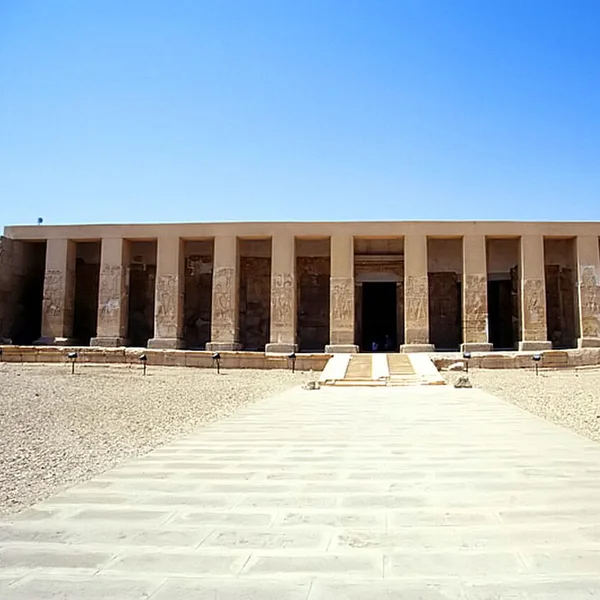
Abydos

c. 4000 BCE – 400 CE26.18°N, 31.92°E

Spiritual anchor of the Egyptian underworld and burial ground of Egypt's First Dynasty kings at Umm el-Qa'ab. The Temple of Seti I houses the famous Abydos King List, providing the foundational chronological backbone of Egyptian historiography.

Abydos King List (cartouches of 76 pharaohs)Osireion subterranean cenotaphUmm el-Qa'ab Early Dynastic royal cemetery
⚡15-Minute Classroom Workshop•15–20 min

15-Minute Workshop: The Logistical Flow of Nile Monumentality

👥Small Groups (3–4 students)
01. Core Pedagogical Objective

Calculate seasonal transport and labor mobilization during the Akhet (inundation) pulse using the Diary of Merer papyrus.

02. Student Group Task

Analyze the 4-month window when the Nile flooded up to the desert edge. Using Merer's log of 40-man crews moving 30 limestone blocks per trip from Tura, contrast state-organized domestic labor against pop-culture tropes of slave labor.

03. Expected Deliverable

A 3-step logistics chain diagram: 1. Low-water quarrying at Tura, 2. Inundation canal barge flotilla, 3. Harbor basin unloading & lubricated sledge ramps.

⚡Active Classroom Exercise

Compare all five Egyptian monuments

Side-by-side construction dates, architectural typologies, and verified archaeological evidence.

01. ChronologySynchronize overlapping construction epochs
02. EngineeringContrast masonry, hydrology & materials
03. EvidenceEvaluate peer-reviewed excavation reports
Pyramids of Giza
1. Pyramids of Giza
Saqqara
2. Saqqara
Karnak Temple Complex
3. Karnak Temple Complex
Valley of the Kings
4. Valley of the Kings

Seminar & Essay Discussion Prompts

Structured inquiry questions designed for classroom debate, seminar discussion, and essay prompts.

1

Monumental Security vs Subterranean Concealment

Old Kingdom pharaohs mobilized monumental stone pyramids (Giza, Saqqara) as cosmic stairways visible across the Nile valley. In contrast, New Kingdom kings carved hidden tombs in the Valley of the Kings. What political, religious, and economic shifts drove this complete inversion of royal funerary architecture?

🎓Teacher Guidance & Stratigraphic Clues▾
Key field data: Compare the vulnerability of Old Kingdom pyramids to First Intermediate Period looting against the New Kingdom subterranean strategy in the Theban hills (Deir el-Medina artisans, natural pyramid-shaped al-Qurn peak).
2

Deconstructing Pop Myths: Was Labor Coerced or State-Mobilized?

Excavations at the Giza workers’ village by Mark Lehner and Zahi Hawass revealed cattle-heavy diets, bakeries, medical care (healed bone fractures), and dedicated worker cemeteries. How does this archaeological evidence directly dismantle centuries-old popular media tropes of slave-built pyramids?

🎓Teacher Guidance & Stratigraphic Clues▾
Key field data: Mark Lehner & Zahi Hawass excavations at Heit el-Ghurab (Lost City of the Pyramids): faunal analysis confirming high-protein cattle rations (prime male beef), medical bone-setting splints, bakeries producing emmer loaves, and dedicated worker cemeteries.
3

Nile Hydrology as State Infrastructure

How did the annual Akhet flood season synchronize state administration, agricultural fallow periods, and monumental stone transport? Consider the Merer Papyrus logs detailing harbor canals and seasonal limestone barge logistics.

🎓Teacher Guidance & Stratigraphic Clues▾
Key field data: The Diary of Merer papyrus (Wadi al-Jarf, 2013) documenting 40-man inspection crews transporting 200+ blocks of fine Tura limestone per month via engineered Nile canal basins directly to the base of Khufu's pyramid during the annual Akhet flood.
Open Access License (CC BY-SA 4.0)

Citation & Classroom Use Rights

✓Free for Educational Reuse

All data, text, and maps are licensed under CC BY-SA 4.0. Educators and students are free to copy, quote, and adapt these materials for lecture presentations, syllabi, homework, and research essays with attribution.

Select Citation Format:
American Psychological Association (7th Ed.)
Atlas Anatolia Editorial Board. (2026). Ancient Egypt — Classroom Pack. Atlas Anatolia Archaeological Education Archive. https://atlasanatolia.com/classroom/ancient-egypt
Ancient Egypt Classroom Pack | Atlas Anatolia