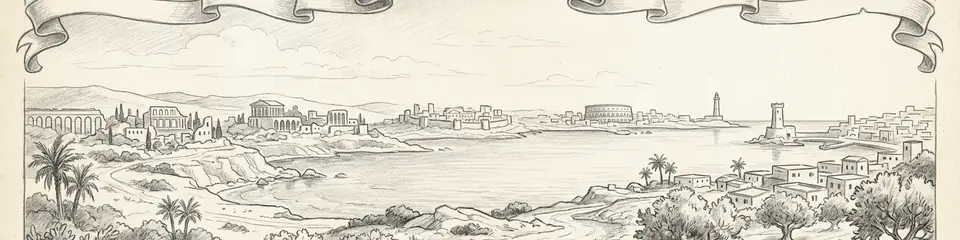
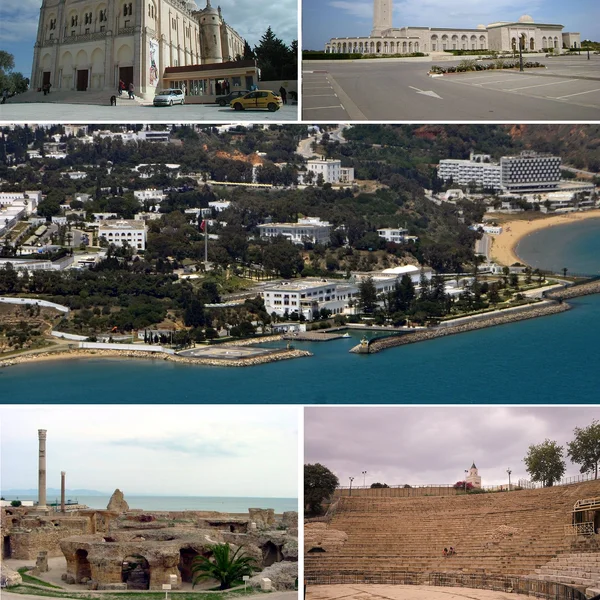
When most travellers think of the Roman Empire in Africa, they think of Carthage — Hannibal's homeland, razed and rebuilt by Rome, its Antonine Baths still dominating the Gulf of Tunis. But the Roman provinces of Africa Proconsularis, Numidia, and Cyrenaica stretched far beyond Carthage, preserving an urban landscape that rivalled Italy in sophistication and in some cases — Bulla Regia's underground mosaics, Sabratha's sea-facing theatre — surpasses it in preservation.
This guide connects five sites that trace the full arc of North African antiquity: Greek colonisation, Punic trade, Roman colonisation, and Byzantine defence.
"Africa, said the Romans, could feed Italy — yet its cities were not warehouses alone, but marble forums and theatres under the Atlas wind."
— Paraphrase of Pliny and modern survey archaeology of Roman Africa
1. Cyrene — The Greek Capital on the Libyan Plateau
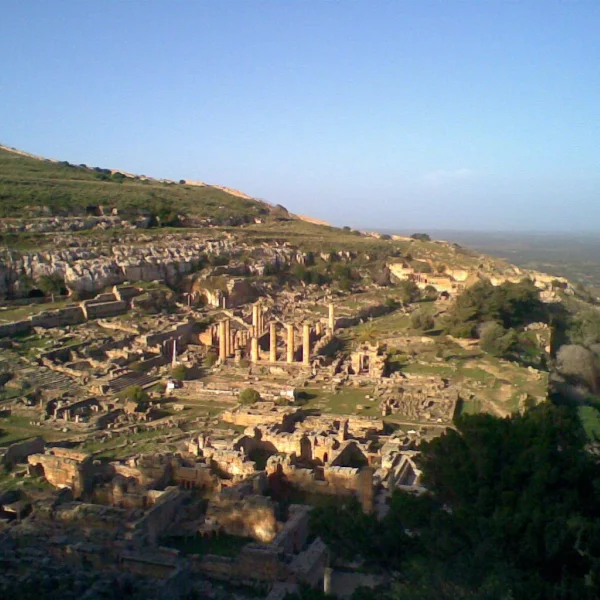
Cyrene was founded around 631 BCE by settlers from Thera (Santorini), according to tradition preserved by Herodotus and Pindar. Perched on the fertile Jebel Akhdar plateau above the Mediterranean, it became the capital of Cyrenaica and one of the wealthiest Greek cities in Africa — famous for silphium, a medicinal plant so prized it appeared on the city's coinage.
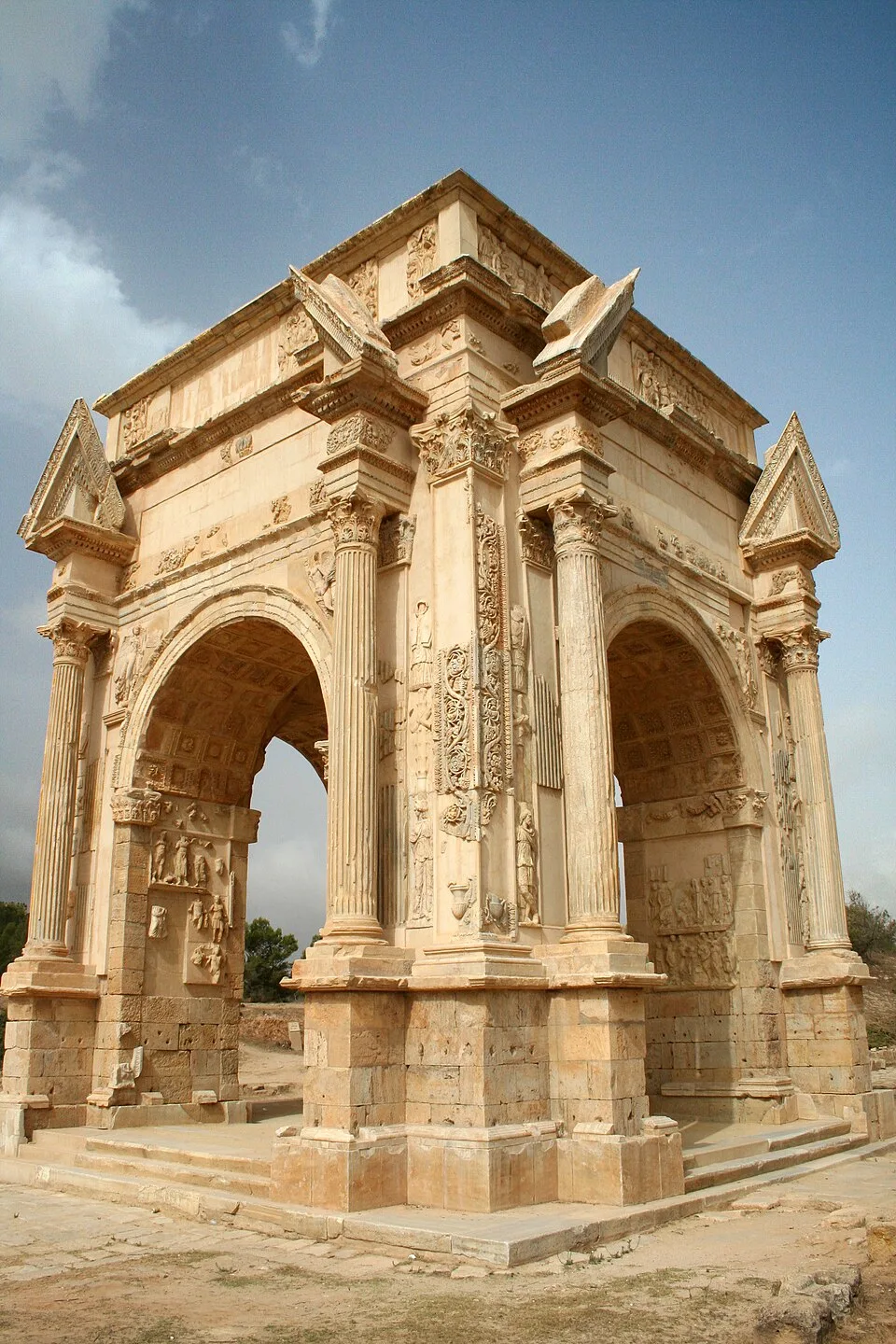
!Leptis Magna Arch of Septimius Severus
Leptis Magna Arch of Septimius Severus | Daviegunn (Public domain)
Cyrene produced philosophers (Aristippus, founder of the Cyrenaic school) and poets (Callimachus). Its Sanctuary of Apollo, theatre, and vast necropolis with monumental rock-cut tombs survive as one of the most extensive Greek-Roman landscapes in North Africa. UNESCO inscribed Cyrene in 1982.
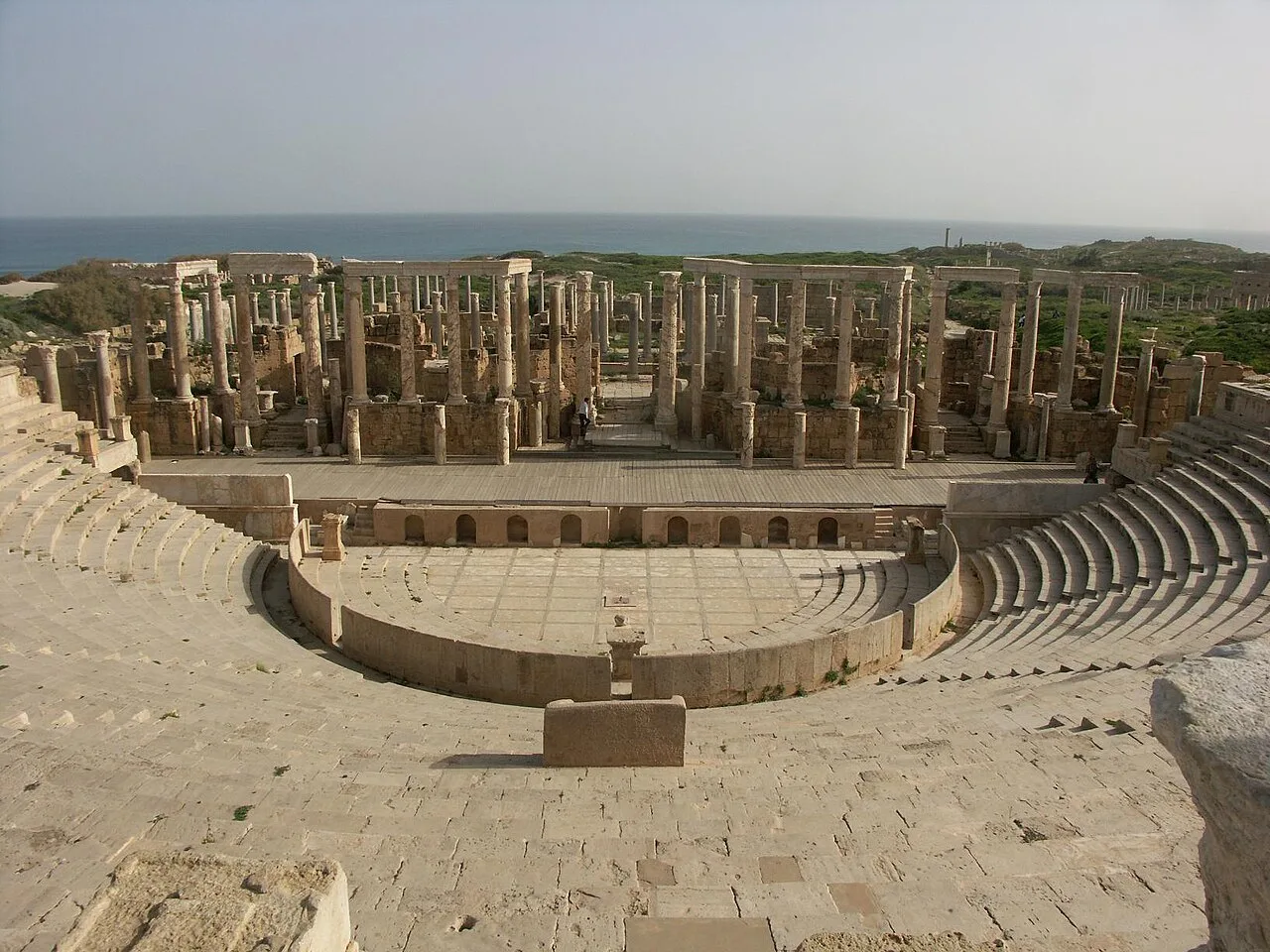
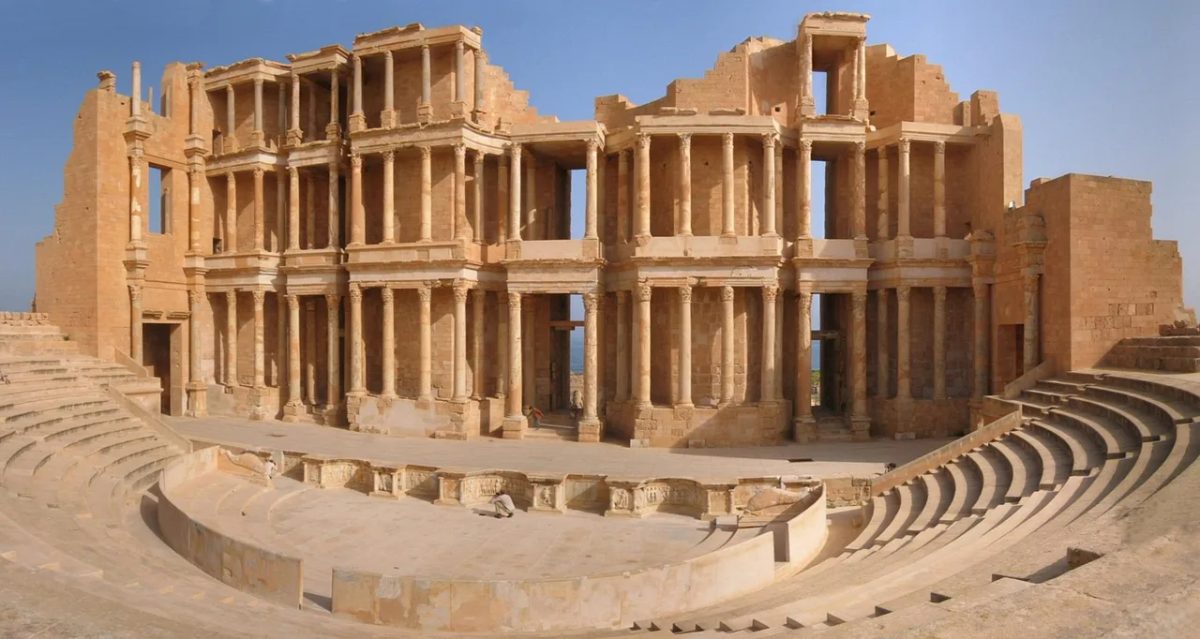
Theatre, Leptis Magna, Libya | bobrayner (CC BY 2.0)
2. Apollonia — The Port That Fed an Empire
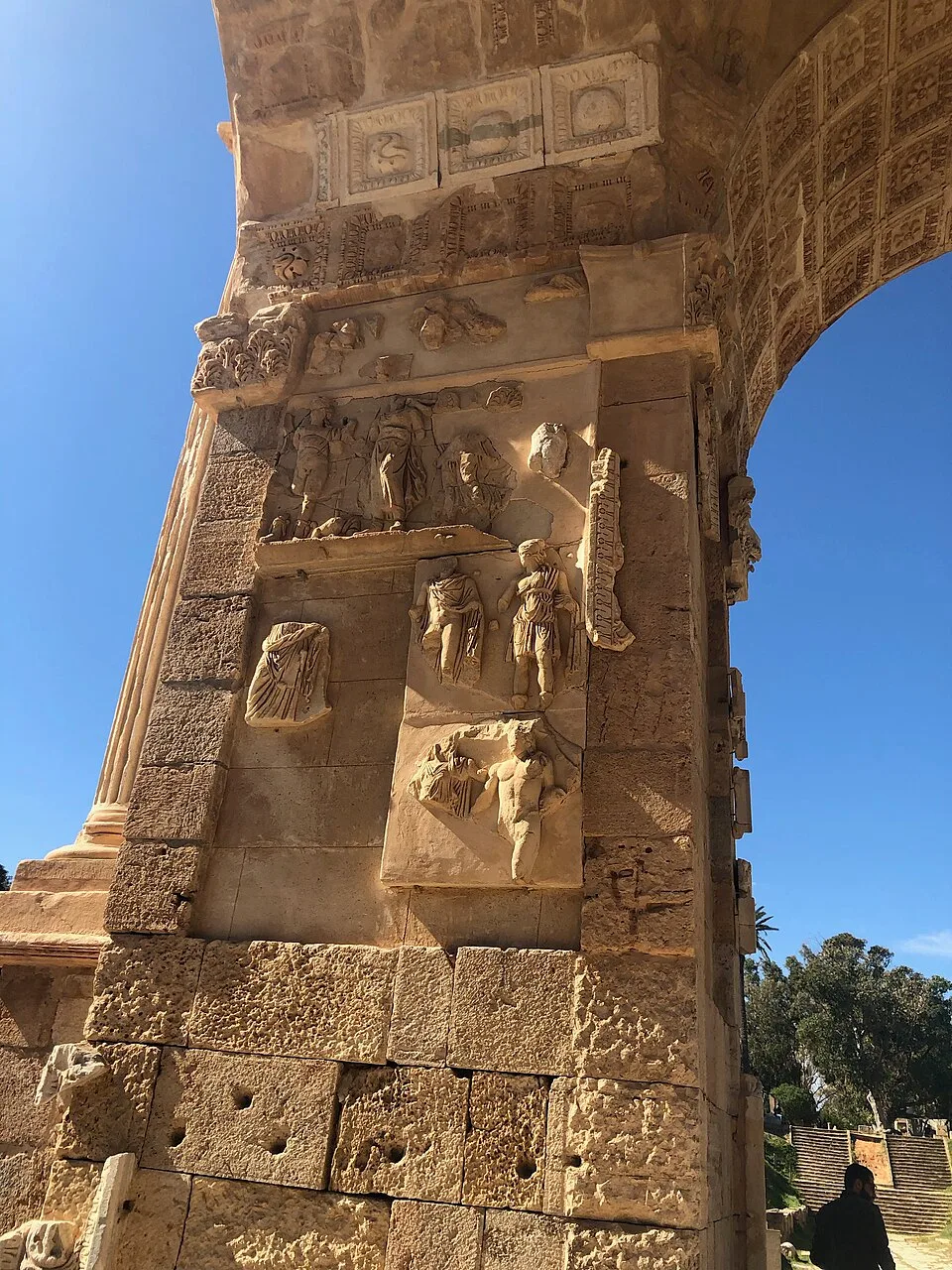
!Leptis Magna Severus Septimius Takı
Leptis Magna Severus Septimius Takı | Egulsahakin (CC BY-SA 4.0)
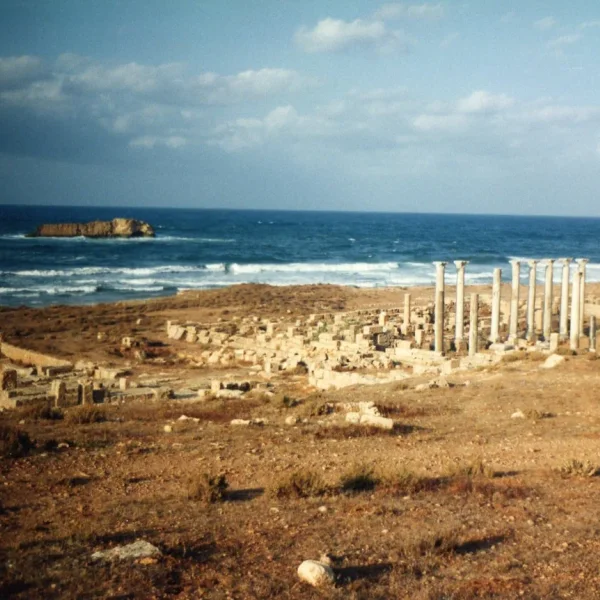
Every inland capital needs a harbour. Apollonia, twenty kilometres north of Cyrene on the Libyan coast, served as Cyrene's port from the 6th century BCE. Under Roman rule it became an independent city with its own magistrates, baths, theatre, and — most visibly — extensive Byzantine fortification walls and churches with mosaic floors.
Submerged harbour structures off the coast preserve rare evidence for ancient maritime engineering. Apollonia completes the Cyrenaican urban system: without its port, Cyrene's silphium and grain exports cannot be understood.
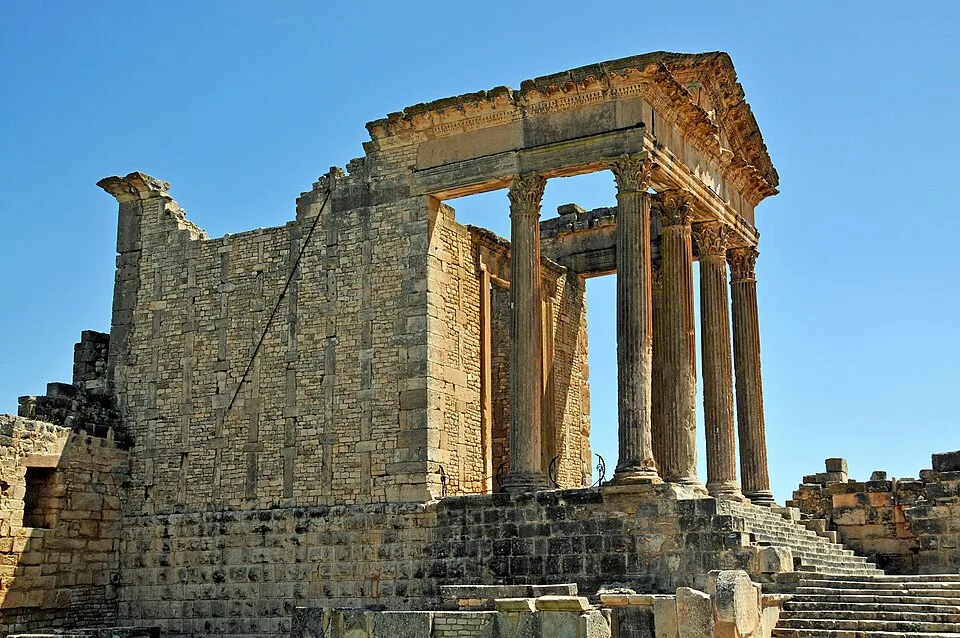
Wall of Dougga Capitol | Dennis G. Jarvis (CC BY-SA 2.0)
3. Sabratha — Theatre Above the Sea
West of Tripoli, Sabratha began as a Phoenician trading post before flowering as a Roman city in the 2nd and 3rd centuries CE. Septimius Severus, born at nearby Leptis Magna, patronised building projects across Tripolitania.
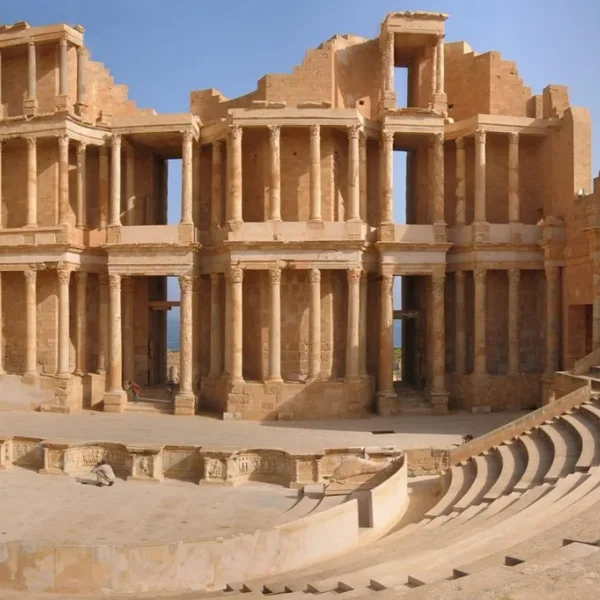
The site's theatre — with a three-storey stage building facing directly onto the Mediterranean — is among the most spectacular Roman monuments on the African coast. Mosaic-rich insulae and the Temple of Liber Pater document a prosperous port exporting olive oil and garum. UNESCO listed Sabratha in 1982 alongside Leptis Magna.
4. Bulla Regia — Rome Underground
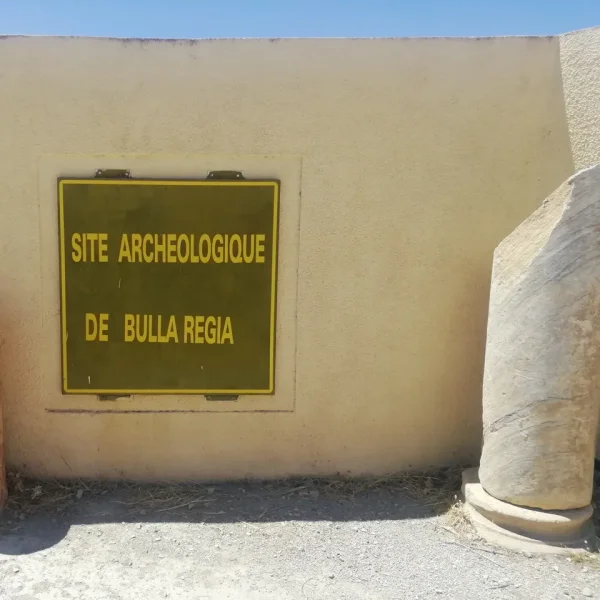
In northern Tunisia's Medjerda Valley, Bulla Regia offers something found nowhere else in the Roman world: entire villa complexes built underground to escape the heat. The upper floors collapsed or were stripped, but the subterranean levels preserved mosaic pavements in situ — including the famous Amphitrite mosaic and the hunting scenes of the House of the Hunt.
Elevated to colonia status under Hadrian, Bulla Regia flourished through the 3rd and 4th centuries CE. Its domestic architecture is the best-preserved picture of Roman elite life anywhere in North Africa.
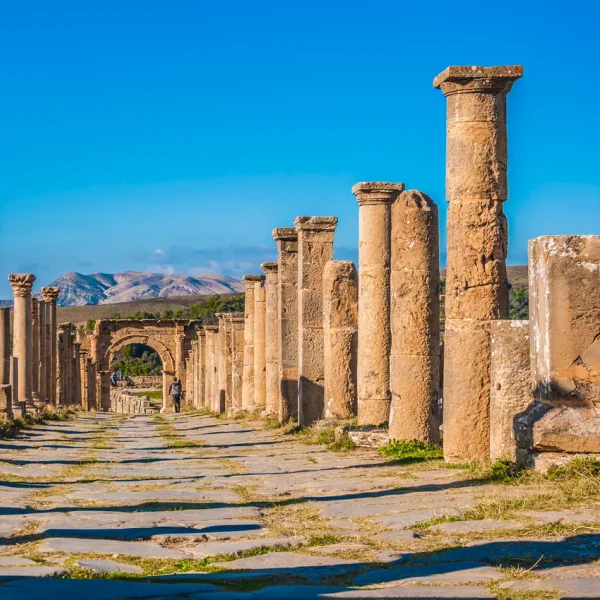
5. Cuicul (Djemila) — Rome in the Mountains
Unlike the coastal cities, Cuicul — modern Djemila in Algeria's Aurès Mountains — was a highland colony founded under Nerva around 97 CE. At 900 metres elevation, it prospered on grain and olive oil from the surrounding valleys rather than maritime trade.
The urban plan is exceptionally coherent: forum, capitol, basilica, baths, and Caracalla's triumphal arch (216 CE) set against mountain scenery. Late antique Christian basilicas with fine mosaics document the region's religious transformation. UNESCO inscribed Djemila in 1982 as a masterpiece of Roman town planning adapted to mountain terrain.
How These Five Connect
Together, these sites map Rome's African provinces across three modern countries:
- Cyrenaica (Libya): Greek colonisation → Roman province → Byzantine defence (Cyrene + Apollonia)
- Tripolitania (Libya): Punic trade → Roman port cities (Sabratha, plus Leptis Magna and Oea)
- Africa Proconsularis (Tunisia/Algeria): Roman colonisation of inland and highland zones (Bulla Regia, Cuicul)
All five complement Carthage — the Punic-Roman metropolis that anchored Rome's African empire — and connect to the broader Roman timeline on Atlas Anatolia.
Last updated: July 2026
Tunisia
Carthage
Ancient Phoenician city-state that became Rome's greatest rival, later reborn as a Roman metropolis, embodying
Libya
Cyrene
A great Greek colony on the Libyan coast of Cyrenaica, founded in the 7th century BCE and later absorbed into
Libya
Sabratha
A Punic trading post turned Roman city on the Libyan coast west of Tripoli, famous for its exceptionally prese
Libya
Apollonia
The ancient port of Cyrene on the Libyan coast, Apollonia served as the harbour city for the inland Greek capi
Algeria
Cuicul (Djemila)
A Roman mountain colony in the Aurès range of Algeria, Cuicul (modern Djemila) preserves one of the most harmo