Overview
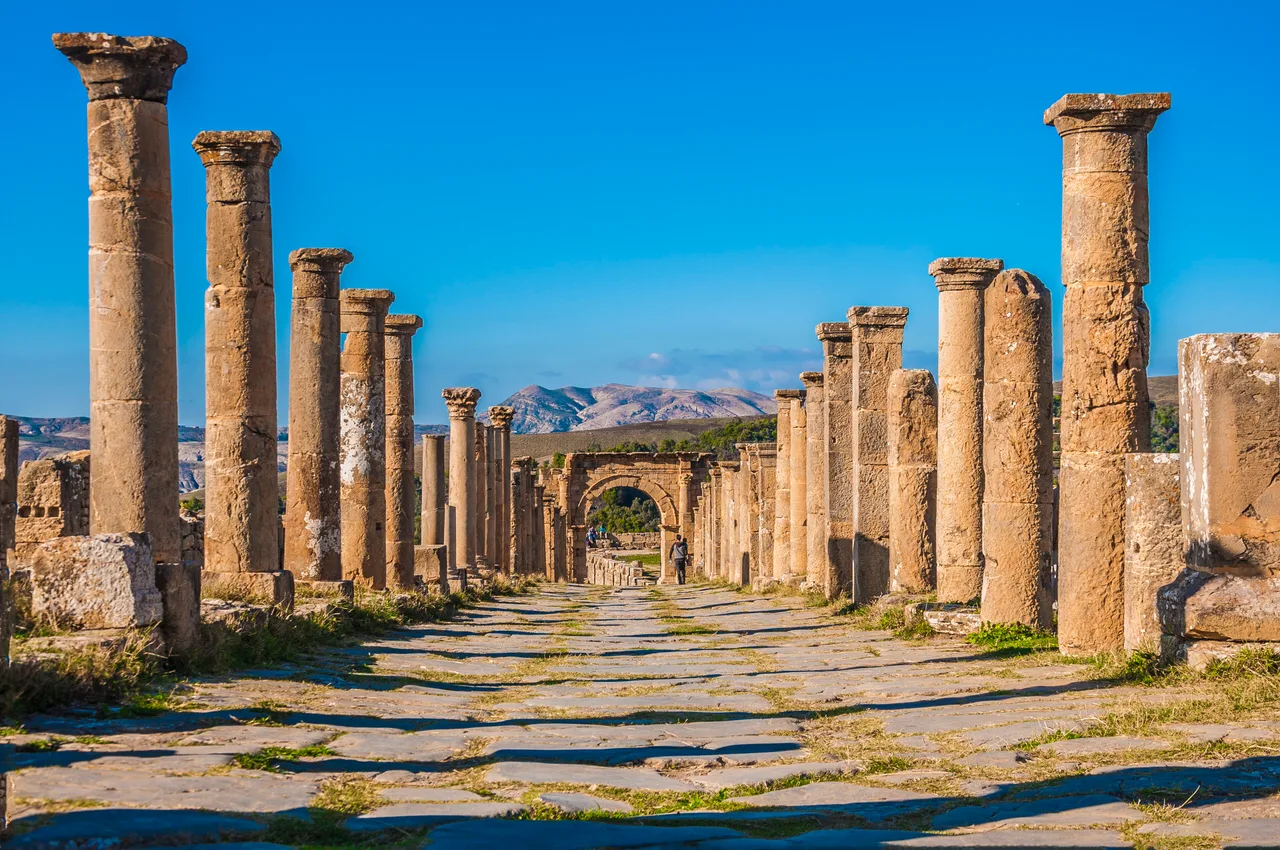
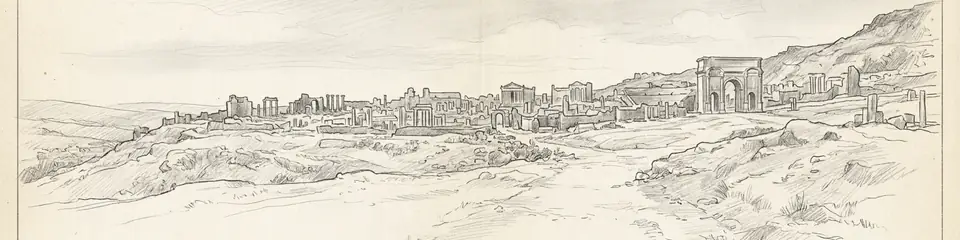
Cuicul — the Roman name for what is now Djemila in northeastern Algeria — was founded as a military colony under Nerva around 97 CE, strategically placed in the Aurès Mountains at roughly 900 metres elevation. The city developed rapidly under the Antonine emperors into a prosperous mountain town serving the agricultural hinterland of the high plateau.
Unlike coastal cities shaped by port commerce, Cuicul's prosperity rested on grain, olive oil, and livestock from the surrounding fertile valleys. The urban plan is exceptionally coherent: a forum bordered by a capitol temple, basilica, and curia; a triumphal arch of Caracalla (216 CE); extensive baths; and later Christian basilicas including one of the finest mosaic-decorated churches in Roman Africa.
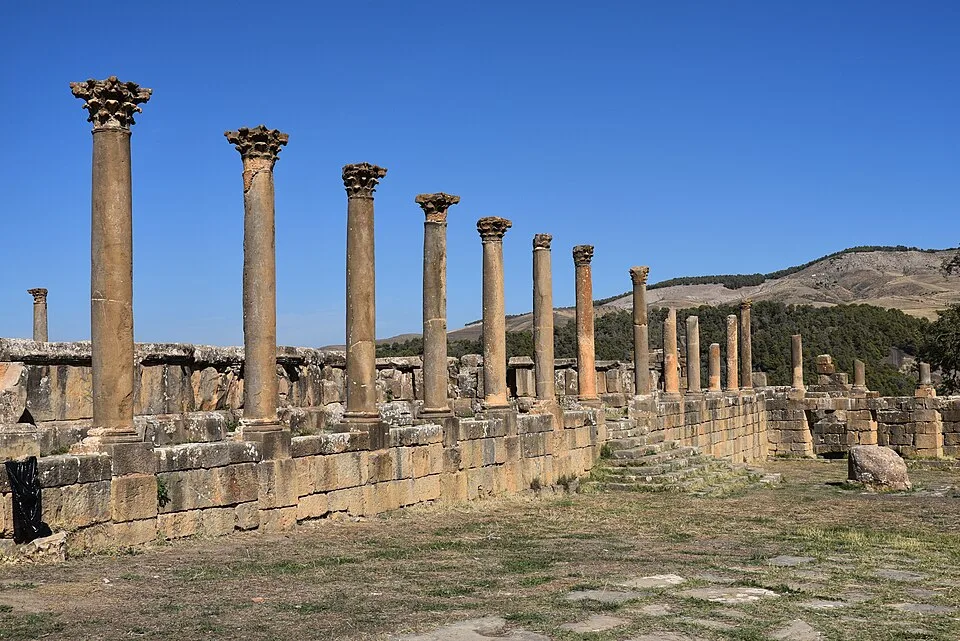
"Cuicul, founded as a colony under Nerva, rose to prosperity in the highlands of Numidia through the grain and olive oil of its hinterland."
— Albert Ballu, Les ruines de Cuicul (1911)
French archaeologist Albert Ballu excavated the site systematically from 1909, revealing mosaics now partly housed in the on-site museum. The city's mountain setting required terracing and adaptation of standard Roman urban models to sloping terrain — a case study in how imperial urbanism flexed to local geography.
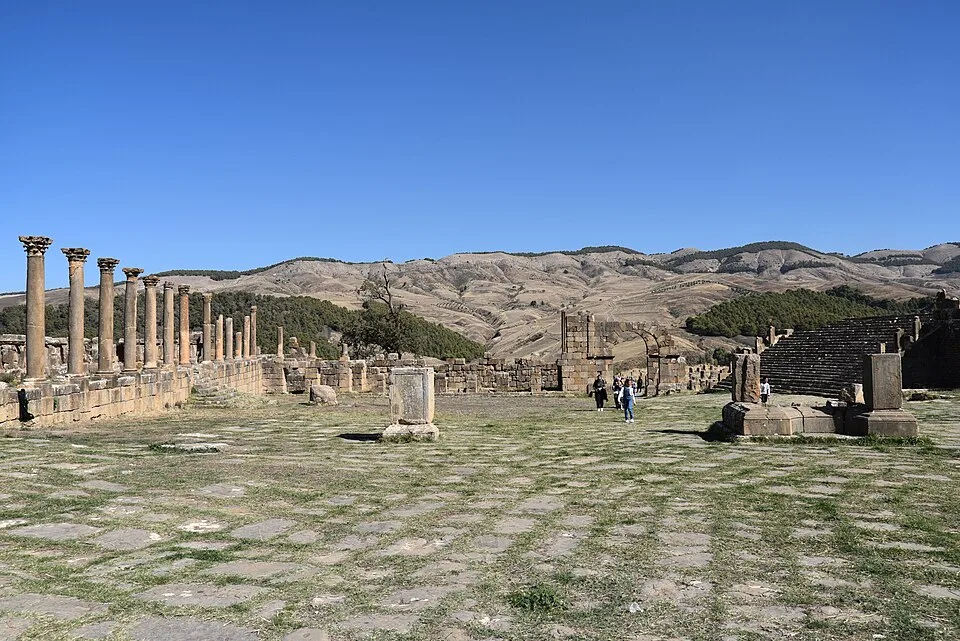
Djemila was inscribed as a UNESCO World Heritage Site in 1982, recognised as an exceptional example of Roman town planning integrated into a mountain landscape.