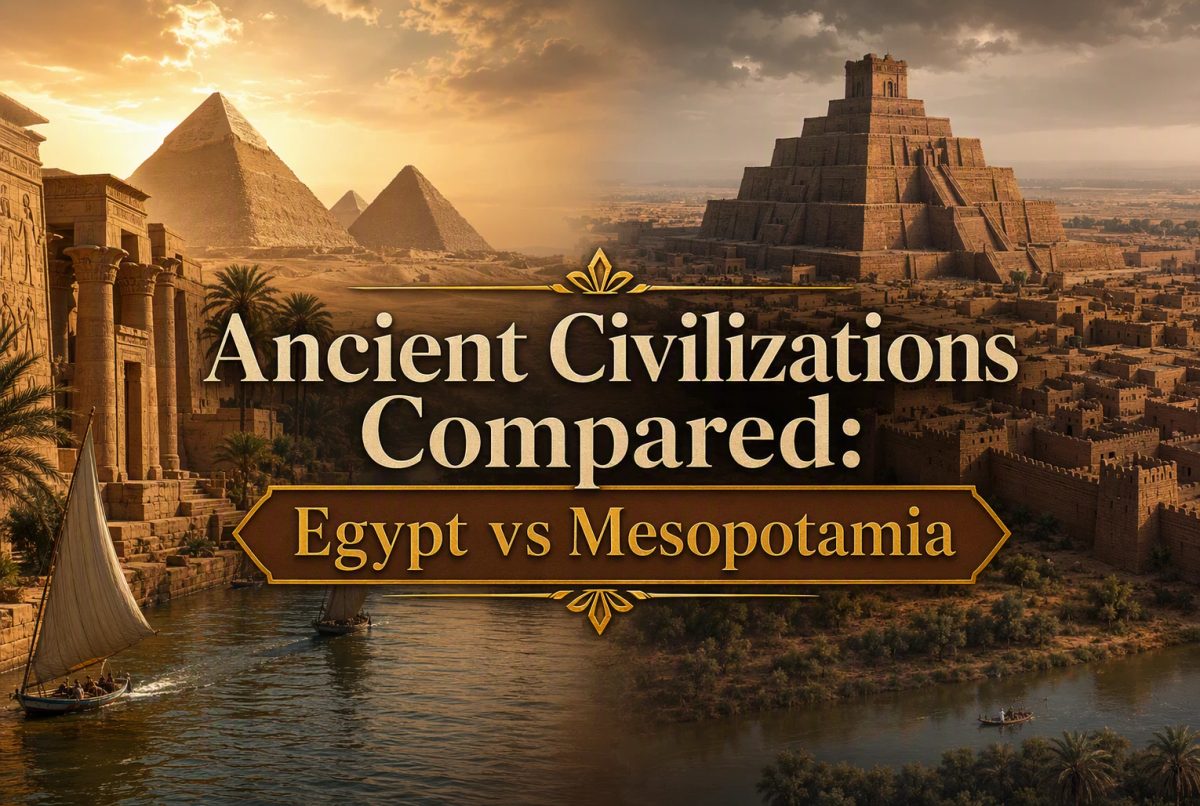
Quick Summary: Ancient Egypt developed a highly centralized state with a divine pharaoh ruling over a stable Nile valley, while Mesopotamia's city-states remained fragmented due to unpredictable rivers and competing local elites. Religion and geography shaped these differences, with Egypt's steady environment fostering unified control and Mesopotamia's open plains encouraging rivalry and decentralization.
If you want the short version, Ancient Civilizations in Egypt and Mesopotamia took different paths. Egypt Civilizations built tighter rule from pharaoh downward. Mesopotamian Culture kept power split across cities and elites. This look at Ancient Civilizations centers the key issue: how land, belief, and government shaped rank, surplus, and daily life. It draws on core historical patterns that scholars use to compare Ancient Civilizations.
Egypt vs Mesopotamia: Social Hierarchy at a Glance
| [Ancient Egypt](https://www.britannica.com/place/ancient-Egypt) | [Mesopotamia](https://www.britannica.com/place/Mesopotamia-historical-region-Asia) | |
|---|---|---|
| Power structure | Highly centralized | More fragmented and city-based |
| Role of religion | Pharaoh as divine mediator | God-centered city cults |
| Elite access to land | Strongly state-controlled | More varied and locally negotiated |
| Local authority | Limited compared with the center | Stronger regional and urban elites |
| Environmental influence | Nile predictability favored central control | Unpredictable rivers encouraged decentralization |
How Ancient Egypt and Mesopotamia Compare
Ancient Egypt
Ancient Egypt grew along the Nile and built a tightly ordered kingdom around the pharaoh, state officials, and temple power. It fits readers who want to see how steady floods, sacred kingship, and firm control helped one center rule a long river valley.
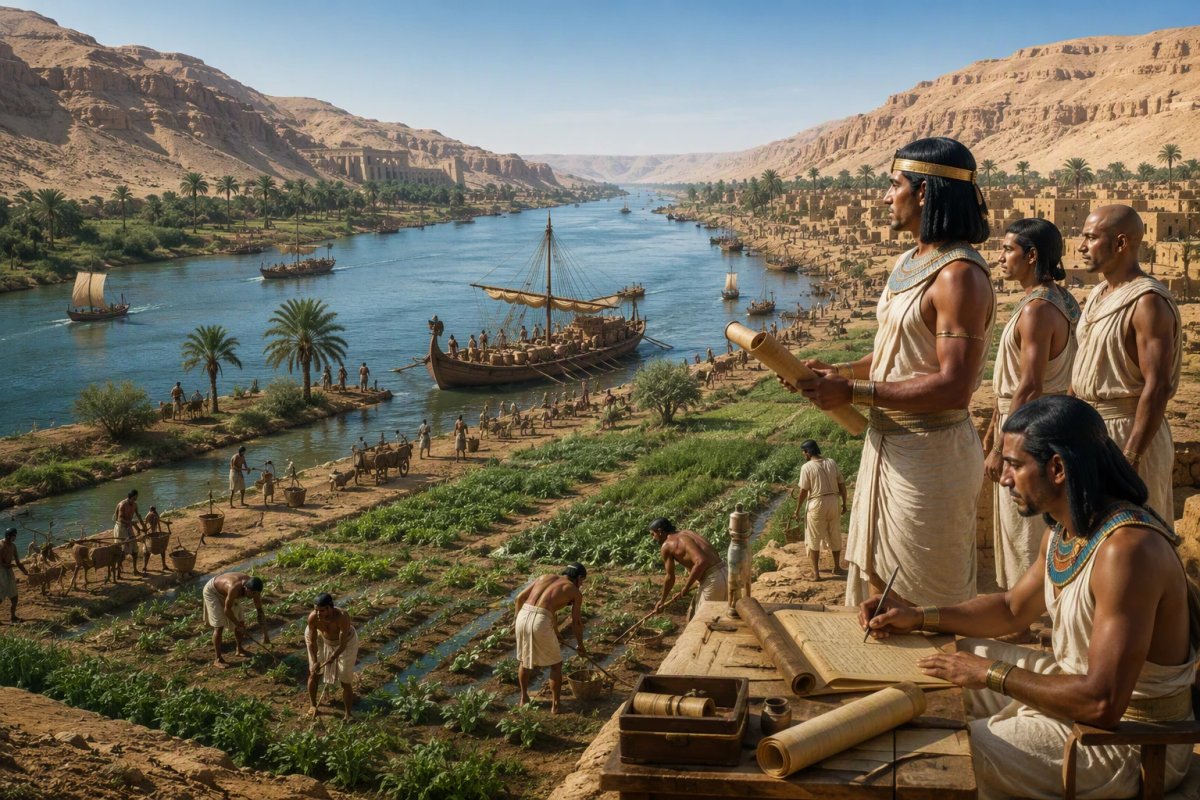
[Sunlit Nile valley with temples, fields, and cliffs along the river)
Mesopotamia
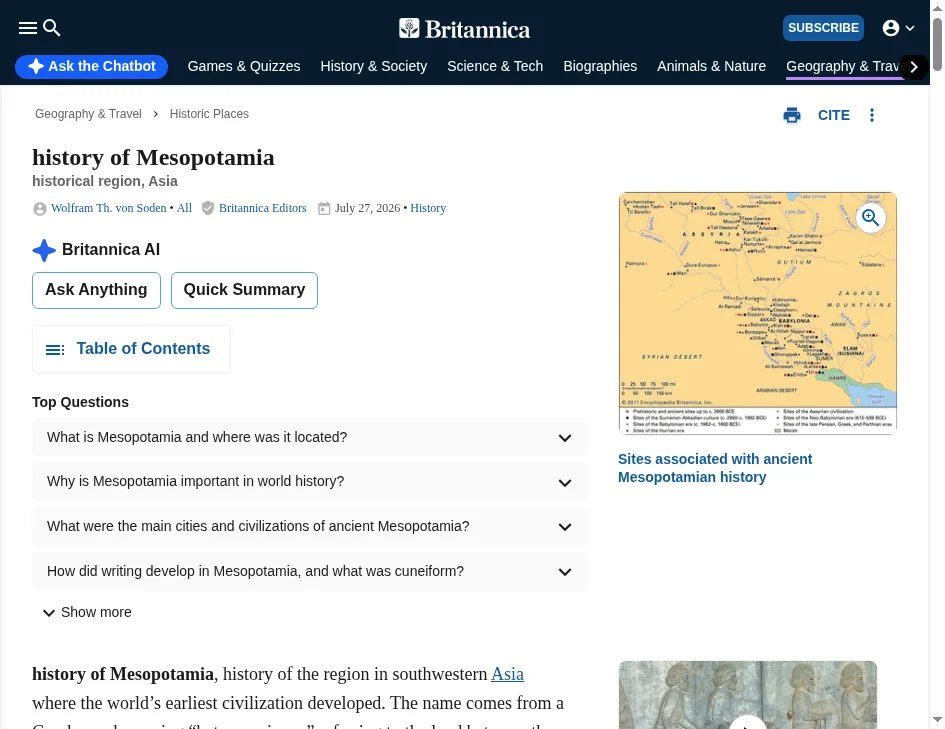
Mesopotamia formed between the Tigris and Euphrates, where many city-states shared space, traded, fought, and worshipped local gods. It suits readers asking why rich early societies could stay divided, with stronger local elites and more negotiated power.
How Geography Shaped Social Rank
Why the Nile mattered more than just for farming
Egypt’s social rank grew around a narrow river world. The Nile’s flood was regular, rich in silt, and easy to track, which helped rulers tax grain and move orders up and down the valley. The river also worked like a long road, while deserts on both sides boxed people into the same corridor. That made it easier for kings, priests, and scribes to sit above village life and hold power across a single state, as shown in UCLA’s study of Nile “linear statecraft”.
!Ancient Nile farmers and river boats in a narrow valley
Why Mesopotamian landscapes produced looser control
Mesopotamia had rich land too, but its setting pushed power outward, not inward. The Tigris-Euphrates plains were open, exposed, and split between irrigation south, dry farming north, and steppe in between. That mix fed trade and cities, yet it also kept borders shifting and made city-states compete. University of Washington research notes that Mesopotamia was more often a patchwork of rival polities than one lasting unified kingdom.
Geography did not fix fate, but it made central rule easier in Egypt than in Mesopotamia.
Also Read: Stories & Discoveries | Atlas Anatolia
Religion, Kingship, and Who Sat Near the Top
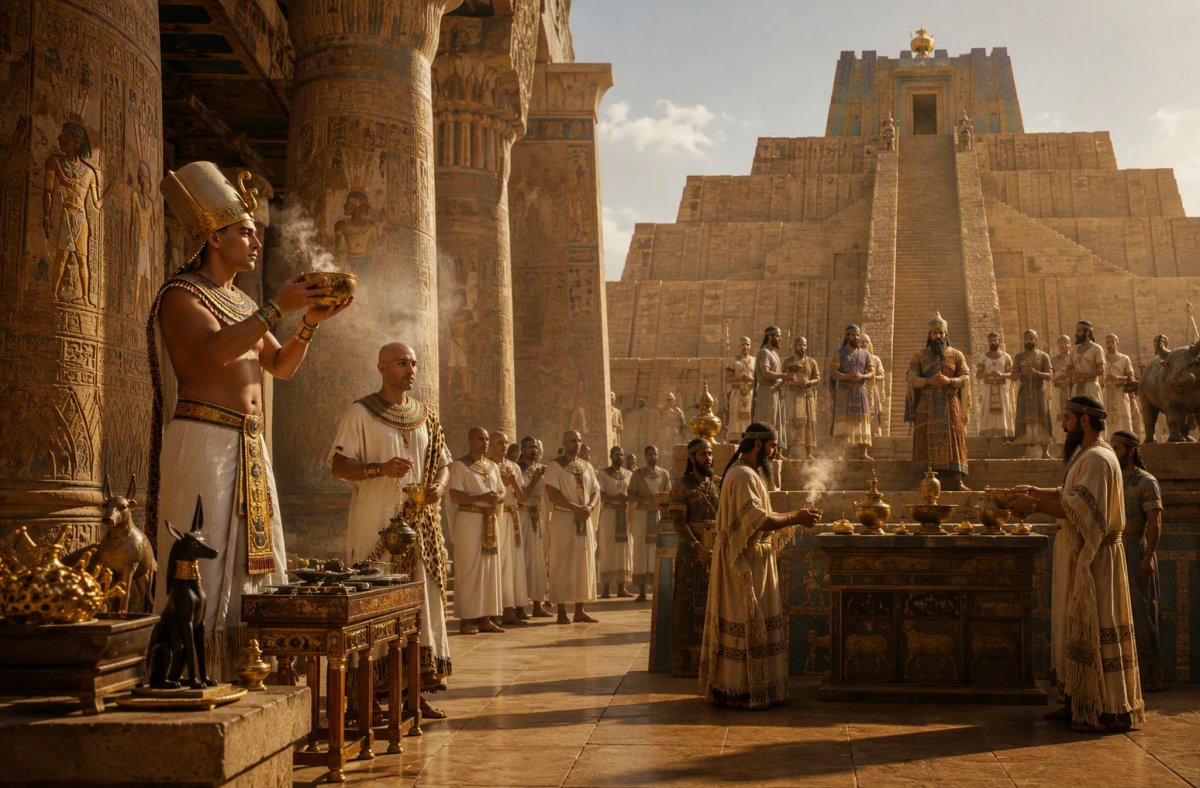
Egypt put the king closer to the gods. Formal ritual centered on the pharaoh, who acted as the main link between people and divine order in ancient Egyptian religion. In Mesopotamia, rulers were sacred too, but they more often served as chief mediators for a city’s god rather than as a fully divine figure across one unified land.
!Pharaoh offering at temple altar with priests
Temples shaped power in both regions, but not in the same way:
- In Egypt, priests often carried out rites on the king’s behalf.
- In Mesopotamia, temple households and priestly staffs held major local weight.
According to Sumerian religion, early city-states were heavily temple-run, and priests managed both cult and irrigation.
- That gave Mesopotamian elites strong local bases.
- Egypt’s court and temple system tied more tightly to one crown.
Also Read: Recent archaeological discoveries in 2026
Which System Was More Centralized?
Egypt was more centralized. Britannica notes that Egyptian society placed a single king at the top, which made rule more unified across the Nile valley Britannica on Egyptian kingship.
- Best choice if you want a tightly unified state: Pick Egypt. One pharaoh stood above local elites, religion backed that power, and the long Nile corridor helped rulers tie regions together.
- Best choice if you want a more layered urban world: Pick Mesopotamia. Power often sat in competing city-states, and local authority stayed strong even when empires rose Annual Review on Mesopotamian states.
Key insight: Egypt usually pulled inward to one center. Mesopotamia kept many centers alive at once.
Compare sites, timelines, and evidence ratings yourself with Atlas Anatolia and turn Egypt vs Mesopotamia into mapped, usable history.
Frequently Asked Questions
Q1: How did social hierarchies differ between ancient Egypt and Mesopotamia?
Egypt centered power on one pharaoh and a tighter state chain. Mesopotamia split power among city-states, so kings, priests, and local elites held more separate authority.
Q2: What roles did religion play in shaping governance in Egypt versus Mesopotamia?
In Egypt, the ruler was divine, which strengthened central rule. In Mesopotamia, gods belonged to cities, so temples and kings shared power more unevenly.
Q3: How did environmental factors influence social structures in ancient Egypt and Mesopotamia?
The Nile's steady floods helped Egypt build stable, centralized control. Mesopotamia's shifting rivers and open plains pushed cities to act on their own and compete.
Conclusion
Egypt unified because the Nile favored control and kingship fused with divine order, according to Britannica on Egyptian rule. Mesopotamia stayed divided because rival city-states and local power endured, as Annual Reviews notes.