Overview
Sabratha lies on a promontory on the Mediterranean coast of northwestern Libya, roughly 70 kilometres west of Tripoli. The site was originally a Phoenician trading settlement, probably established in the 6th–5th century BCE, before developing into a major Roman city under the empire.
Under Roman rule Sabratha became an important port in the province of Africa Proconsularis (later Tripolitania), exporting olive oil, garum (fish sauce), and agricultural products. The city reached its architectural peak in the 2nd and 3rd centuries CE, when emperors including Antoninus Pius and Septimius Severus (himself born in nearby Leptis Magna) patronised major building projects.
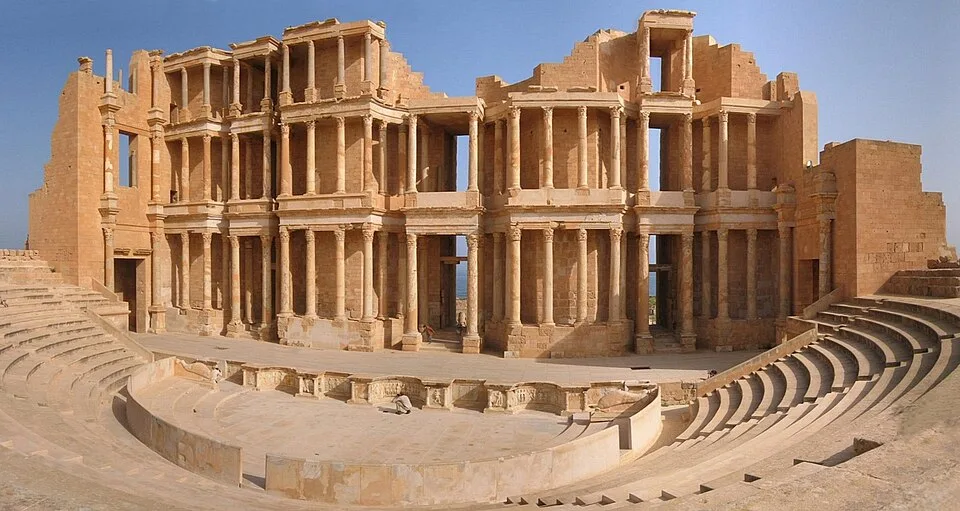
"The theatre at Sabratha, with its stage building facing the sea, is among the most beautiful monuments of Roman Africa."
— Archaeological summary, UNESCO World Heritage inscription, 1982
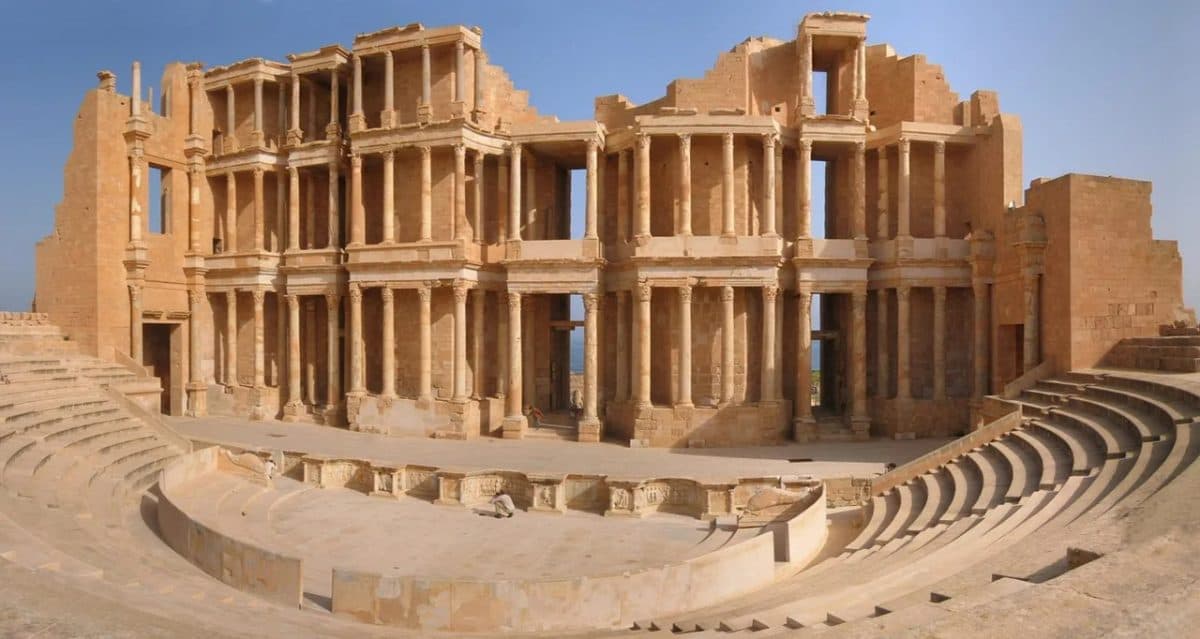
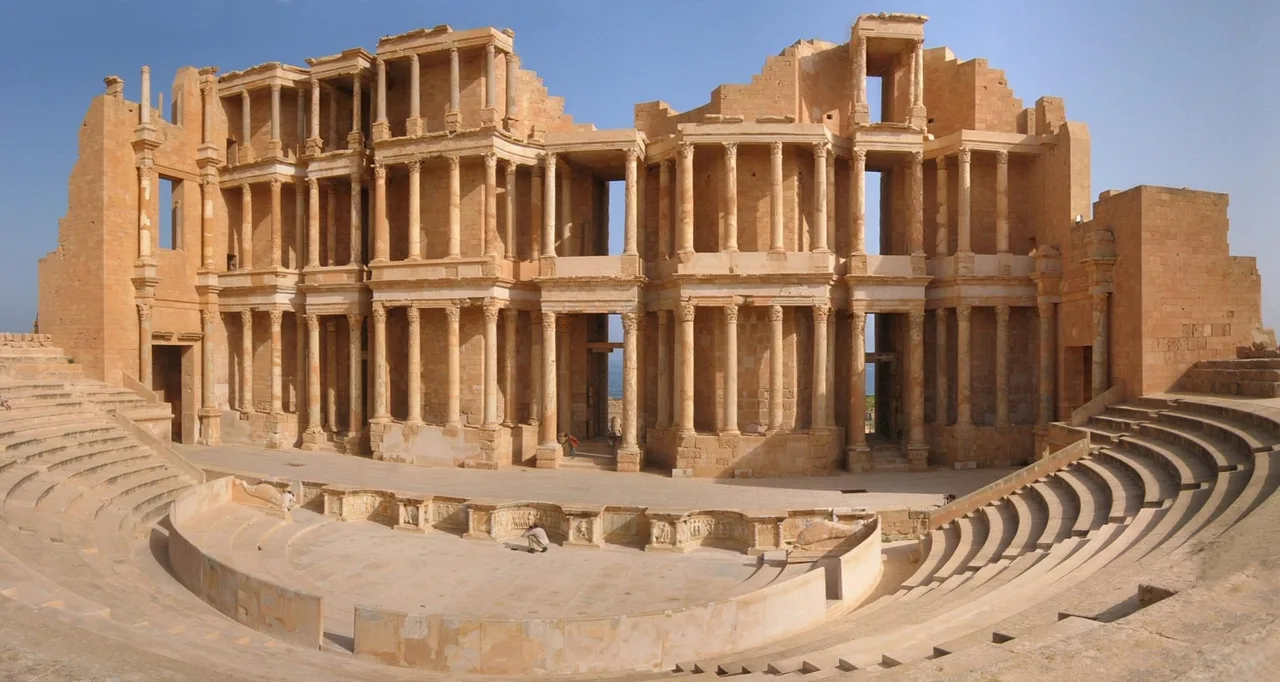
The theatre, rebuilt in the 2nd century CE with a three-storey scaenae frons (stage building) facing directly toward the sea, is among the most spectacular Roman theatres in Africa. Nearby stand the Forum Temple (Temple of Liber Pater), basilicas, baths decorated with mosaics, and residential quarters. Sabratha was damaged in earthquakes in the 4th century and declined after the Vandal and Byzantine periods.
Italian archaeologists excavated extensively from the 1920s onward; the site is part of the UNESCO World Heritage listing "Archaeological Site of Sabratha" (1982).