Overview
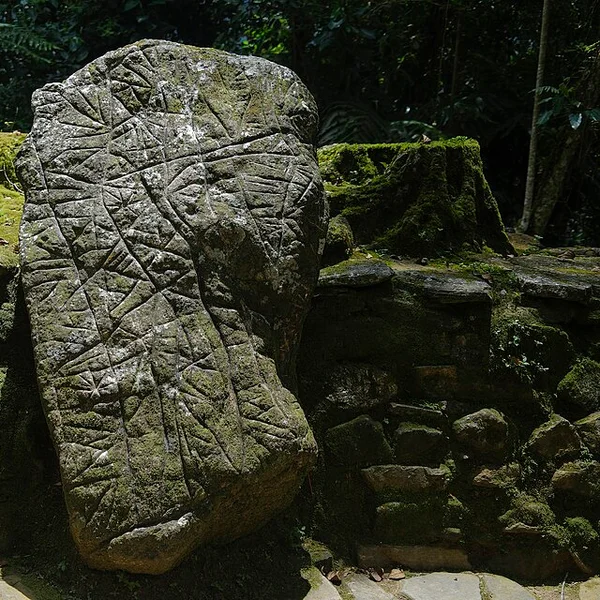
Tierradentro lies in Inzá municipality, Cauca Department, on ridges of the Central Cordillera. Between roughly 600 and 900 CE, local societies cut deep shaft-and-chamber tombs—some over 7 m deep—with spiral stairs, niches, and polychrome wall painting. Surface areas held anthropomorphic stone statues related to the San Agustín sculptural tradition farther south. The necropolis zones (Alto de Segovia, El Duende, and others) form a national archaeological park.
Colombian Institute of Anthropology and History (ICANH) excavations and conservation confront seismic risk, humidity, and past looting. The tombs’ scale implies ranked lineages and prolonged funerary ritual rather than simple inhumation. Iconography—spirals, lizards, human faces—links highland Cauca to a broader Intermediate Area of monumental funerary art.
Pair with San Agustín for Colombian stone sculpture and with Monte Albán for New World elite necropolises carved into living rock.