
Overview
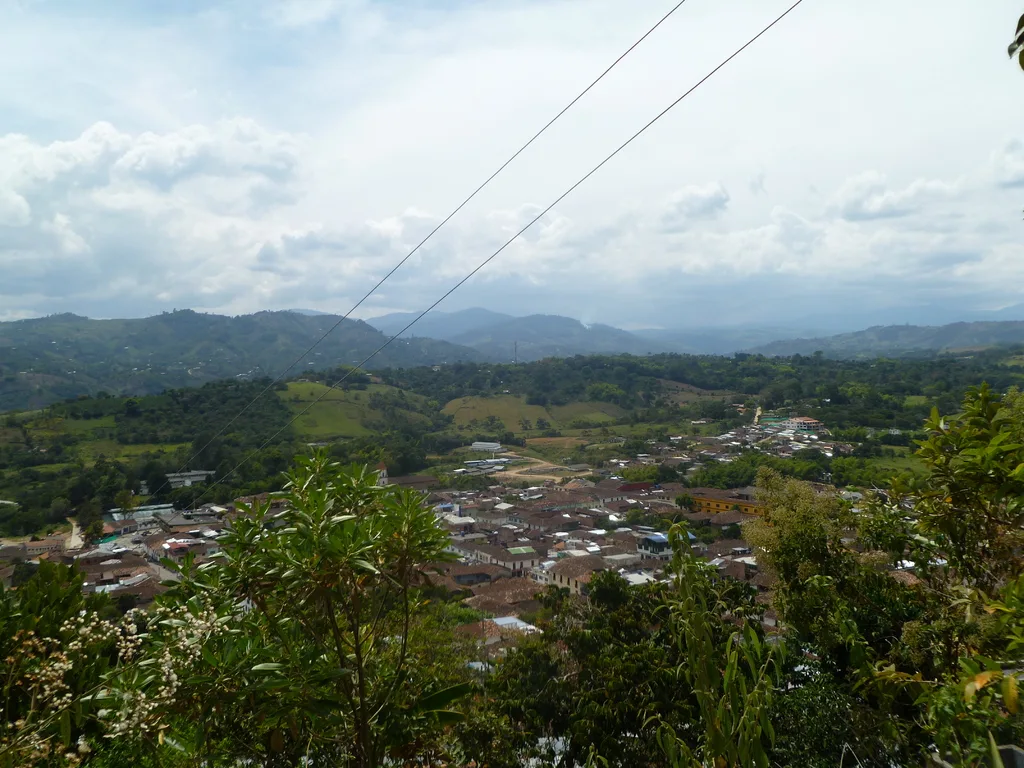
San Agustín lies in the Colombian Andes, in the department of Huila, near the headwaters of the Magdalena River. Between roughly the 1st and 9th centuries CE, a society archaeologists know only as the San Agustín culture carved several hundred monumental statues from volcanic rock and arranged them across burial mounds, ceremonial terraces, and funerary temples scattered over an area of several hundred square kilometres — the largest concentration of pre-Columbian megalithic sculpture anywhere on the continent.
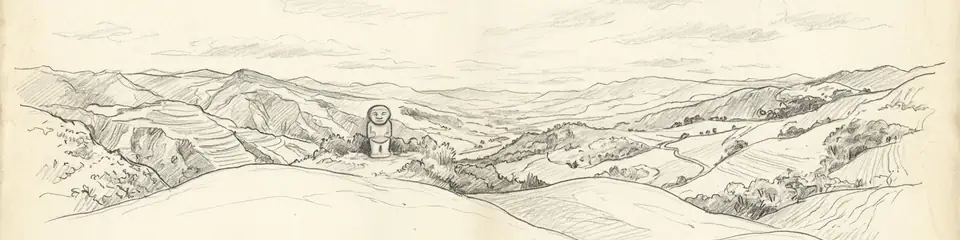
The statues range from simple, blocky anthropomorphic forms to extraordinarily elaborate composite figures combining human and animal features — jaguars, eagles, frogs, and snakes recur frequently, often merged with human faces in ways that suggest shamanic transformation, a recurring theme in the iconography of many Andean and Amazonian cultures in which ritual specialists were believed to transform into powerful animal spirits. Many statues functioned explicitly as tomb guardians, carved to stand watch over the burial chambers and sarcophagi of important individuals within artificial mounds; others appear to have stood at ceremonial sites without an obviously associated burial.
The most striking single feature at the site is the "Fuente de Lavapatas," a ceremonial stream bed carved directly into the bedrock with an intricate network of channels, pools, and sculpted serpent and lizard figures, through which water was directed to flow over and around the carved forms — interpreted as a ritual bathing or purification site, its precise function still debated. Nearby, the Alto de los Ídolos and Alto de las Piedras sectors preserve additional major statue groupings and burial mound complexes.
Despite more than a century of archaeological attention beginning with 18th-century Spanish colonial reports and intensifying with 20th-century excavation, remarkably little is confirmed about who built San Agustín. No writing system associated with the culture has been identified, no historical chronicle names them, and the site had already been abandoned for centuries by the time Spanish colonisers arrived in the region, meaning there was no living oral tradition to record for later ethnographers, unlike many other indigenous South American cultures. The reasons for the culture's decline and disappearance sometime after the 9th century CE remain unknown, with proposed explanations ranging from environmental change to social collapse, none conclusively established. San Agustín was inscribed as a UNESCO World Heritage Site in 1995.