
Overview
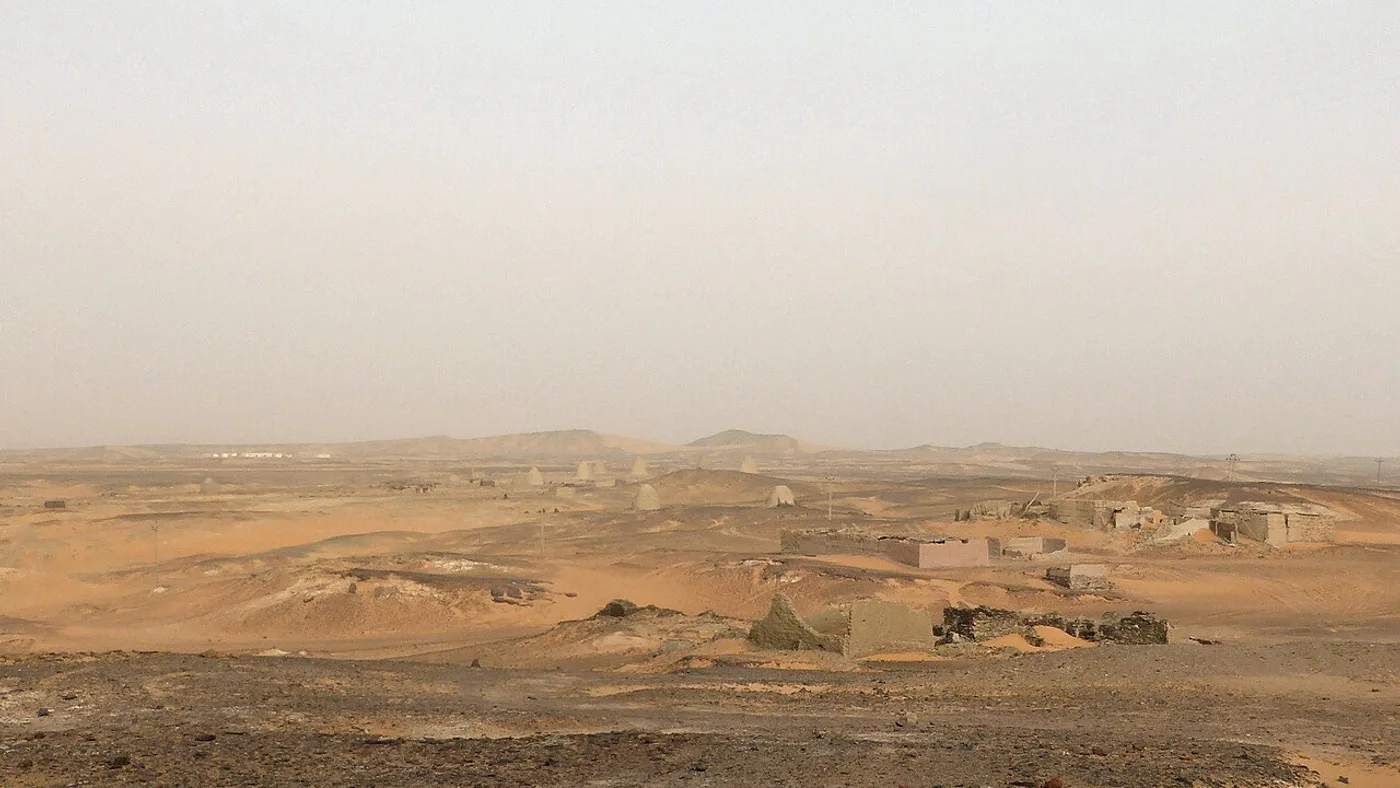
Old Dongola (known in Old Nubian as Tungul and in Arabic as Dunqula al-Ajuz) overlooks the east bank of the Nile opposite the outlet of Wadi Howar in Sudan's Northern State, positioning it at a decisive crossroads linking the Middle Nile Valley with trans-Saharan caravan routes toward Darfur and Kordofan. Emerging in the late 5th and 6th centuries CE following the decline of Kushite Meroë, the fortified citadel and surrounding urban quarters rapidly developed into the political, ecclesiastical, and commercial capital of the Christian Nubian kingdom of Makuria.
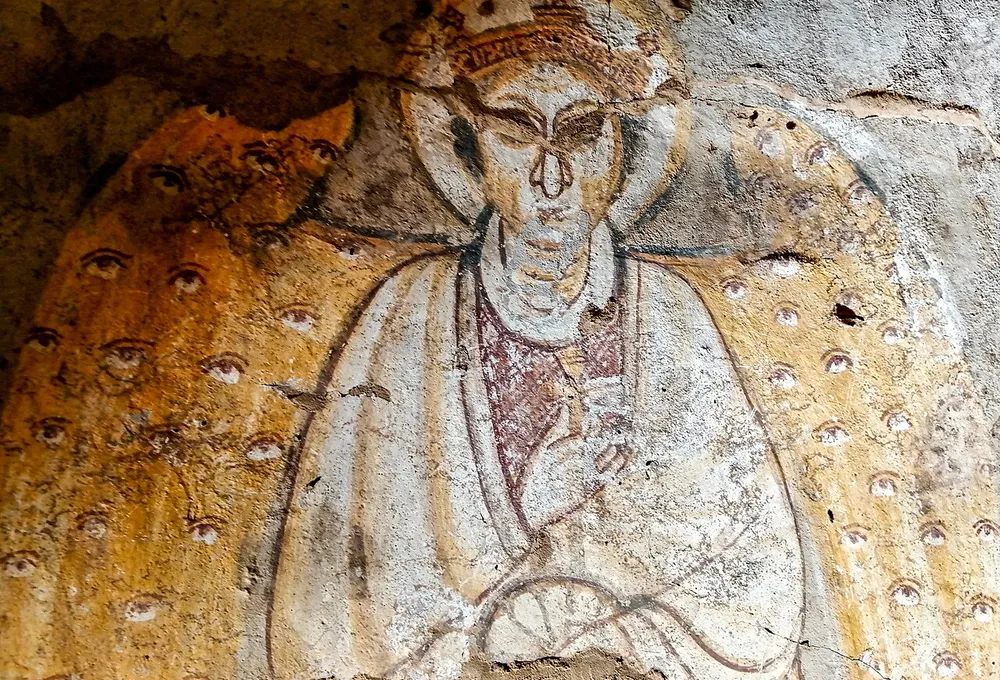
Following the famous seventh-century Baqt peace and trade accord of 652 CE between Makuria and early Islamic Egypt, Old Dongola entered centuries of sustained stability and architectural patronage. Excavations across the upper citadel, residential neighborhoods, and suburban religious complexes revealed landmark sanctuaries including the Church of the Granite Columns, the Cruciform Church, and the Monastery on Kom H. At Kom H, exceptional murals and multilingual texts written in Greek, Coptic, Old Nubian, and Arabic document a cosmopolitan intellectual and liturgical tradition unique along the African Nile.
In November 2026, a joint expedition of the Polish Centre of Mediterranean Archaeology (PCMA) at the University of Warsaw and Sudan's National Corporation for Antiquities and Museums (NCAM), directed by Prof. Artur Obłuski, announced a major breakthrough inside the Great Church of Jesus, a monumental cathedral first identified within the citadel in 2021. Digging through deep, multi-story architectural fill, archaeologists cleared a monumental staircase framed by mudbrick and stone walls still preserved roughly 11 meters (36 feet) high, reaching the original medieval cathedral floor at its base alongside apse structural buttresses and an adjoining upper-floor church. Based on surface mapping and test trenches rather than full interior clearance, excavators estimate the building's footprint at approximately 47 by 57 meters and its original height around 21 meters.
"In the history of architecture, certain buildings emerge that, to use a modern term, become trendsetters. Hagia Sophia in Constantinople, modern-day Istanbul, is certainly one such example. The Great Church of Jesus appears to be a natural candidate for such a role in Nubia, and perhaps even in this part of Africa." — Prof. Artur Obłuski, PCMA University of Warsaw (November 2026)
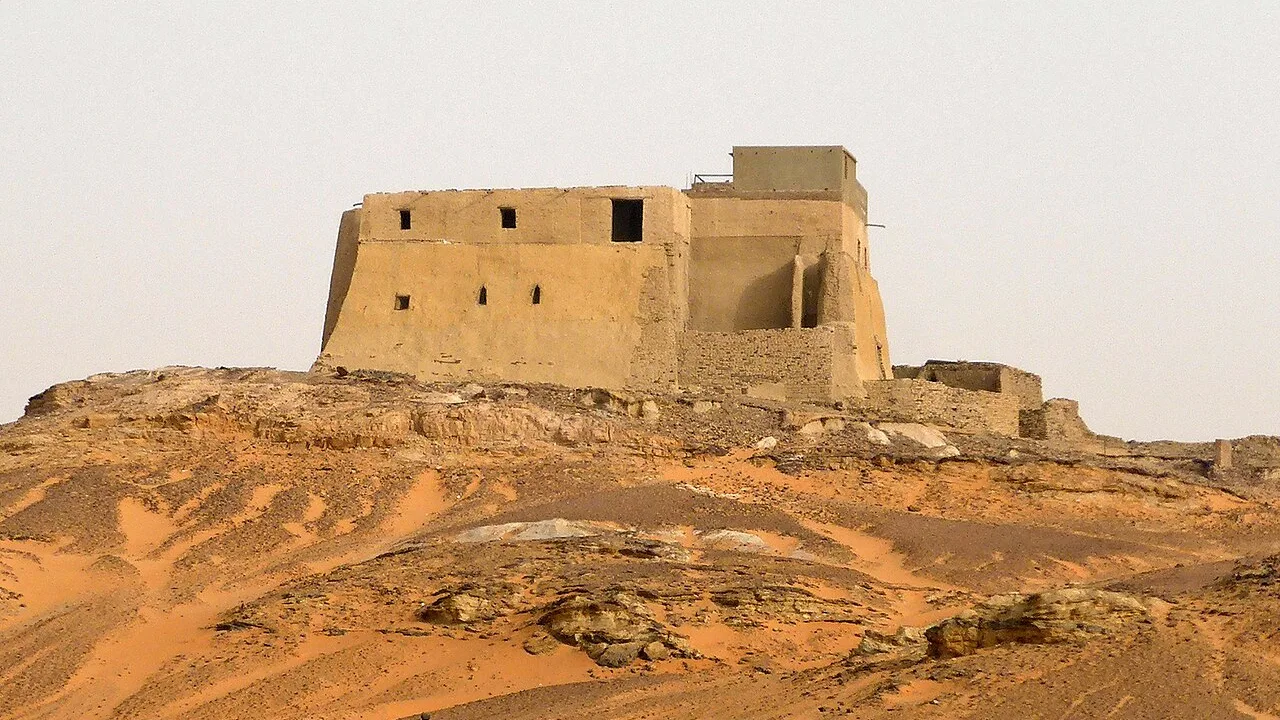
Such extraordinary vertical preservation reflects localized geoarchaeological site formation: collapsed brick vaulting combined with windblown Nubian sand rapidly entombed lower wall courses and staircases, shielding lower strata from modern surface deflation while posing formidable engineering challenges for deep-trench excavation. North of the cathedral district stands the two-story Throne Hall of the Makurian Kings, built in the 9th century CE as a royal audience hall; an extant Arabic foundation inscription records its peaceful ceremonial conversion into a mosque in 1317 CE under King Abdullah Barshambu, making it Sudan's oldest preserved mosque. Subsequent Funj-period domed Sufi saints' tombs (qubbas) and residential quarters continued on the site until urban administration shifted downstream in the early 19th century.
Since 1964, continuous Polish-Sudanese missions initiated by Prof. Kazimierz Michałowski and expanded by Stefan Jakobielski, Włodzimierz Godlewski, and Artur Obłuski have transformed Old Dongola into a cornerstone of medieval African archaeology. Currently inscribed on Sudan's UNESCO World Heritage Tentative List, the site provides irreplaceable primary evidence for indigenous African statehood, Byzantine-Nubian artistic synthesis, and long-term religious transition along the Middle Nile.