
Skip to content
Atlas AnatoliaAtlas Anatolia
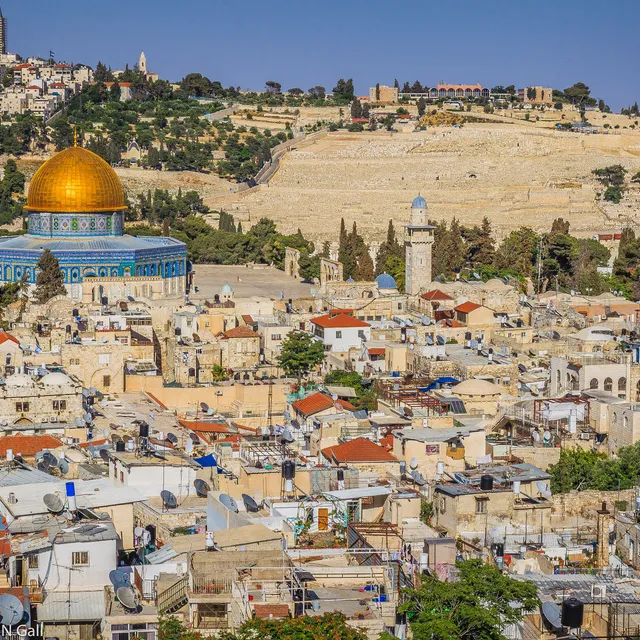
The Dome of the Rock and Temple Mount in the Old City of Jerusalem

Country Record

Longest Continuously Occupied Site in Israel

Old City of Jerusalem

העיר העתיקה / البلدة القديمة1000 BCE – 1900 CE

Walls

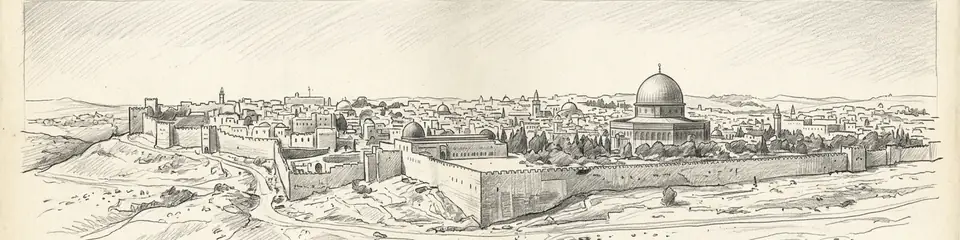
Present Ottoman walls largely 1535–1542 CE (Suleiman)

Area

~0.9 km² within the ramparts

Dome of the Rock

Completed 691 CE under Umayyad caliph Abd al-Malik

Quarters

Jewish, Christian, Muslim, and Armenian quarters

UNESCO

World Heritage Site (1981)

Jerusalem's Old City is the supreme example of a living sacred city where archaeology, scripture, and contemporary worship intersect in every street.”

Location

Overview

The Old City of Jerusalem occupies the southeastern hill of the city on the edge of the Judaean Desert plateau, enclosed since the 16th century by stone walls built under the Ottoman sultan Suleiman the Magnificent. Within this compact space lie the holiest sites of three world religions and one of the densest archaeological palimpsests on Earth: Canaanite and Iron Age settlement, the Herodian Temple Mount platform, Roman Aelia Capitolina, Byzantine churches, early Islamic monuments, Crusader rebuilding, and Mamluk/Ottoman restoration.

For Jews the Temple Mount (Har HaBayit) and the Western Wall (Kotel) — the last standing retaining wall of the Second Temple platform expanded by Herod the Great — anchor religious memory. For Christians the Church of the Holy Sepulchre, maintained by six denominations, marks the traditional sites of crucifixion and resurrection. For Muslims the Haram al-Sharif (Noble Sanctuary) with the Dome of the Rock (691 CE) and Al-Aqsa Mosque is the third holiest place in Islam.

Archaeological work in and around the Old City — the City of David to the south, the Jewish Quarter, the Damascus Gate area — has recovered fortifications, water systems, and domestic quarters spanning three millennia. UNESCO inscribed the Old City of Jerusalem and its Walls in 1981; the site remains among the most visited and most contested heritage places in the world.
Why It Matters

Jerusalem's Old City is the supreme example of a living sacred city where archaeology, scripture, and contemporary worship intersect in every street. Its monuments supplied the architectural vocabulary of three faiths and shaped medieval pilgrimage, Crusader politics, and modern heritage law — making it indispensable for any global atlas of the ancient and historic world.

Stay curious

New stories and sites, once a month. No spam.

Evidence & Interpretation

Distinguishing what is well-established from what remains debated.

Well-Established Facts

2
  • Herodian ashlar masonry and the Western Wall retaining course are securely dated to the late 1st century BCE expansion of the Second Temple platform.
  • The Dome of the Rock inscription and Umayyad historical sources document construction in the 690s CE.

Scholarly Inferences

1
  • The Church of the Holy Sepulchre tradition linking the site to Golgotha and the tomb dates to the 4th-century pilgrimage of Helena; exact identification remains faith-based though Roman-era tombs exist in the area.

Debated Interpretations

1
  • The location and extent of the First Temple structure beneath the Haram al-Sharif are archaeologically inaccessible and politically contested; no consensus exists on visible remains.

More Photos

Museum Artifacts

Community Photos

Share your experience

Have you visited this site? Upload your photos to help others discover it.

How to cite this page

Atlas Anatolia. (1000). Old City of Jerusalem. Atlas Anatolia. https://atlasanatolia.com/site/old-city-jerusalem

Content licensed CC BY-SA 4.0 — attribution required when reusing.

Knowledge Graph

Connections to related sites and stories.

Sources

  • Jerusalem: City of LongingGoldhill, Simon (2008)
  • UNESCO — Old City of JerusalemLink

Research Papers

Frequently Asked Questions

Where is Old City of Jerusalem located?

Old City of Jerusalem is located in Israel.

How old is Old City of Jerusalem?

Old City of Jerusalem dates to approximately 1000 BCE – 1900 CE.

Which civilizations are associated with Old City of Jerusalem?

Old City of Jerusalem is associated with the Roman, Byzantine, Islamic / Medieval, Judean.

Why is Old City of Jerusalem important?

Jerusalem's Old City is the supreme example of a living sacred city where archaeology, scripture, and contemporary worship intersect in every street.

Is Old City of Jerusalem a UNESCO World Heritage Site?

Yes — Old City of Jerusalem is inscribed as a UNESCO World Heritage Site.