Overview
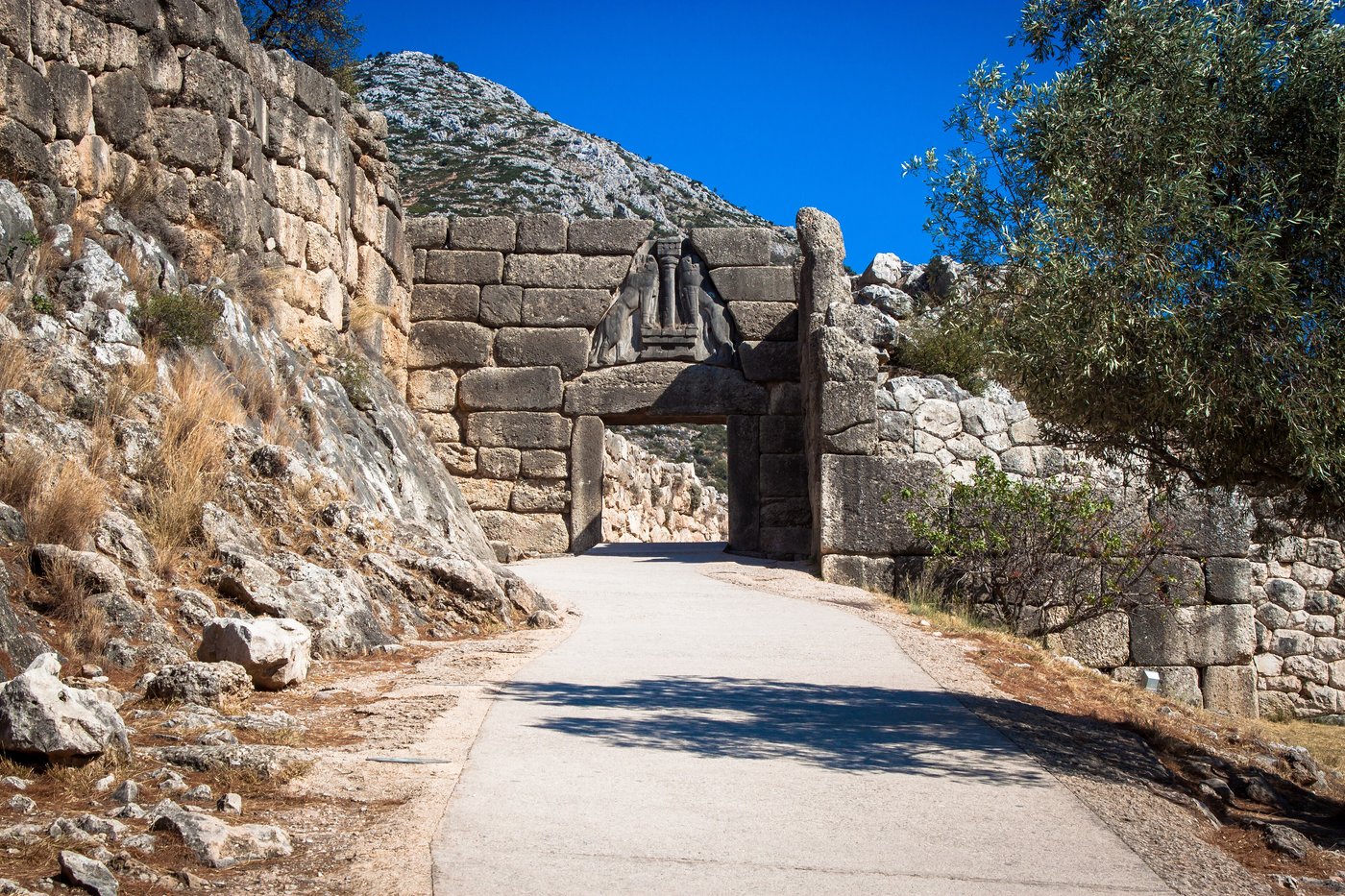
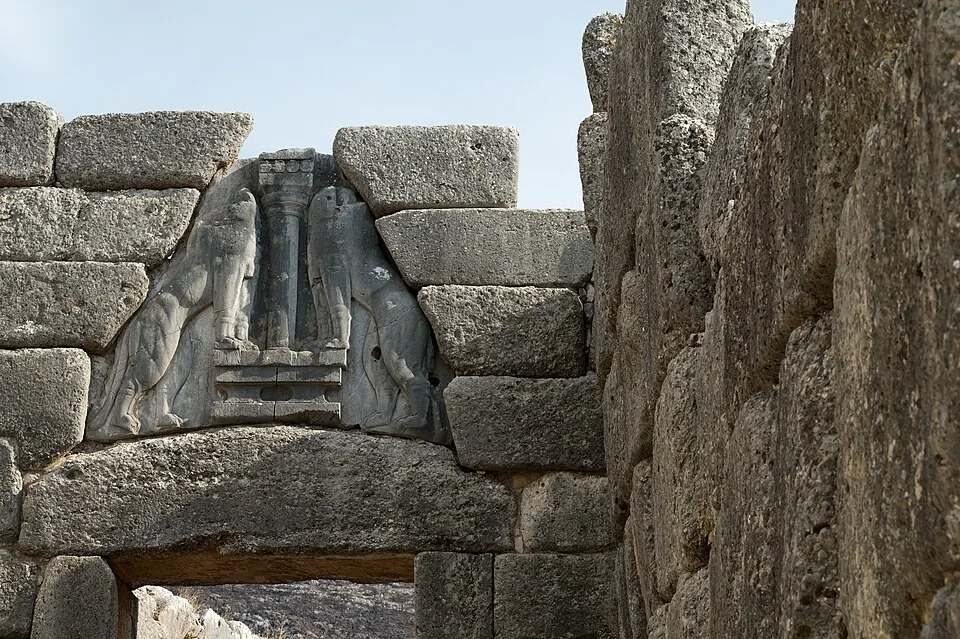
Mycenae crowns a rocky hill between two hills in the Argolid plain of northeastern Peloponnese. From roughly 1750 to 1100 BCE it was among the most powerful centres of the Mycenaean world, a network of palaces writing Greek in Linear B and trading across the eastern Mediterranean. The Lion Gate, two lions flanking a column above the main entrance, is still the site's icon.
Heinrich Schliemann excavated here in 1876, opening Grave Circle A inside the later walls and recovering gold masks, cups, and weapons he attributed to Agamemnon and his family. We now date those shaft graves to the 16th century BCE, centuries before any plausible Trojan War, but the grave goods remain masterpieces of Aegean metalwork. Later Greek excavators and the ongoing work of the Archaeological Society of Athens exposed the palace on the summit, further grave circles, and the tholos tombs called Treasury of Atreus and Tomb of Clytemnestra.
"I have gazed upon the face of Agamemnon — for the gold mask we lifted from the shaft grave seemed to me, in that first moment, the very portrait of the king of men."
— Heinrich Schliemann, telegram to King George of Greece on the discovery of Grave Circle A at Mycenae, 28 November 1876
Linear B tablets from the palace record personnel, offerings, and industries. They confirm that the language of administration was an early form of Greek. Mycenae's collapse around 1100 BCE belongs to the wider Bronze Age crisis that ended palatial economies across the region.
Homer makes Mycenae "rich in gold," home of Agamemnon who leads the Greek coalition against Troy. Whether a single high king ever ruled from here is debated; the archaeology shows elite wealth and fortification, not proof of Homer's genealogy. Pair Mycenae with Tiryns, its neighbour citadel, and Palace of Nestor at Pylos for three mainland palaces named in epic tradition.
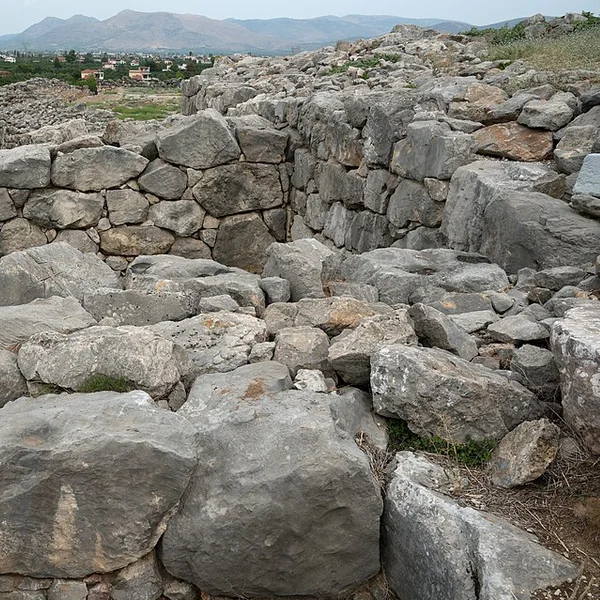
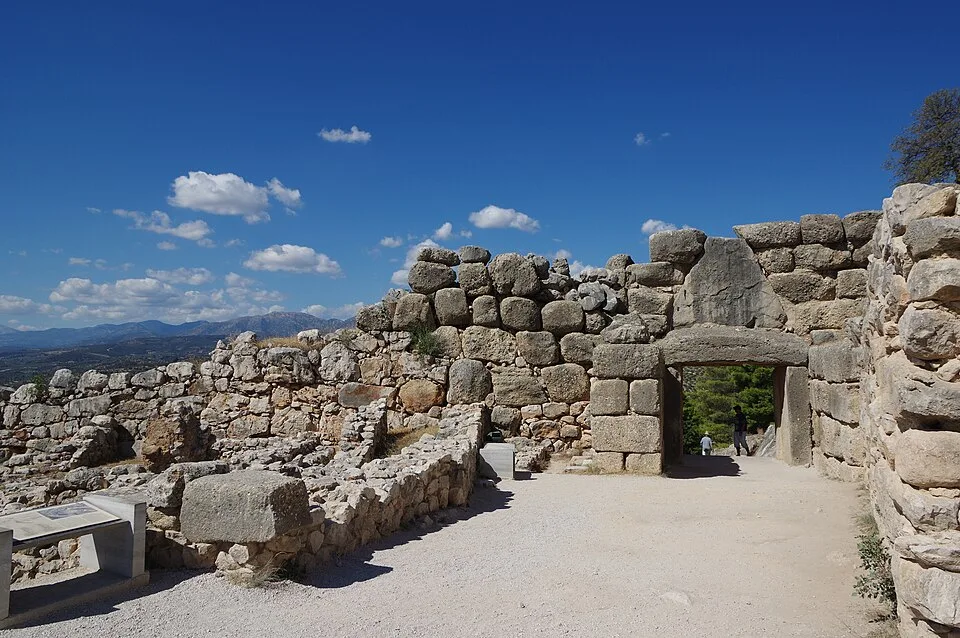
Film crews seeking authentic Cyclopean walls often scout the Argolid. The stones are real even when the dialogue is not.