
Overview
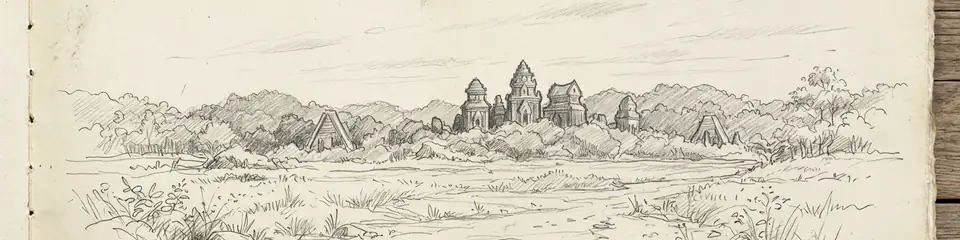
My Son lies in a secluded valley surrounded by jungle-covered mountains in Quang Nam province, central Vietnam, about 40 kilometres from the ancient Cham trading port of Hoi An. The valley was selected as a royal sanctuary by Cham kings around the 4th century CE and remained their principal religious site until the 13th century — nearly a thousand years during which successive dynasties built, repaired, and expanded a complex of more than seventy temples and towers dedicated primarily to the Hindu god Siva.
The Cham were a Malayo-Polynesian-speaking people who dominated central and southern Vietnam from roughly the 2nd to the 15th century CE. Their kingdom absorbed profound cultural influences from India — Hindu religion, Sanskrit learning, temple architecture — while developing a distinctive artistic style of remarkable quality. Royal steles found at My Son record the consecration of temples and the donation of land and slaves to the sanctuary's priests.
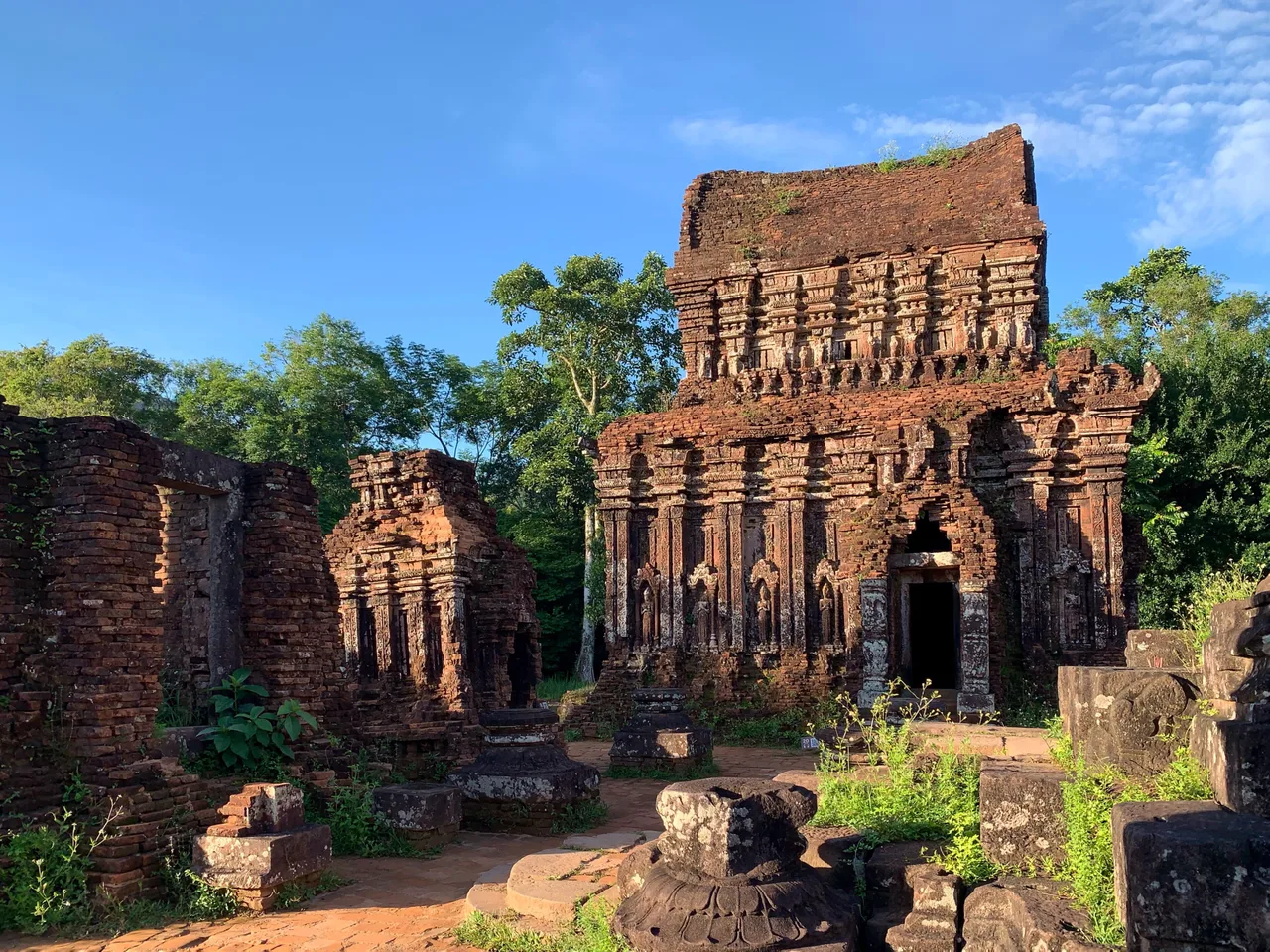
The temples are built in fired brick decorated with elaborate sandstone carvings of Hindu deities, dancers, mythological animals, and abstract ornament. The towers taper into curvilinear spires transformed into a distinctive Cham style from the Indian shikhara. The site suffered severe bombing during the Vietnam War — many towers destroyed in 1969 — and UNESCO inscribed the surviving structures in 1999.