Skip to content
Atlas AnatoliaAtlas Anatolia
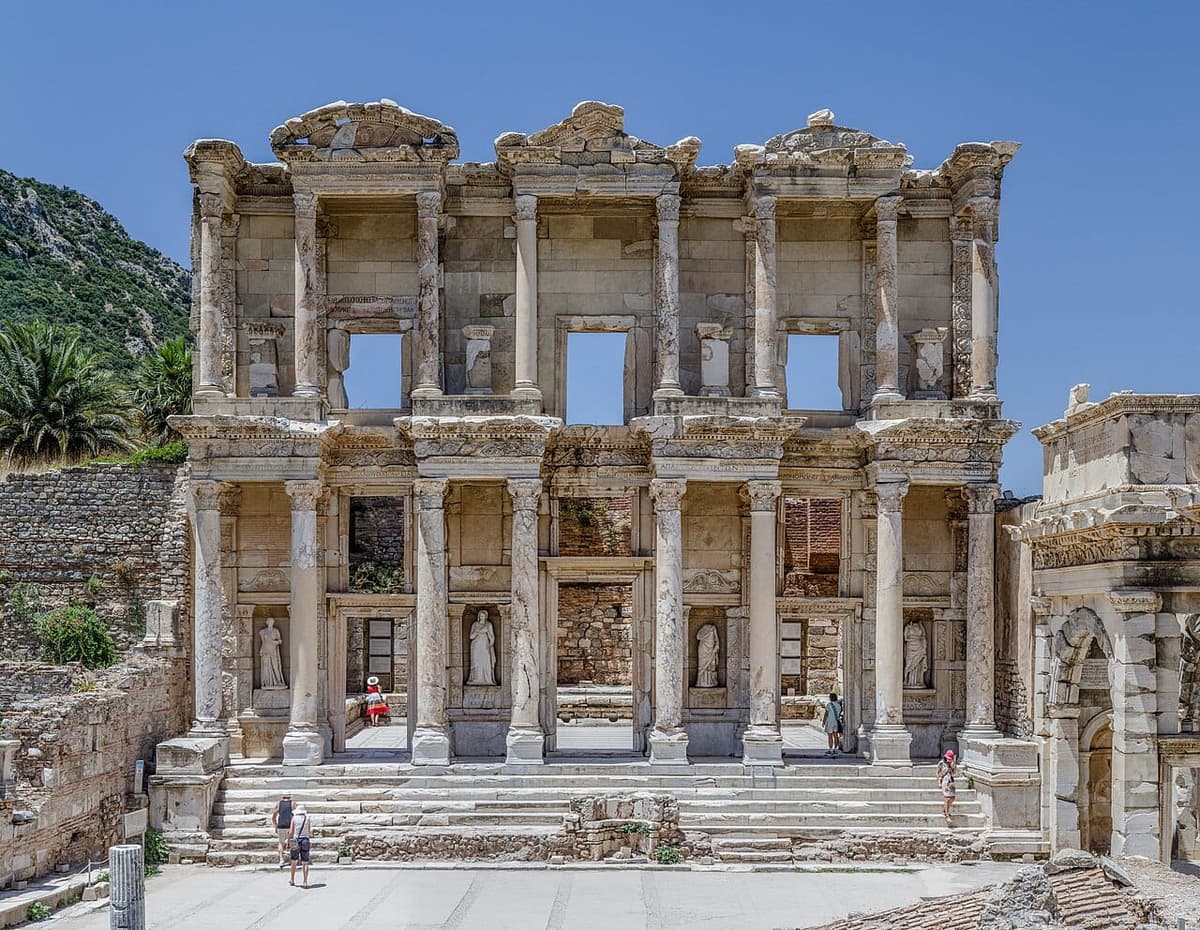
The Library of Celsus at Ephesus

Wikimedia Commons (CC BY-SA)

CityUNESCO

Ephesus

Efes1000 BCE – 700 CE

Major Ionian city near modern Selçuk, once home to the Temple of Artemis and later a Roman metropolis of marble streets, terrace houses, and the Library of Celsus. Paul's epistles and pilgrimage routes kept Ephesus famous after the ancient harbour silted away.

312
Interest 83

Location

İzmir · Aegean · Türkiye

37.94°N · 27.34°E · Asia

Peak Population

~250,000

Theatre Capacity

~25,000

UNESCO Status

World Heritage Site (2015)

Famous Monument

Library of Celsus

Main Excavating Institution

Austrian Archaeological Institute (since 1895)

Major Earthquake Damage

262 CE (Gothic invasion) and 614 CE

Ephesus compresses three thousand years of urban ambition, from Artemis's wonder to Roman marble and early Christian councils.”

From Wikipedia

Ephesus was an ancient Greek city on the coast of Ionia, in present-day Selçuk in İzmir Province, Turkey. During the Classical Greek era, it was one of twelve cities of the Ionian League. The city was famed for the Temple of Artemis, one of the Seven Wonders of the Ancient World.

Read full article on Wikipedia

Location

Overview

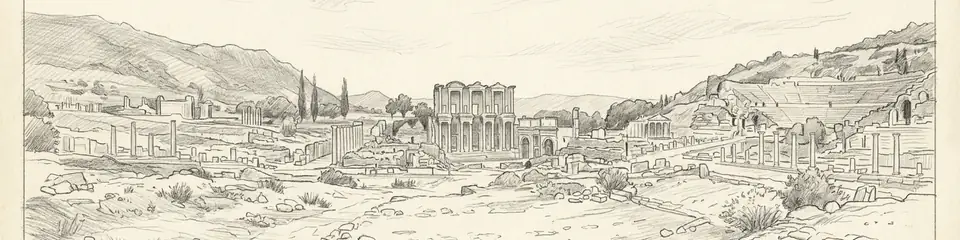
Ephesus lies near the modern town of Selçuk in İzmir Province, where the Cayster (Küçük Menderes) plain meets hills that once held a fortified acropolis. Greeks founded the city in the early Iron Age; under Persian, Hellenistic, and Roman rule it grew into one of the largest urban centres in the Mediterranean, with a population that may have reached hundreds of thousands in the imperial period.

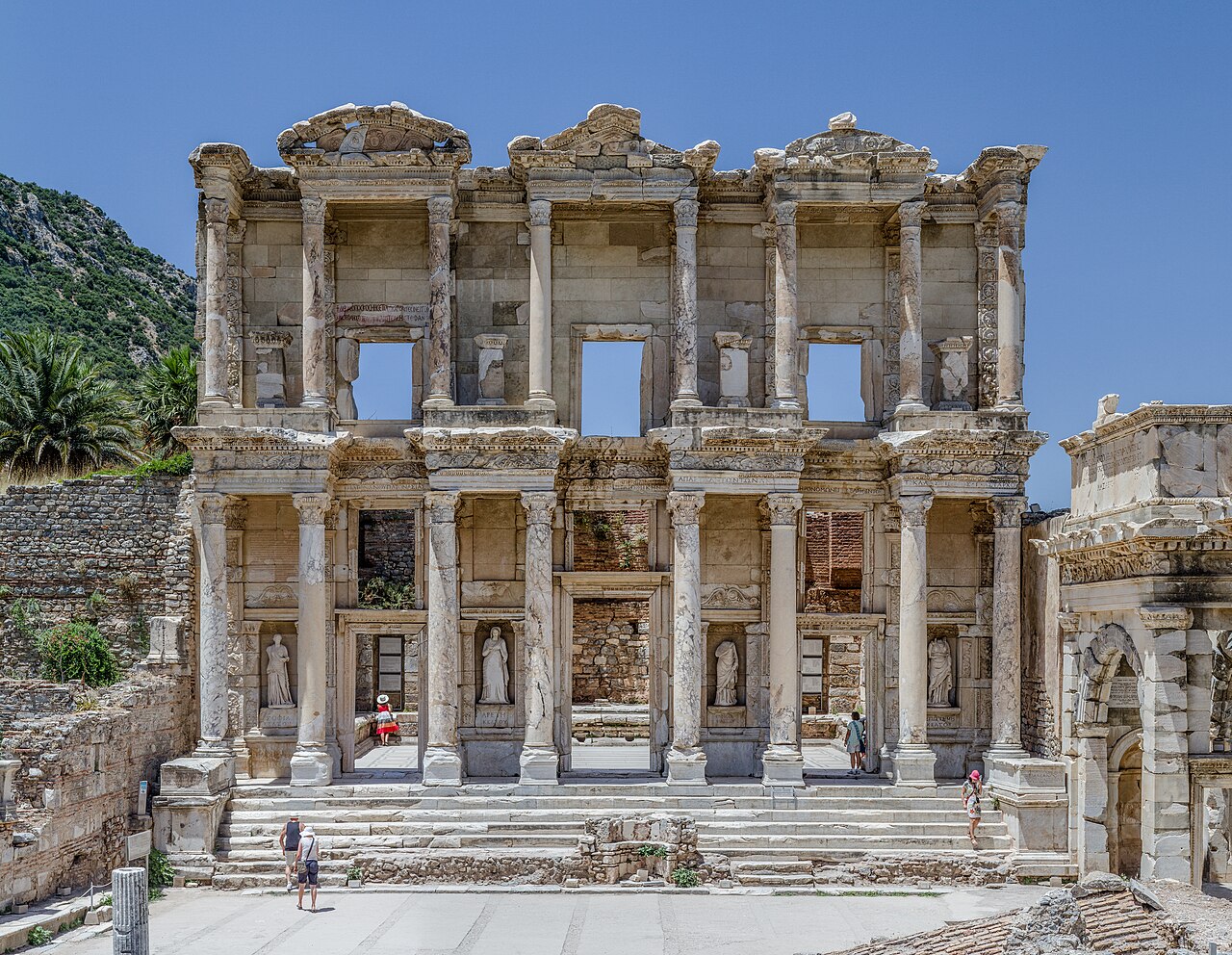
The Temple of Artemis, rebuilt on a marshy terrace, became one of the Seven Wonders of the ancient world. Today a single re-erected column marks the temple platform; most sculpture survives in museums. Roman Ephesus is what visitors walk: the Curetes Street, the façade of the Library of Celsus, the Great Theatre that held an estimated 25,000 spectators, and the terrace houses with frescoes and mosaic floors under protective roofs.
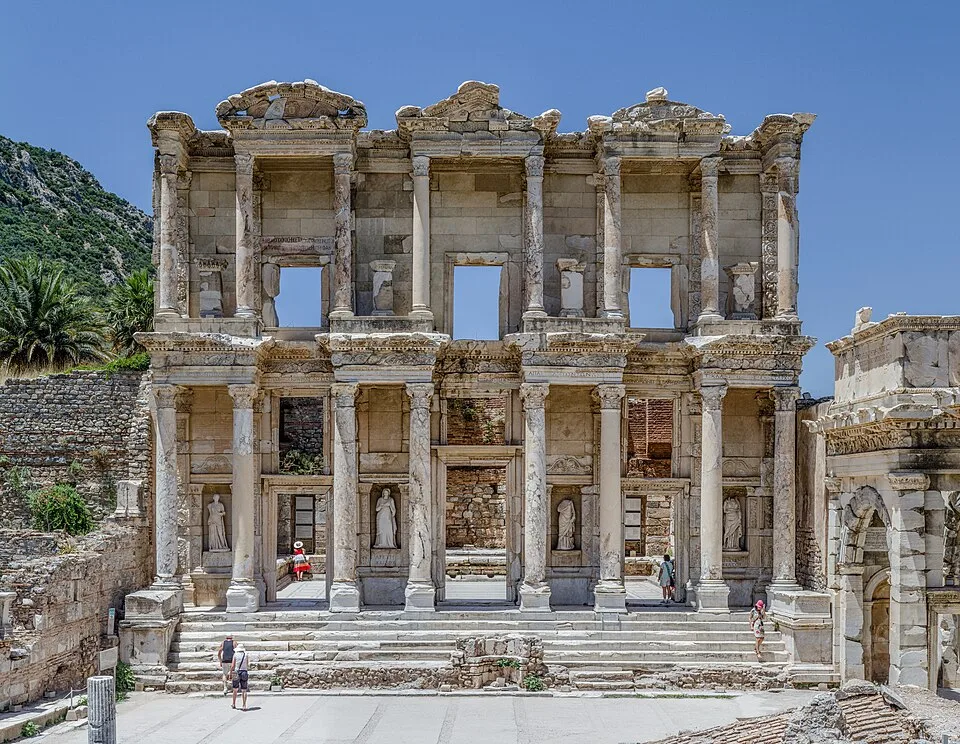
Ephesus Celsus Library Façade

Ephesus Celsus Library Façade | Benh LIEU SONG (CC BY-SA 3.0)

"Great is Artemis of the Ephesians!"
— Acts of the Apostles 19:28, describing the silversmiths' protest (c. 57 CE)

The harbour that made Ephesus rich silted progressively; by Byzantine times the sea had retreated kilometres west. Excavations by Austrian archaeologists since 1895 mapped the marble city; Turkish and international teams continue in the terrace houses and Artemision.
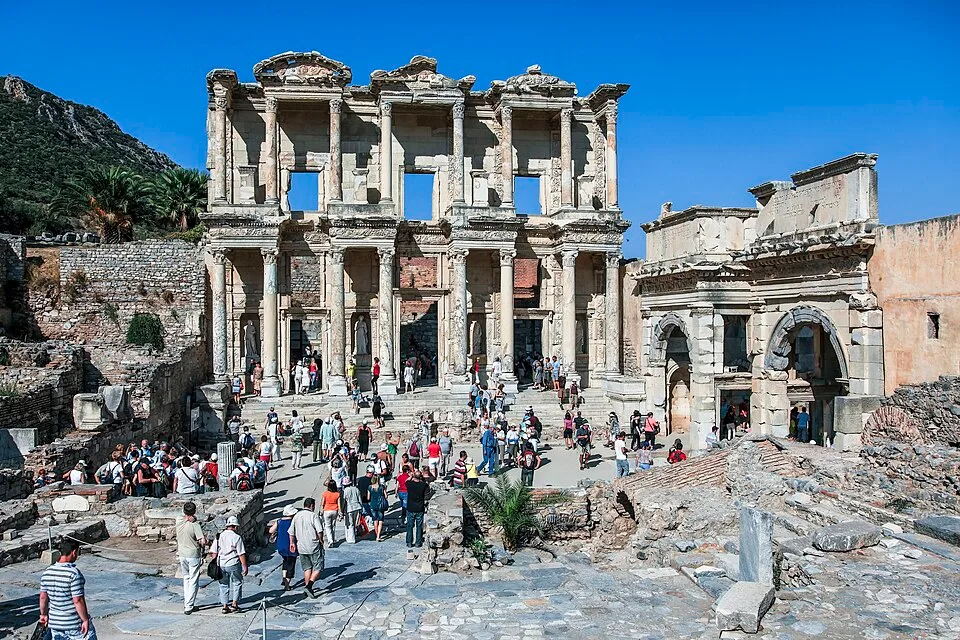
TR.IZ.Selcuk Ephesus Celsus-Library 32 3x2-R 5K

TR.IZ.Selcuk Ephesus Celsus-Library 32 3x2-R 5K | Roy Egloff (CC BY-SA 4.0)

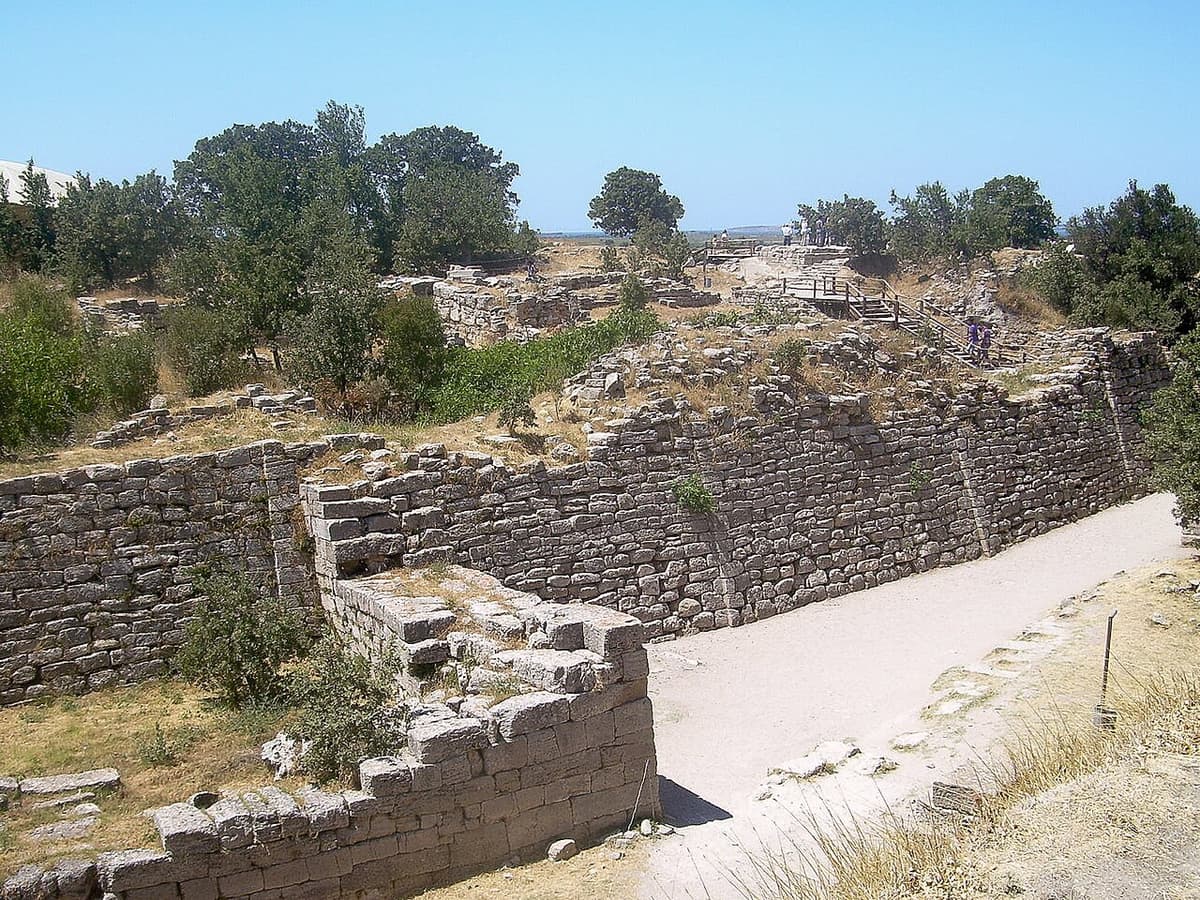
Homer's epics do not stage action at Ephesus, but the Ionian coast belongs to the same Greek-speaking world as Troy and the islands Odysseus wanders. In the Odyssey, Asia Minor appears in stories of storms, raiding, and hospitality; a later reader easily imagines Ephesian harbours in that network. Today Ephesus is a common shore excursion for travellers circling the Aegean after visiting Troy or the Greek mainland palaces.

Film crews love the Library of Celsus façade for its instant "ancient city" readability. The archaeology rewards slower pacing: start at dawn, read the inscriptions, and remember the city was a harbour long before it became a marble stage set.
Why It Matters

Ephesus compresses three thousand years of urban ambition, from Artemis's wonder to Roman marble and early Christian councils. Its terrace houses are among the best-preserved domestic interiors anywhere in the Roman East.

Stay curious

New stories and sites, once a month. No spam.

Evidence & Interpretation

Distinguishing what is well-established from what remains debated.

Well-Established Facts

3
  • The Library of Celsus was built around 117 CE as a monumental tomb for the Roman senator Celsus.
  • The Temple of Artemis was one of the Seven Wonders of the Ancient World.
  • The city declined primarily because its harbor silted up.

Scholarly Inferences

1
  • Ephesus was likely the largest city in Roman Asia with a population of approximately 250,000.

Debated Interpretations

2
  • The exact location and circumstances of the Virgin Mary's residence near Ephesus are based on tradition rather than archaeological evidence.
  • The 'Temple of Domitian' was likely dedicated to the Flavian emperors (Vespasian and Titus) rather than Domitian specifically.

Discovery & Excavation

1863

First excavations

Led by John Turtle Wood

John Turtle Wood began excavations seeking the Temple of Artemis for the British Museum.

1895

Austrian excavations begin

Led by Austrian Archaeological Institute

The Austrian Archaeological Institute began systematic excavations that continue to this day.

1904

Discovery of the Library of Celsus

Led by Rudolf Heberdey (Austrian Archaeological Institute)

The monumental facade of the Library of Celsus was uncovered during excavations directed by Rudolf Heberdey.

1956

Excavation of the Terrace Houses

Led by Franz Miltner (Austrian Archaeological Institute)

Systematic excavation of the luxurious residential complex known as the 'Terrace Houses' or 'Houses on the Slope' began under Franz Miltner.

More Photos

Museum Artifacts

Community Photos

Share your experience

Have you visited this site? Upload your photos to help others discover it.

How to cite this page

Atlas Anatolia. (1000). Ephesus. Atlas Anatolia. https://atlasanatolia.com/site/ephesus

Content licensed CC BY-SA 4.0 — attribution required when reusing.

Knowledge Graph

Connections to related sites and stories.

Read the full article on World History Encyclopedia
World History Encyclopedia · CC BY-NC-SA

Sources

  • Ephesos: Architecture, Monuments & SculpturePeter Scherrer (2000)
  • UNESCO World Heritage — EphesusLink

Research Papers

Frequently Asked Questions

Where is Ephesus located?

Ephesus is located in İzmir, Aegean, Türkiye.

How old is Ephesus?

Ephesus dates to approximately 1000 BCE – 700 CE.

Which civilizations are associated with Ephesus?

Ephesus is associated with the Greek, Roman, Byzantine.

Why is Ephesus important?

Ephesus compresses three thousand years of urban ambition, from Artemis's wonder to Roman marble and early Christian councils.

Is Ephesus a UNESCO World Heritage Site?

Yes — Ephesus is inscribed as a UNESCO World Heritage Site.