The Book of Revelation opens with letters to seven churches. They were not allegories or metaphors — they were real communities in real cities, each still standing today in western Turkey. Walking the circuit that connects them is one of the strangest journeys in the world of archaeological travel: a biblical itinerary overlaid on Hellenistic marble, Roman columns, and Byzantine frescoes, all within a landscape that has been continuously inhabited for millennia.
The Seven Cities
"To the angel of the church in Ephesus write: I know your deeds, your hard work and your perseverance."
— Revelation 2:1–2
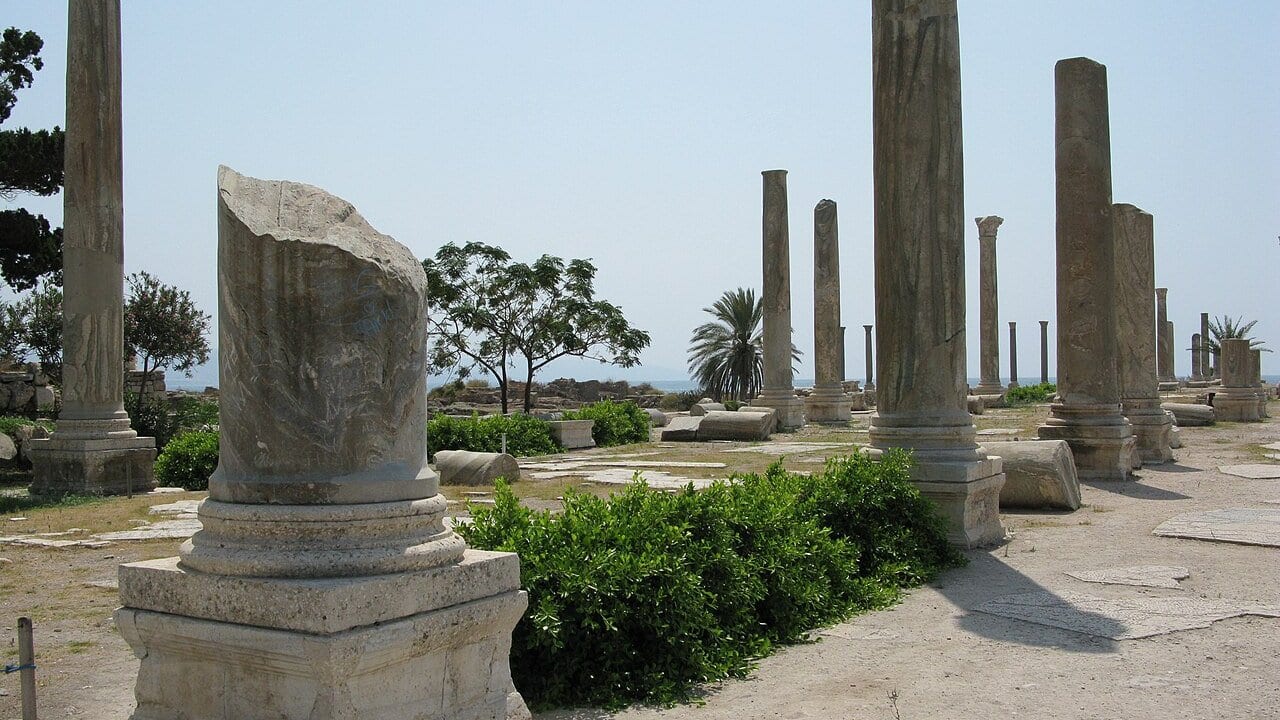
!The Roman Agora of Smyrna with reconstructed colonnade in modern İzmir · Wikimedia Commons")
The order in Revelation — Ephesus, Smyrna, Pergamon, Thyatira, Sardis, Philadelphia, and Laodicea — corresponds roughly to a circular route through the region known in antiquity as Asia Minor. This was not coincidence. The cities formed a postal circuit along Roman roads, and a letter carrier could realistically have delivered messages to each in sequence. The region was among the most prosperous in the Roman Empire, and the communities addressed in the letters were real congregations navigating the complexities of life under Roman rule.
Ephesus: The Greatest City
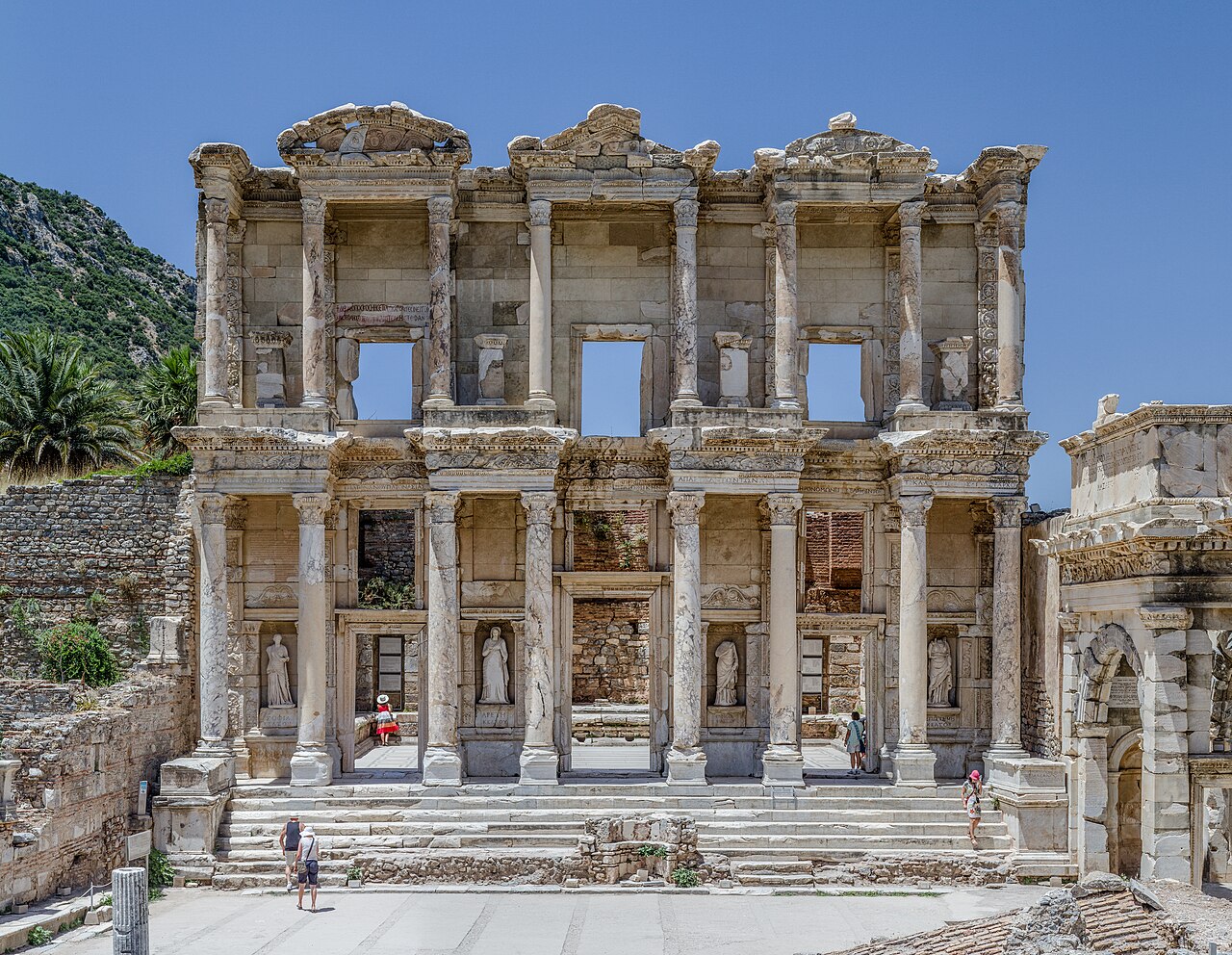
!The Library of Celsus at Ephesus")
Ephesus was, at the time the letters were written (probably late first century CE), among the largest cities in the eastern Roman Empire. Its population has been estimated at several hundred thousand. The Library of Celsus, whose facade still stands, was the third-largest library in the ancient world. The Temple of Artemis, one of the Seven Wonders, stood within walking distance of the city center.
The site today is one of the best-preserved Roman cities anywhere. Marble-paved streets, intact colonnades, a theater that seated twenty-five thousand people — Ephesus offers an immersion in what a wealthy Roman provincial capital actually looked like. The letter to Ephesus in Revelation accuses the community of losing its "first love." Standing in the ruins, you feel the weight of what was once here.
Pergamon: The High City
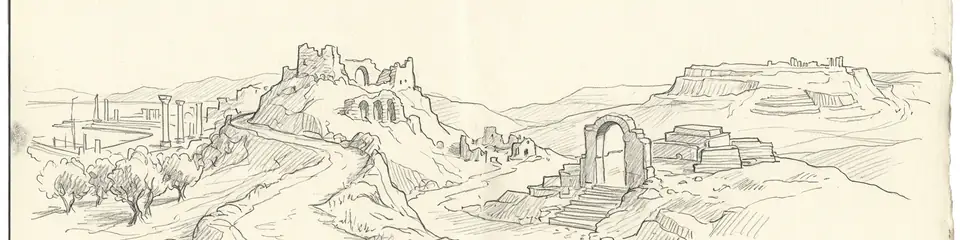
!The Acropolis of Pergamon (Bergama)")
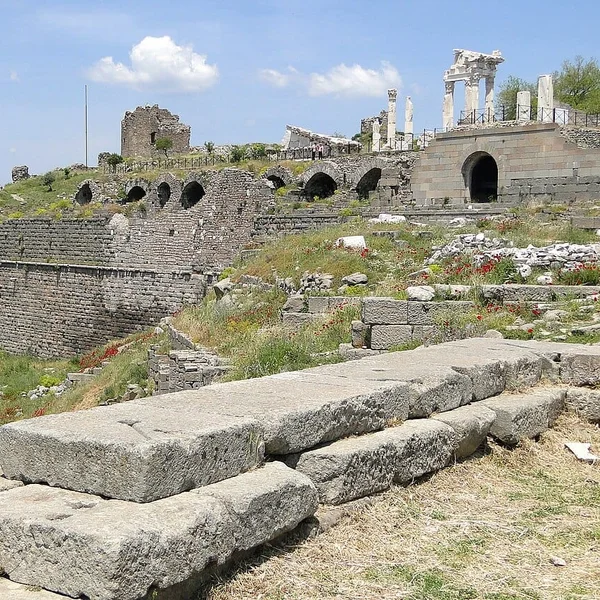
Pergamon sits atop a dramatic acropolis, its theater clinging to a slope so steep that the audience appears to be looking directly into the sky. The city was the capital of the Attalid kingdom before becoming a Roman provincial capital, and its library was so large that Mark Antony reportedly gave its entire collection to Cleopatra as a gift.
The letter to Pergamon mentions "the throne of Satan" — a reference scholars have interpreted as the great altar of Zeus that dominated the acropolis. The altar is now partially reassembled in the Pergamon Museum in Berlin. Walking the site, with its views across the Caicus valley and the distant Aegean, you understand why ancient visitors considered it among the most commanding cityscapes in the world.
Sardis: Where Money Was Invented
!The Bath-Gymnasium complex at Sardis")
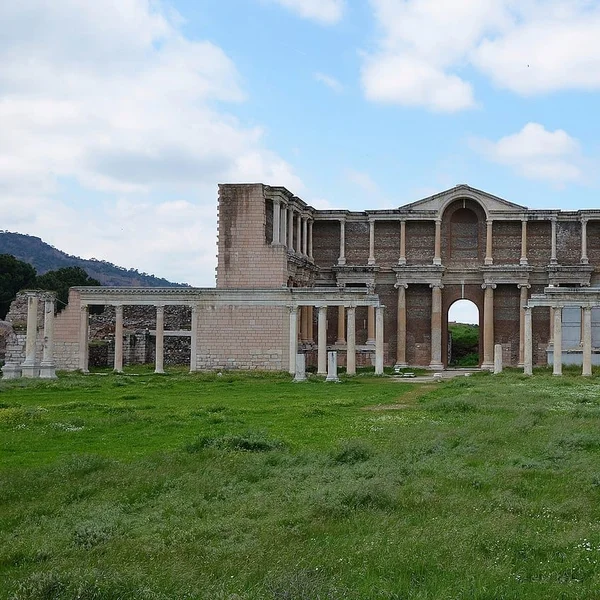
Sardis was the capital of Lydia and, according to ancient tradition, the place where coinage was first struck. The Pactolus River, which flowed through the city and carried gold dust from the mountains, was the material basis for the Lydian wealth that made Croesus a byword for riches. The site today preserves a Roman gymnasium complex — one of the largest in the world — and a synagogue that is itself one of the oldest known in Asia Minor.
The letter to Sardis is among the sternest of the seven, accusing the community of being spiritually "dead" despite its reputation for life. There is something appropriate about this in a city whose real-world history ended in conquest by Cyrus the Great.
Philadelphia and Laodicea: The Last Two
Philadelphia (modern Alaşehir) receives the most encouraging letter of the seven — a community praised for keeping faith "in spite of small power." Little survives above ground, but excavations have revealed traces of the Byzantine city that grew from the ancient one.
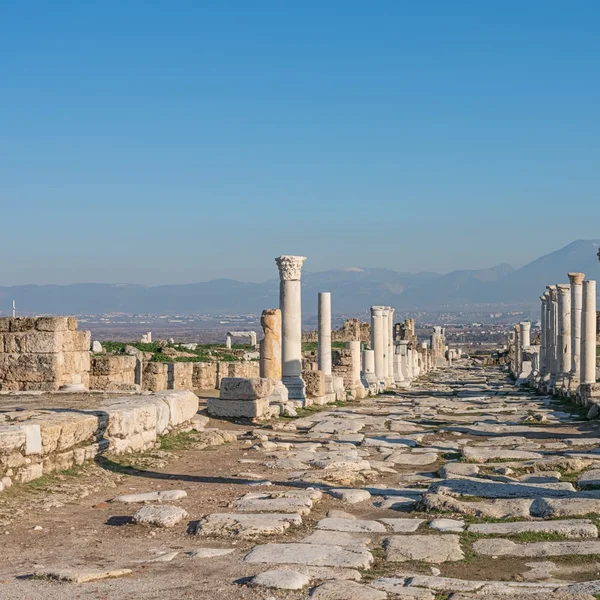
Laodicea, the final city, receives the most famous and most critical letter: the community is described as "lukewarm — neither hot nor cold." Laodicea was a prosperous textile and banking center, and its water supply, drawn from hot springs via aqueduct, arrived at the city at an unpleasantly lukewarm temperature. The metaphor was local, and the locals would have caught it immediately. Active excavation since 2003 has made the site increasingly impressive.
The Journey
The circuit covers roughly 400 kilometers by road and connects some of the most significant sites of the Hellenistic and Roman world. It traces the emergence of Christianity in an empire still dominated by Roman temples and civic religion. As a landscape journey, it crosses river valleys, olive groves, and volcanic plateaus where the ancient and the modern are wound together in ways that resist easy separation.
The letters in Revelation were written for people who lived in these specific cities, at a specific moment, with specific problems and specific histories. Reading them in place — standing where the Temple of Artemis stood, looking out from the theater at Pergamon — recovers something of the original context that no amount of commentary can fully replace.
Türkiye
Ephesus
Major Ionian city near modern Selçuk, once home to the Temple of Artemis and later a Roman metropolis of marbl
Türkiye
Pergamon
A major Hellenistic capital perched on a dramatic acropolis, renowned for its Great Altar, its library rivalin
Türkiye
Sardis
Capital of the Lydian Kingdom, where coinage was likely invented. Home to King Croesus and his legendary wealt
Türkiye
Laodikeia
One of the Seven Churches of the Book of Revelation, this wealthy Roman trading city in the Lycus Valley rival