
Перейти к содержанию
Atlas Anatolia
НовостиЗубы ледникового периода на Сулавеси отодвигают использование бетеля на 25 000 лет назадРимская мозаика и голова Эрота обнаружены в базилике Помпейополиса, Кастамону
Cahokia — United States

Wikimedia Commons (CC BY-SA)

Country Record

Earliest Known Site in United States

ГородЮНЕСКОИзбранное

Cahokia

Seyfi Cem Baskin

1050 н. э. – 1350 н. э.

Massive pre-Columbian city of the Mississippian culture, Cahokia flourished from 1050–1350 CE with monumental earthen mounds and a complex society.

322
Интерес 72

Местоположение

Illinois · Mississippi River Valley · Соединённые Штаты Америки

38.65°N · 90.06°W · Северная Америка

Built

c. 1050 CE

Civilization

Mississippian culture

Discovered

Documented by Europeans in the 17th century; systematic excavations began in the late 19th century

Status

UNESCO World Heritage Site (1982)

Peak Population

10,000–20,000

Area

Approximately 16 km² with over 120 mounds

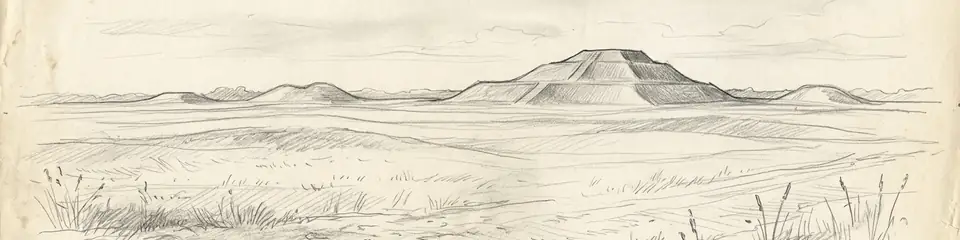
Graphite pencil sketch banner of Cahokia

“Cahokia represents the largest and most influential urban center of prehistoric North America, demonstrating the complexity of indigenous societies before European contact.”

Местоположение

Обзор

Discovery and Early Recognition

European explorers first documented the Cahokia mounds in the 17th century, but systematic archaeological interest began only in the late 19th century. Early antiquarians and local historians, such as John Francis Snyder, mapped and excavated several mounds, though their methods lacked the rigor of modern archaeology. The true scale of the site became apparent with aerial photography in the 1920s, revealing a vast urban complex of over 120 earthen mounds.

The Urban Landscape and Monks Mound

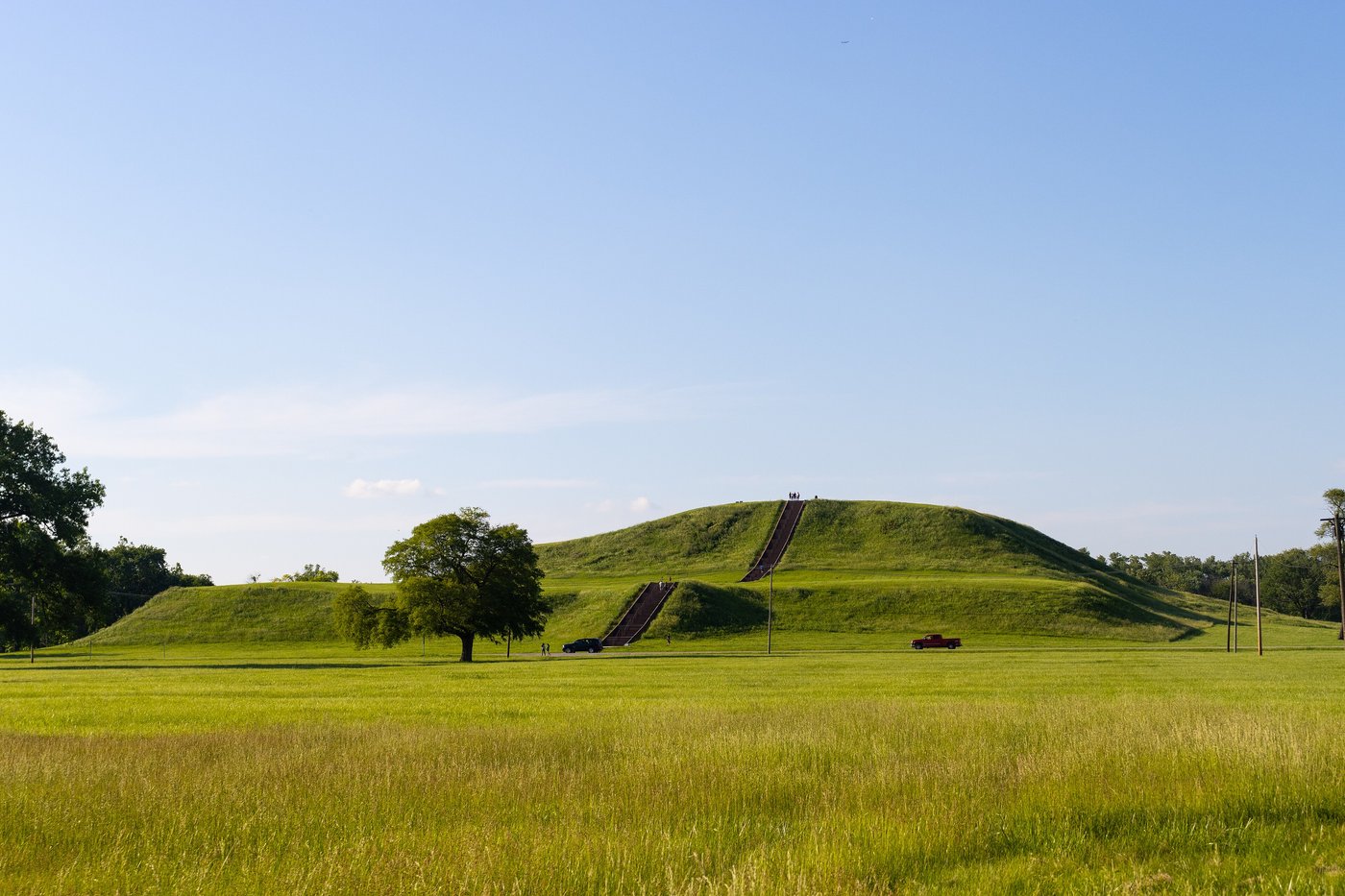
At its heart lies Monks Mound, the largest prehistoric earthwork in the Americas, rising 30 meters and covering 6 hectares. Constructed in stages between 900 and 1200 CE, it likely supported a temple or elite residence. The city extended over 16 square kilometers, with a grand plaza, defensive palisades, and residential zones arranged around dozens of smaller platform and burial mounds. The layout reflects meticulous planning, aligned with solar and lunar cycles, evidenced by the Woodhenge circle—a wooden calendar of posts.
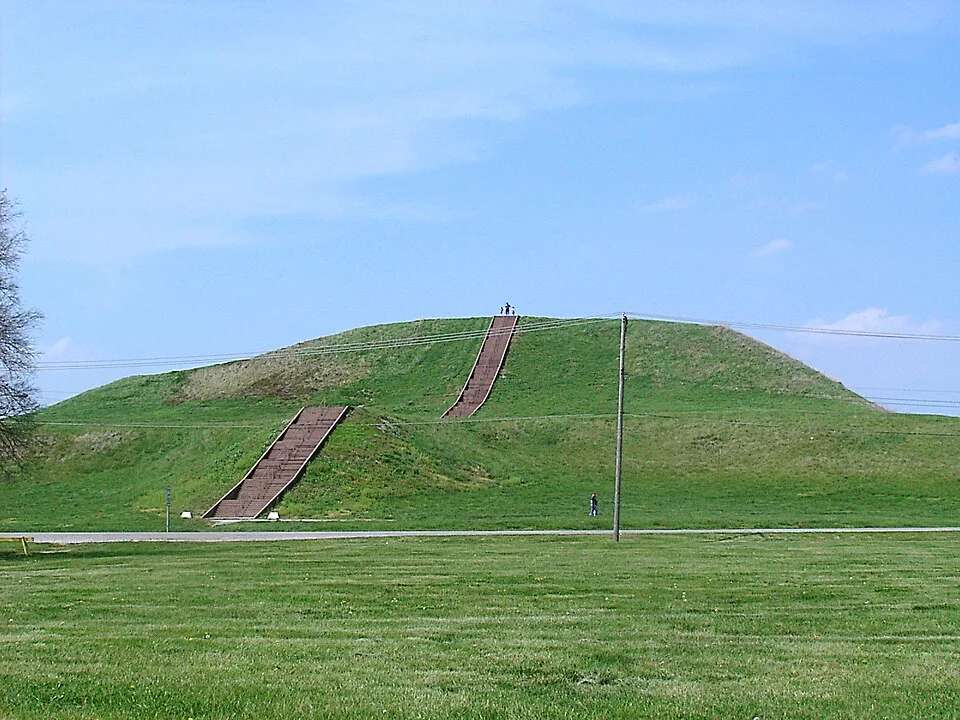
Monks Mound in July
Monks Mound in July | Skubasteve834 (CC BY-SA 3.0)
"The largest mound which has come to my notice is on the eastern bank of the Mississippi opposite St. Louis. It rises in regular flights of terraces, and its base covers nearly seventeen acres."
— Henry Marie Brackenridge, Views of Louisiana, describing Monks Mound at Cahokia (1814)

Society and Ritual Practices

Cahokia supported a peak population of 10,000 to 20,000, sustained by maize agriculture and long-distance trade networks extending to the Great Lakes and Gulf Coast. Archaeological evidence, particularly from Mound 72, reveals a stratified society with elite burials accompanied by sacrificed retainers and elaborate grave goods. The mound contained over 270 individuals, including a respected leader interred on a bed of shell beads. Ritual practices likely centered on fertility, ancestor veneration, and cosmic renewal, integrating the community into a shared ideological system.
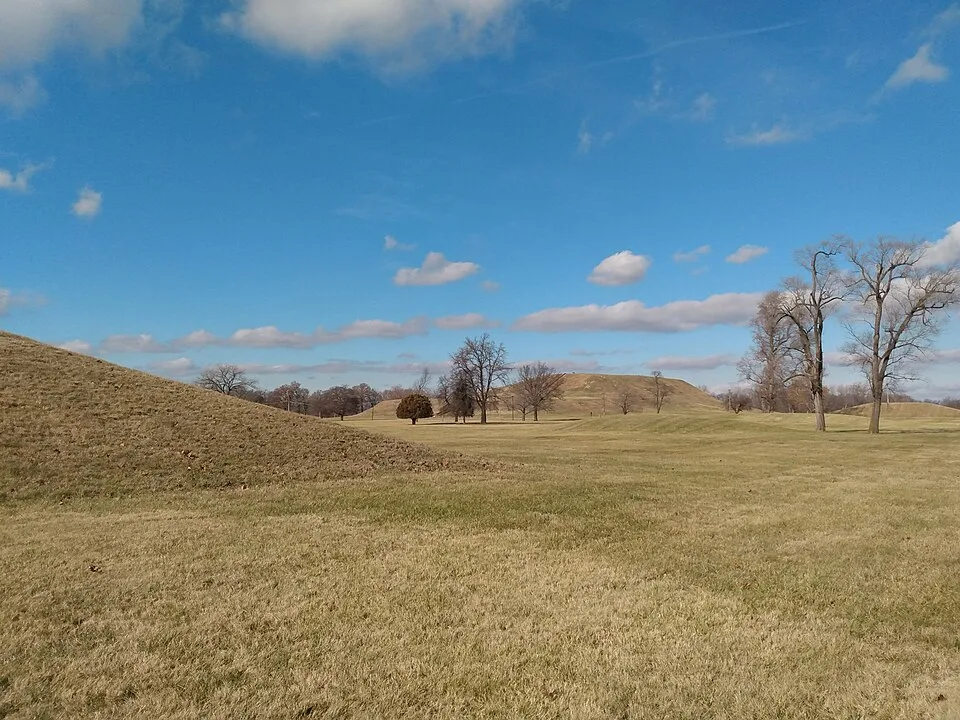
Monks Mound-55
Monks Mound-55 | Clarinetguy097 (CC BY-SA 4.0)

Decline and Abandonment

By 1350 CE, Cahokia was largely abandoned. Multiple factors likely contributed, including prolonged droughts, resource depletion, and flooding. The palisade expansions suggest increasing conflict or social unrest. Some scholars infer that political and ideological shifts led to decentralization, while others debate whether environmental collapse or disease played a primary role. The precise cause remains contested, but the sudden decline ended Cahokia’s regional dominance.

Modern Significance and Conservation

Designated a UNESCO World Heritage Site in 1982, Cahokia is now protected as a state historic site. Ongoing research employs remote sensing and non-invasive techniques to uncover buried features without disturbing the landscape. The site challenges outdated narratives of pre-Columbian North America, demonstrating that complex societies flourished here long before European contact.

Почему это важно

Cahokia represents the largest and most influential urban center of prehistoric North America, demonstrating the complexity of indigenous societies before European contact. Its monumental architecture and trade networks challenge misconceptions about pre-Columbian civilizations in the Mississippi Valley, and its rise and fall offer crucial insights into the dynamics of early urbanism.

Свидетельства и интерпретация

Различать, что хорошо установлено, а что остаётся предметом дискуссий.

Хорошо установленные факты

3
  • Cahokia was the largest pre-Columbian settlement north of Mexico, with a population exceeding 10,000 at its peak.
  • Monks Mound, the central platform mound, rises to 30 meters and covers 6 hectares at its base.
  • Mound 72 contains the remains of over 270 individuals, including a prominent burial with numerous grave goods and evidence of ritual sacrifice.

Научные выводы

2
  • Cahokia's decline was likely due to a combination of environmental degradation, flooding, and social strife.
  • The site's layout, with a central plaza and solar alignments, suggests a sophisticated understanding of astronomy and cosmology.

Спорные интерпретации

2
  • Whether Cahokia was a state-level society or a chiefdom remains contested.
  • The role of maize agriculture in supporting the city's population and its relationship to social complexity is debated.

Открытие и раскопки

Modern conservation and research

Под руководством Various

Ongoing management by the Illinois Historic Preservation Agency; remote sensing and non-invasive techniques continue to reveal new features.

1860–1880

Early Antiquarian Investigations

Под руководством John Francis Snyder

Initial surveys and mound explorations by local historians and antiquarians, including the work of John Francis Snyder.

1960–1970

University of Illinois Excavations

Под руководством Melvin Fowler, Warren Wittry

Large-scale excavations led by Melvin Fowler and Warren Wittry, revealing the palisade and Mound 72.

1980–1990

Fai-270 Archaeological Project

Под руководством James B. Griffin, et al.

Salvage archaeology due to highway construction, uncovering extensive residential areas and refining chronology.

1990–2000

Woodhenge Investigations

Под руководством William Iseminger

Excavations at the Woodhenge solar calendar, led by William Iseminger, revealing multiple construction phases.

Фотографии сообщества

Поделитесь своими впечатлениями

Вы посещали это место? Загрузите свои фотографии, чтобы помочь другим открыть его для себя.

Как цитировать эту страницу

Atlas Anatolia. (1050). Cahokia. Atlas Anatolia. https://atlasanatolia.com/ru/site/cahokia

Материалы распространяются по лицензии CC BY-SA 4.0 — при повторном использовании указание авторства обязательно.

Источники

  • Pauketat (2009), Cahokia: Ancient America's Great City on the Mississippi — Timothy R. Pauketat (2009)
  • The Rise and Fall of Cahokia — Thomas E. Emerson (1997)
  • Cahokia's Mound 72: A Prehistoric Cemetery and its Meaning — Melvin L. Fowler (1974)
  • Pauketat and Emerson (1997), Cahokia: Domination and Ideology in the Mississippian World — Timothy R. Pauketat, Thomas E. Emerson (1997)
  • UNESCO World Heritage entry for Cahokia MoundsСсылка

Часто задаваемые вопросы

Где находится Cahokia?

Cahokia находится в Illinois, Mississippi River Valley, United States.

Сколько лет Cahokia?

Cahokia датируется приблизительно 1050 н. э. – 1350 н. э..

С какими цивилизациями связано место Cahokia?

Cahokia связано с цивилизацией: Mississippian.

Почему Cahokia имеет важное значение?

Cahokia represents the largest and most influential urban center of prehistoric North America, demonstrating the complexity of indigenous societies before European contact.

Входит ли Cahokia в список Всемирного наследия ЮНЕСКО?

Да — Cahokia включено в список Всемирного наследия ЮНЕСКО.