
콘텐츠로 건너뛰기
Atlas Anatolia
디그
뉴스술라웨시 빙하기 치아에서 빈랑 사용 25,000년 전까지 소급카스타모누 폼페이오폴리스 바실리카에서 로마 모자이크와 에로스 두상 발견
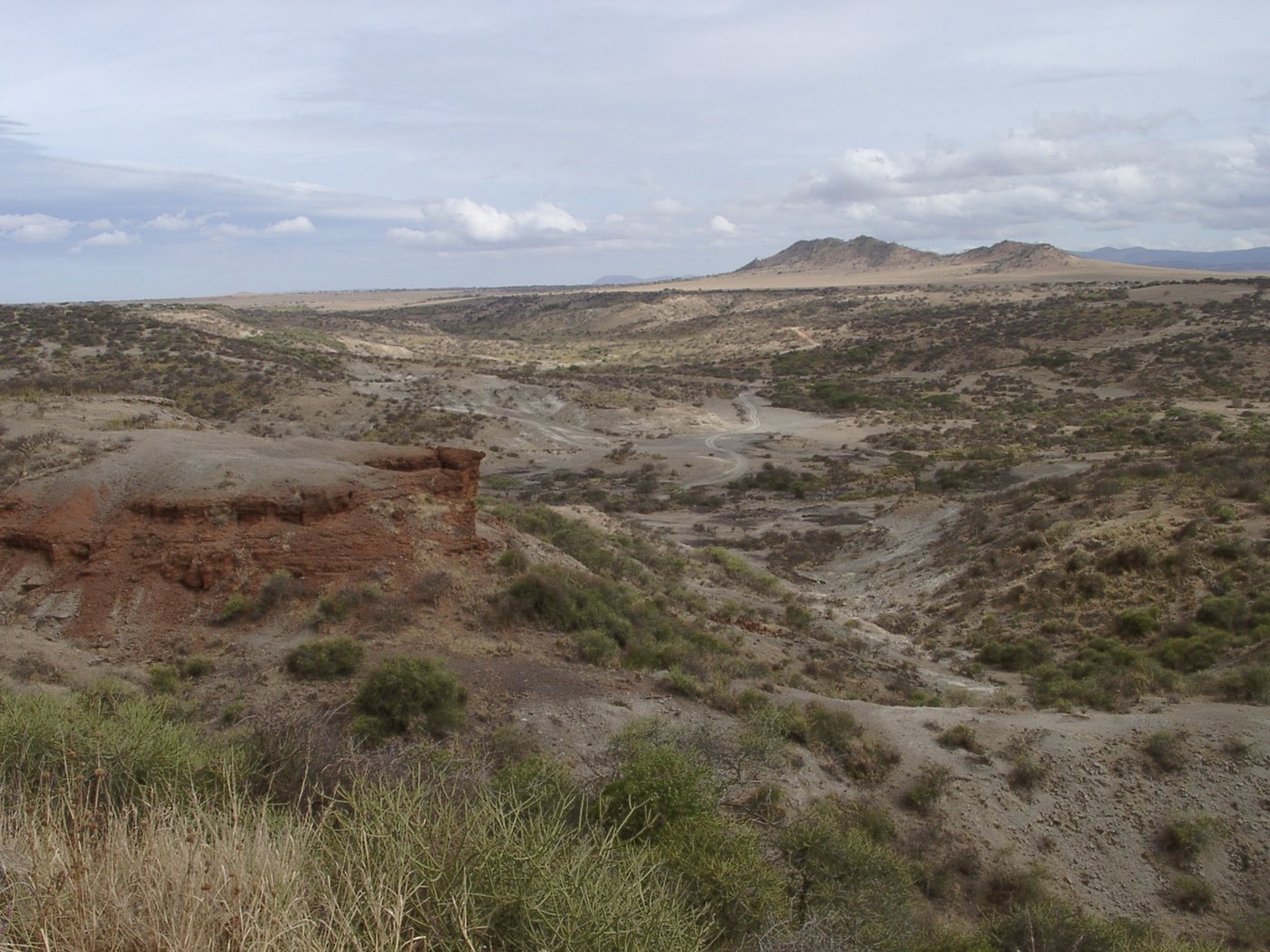
Olduvai Gorge — Tanzania

Wikimedia Commons (CC BY-SA)

World Record

Oldest Known Site in the World

복합 단지유네스코

Olduvai Gorge

Seyfi Cem Baskin

Oldupai1900000 기원전 – 10000 기원전

Olduvai Gorge, Tanzania, exposes a 1.9 million-year record of human evolution, preserving early stone tools and fossils of key hominins like Paranthropus boisei and Homo habilis.

322
관심 68

위치

Arusha Region · Great Rift Valley · 탄자니아

2.99°S · 35.35°E · 아프리카

Occupation Period

~1.9 million BCE – 10,000 BCE

Civilization

Oldowan and Acheulean toolmakers (pre-modern humans)

Discovered

1911 by Wilhelm Kattwinkel; systematically excavated by Louis and Mary Leakey from 1931

Status

UNESCO World Heritage Site (inscribed 1979)

Key Fossils

Paranthropus boisei (1959), Homo habilis (1960), Homo erectus

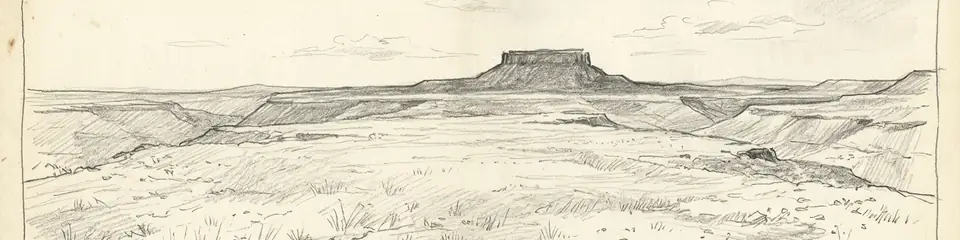
Graphite pencil sketch banner of Olduvai Gorge

“Olduvai Gorge is the most iconic site documenting the early stages of human evolution in Africa.”

위치

개요

Discovery and Excavation History

Olduvai Gorge was first brought to scientific attention in 1911 by German entomologist Wilhelm Kattwinkel, who stumbled upon fossil bones while chasing butterflies. However, it was not until 1931 that Louis Leakey, convinced of Africa’s importance for human origins, began systematic excavations. Joined by Mary Leakey in 1935, the couple’s decades-long work laid the foundation for East African paleoanthropology. Their most celebrated find came in 1959, when Mary discovered the cranium of Paranthropus boisei (then Zinjanthropus), dated to 1.75 million years ago. This was followed by the 1960 discovery of Homo habilis, a species with a larger brain and tool-making capabilities, which Leakey argued was the earliest member of our genus.

Stratigraphy and Dating

The gorge cuts through a sequence of volcanic and sedimentary beds that span the Early to Middle Pleistocene. The main fossiliferous units are Beds I–IV, with Bed I dated to approximately 2.0–1.75 million years ago, Bed II 1.75–1.5 million years ago, Bed III between 1.5 and 0.6 million years ago, and the overlying Bed IV continuing into the Middle Pleistocene. The uppermost Masek and Ndutu Beds document the later Acheulean and Middle Stone Age. Radiometric dating of intercalated tuffs—especially the Basalt Tuff (1.88 Ma) and Naabi Ignimbrite (2.012 Ma)—alongside paleomagnetic analysis, provides a robust chronostratigraphic framework. This precise dating makes Olduvai the primary reference sequence for Plio-Pleistocene archaeology in Africa.
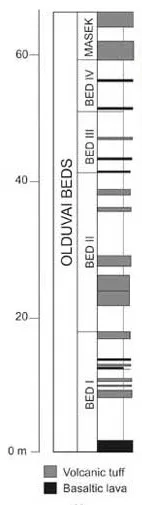
Generalized stratigraphy of Olduvai Gorge - 245-1227-1-PB-C
Generalized stratigraphy of Olduvai Gorge - 245-1227-1-PB-C | McHenry, L, Njau, J, Pante, M and de la Torre, I 2012 (CC BY 3.0)
"On 17 July 1959 Mary discovered a hominid jaw fragment in Bed I of Olduvai Gorge — the skull we came to call Zinjanthropus. With its discovery, the prehistory of Africa, and indeed of all mankind, was at one stroke made very much older."
— Louis Leakey, announcing the Zinjanthropus boisei discovery at Olduvai, in Olduvai Gorge: A Report on the Evolution of the Hand-Axe Culture (1965)

Hominin Fossils and Cultural Remains

Olduvai has yielded multiple hominin taxa, including Paranthropus boisei (a robust australopith), Homo habilis, Homo erectus (or early Homo sapiens), and the enigmatic Homo rudolfensis. The site is equally famous for its stone tool industries: the Oldowan—the world’s earliest lithic technology—characterized by simple pebble tools and flakes, appears in Bed I at around 1.9 million years ago. The transition to more sophisticated Acheulean handaxes is seen in Bed II and later, demonstrating cognitive and technological advancement. Associated butchery-marked bones, plant remains, and living floors (e.g., the Zinj site and the DK site with a potential stone circle) offer rare insights into hominin behavior, including meat-eating, scavenging, and perhaps early social organization.
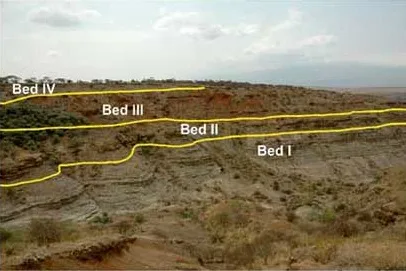
Section of Olduvai Gorge with the position of the main sedimentary beds - 245-1227-1-PB-D
Section of Olduvai Gorge with the position of the main sedimentary beds - 245-1227-1-PB-D | McHenry, L, Njau, J, Pante, M and de la Torre, I 2012 (CC BY 3.0)

Significance in Human Evolution

Olduvai Gorge is a cornerstone of paleoanthropology. The finds here shifted the focus of human origins from Asia to Africa and established that tool-making and larger brains emerged much earlier than previously thought. The sequence encapsulates the transition from small-brained australopiths to early Homo, and from simple Oldowan choppers to the Acheulean handaxe tradition. It remains a key reference for understanding the environmental contexts of these changes, as interleaved lake and savanna sediments document fluctuating climates. Moreover, Mary Leakey’s meticulous excavations set new standards for archaeological methodology.

Current Research and Conservation

Today, Olduvai Gorge is a UNESCO World Heritage Site. Research continues under the Olduvai Gorge Archaeological Project (OGAP) and other international teams, focusing on high-resolution dating, paleoecology, and early hominin cognitive evolution. New fossil discoveries, such as a 1.8 million-year-old hominin pelvis (OH 62) and a 1.34 million-year-old Homo erectus partial hand (OH 86), continue to refine our understanding. Conservation efforts combat erosion and illegal fossil collecting, while the site museum educates the public on this critical chapter of human prehistory.

중요성

Olduvai Gorge is the most iconic site documenting the early stages of human evolution in Africa. Its long stratigraphic record, securely dated stone tool industries, and wealth of hominin fossils have established the East African Rift as the cradle of humankind and provided a foundational sequence for understanding technological and biological change over nearly two million years.

증거와 해석

확립된 사실과 논쟁 중인 사항을 구분합니다.

잘 확립된 사실

3
  • Olduvai Gorge contains the earliest documented Oldowan stone tools, dating to approximately 1.9 million years ago.
  • Paranthropus boisei and Homo habilis coexisted at Olduvai around 1.75 million years ago, as shown by fossils from Beds I and II.
  • The transition from Oldowan to Acheulean technology is recorded in Bed II, with handaxes appearing around 1.5 million years ago.

학술적 추론

2
  • Homo habilis was likely the primary maker of Oldowan tools, based on its larger brain size and association with tool-bearing levels.
  • The concentration of tools and bones at sites like FLK Zinj suggests central-place foraging and meat-processing activities.

논쟁 중인 해석

2
  • The taxonomic validity and phylogenetic placement of Homo habilis remain contested, with some researchers arguing it should be split or reassigned.
  • Whether Paranthropus boisei also made or used stone tools is unresolved, as both it and early Homo are found in tool-bearing contexts.

발견과 발굴

1911–1911

Initial Discovery by Wilhelm Kattwinkel

지휘 Wilhelm Kattwinkel

German entomologist Wilhelm Kattwinkel collected fossil remains, including the first hominin tooth, while on a butterfly-collecting expedition, bringing the site to scientific attention.

1931–1959

Louis and Mary Leakey's Founding Excavations

지휘 Louis and Mary Leakey

Louis Leakey began systematic excavations in 1931, joined by Mary Leakey in 1935. Their work culminated in the 1959 discovery of Paranthropus boisei, establishing Olduvai as a key site for human origins.

1960–1986

Mary Leakey's Detailed Excavations and Tool Classification

지휘 Mary Leakey

Following the 1960 discovery of Homo habilis, Mary Leakey directed extensive excavations, meticulously documenting Oldowan and Acheulean assemblages and establishing a rigorous typology that remains influential.

1989

Olduvai Gorge Archaeological Project (OGAP) and Modern Research

지휘 Various international teams

Multidisciplinary teams led by researchers such as Richard Hay, Tim White, and later Jackson Njau and others have conducted high-resolution dating, taphonomic studies, and re-excavations with modern methods, continuing to the present.

커뮤니티 사진

당신의 경험을 공유하세요

이 유적지를 방문하셨나요? 다른 탐험가들을 위해 사진을 업로드해 보세요.

이 페이지 인용 방법

Atlas Anatolia. (1900000). Olduvai Gorge. Atlas Anatolia. https://atlasanatolia.com/ko/site/olduvai-gorge

콘텐츠는 CC BY-SA 4.0 라이선스에 따라 제공됩니다 — 재사용 시 출처 표시가 필요합니다.

출처

  • Leakey, M. D. (1971), Olduvai Gorge: Excavations in Beds I and II, 1960–1963 — Mary D. Leakey (1971)
  • Leakey, L. S. B. (1965), Olduvai Gorge 1951–61: Fauna and Background — Louis S. B. Leakey (1965)
  • Hay, R. L. (1976), Geology of the Olduvai Gorge — Richard L. Hay (1976)
  • Blumenschine, R. J. & Masao, F. T. (1991), 'Living sites at Olduvai Gorge? Landscape perspectives on the last two million years', Journal of Human Evolution — R. J. Blumenschine and F. T. Masao (1991)
  • De la Torre, I. (2011), 'The origins of stone tool technology in Africa: a historical perspective', Philosophical Transactions of the Royal Society B — Ignacio de la Torre (2011)
  • UNESCO World Heritage Centre – Ngorongoro Conservation Area (includes Olduvai Gorge)링크

자주 묻는 질문

Olduvai Gorge은(는) 어디에 위치해 있나요?

Olduvai Gorge은(는) Arusha Region, Great Rift Valley, Tanzania에 위치해 있습니다.

Olduvai Gorge의 연대는 언제인가요?

Olduvai Gorge의 연대는 대략 1900000 기원전 – 10000 기원전로 거슬러 올라갑니다.

Olduvai Gorge이(가) 중요한 이유는 무엇인가요?

Olduvai Gorge is the most iconic site documenting the early stages of human evolution in Africa.

Olduvai Gorge은(는) 유네스코 세계유산인가요?

예 — Olduvai Gorge은(는) 유네스코 세계유산으로 등재되어 있습니다.