
콘텐츠로 건너뛰기
Atlas Anatolia
디그
뉴스술라웨시 빙하기 치아에서 빈랑 사용 25,000년 전까지 소급카스타모누 폼페이오폴리스 바실리카에서 로마 모자이크와 에로스 두상 발견
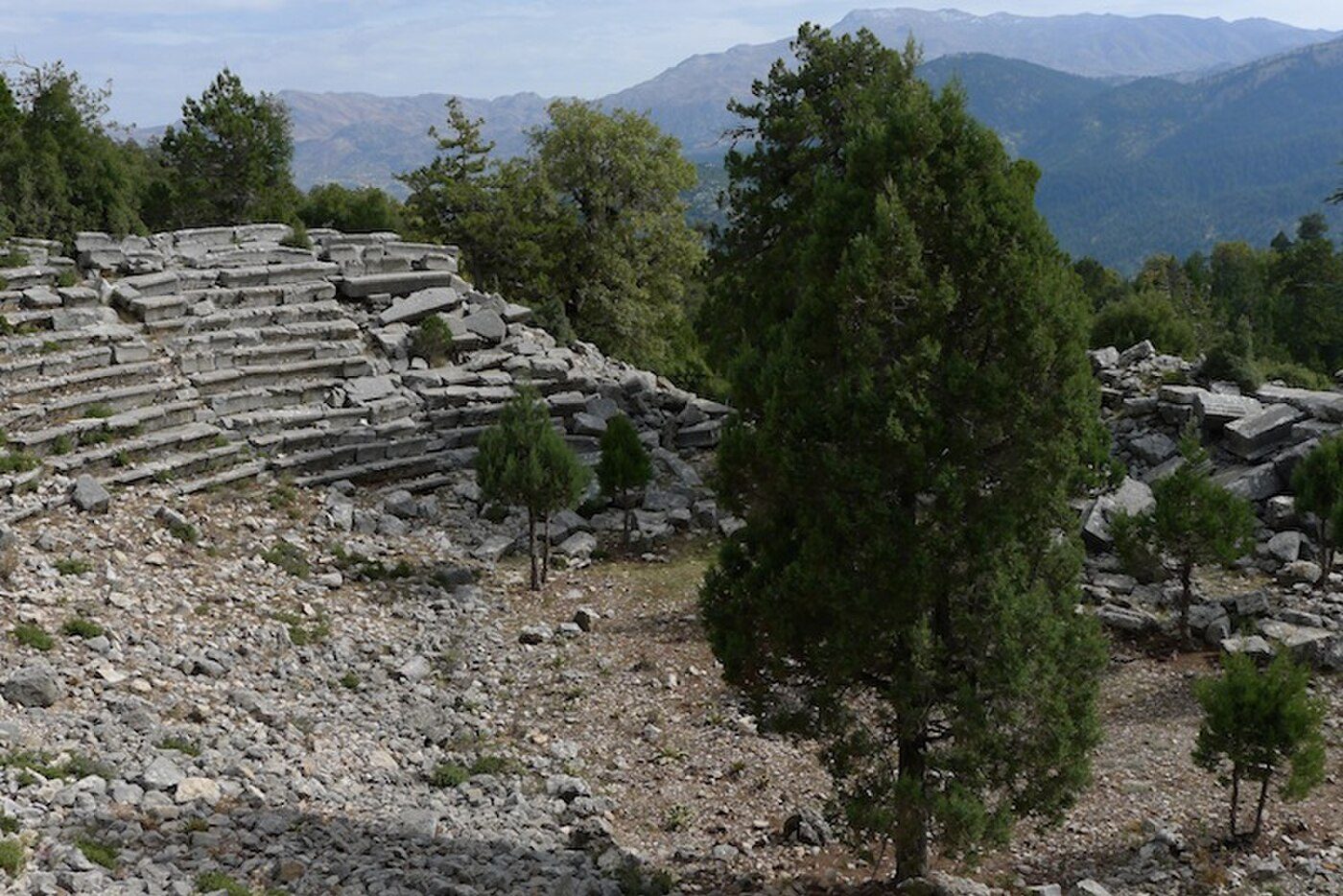
Stone blocks bearing the philosophical inscription of Diogenes at the ancient city of Oenoanda

Wikimedia Commons

도시

Oenoanda

Seyfi Cem Baskin

Incealiler300 기원전 – 700 서기

A remote mountain city in northern Lycia where a 2nd century CE philosopher named Diogenes carved the world's largest known ancient philosophical inscription — an entire Epicurean treatise spanning over 25,000 words across a massive stone wall.

321
관심 37

위치

Mugla · Aegean · 튀르키예

36.75°N · 29.52°E · 아시아

Inscription

World's largest ancient philosophical inscription (25,000+ surviving words)

Philosopher

Carved by Diogenes of Oenoanda, 2nd century CE Epicurean

Philosophy

Comprehensive Epicurean treatise on physics, ethics, and death

Elevation

Mountain city at approximately 1,450 meters above sea level

Original Length

Estimated 80,000+ words; roughly one-third survives

Province

Mugla, northern Lycia

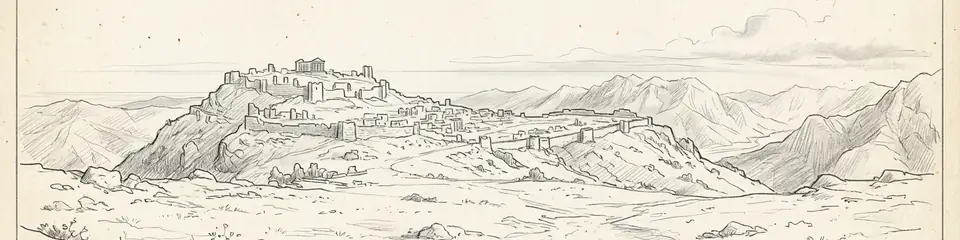
Graphite pencil sketch banner of Oenoanda

“The Diogenes inscription at Oenoanda is one of the most important documents in the history of philosophy.”

위키백과에서

Oenoanda is an ancient Lycian-Roman mountain city famous for the world's largest known ancient philosophical inscription, carved by the Epicurean philosopher Diogenes in the 2nd century CE.

위키백과에서 전체 기사 읽기 →

위치

개요

Oenoanda is an ancient city located on a dramatic mountain plateau near the village of Incealiler in Mugla province, on the northern frontier of ancient Lycia. While the site preserves conventional Greco-Roman urban remains including an aqueduct, theater, agora, and city walls, its global fame rests on a single extraordinary monument: the inscription of Diogenes of Oenoanda, the largest known philosophical inscription from the ancient world.

In the 2nd century CE, a wealthy citizen named Diogenes commissioned the carving of his philosophical teachings across a massive stone wall in the city's public area. The inscription, written in Greek, presented a comprehensive summary of Epicurean philosophy — covering physics, ethics, the nature of the gods, the fear of death, and the pursuit of pleasure as the highest good. The surviving fragments, totaling over 25,000 words across hundreds of inscribed blocks, represent roughly one-third of the original text, which may have extended to 80,000 words or more.

"Diogenes, in his old age, wished to help those who came after, and set up this inscription in the stoa."
— Diogenes of Oenoanda (from the inscription itself)

Diogenes explained his motivation in the inscription itself: having reached old age and nearing death, he wished to share the gift of Epicurean wisdom with his fellow citizens and with foreigners passing through. He explicitly stated that he was carving the wall because he could not travel to spread the philosophy in person, making this perhaps the ancient world's most ambitious public education project — a philosopher's last testament written in stone for eternity.

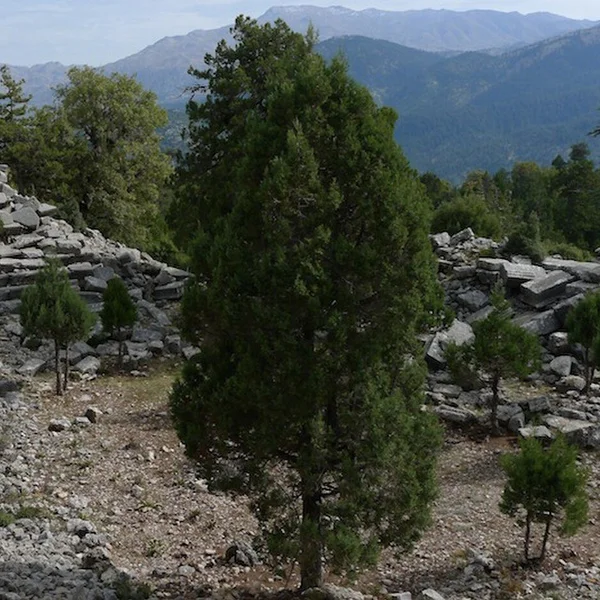
The city itself occupies a strategic but remote position at approximately 1,450 meters elevation, overlooking the upper Xanthus valley. Its urban plan follows the typical pattern of a prosperous Lycian-Roman city, with the aqueduct that supplied the settlement still traceable across the surrounding landscape. The theater, partially carved from the living rock, provided seating for perhaps 5,000 spectators. The city walls show multiple phases of construction from the Hellenistic through Byzantine periods.

중요성

The Diogenes inscription at Oenoanda is one of the most important documents in the history of philosophy. As the largest ancient philosophical text preserved in its original monumental form, it provides our most extensive direct source for popular Epicurean thought outside the writings of Epicurus himself and Lucretius. Diogenes's remarkable decision to carve an entire philosophical system into a public wall reveals a deeply democratic impulse — the belief that philosophy should be freely available to all, not confined to elite schools. The inscription represents an ancient experiment in public education and intellectual accessibility that resonates powerfully with modern ideals of open knowledge and democratic learning.

증거와 해석

확립된 사실과 논쟁 중인 사항을 구분합니다.

잘 확립된 사실

3
  • Over 300 inscribed stone blocks bearing the Diogenes inscription have been documented, totaling more than 25,000 words of Epicurean philosophical text in Greek.
  • Diogenes states his purpose explicitly in the text: to share Epicurean wisdom with fellow citizens and visitors because old age prevents him from traveling to spread the philosophy in person.
  • The inscription covers major Epicurean topics including atomic physics, the mortality of the soul, the nature of pleasure, and the non-intervention of the gods in human affairs.

학술적 추론

2
  • The estimated original length of 80,000+ words suggests the inscription wall extended over 80 meters, making it one of the largest monumental inscriptions ever erected in the ancient world.
  • Diogenes's wealth, evident from the massive cost of the inscription, combined with his democratic motivation suggests a distinctive social class of philosophically inclined provincial elites in Roman Asia Minor.

논쟁 중인 해석

1
  • Whether Diogenes was presenting original philosophical arguments or primarily summarizing existing Epicurean texts (some now lost) remains debated among historians of philosophy.

발견과 발굴

1884

Discovery of the inscription

French epigraphers first documented fragments of Diogenes's philosophical inscription among the ruins, recognizing its exceptional importance for the history of Epicurean philosophy.

1968–1983

Martin Ferguson Smith's epigraphic work

지휘 Martin Ferguson Smith

Martin Ferguson Smith began systematic documentation of the Diogenes inscription, locating, recording, and translating hundreds of inscribed blocks scattered across the site.

1997–2010

British-Turkish excavation project

Joint excavation investigated the city's urban plan, documenting the theater, agora, aqueduct, and the original location of the inscription wall, while recovering additional inscribed fragments.

2007

New inscription fragments

Discovery of significant new fragments of the Diogenes inscription including sections on the nature of the gods and the physics of the cosmos previously unknown.

2012–2020

Continuing epigraphic survey

Ongoing epigraphic documentation continued to identify new fragments among the tumbled stonework, gradually expanding the known text of the world's largest philosophical inscription.

커뮤니티 사진

당신의 경험을 공유하세요

이 유적지를 방문하셨나요? 다른 탐험가들을 위해 사진을 업로드해 보세요.

이 페이지 인용 방법

Atlas Anatolia. (300). Oenoanda. Atlas Anatolia. https://atlasanatolia.com/ko/site/oenoanda

콘텐츠는 CC BY-SA 4.0 라이선스에 따라 제공됩니다 — 재사용 시 출처 표시가 필요합니다.

출처

  • The Epicurean Inscription of Diogenes of Oinoanda — Martin Ferguson Smith (1993)
  • Diogenes of Oenoanda: New Fragments and Recent Studies — Martin Ferguson Smith (2003)
  • Wikipedia — Oenoanda링크

자주 묻는 질문

Oenoanda은(는) 어디에 위치해 있나요?

Oenoanda은(는) Mugla, Aegean, Türkiye에 위치해 있습니다.

Oenoanda의 연대는 언제인가요?

Oenoanda의 연대는 대략 300 기원전 – 700 서기로 거슬러 올라갑니다.

Oenoanda과(와) 관련된 고대 문명은 무엇인가요?

Oenoanda은(는) Lycian, Roman 문명과 관련이 있습니다.

Oenoanda이(가) 중요한 이유는 무엇인가요?

The Diogenes inscription at Oenoanda is one of the most important documents in the history of philosophy.

Oenoanda은(는) 유네스코 세계유산인가요?

Oenoanda은(는) 현재 유네스코 세계유산 목록에 등재되어 있지 않습니다.