
콘텐츠로 건너뛰기
Atlas Anatolia
디그
뉴스술라웨시 빙하기 치아에서 빈랑 사용 25,000년 전까지 소급카스타모누 폼페이오폴리스 바실리카에서 로마 모자이크와 에로스 두상 발견
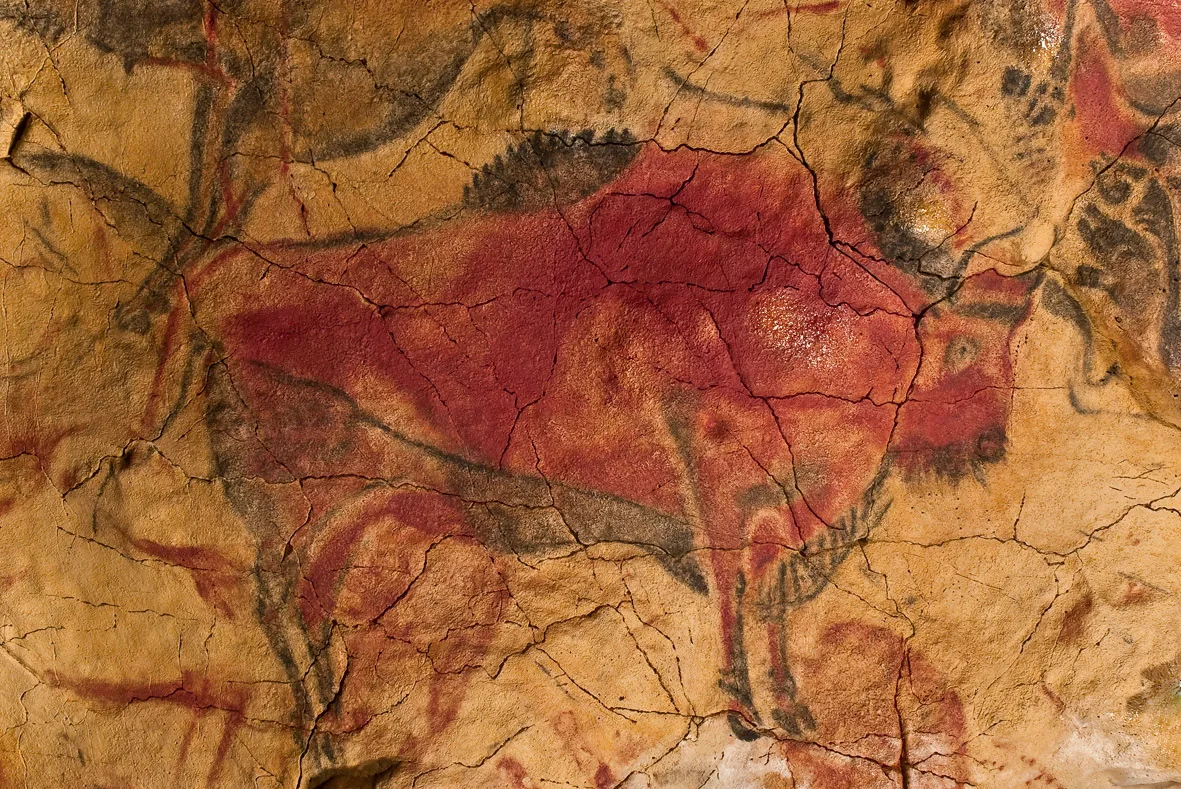
Polychrome Magdalenian bison painted on the ceiling of Altamira Cave, Cantabria, Spain

Wikimedia Commons

Continent Record

Earliest Known Site in Europe

성소유네스코주요

Cave of Altamira

Seyfi Cem Baskin

Cueva de Altamira18500 기원전 – 13000 기원전

The "Sistine Chapel of the Palaeolithic" — a limestone cave in northern Spain whose ceiling is painted with a panorama of Ice Age bison, horses, and deer dating to 18,500 years ago, the first prehistoric cave art ever recognised and among the greatest artistic achievements in human history.

31
관심 70

위치

스페인

43.38°N · 4.08°W · 유럽

Main paintings

c. 18,500-14,000 BP (Magdalenian period)

Subjects

Bison (dominant), horses, deer, boar, wolf

Technique

Polychrome pigments (red, black, ochre) using rock relief for 3D effect

Discovery

1879 by Marcelino Sanz de Sautuola; rejected by science until 1902

Access

Closed in 2002; replica "Neocave" open to visitors

UNESCO

World Heritage Site 1985 (extended 2008 to include 17 Spanish caves)

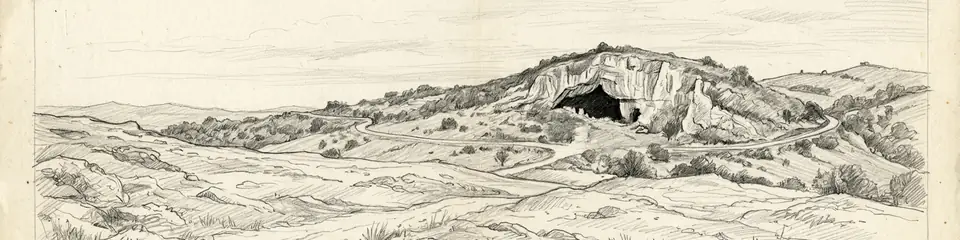
Graphite pencil sketch banner of Cave of Altamira

“Altamira forced a fundamental revision of what it means to be human.”

위치

개요

Altamira lies near the town of Santillana del Mar in Cantabria, northern Spain. The cave was used by Palaeolithic humans from roughly 35,000 BCE onward, but its greatest art was created during the Magdalenian period, approximately 18,500 to 14,000 years ago, when a ceiling chamber was painted with an extraordinary panorama of Ice Age animals.

The polychrome paintings on the ceiling of the Great Hall cover an area of about 270 square metres. They depict bison (the dominant subject), horses, deer, a boar, and a wolf — painted in red, black, and ochre pigments applied directly to natural undulations in the rock to create a three-dimensional sculptural effect. The largest bison, at about 2 metres long, are executed with a fluency and naturalism that stunned the modern world when they were first published.

The cave was discovered in 1868 by a local hunter, and the paintings were identified in 1879 by the landowner Marcelino Sanz de Sautuola with the help of his young daughter Maria, who was the first to look up and notice the figures on the ceiling. When Sautuola published his discovery, the scientific establishment refused to believe that prehistoric humans were capable of such art and accused him of fraud. His vindication came only in 1902, when similar paintings were accepted at La Mouthe and Font-de-Gaume in France. By then Sautuola had died, unjustly disgraced. The cave was closed to the public in 2002 to prevent further deterioration and can now only be visited via a full-scale replica. UNESCO inscribed it in 1985 alongside the caves of northern Spain.

중요성

Altamira forced a fundamental revision of what it means to be human. Its discovery proved that people living 18,000 years ago in the middle of the last Ice Age — before farming, writing, or permanent settlement — were capable of art of the highest aesthetic quality. The paintings are not primitive: they are accomplished, sophisticated, and deeply expressive works that rival any art produced in human history. The story of Altamira's discovery and initial rejection is also one of the most instructive episodes in the history of science: a layman's correct identification of the paintings was dismissed by experts because it contradicted their assumptions about primitive man. The cave reminds us that our understanding of the deep human past remains partial and subject to revision, and that art — in all its complexity — has been part of what it means to be human for as long as there have been humans.

증거와 해석

확립된 사실과 논쟁 중인 사항을 구분합니다.

잘 확립된 사실

3
  • Radiocarbon and uranium-series dating of calcite crusts overlying the paintings has established that the main polychrome works in the Great Hall date to approximately 18,500-14,000 BP, with some paintings possibly earlier.
  • Pigment analysis has identified charcoal (black), manganese dioxide (black), haematite (red), and ochre (yellow-brown) — materials available in the local Cantabrian environment and consistent with other Magdalenian sites.
  • The deliberate use of natural rock undulations to create three-dimensional illusions of muscle and movement has been confirmed by photogrammetric analysis — demonstrating intentional compositional design rather than random placement.

학술적 추론

1
  • The purpose of the paintings (ritual, shamanic, hunting magic, or aesthetic) is unknown; the chamber is deep enough that natural light never reaches it, suggesting torchlight was used, but whether the paintings were viewed repeatedly or made in a single event is debated.

커뮤니티 사진

당신의 경험을 공유하세요

이 유적지를 방문하셨나요? 다른 탐험가들을 위해 사진을 업로드해 보세요.

이 페이지 인용 방법

Atlas Anatolia. (18500). Cave of Altamira. Atlas Anatolia. https://atlasanatolia.com/ko/site/altamira

콘텐츠는 CC BY-SA 4.0 라이선스에 따라 제공됩니다 — 재사용 시 출처 표시가 필요합니다.

출처

  • The Cave Beneath the Sea: Palaeolithic Images at Cosquer — Clottes, Jean & Courtin, Jean (1996)
  • The Cave of Altamira — Freeman, Leslie & Echegaray, Joaquin Gonzalez (1998)

자주 묻는 질문

Cave of Altamira은(는) 어디에 위치해 있나요?

Cave of Altamira은(는) Spain에 위치해 있습니다.

Cave of Altamira의 연대는 언제인가요?

Cave of Altamira의 연대는 대략 18500 기원전 – 13000 기원전로 거슬러 올라갑니다.

Cave of Altamira이(가) 중요한 이유는 무엇인가요?

Altamira forced a fundamental revision of what it means to be human.

Cave of Altamira은(는) 유네스코 세계유산인가요?

예 — Cave of Altamira은(는) 유네스코 세계유산으로 등재되어 있습니다.