
콘텐츠로 건너뛰기
Atlas Anatolia
디그
뉴스술라웨시 빙하기 치아에서 빈랑 사용 25,000년 전까지 소급카스타모누 폼페이오폴리스 바실리카에서 로마 모자이크와 에로스 두상 발견
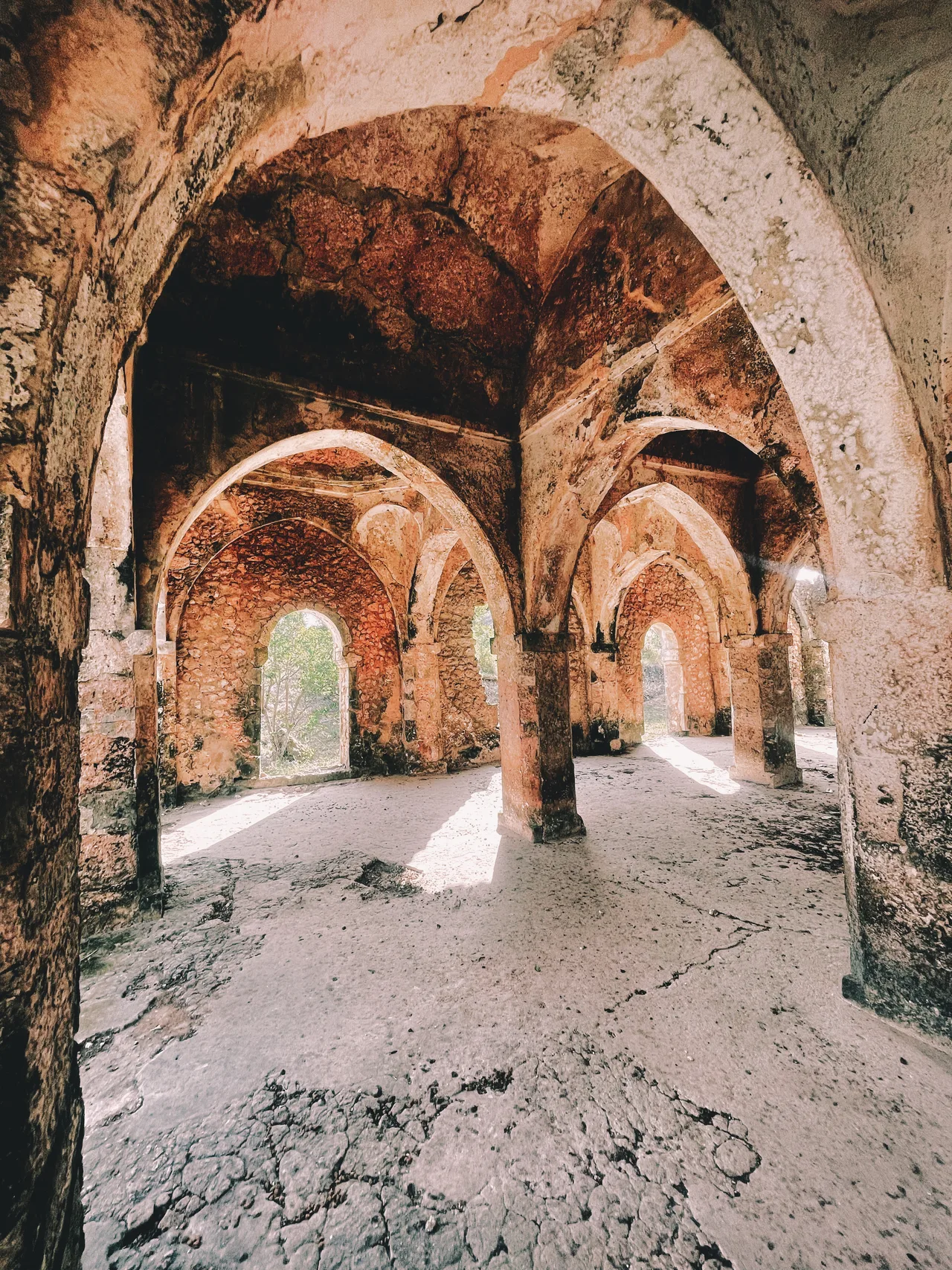
The vaulted coral-stone nave of the Great Mosque of Kilwa Kisiwani, Tanzania

Wikimedia Commons

Country Record

Longest Continuously Occupied Site in Tanzania

도시유네스코주요

Kilwa Kisiwani

Seyfi Cem Baskin

800 서기 – 1520 서기

The greatest medieval trading city on the East African coast — an island sultanate whose coral-stone mosques and palaces dominated the Indian Ocean gold trade from the 9th to the 16th century. Ibn Battuta visited in 1331 and called it one of the most beautiful cities in the world.

41
관심 58

위치

탄자니아

8.93°S · 39.51°E · 아프리카

Founded

c. 9th century CE by Shirazi settlers

Peak

13th-14th century; main gold-trade entrepot of East Africa

Great Mosque

Largest pre-European mosque in sub-Saharan Africa

Currency

Earliest locally minted coinage in sub-Saharan Africa

Famous visitor

Ibn Battuta (1331): "one of the most beautiful cities in the world"

UNESCO

World Heritage Site 1981

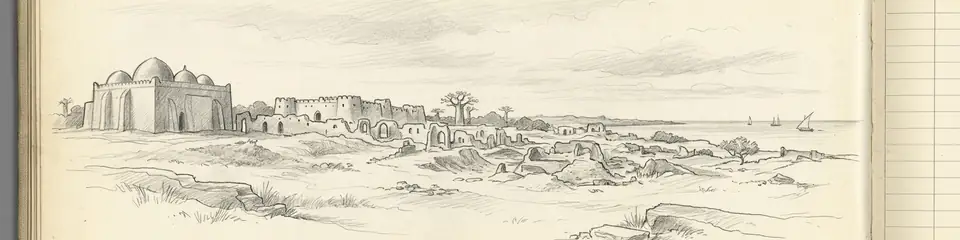
Graphite pencil sketch banner of Kilwa Kisiwani

“Kilwa Kisiwani is the finest surviving testimony to the Swahili civilisation that flourished along the East African coast for more than a millennium.”

위치

개요

Kilwa Kisiwani ("Kilwa on the island") occupies a small island in the Indian Ocean off the southern coast of modern Tanzania. Founded by Shirazi settlers from the Persian Gulf around the 9th century CE, it grew into the most powerful city-state on the Swahili Coast, commanding trade routes that linked the gold-producing interior of southern Africa to merchants from Arabia, Persia, India, and China.

At its commercial peak in the 13th and 14th centuries, Kilwa controlled the export of gold, ivory, iron, and copper across the western Indian Ocean. The wealth this generated built the Great Mosque of Kilwa — the largest pre-European mosque in sub-Saharan Africa — whose vaulted coral-rag nave survives largely intact. Adjacent stood Husuni Kubwa, an extraordinary 14th-century palace complex covering nearly a hectare with a sunken octagonal swimming pool and over a hundred rooms — the largest medieval building in sub-Saharan Africa.

The town minted its own copper and gold coins — the earliest locally struck coinage in sub-Saharan Africa — and finds of Chinese porcelain and Persian glazed-ware confirm participation in Asia-wide trade networks. In 1505 the Portuguese bombarded Kilwa and established a fort (the Gereza, whose ruins survive), breaking the city's commercial power. UNESCO inscribed the site in 1981.

중요성

Kilwa Kisiwani is the finest surviving testimony to the Swahili civilisation that flourished along the East African coast for more than a millennium. It demonstrates the sophistication of African maritime trade and urban culture long before European contact — building in coral stone, minting coins, and maintaining commercial relationships across the entire Indian Ocean world. Its Great Mosque and Husuni Kubwa palace are architectural achievements that rival contemporary Islamic buildings anywhere in the world, built by Africans from local materials. The site overturns persistent misconceptions about sub-Saharan Africa as isolated from global networks of commerce and culture.

증거와 해석

확립된 사실과 논쟁 중인 사항을 구분합니다.

잘 확립된 사실

4
  • The Great Mosque, built in coral rag and lime mortar, contains a vaulted nave dated by architectural analysis and radiocarbon dating to the 11th-14th centuries — the largest such structure in pre-colonial sub-Saharan Africa.
  • Kilwa minted its own copper and silver coins — the earliest locally produced coinage in sub-Saharan Africa; hundreds of examples have been excavated on the island and at trading-partner sites.
  • Chinese celadon and blue-and-white porcelain, Persian glazed pottery, and glass beads from South Asia found in excavations confirm direct participation in Indian Ocean trade networks from the 9th century onward.
  • Husuni Kubwa palace, dated to the early 14th century, covers approximately one hectare and includes a sunken octagonal pool — its scale demonstrates the wealth of the Kilwa sultanate at its peak.

학술적 추론

1
  • Kilwa's control of the Zimbabwe gold trade is inferred from the strong correlation between Kilwa coin finds and southern African gold-producing regions, though direct written records of the trade mechanism are sparse.

커뮤니티 사진

당신의 경험을 공유하세요

이 유적지를 방문하셨나요? 다른 탐험가들을 위해 사진을 업로드해 보세요.

이 페이지 인용 방법

Atlas Anatolia. (800). Kilwa Kisiwani. Atlas Anatolia. https://atlasanatolia.com/ko/site/kilwa-kisiwani

콘텐츠는 CC BY-SA 4.0 라이선스에 따라 제공됩니다 — 재사용 시 출처 표시가 필요합니다.

출처

  • The Swahili: The Social Landscape of a Mercantile Society — Horton, Mark & Middleton, John (2000)
  • Horn and Crescent: Cultural Change and Traditional Islam on the East African Coast — Pouwels, Randall (1987)

자주 묻는 질문

Kilwa Kisiwani은(는) 어디에 위치해 있나요?

Kilwa Kisiwani은(는) Tanzania에 위치해 있습니다.

Kilwa Kisiwani의 연대는 언제인가요?

Kilwa Kisiwani의 연대는 대략 800 서기 – 1520 서기로 거슬러 올라갑니다.

Kilwa Kisiwani과(와) 관련된 고대 문명은 무엇인가요?

Kilwa Kisiwani은(는) Islamic / Medieval, Swahili 문명과 관련이 있습니다.

Kilwa Kisiwani이(가) 중요한 이유는 무엇인가요?

Kilwa Kisiwani is the finest surviving testimony to the Swahili civilisation that flourished along the East African coast for more than a millennium.

Kilwa Kisiwani은(는) 유네스코 세계유산인가요?

예 — Kilwa Kisiwani은(는) 유네스코 세계유산으로 등재되어 있습니다.