
콘텐츠로 건너뛰기
Atlas Anatolia
디그
뉴스술라웨시 빙하기 치아에서 빈랑 사용 25,000년 전까지 소급카스타모누 폼페이오폴리스 바실리카에서 로마 모자이크와 에로스 두상 발견
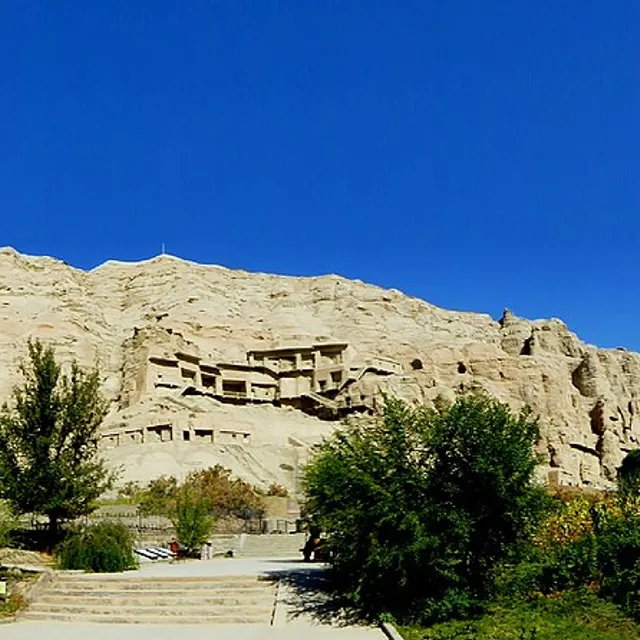
Cliff face and cave openings of the Kizil Buddhist grottoes, Xinjiang

Wikimedia Commons

성소유네스코

Kizil Caves

Seyfi Cem Baskin

克孜尔千佛洞300 서기 – 800 서기

The earliest large complex of Buddhist rock-cut cave temples on the northern Silk Road, carved into cliffs above the Muzart River near Kucha — murals of Indo-Iranian and Central Asian style that predate and influenced later Chinese grotto art.

21
관심 56

위치

중국

41.78°N · 82.50°E · 아시아

Scale

200+ rock-cut caves along the Muzart River cliffs

Date

Main painting phases c. 3rd–8th centuries CE

Culture

Buddhist monasteries of the Kucha / Tocharian oasis kingdom

Art history

Earliest large grotto complex on the northern Silk Road

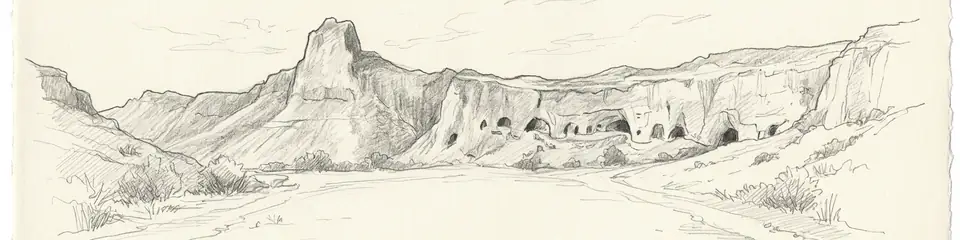
Graphite pencil sketch banner of Kizil Caves

“Kizil is foundational for Central Asian Buddhist art history — chronologically early, stylistically hybrid, and textually linked to Tocharian monastic culture.”

위치

개요

The Kizil Caves stretch along river cliffs about 70 kilometres west of Kucha (Kuqa) in Xinjiang, China. From roughly the 3rd to 8th centuries CE, Buddhist monastic communities excavated and painted over 230 caves, making Kizil the earliest major grotto series of the Tarim Basin — earlier in origin than Dunhuang’s Mogao heyday and crucial for understanding how Indian Buddhist art adapted along the northern route around the Taklamakan.

Murals employ distinctive “Western Regions” styles: stylised drapery, musical and narrative scenes from Jātakas and Avadānas, and a palette influenced by Iranian and Gandhāran visual traditions. German Turfan expeditions under Albert Grünwedel and Albert von Le Coq removed many mural panels to Berlin; surviving in situ painting still shows diamond-ceiling patterns, musicians, and donor figures of Tocharian-speaking oasis elites.
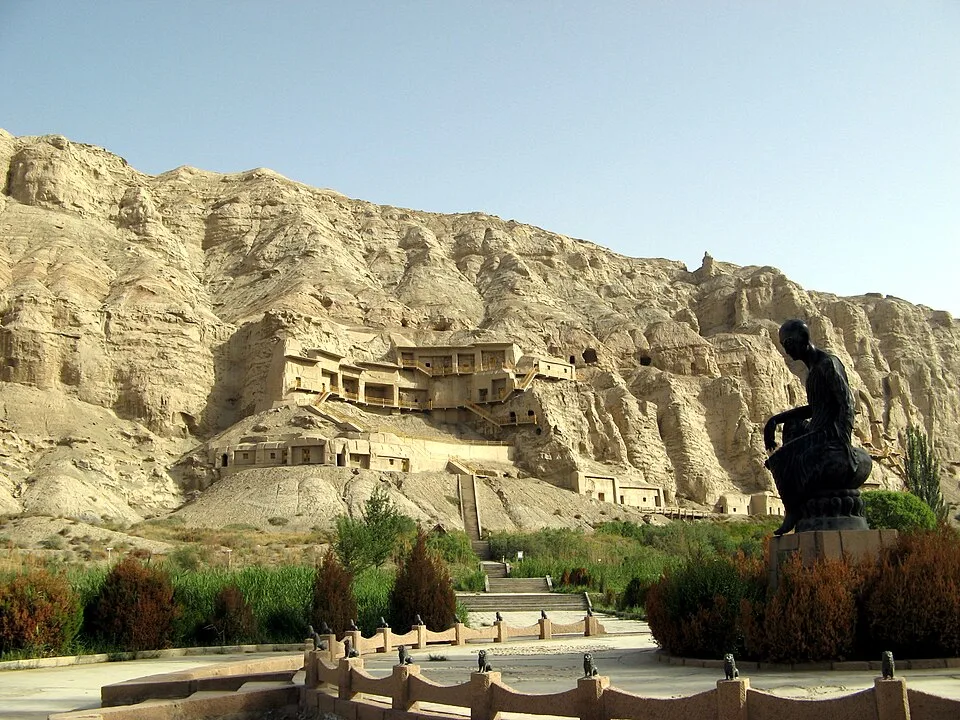
Kuqa May 2007 427
Kuqa May 2007 427 | G41rn8 (CC BY-SA 4.0)
"In the cliffs above the river the monks of Kucha cut cells and painted the deeds of the Bodhisattva — music, dance, and the path to nirvana in colours brought along the northern road."
— Modern paraphrase of Kucha Buddhist mural programmes at Kizil

Kizil belongs to the broader Kucha kingdom’s Buddhist landscape and is a component of UNESCO Silk Roads serial heritage. Conservation and documentation by Chinese institutes continue to recover chronology through radiocarbon and stylistic sequencing.
중요성

Kizil is foundational for Central Asian Buddhist art history — chronologically early, stylistically hybrid, and textually linked to Tocharian monastic culture. It shows how the Silk Road was not only a trader’s corridor but a monastery network that translated Indian Buddhism into oasis visual languages later radiating into China proper.

증거와 해석

확립된 사실과 논쟁 중인 사항을 구분합니다.

잘 확립된 사실

2
  • Standing caves and remaining murals document an extensive early Buddhist monastic complex.
  • Stylistic and palaeographic links connect Kizil art to Indo-Iranian and Tocharian Buddhist cultures of Kucha.

논쟁 중인 해석

1
  • Fine-grained dating of individual cave phases continues to be refined; some early expedition attributions have been revised.

커뮤니티 사진

당신의 경험을 공유하세요

이 유적지를 방문하셨나요? 다른 탐험가들을 위해 사진을 업로드해 보세요.

관련 이야기

이 페이지 인용 방법

Atlas Anatolia. (300). Kizil Caves. Atlas Anatolia. https://atlasanatolia.com/ko/site/kizil-caves

콘텐츠는 CC BY-SA 4.0 라이선스에 따라 제공됩니다 — 재사용 시 출처 표시가 필요합니다.

그래프

관련 유적지와 스토리로의 연결.

출처

  • Chinese Sculpture — Howard, Angela F. et al. (2006)
  • Archaeological Survey at Kizil — Vignato, Giuseppe (2006)

자주 묻는 질문

Kizil Caves은(는) 어디에 위치해 있나요?

Kizil Caves은(는) China에 위치해 있습니다.

Kizil Caves의 연대는 언제인가요?

Kizil Caves의 연대는 대략 300 서기 – 800 서기로 거슬러 올라갑니다.

Kizil Caves과(와) 관련된 고대 문명은 무엇인가요?

Kizil Caves은(는) Han, Tocharian 문명과 관련이 있습니다.

Kizil Caves이(가) 중요한 이유는 무엇인가요?

Kizil is foundational for Central Asian Buddhist art history — chronologically early, stylistically hybrid, and textually linked to Tocharian monastic culture.

Kizil Caves은(는) 유네스코 세계유산인가요?

예 — Kizil Caves은(는) 유네스코 세계유산으로 등재되어 있습니다.