
콘텐츠로 건너뛰기
Atlas Anatolia
디그
뉴스술라웨시 빙하기 치아에서 빈랑 사용 25,000년 전까지 소급카스타모누 폼페이오폴리스 바실리카에서 로마 모자이크와 에로스 두상 발견
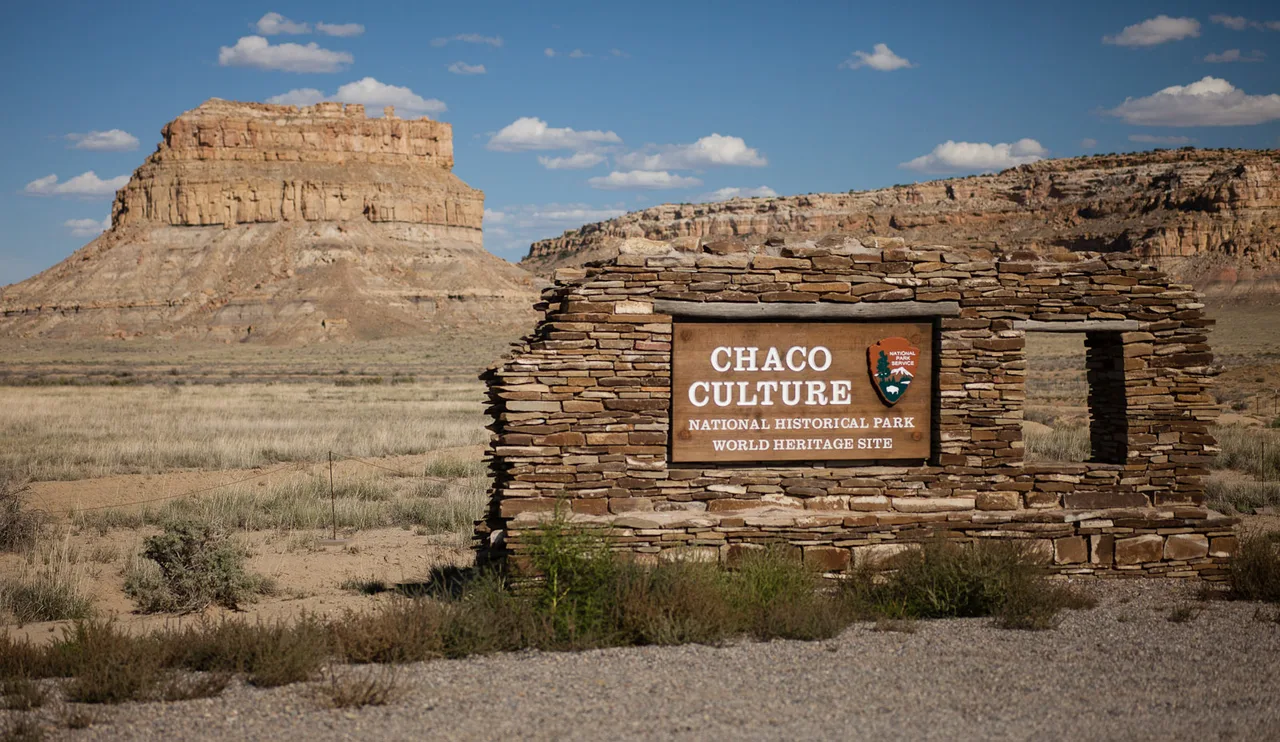
Aerial view of Pueblo Bonito, the largest great house at Chaco Canyon

Wikimedia Commons

Country Record

Known by the Most Names in United States

복합 단지유네스코

Chaco Canyon

Seyfi Cem Baskin

850 서기 – 1150 서기

The ceremonial and architectural center of Ancestral Puebloan civilization between 850 and 1150 CE — Pueblo Bonito, with 650 rooms and 40 kivas, was the largest building in North America for six hundred years, aligned precisely with solar and lunar cycles.

31
관심 71

위치

미국

36.06°N · 107.96°W · 북아메리카

Pueblo Bonito size

650+ rooms, 40 kivas, 5 stories, D-shaped plan

Road network

400+ km of 9-m-wide straight roads connecting outlier sites

Peak period

850–1150 CE; abandoned by c. 1150 CE

Astronomical alignment

Solstice/equinox alignments in kiva doorways and the Sun Dagger site

UNESCO

World Heritage Site since 1987

Territory covered

~60,000 km² of road-connected Ancestral Puebloan sites

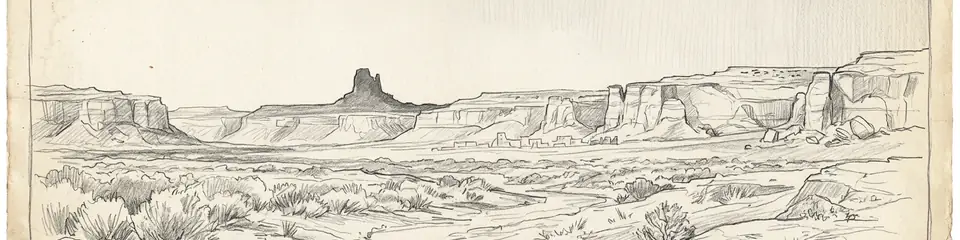
Graphite pencil sketch banner of Chaco Canyon

“Chaco Canyon is where Ancestral Puebloan civilization built on the largest scale.”

위치

개요

Chaco Canyon cuts through the San Juan Basin of northwestern New Mexico, an arid plateau at 1,900 m elevation surrounded by desert. Between approximately 850 and 1150 CE it functioned as the political, ceremonial, and redistribution center of a culture archaeologists call the Ancestral Puebloans — the ancestors of the modern Pueblo peoples of Arizona and New Mexico.

The canyon contains twelve major 'great houses' — monumental masonry structures of five or more stories, containing hundreds of rooms and multiple kivas (circular ceremonial chambers). Pueblo Bonito, the largest, was planned from the outset as a single integrated structure: a D-shaped building, 162 m across, containing approximately 650 rooms arranged in a rising crescent of masonry terraces, 2–5 stories high, with 40 circular kivas including two great kivas over 20 m in diameter. It was constructed over roughly 300 years (850–1150 CE) and was the largest building in North America until the 19th century. Chetro Ketl, Pueblo del Arroyo, and the other great houses follow similar architectural principles: massive core-and-veneer sandstone masonry, a D- or C-shaped plan, regular room arrangements, and elaborate kivas.

What makes Chaco exceptional beyond its architecture is its relationship to the wider landscape. More than 400 km of prehistoric roads radiate from the canyon to outlier great houses across a 60,000 km² territory, connecting communities as far as 150 km away. These roads — 9 m wide, dead-straight, often cut into bedrock — served as communication and redistribution channels for turquoise, ceramics, and food.

The solar and lunar alignments built into Chacoan architecture are among the most precisely documented in prehistoric North America. The main facade of Pueblo Bonito faces due south; great kiva doorways are aligned with solstice sunrises; the Sun Dagger site on Fajada Butte uses a slotted rock to cast a dagger of light on spiral petroglyphs at solstices and equinoxes. The canyon was largely abandoned by 1150 CE, possibly due to drought, social fragmentation, or the shift of power to new regional centers.

중요성

Chaco Canyon is where Ancestral Puebloan civilization built on the largest scale. The great houses are not merely large — they are precisely planned, astronomically aligned, and connected to a continent-spanning road network. Understanding Chaco means reconsidering what North American civilizations were before European contact: complex, centralized, architecturally ambitious, and capable of organizing labor and materials across vast distances. The turquoise trade evidence at Chaco — hundreds of thousands of worked turquoise pieces from mines in New Mexico and Colorado — shows an economic network of a scale not seen again in the American Southwest until after Spanish colonization. Modern Pueblo peoples maintain direct oral and cultural connections to Chaco, making the site simultaneously an archaeological record and a living ancestral homeland.

증거와 해석

확립된 사실과 논쟁 중인 사항을 구분합니다.

잘 확립된 사실

3
  • Tree-ring dating (dendrochronology) from Pueblo Bonito's roof timbers provides one of the most precise construction chronologies in North American archaeology: building began c. 850 CE and continued in discrete phases to c. 1130 CE, with a major expansion between 1020 and 1050 CE.
  • Isotopic analysis of macaw bones found at Chaco shows the birds were imported from breeding facilities in northern Mexico, confirming a long-distance exchange network extending more than 1,000 km south.
  • Over 200,000 worked turquoise pieces — beads, pendants, inlay — have been recovered from Chaco; isotopic source-matching links them to mines at Cerrillos (60 km south of Santa Fe) and other sources across the Colorado Plateau.

논쟁 중인 해석

1
  • Whether Chaco functioned as a ceremonial pilgrimage center (receiving periodic influxes of visitors from outlier communities), a permanent political capital (with a ruling elite resident year-round), or primarily a storage and redistribution node for the basin's agricultural surplus is actively debated.

커뮤니티 사진

당신의 경험을 공유하세요

이 유적지를 방문하셨나요? 다른 탐험가들을 위해 사진을 업로드해 보세요.

이 페이지 인용 방법

Atlas Anatolia. (850). Chaco Canyon. Atlas Anatolia. https://atlasanatolia.com/ko/site/chaco-canyon

콘텐츠는 CC BY-SA 4.0 라이선스에 따라 제공됩니다 — 재사용 시 출처 표시가 필요합니다.

출처

  • In Search of Chaco: New Approaches to an Archaeological Enigma — David Grant Noble (ed.) (2004)
  • Chaco's Northern Prodigies: Salmon, Aztec, and the Ascendancy of the Middle San Juan — Paul Reed (ed.) (2008)
  • Chaco Culture NHP — National Park Service링크

자주 묻는 질문

Chaco Canyon은(는) 어디에 위치해 있나요?

Chaco Canyon은(는) United States에 위치해 있습니다.

Chaco Canyon의 연대는 언제인가요?

Chaco Canyon의 연대는 대략 850 서기 – 1150 서기로 거슬러 올라갑니다.

Chaco Canyon과(와) 관련된 고대 문명은 무엇인가요?

Chaco Canyon은(는) Ancestral Puebloan 문명과 관련이 있습니다.

Chaco Canyon이(가) 중요한 이유는 무엇인가요?

Chaco Canyon is where Ancestral Puebloan civilization built on the largest scale.

Chaco Canyon은(는) 유네스코 세계유산인가요?

예 — Chaco Canyon은(는) 유네스코 세계유산으로 등재되어 있습니다.