
コンテンツへスキップ
Atlas Anatolia
ニュースIce Age teeth in Sulawesi push betel-nut use back as far as 25,000 yearsRoman mosaic and Eros head uncovered in the basilica at Pompeiopolis, Kastamonu
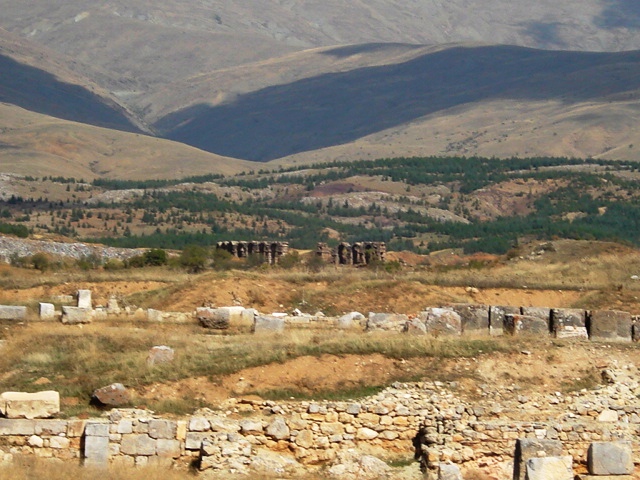
Ruins of the Augustus Temple sanctuary at Antioch in Pisidia

Wikimedia Commons

都市

Yalvac (Antioch in Pisidia)

Seyfi Cem Baskin

Yalvac280 紀元前 – 700 西暦

The site where St. Paul delivered his first recorded sermon, a major Roman colony in the Pisidian lake district with a monumental Augustus Temple and well-preserved civic center.

321
関心 50

所在地

Isparta · Mediterranean · トルコ

38.30°N · 31.18°E · アジア

St. Paul

Site of his first recorded sermon (Acts 13, c. 47 CE)

Augustus Temple

Monumental imperial cult sanctuary with Res Gestae inscription

Colonial Status

Roman colony (Colonia Caesareia) under Augustus

Province

Isparta, Pisidian lake district of central Anatolia

Notable Finds

The 'Propylon of Augustus', a monumental triple-arched gateway dedicated to the emperor, and a large nymphaeum (fountain house).

Dating Method

Extensive use of epigraphy (inscriptions) and numismatics (coinage) to establish chronology, supported by stratigraphy from modern excavations.

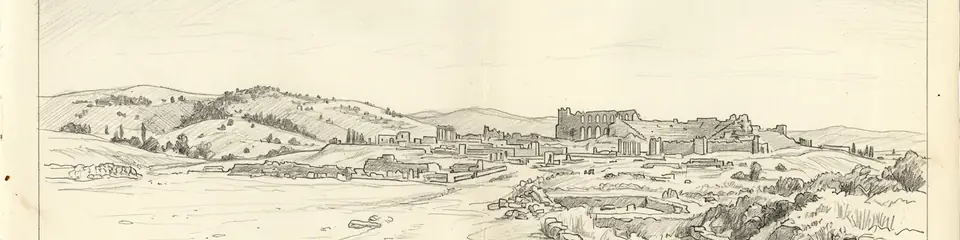
Graphite pencil sketch banner of Yalvac (Antioch in Pisidia)

“As the location of St.”

Wikipediaより

Antioch in Pisidia (modern Yalvac) was a major Roman colony where St. Paul delivered his first recorded sermon, with a monumental Augustus Temple and civic center.

Wikipediaで全文を読む →

所在地

概要

Yalvac — ancient Antioch in Pisidia — occupies a strategic position on the road connecting the Aegean coast to the Anatolian interior, near the beautiful lake district of Isparta province. Founded by the Seleucid dynasty in the 3rd century BCE and later established as a Roman colony by Augustus, the city became one of the most important urban centers of central Anatolia.

The site holds particular significance for the history of Christianity. According to the Acts of the Apostles (chapters 13-14), St. Paul visited Antioch in Pisidia during his first missionary journey around 46-48 CE and delivered his first recorded sermon in the city's synagogue. This sermon, laying out the theological case for Christianity's fulfillment of Jewish prophecy, marks a pivotal moment in the spread of Christianity beyond the Jewish community.

"Antioch of Pisidia is a Roman colony. I have myself seen the city and the lake in front of it."
— Strabo, c. 7 BCE - 23 CE

The monumental sanctuary of Augustus (the Imperial cult temple) dominates the upper city, featuring a propylaeum, temenos, and semicircular plaza. The Res Gestae — Augustus's account of his achievements — was inscribed on the temple walls, with fragments providing important textual evidence for this key Roman document. The civic center below includes a large theatre, bath complex, colonnaded streets, and an aqueduct.

The Yalvac Museum houses an exceptional collection of artifacts from the site, including inscriptions, sculpture, and architectural elements that document the city's life across centuries.
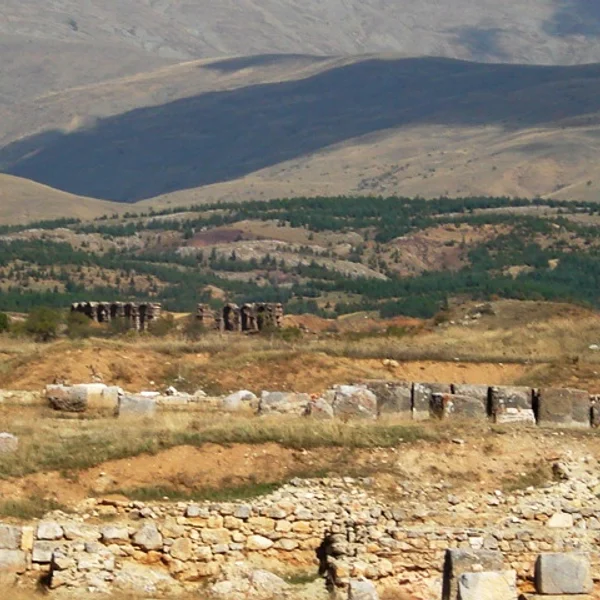
Augustus Temple sanctuary ruins at Antioch in Pisidia near Yalvaç
Dosseman / Wikimedia Commons (CC BY-SA 4.0)

The city's urban plan, laid out on a Hippodamian grid, featured a monumental cardo maximus and decumanus. Its public infrastructure was extensive, including a large theater built into the hillside, a bath-gymnasium complex, and a sophisticated water supply system fed by a 10km-long aqueduct terminating in a grand nymphaeum. These structures reflect the wealth and Roman colonial identity of its inhabitants, who engaged in agriculture, local crafts, and trade facilitated by the city's position on the Sebaste Road connecting the Anatolian plateau to Pamphylia.

Antioch prospered into the late Roman and early Byzantine periods, becoming a bishopric. However, its strategic location also made it vulnerable. The city suffered from Arab raids in the 7th and 8th centuries CE, which, combined with shifting trade routes and regional instability, led to a gradual decline. By the 12th century, the urban center had largely been abandoned, with settlement shifting to the modern town of Yalvaç nearby, leaving the ancient ruins remarkably well-preserved for archaeological investigation.

重要性

As the location of St. Paul's first recorded sermon, Antioch in Pisidia is one of the most significant sites in early Christian history. The sermon described in Acts 13 represents the moment when Paul began articulating Christianity's universal message to a mixed audience of Jews and Gentiles. The Augustan sanctuary and its Res Gestae inscription connect the site to the highest levels of Roman imperial ideology and propaganda. Together, the pagan temple and the Christian heritage illustrate the dramatic religious transformation that reshaped the Roman world.

証拠と解釈

確立された事実と議論が続く事柄を区別する。

確立された事実

3
  • Fragments of the Res Gestae Divi Augusti were found inscribed on the Augustus Temple walls, providing important textual variants for this key Roman document.
  • Inscriptions identify the city as Colonia Caesareia Antiocheia, confirming its status as a Roman colony with full colonial rights under Augustus.
  • Acts 13:14-52 provides a detailed account of Paul's visit and sermon at Antioch in Pisidia, one of the most fully narrated episodes in Paul's missionary journeys.

学術的推論

2
  • The size of the synagogue mentioned in Acts and the city's cosmopolitan population suggest a significant Jewish community facilitating early Christian missionary work.
  • The city's orthogonal street grid and central colonnaded street (cardo maximus) reflect a comprehensive Augustan-era urban redesign following its establishment as a Roman colony.

議論のある解釈

1
  • Whether the Augustus Temple was built entirely under Augustus or incorporated an earlier Seleucid sanctuary is debated based on architectural analysis.

発見と発掘調査

1913–1914

Ramsay and Callander excavations

指揮 William Mitchell Ramsay

William Mitchell Ramsay conducted early excavations identifying the Augustus Temple and recovering fragments of the Res Gestae inscription.

1924

Michigan expedition

University of Michigan team excavated the sanctuary of Augustus, recovering additional architectural elements and inscriptions.

1979

Turkish Rescue Excavations

指揮 Ministry of Culture and Ankara University

Systematic excavations and conservation work initiated by the Turkish Ministry of Culture and continued by Ankara University, focusing on the city center and major monuments.

2008–2018

Turkish university excavations

Suleyman Demirel University excavations focused on the lower city, revealing the colonnaded street, bath complex, and residential quarters with mosaics.

コミュニティ写真

あなたの体験を共有する

この遺跡を訪れたことがありますか?写真をアップロードして魅力を共有しましょう。

このページの引用方法

Atlas Anatolia. (280). Yalvac (Antioch in Pisidia). Atlas Anatolia. https://atlasanatolia.com/ja/site/yalvac

コンテンツはCC BY-SA 4.0ライセンスの下で提供されています — 再利用の際は出典表示が必要です。

出典

  • St. Paul the Traveller and Roman Citizen — William Mitchell Ramsay (1895)
  • Roman Antioch in Pisidia: The Res Gestae and the Augustus Temple — Adrian Ossi (2017)
  • Wikipedia — Antioch of Pisidiaリンク

よくある質問

Yalvac (Antioch in Pisidia)はどこにありますか?

Yalvac (Antioch in Pisidia)はIsparta, Mediterranean, Türkiyeに位置しています。

Yalvac (Antioch in Pisidia)の年代はいつ頃ですか?

Yalvac (Antioch in Pisidia)はおよそ280 紀元前 – 700 西暦のものとされています。

Yalvac (Antioch in Pisidia)はどの文明に関連していますか?

Yalvac (Antioch in Pisidia)はGreek, Roman, Early Christian文明に関連しています。

Yalvac (Antioch in Pisidia)が重要な理由は何ですか?

As the location of St.

Yalvac (Antioch in Pisidia)はユネスコ世界遺産ですか?

Yalvac (Antioch in Pisidia)は現在ユネスコ世界遺産には登録されていません。