コンテンツへスキップ
Atlas Anatolia
ニュースIce Age teeth in Sulawesi push betel-nut use back as far as 25,000 yearsRoman mosaic and Eros head uncovered in the basilica at Pompeiopolis, Kastamonu
Xanthos archaeological site

Wikimedia Commons (CC BY-SA)

都市UNESCO

Xanthos

Seyfi Cem Baskin

Xantos800 紀元前 – 700 西暦

Capital of ancient Lycia, famous for its monumental pillar tombs and the Nereid Monument. The city was twice destroyed by its own inhabitants rather than surrendered to invaders.

312
関心 51

所在地

Antalya · Mediterranean · トルコ

36.36°N · 29.32°E · アジア

Date Range

800 BCE – 700 CE

Province

Antalya

Historical Significance

Capital of ancient Lycia, a powerful federation in southwestern Anatolia.

Notable Monuments

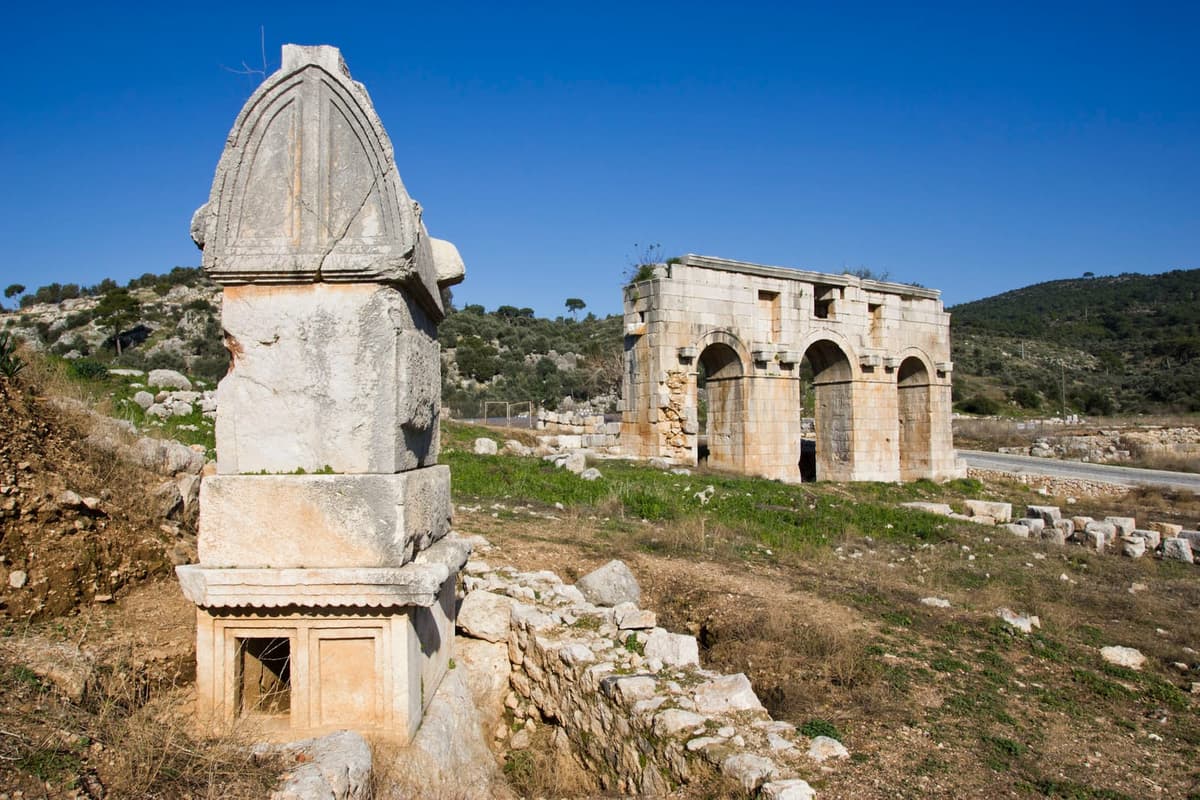
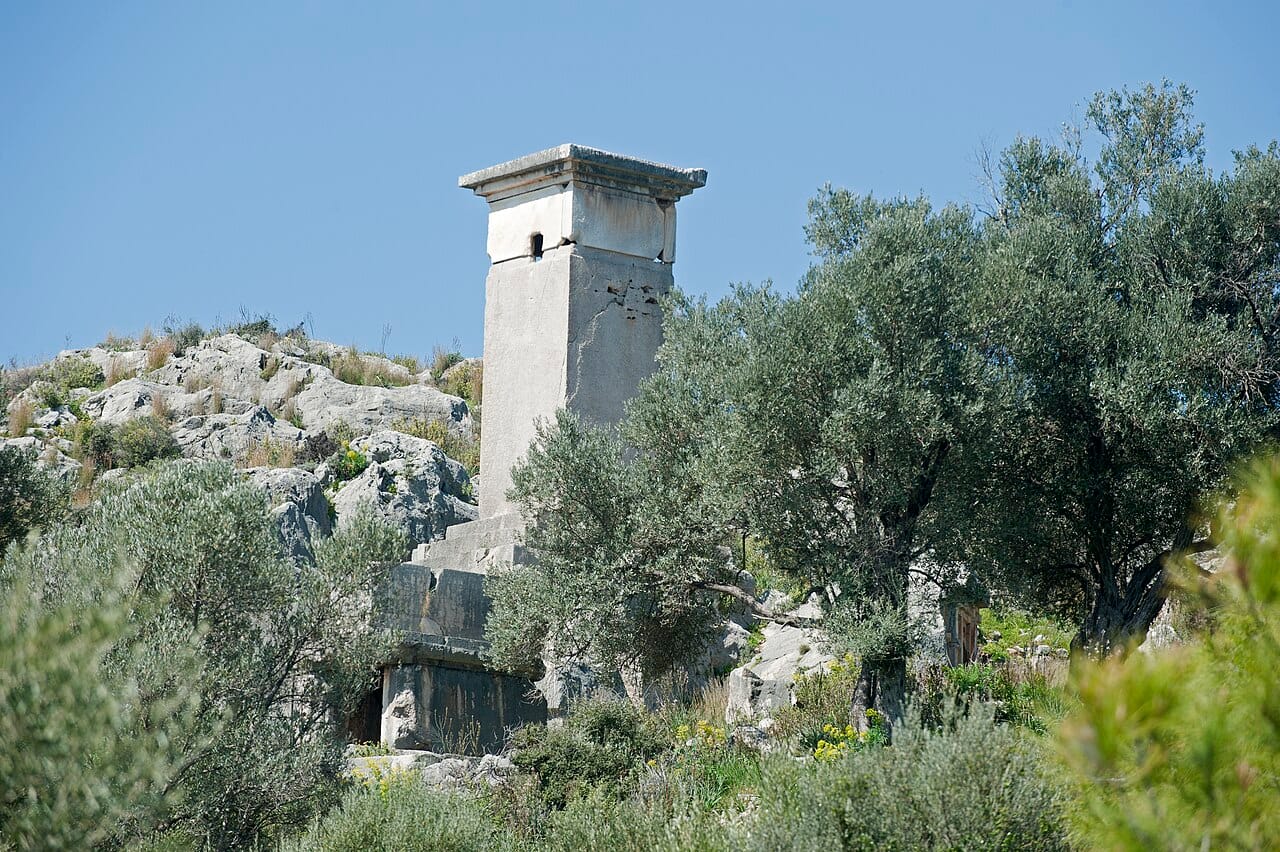
Famous for its monumental pillar tombs (like the Harpy Tomb) and the Nereid Monument, a temple-style tomb.

Defiant History

Twice destroyed by its own inhabitants (in 540 BCE and 42 BCE) rather than surrender to invading Persian and Roman forces.

UNESCO Status

Inscribed as a UNESCO World Heritage Site in 1988 as part of 'Xanthos-Letoon'.

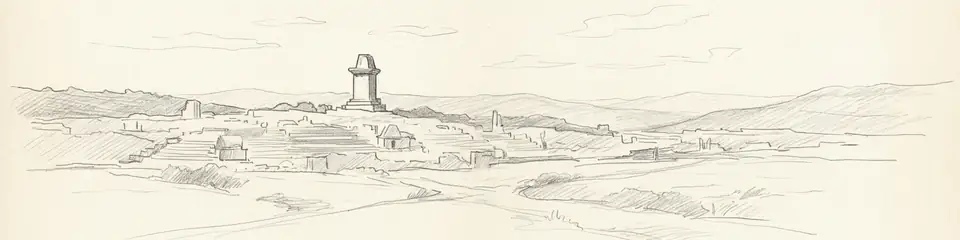
Graphite pencil sketch banner of Xanthos

“Xanthos matters as the political and religious capital of Lycia, offering unparalleled insight into a unique Anatolian culture that blended indigenous, Greek, and Persian influences.”

所在地

概要

Xanthos, situated on a rocky acropolis overlooking the fertile Xanthos River valley in modern-day Antalya province, presents a dramatic physical setting that underscores its historical significance. As the political and religious capital of ancient Lycia, the city commanded a strategic position linking the Anatolian interior to the Mediterranean coast. Its remains, spread across two hills, reveal a complex urban layout featuring an impressive circuit of walls, an agora, a Roman-era theater, and several Byzantine churches. The site's most distinctive feature, however, is its extraordinary collection of monumental funerary architecture, which fuses Anatolian, Greek, and Persian influences into a unique Lycian expression.

The historical significance of Xanthos is profound, both for its role as a resilient Lycian stronghold and for the poignant episodes of self-destruction recorded by ancient historians. According to accounts by Herodotus and Appian, the Xanthians chose mass suicide—first during a Persian siege in the mid-6th century BCE and again in 42 BCE against Roman forces under Brutus—rather than submit to foreign conquest. These acts cemented Xanthos's legendary reputation for fierce independence. The city later flourished under Roman and Byzantine rule before its eventual abandonment.

"The Xanthians, besieged by the Persians, gathered their wives, children, and possessions into the acropolis and set it all ablaze, then sallied forth to die fighting."
— Herodotus, c. 440 BCE

Key structures that define the site include the iconic pillar tombs, where Lycian nobles were interred atop tall, carved monoliths, most notably the Harpy Tomb and the Inscribed Pillar. The latter bears a crucial trilingual inscription in Lycian, Greek, and Aramaic that proved instrumental in deciphering the Lycian language. Although the famed Nereid Monument, a lavish temple-tomb resembling an Ionic Greek temple adorned with statues of Nereids, was removed in the 19th century and now resides in the British Museum, its base remains in situ. Other significant remains include the richly decorated Roman-era theater, the extensive agora, and the later Byzantine basilica.

Culturally, Xanthos stands as the primary testament to the Lycian civilization, a people who maintained a distinct identity, language, and political federation while absorbing and adapting external influences. The artistic and architectural syncretism visible at the site—blending Persian motifs, Greek architectural orders, and local traditions—epitomizes the complex cultural interactions of ancient Anatolia. The extensive epigraphic record found here provides invaluable insight into Lycian social structure, religion, and funerary practices, solidifying Xanthos's status as an essential source for understanding this unique Bronze Age and classical culture.
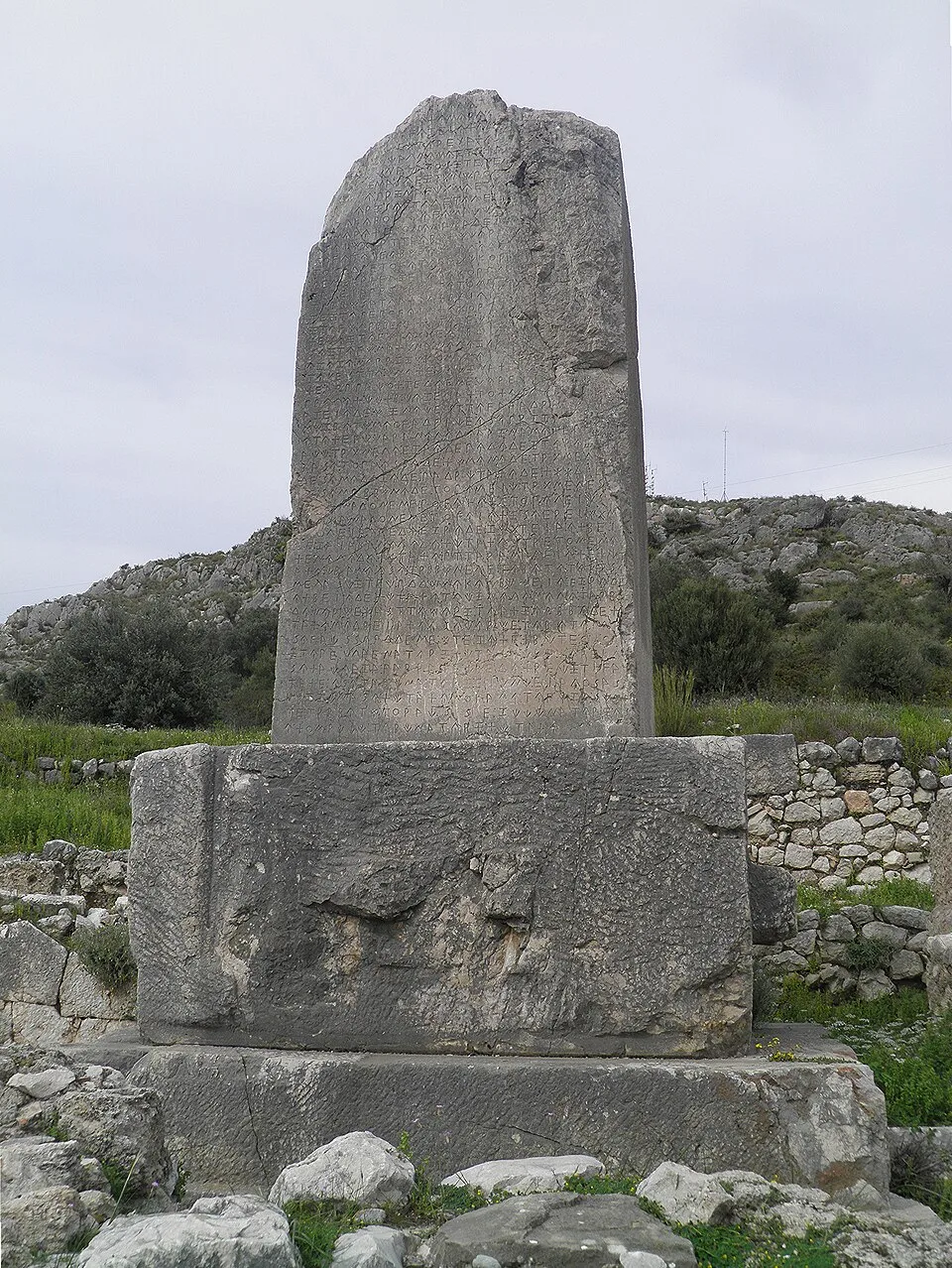
The Xanthos Obelisk, a trilingual inscribed pillar in the Lycian language with Greek inscriptions, Xanthos, Lycia, Turke
The Xanthos Obelisk, a trilingual inscribed pillar in the Lycian language with Greek inscriptions, Xanthos, Lycia, Turke | Carole Raddato from FRANKFURT, Germany (CC BY-SA 2.0)

重要性

Xanthos matters as the political and religious capital of Lycia, offering unparalleled insight into a unique Anatolian culture that blended indigenous, Greek, and Persian influences. Its extraordinary funerary architecture, particularly the pillar tombs and the sculpted Nereid Monument, provides a critical archaeological record of Lycian beliefs, social hierarchy, and artistic synthesis not found elsewhere. The city’s historical significance is dramatically underscored by the ancient accounts of its two mass self-destructions, a powerful testament to its fierce independence. This legacy, combined with its extensive epigraphic corpus including the trilingual "Letoon Trilingual Stele," makes Xanthos a cornerstone for understanding cultural resilience and interaction in the ancient world, earning its status as a UNESCO World Heritage site.

証拠と解釈

確立された事実と議論が続く事柄を区別する。

確立された事実

3
  • The city was the political and administrative capital of Lycia, confirmed by extensive Lycian and Greek inscriptions found on-site.
  • The Nereid Monument was a lavish Ionic-style tomb for a Lycian ruler (likely Arbinas), based on its architecture and sculptural fragments.
  • The 'Xanthos Obelisk' or 'Inscribed Pillar' (c. 400 BCE) contains the longest known Lycian text, a historical funerary inscription detailing the military exploits of a ruler named Kheriga, providing direct epigraphic evidence for the city's dynastic history.

学術的推論

1
  • The two mass suicides/destructions were motivated by a cultural ethos of extreme resistance, inferred from ancient historical accounts (e.g., Appian).

議論のある解釈

2
  • The exact identity and lineage of the rulers buried in the pillar tombs, and the full political relationship between Xanthos and the Persian Empire.
  • The function and Lycian name of the building known as the 'Lycian Acropolis' or 'Building G' are debated, with interpretations ranging from a Persian-influenced dynastic palace to a fortified administrative or religious complex.

発見と発掘調査

1838

Initial British Expedition

指揮 Charles Fellows

Charles Fellows' expedition led to the removal of the Nereid Monument and other sculptures to the British Museum.

1881

Austrian Expedition

指揮 Otto Benndorf and Georg Niemann

An Austrian team led by Otto Benndorf and Georg Niemann conducted a detailed survey and partial excavation, producing the first comprehensive architectural plans and studies of the city's monuments.

1950

Systematic French Excavations Begin

指揮 French Institute of Anatolian Studies (Institut Français d'Études Anatoliennes)

Long-term archaeological mission by the French Institute of Anatolian Studies, uncovering major structures and inscriptions.

2005

Turkish-French Collaborative Project

指揮 Turkish and French Archaeological Teams

Joint mission focusing on conservation, restoration, and further exploration of the acropolis and surrounding areas.

コミュニティ写真

あなたの体験を共有する

この遺跡を訪れたことがありますか?写真をアップロードして魅力を共有しましょう。

関連記事

このページの引用方法

Atlas Anatolia. (800). Xanthos. Atlas Anatolia. https://atlasanatolia.com/ja/site/xanthos

コンテンツはCC BY-SA 4.0ライセンスの下で提供されています — 再利用の際は出典表示が必要です。

グラフ

関連する遺跡やストーリーへのつながり。

World History Encyclopediaで全文を読む
World History Encyclopedia · CC BY-NC-SA

出典

よくある質問

Xanthosはどこにありますか?

XanthosはAntalya, Mediterranean, Türkiyeに位置しています。

Xanthosの年代はいつ頃ですか?

Xanthosはおよそ800 紀元前 – 700 西暦のものとされています。

Xanthosはどの文明に関連していますか?

XanthosはLycian, Greek, Roman, Byzantine文明に関連しています。

Xanthosが重要な理由は何ですか?

Xanthos matters as the political and religious capital of Lycia, offering unparalleled insight into a unique Anatolian culture that blended indigenous, Greek, and Persian influences.

Xanthosはユネスコ世界遺産ですか?

はい — Xanthosはユネスコ世界遺産に登録されています。