
コンテンツへスキップ
Atlas Anatolia
ニュースIce Age teeth in Sulawesi push betel-nut use back as far as 25,000 yearsRoman mosaic and Eros head uncovered in the basilica at Pompeiopolis, Kastamonu
Stone statues on the Sacred Way of the Ming Tombs, Beijing

Wikimedia Commons (CC BY-SA 3.0)

遺産ネクロポリスUNESCO

Ming Tombs

Seyfi Cem Baskin

明十三陵1409 西暦 – 1644 西暦

The valley necropolis north of Beijing where thirteen Ming emperors lie in underground palaces behind marble spirit ways — anchored by the Changling tomb of the Yongle Emperor — draws massive search interest especially in Chinese and ranks among East Asia's grandest imperial burial landscapes.

21
関心 67

所在地

中国

40.29°N · 116.22°E · アジア

Emperors buried

13 Ming emperors (1409–1644 CE)

Largest tomb

Changling — Yongle Emperor (d. 1424)

Excavated tomb

Dingling (Wanli) — opened 1956–1958

UNESCO

Imperial Tombs of the Ming and Qing Dynasties

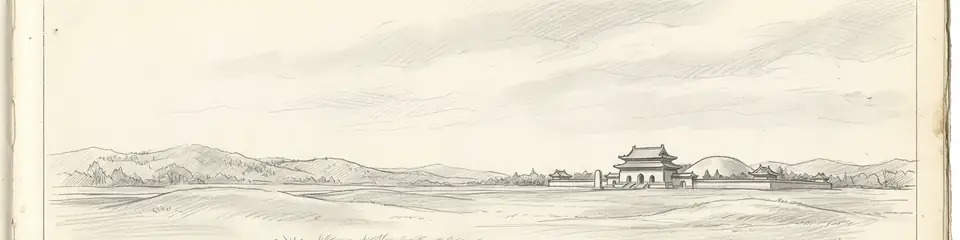
Graphite pencil sketch banner of Ming Tombs

“The Ming Tombs preserve the fullest above-ground ritual architecture of China's late imperial burial cult — spirit ways, sacrificial halls, and mound tombs scaled to Son-of-Heaven ideology.”

所在地

概要

The Ming Tombs (Shisan Ling) occupy a valley at the foot of the Tianshou Mountains in Changping District, roughly 50 kilometres northwest of central Beijing. The Yongle Emperor, who built the Forbidden City and Temple of Heaven, chose the site in the early 15th century for its geomantically auspicious basin opening south toward the capital. Thirteen of sixteen Ming emperors (from Yongle to Chongzhen) were buried here in individual tomb complexes, each with a spirit way (shendao) of stone animals and officials leading to a ceremonial gate and burial mound.

Changling, Yongle's tomb, is the largest and most visited: its above-ground halls rest on marble terraces, and the underground palace (not always open) follows a layout of vaulted chambers with thrones and ritual vessels for the deceased emperor and empresses. Dingling, the tomb of the Wanli Emperor, was excavated in the 1950s — a controversial dig that yielded silk textiles and crowns but taught conservators harsh lessons about opening waterlogged royal chambers.

The Sacred Way (shared approach road) lines up stone camels, elephants, lions, and civil and military officials in pairs, dramatising the emperor's procession into the afterlife. UNESCO inscribed the Ming Tombs in 2000, 2003, and 2004 as part of the serial Imperial Tombs of the Ming and Qing Dynasties. Pair with the Forbidden City and Temple of Heaven on a Beijing heritage circuit.

重要性

The Ming Tombs preserve the fullest above-ground ritual architecture of China's late imperial burial cult — spirit ways, sacrificial halls, and mound tombs scaled to Son-of-Heaven ideology. Changling and the excavated Dingling provide rare access to how Ming court workshops imagined eternity for emperors who also built Beijing's greatest living monuments.

証拠と解釈

確立された事実と議論が続く事柄を区別する。

確立された事実

2
  • Ming chronicles record selection of Tianshou valley and construction phases for each imperial tomb.
  • Dingling excavation yielded dated wooden plaques, thrones, and textiles consistent with Wanli-era court style.

議論のある解釈

1
  • Whether further royal chambers should be opened for research versus left sealed remains an active conservation debate.

コミュニティ写真

あなたの体験を共有する

この遺跡を訪れたことがありますか?写真をアップロードして魅力を共有しましょう。

このページの引用方法

Atlas Anatolia. (1409). Ming Tombs. Atlas Anatolia. https://atlasanatolia.com/ja/site/ming-tombs

コンテンツはCC BY-SA 4.0ライセンスの下で提供されています — 再利用の際は出典表示が必要です。

出典

  • Chronicle of the Chinese Emperors — Paludan, Ann (1998)
  • UNESCO — Imperial Tombs of the Ming and Qing Dynastiesリンク

よくある質問

Ming Tombsはどこにありますか?

Ming TombsはChinaに位置しています。

Ming Tombsの年代はいつ頃ですか?

Ming Tombsはおよそ1409 西暦 – 1644 西暦のものとされています。

Ming Tombsはどの文明に関連していますか?

Ming TombsはMing文明に関連しています。

Ming Tombsが重要な理由は何ですか?

The Ming Tombs preserve the fullest above-ground ritual architecture of China's late imperial burial cult — spirit ways, sacrificial halls, and mound tombs scaled to Son-of-Heaven ideology.

Ming Tombsはユネスコ世界遺産ですか?

はい — Ming Tombsはユネスコ世界遺産に登録されています。