
コンテンツへスキップ
Atlas Anatolia
ニュースIce Age teeth in Sulawesi push betel-nut use back as far as 25,000 yearsRoman mosaic and Eros head uncovered in the basilica at Pompeiopolis, Kastamonu
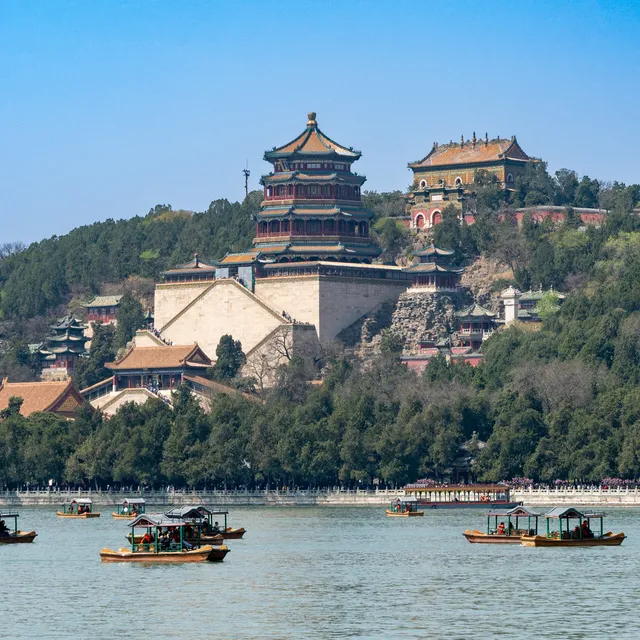
Kunming Lake and Longevity Hill at the Summer Palace, Beijing

Wikimedia Commons

遺産複合体UNESCO

Summer Palace

Seyfi Cem Baskin

颐和园1750 西暦 – 1908 西暦

The Qing dynasty's lakeside retreat northwest of Beijing — Kunming Lake and Longevity Hill studded with pavilions, corridors, and the Marble Boat — a masterpiece of Chinese landscape garden design and one of the most visited imperial sites in China.

21
関心 75

所在地

中国

40.00°N · 116.28°E · アジア

Area

~293 ha; Kunming Lake ~220 ha

Long Corridor

728 m painted gallery along the lake shore

Rebuild

Major restoration under Empress Dowager Cixi after 1888

UNESCO

World Heritage Site (1998)

Graphite pencil sketch banner of Summer Palace

“The Summer Palace crystallises Qing imperial garden philosophy — manipulating water, hill, and architecture to embody cosmological order and literary allusion.”

所在地

概要

The Summer Palace (Yiheyuan, "Garden of Nurtured Harmony") lies in the Haidian district northwest of central Beijing, China. The site originated as Qingyi Garden, expanded under the Qianlong Emperor in the 18th century; the present name and much of the layout reflect the rebuilding ordered by Empress Dowager Cixi after Anglo-French destruction in 1860 and further work after 1888, reputedly using funds intended for the navy.

Kunming Lake — expanded to resemble West Lake at Hangzhou — covers about three quarters of the 293-hectare park. Longevity Hill rises on the north shore, terraced with temples and halls linked by the Long Corridor (Chang Lang), a 728-metre painted gallery. The Marble Boat (清晏舫) on the lake shore symbolises the durability of the Qing throne. The Seventeen-Arch Bridge, Suzhou Street, and Tower of Buddhist Incense anchor key vistas.

UNESCO listed the Summer Palace in 1998 as an outstanding example of Chinese landscape garden design. It ranks among the top visitor attractions in Beijing alongside the Forbidden City and Temple of Heaven.

重要性

The Summer Palace crystallises Qing imperial garden philosophy — manipulating water, hill, and architecture to embody cosmological order and literary allusion. Its 19th-century rebuilding under Cixi documents the dynasty's final decades of luxury, naval reform debates, and encounter with Western military technology.

証拠と解釈

確立された事実と議論が続く事柄を区別する。

確立された事実

2
  • Qing imperial archives and stele inscriptions document Qianlong expansion and later Cixi-period rebuilding campaigns.
  • Garden layout follows documented Chinese landscape principles citing Hangzhou West Lake and Buddhist–Daoist iconography on Longevity Hill.

議論のある解釈

1
  • The extent to which naval funds were diverted to the 1888 rebuild is attested in reformist polemic but disputed in detail by Qing fiscal historians.

コミュニティ写真

あなたの体験を共有する

この遺跡を訪れたことがありますか?写真をアップロードして魅力を共有しましょう。

このページの引用方法

Atlas Anatolia. (1750). Summer Palace. Atlas Anatolia. https://atlasanatolia.com/ja/site/summer-palace-beijing

コンテンツはCC BY-SA 4.0ライセンスの下で提供されています — 再利用の際は出典表示が必要です。

出典

  • The Forbidden City — Barmé, Geremie R. (2008)
  • UNESCO — Summer Palaceリンク

よくある質問

Summer Palaceはどこにありますか?

Summer PalaceはChinaに位置しています。

Summer Palaceの年代はいつ頃ですか?

Summer Palaceはおよそ1750 西暦 – 1908 西暦のものとされています。

Summer Palaceはどの文明に関連していますか?

Summer PalaceはMing, Qing文明に関連しています。

Summer Palaceが重要な理由は何ですか?

The Summer Palace crystallises Qing imperial garden philosophy — manipulating water, hill, and architecture to embody cosmological order and literary allusion.

Summer Palaceはユネスコ世界遺産ですか?

はい — Summer Palaceはユネスコ世界遺産に登録されています。