
コンテンツへスキップ
Atlas Anatolia
ニュースIce Age teeth in Sulawesi push betel-nut use back as far as 25,000 yearsRoman mosaic and Eros head uncovered in the basilica at Pompeiopolis, Kastamonu
The brick vault of Taq Kasra, the great ayvān of Ctesiphon, Iraq

Wikimedia Commons (CC BY-SA 4.0)

Country Record

Known by the Most Names in Iraq

都市注目

Ctesiphon

Seyfi Cem Baskin

قطيسفون129 紀元前 – 637 西暦

The Parthian and Sasanian capital on the Tigris south of Baghdad — celebrated for the colossal brick vault of Taq Kasra — is among the most searched late-antique archaeological sites and the administrative twin of Seleucia on the opposite bank.

21
関心 62

所在地

イラク

33.09°N · 44.58°E · アジア

Capitals

Parthian winter seat; Sasanian imperial capital

Taq Kasra

~30 m high brick vault (ayvān)

Fall

Taken by Arab armies, 637 CE

Location

East bank of Tigris, ~35 km SE of Baghdad

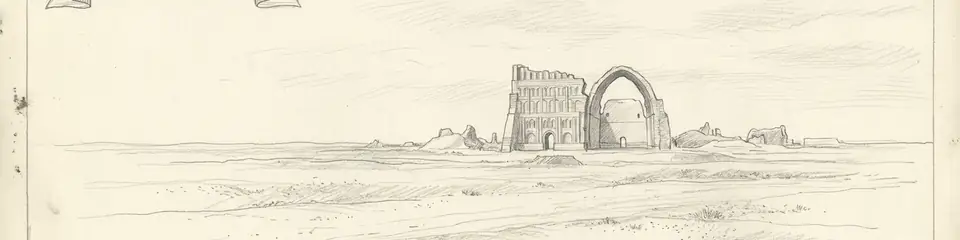
Graphite pencil sketch banner of Ctesiphon

“Ctesiphon was the primary capital of the last pre-Islamic Iranian empire and the eastern pole opposite Constantinople in late antique geopolitics.”

所在地

概要

Ctesiphon developed on the east bank of the Tigris opposite Hellenistic Seleucia, consolidating into the twin cities later called al-Mada’in. Parthian kings wintered here; Sasanian shahanshahs made it the ceremonial and administrative heart of Erānshahr from Ardashir I through Khosrow II. Arab armies captured the city in 637 CE after the Battle of al-Qādisiyyah; much of the palace quarter decayed as Baghdad rose.

What remains most dramatically visible is Taq Kasra (the Arch of Khosrow / ayvān of al-Madāʾin): a free-standing baked-brick vault roughly 30 metres high spanning about 25 metres — one of the largest unreinforced brick arches ever built. Excavations and early travellers documented palace complexes, residential mounds, and canalised floodplains; modern damage, flood, and conflict have thinned standing fabric beyond the arch.

The site anchors debates on Sasanian court culture, silk-road diplomacy with Byzantium, and the transfer of imperial capitalship from Mesopotamian to Islamic Iraq. Pair with Hatra and Persepolis for complementary Iranian imperial landscapes, and with Palmyra for late antique caravan politics.

重要性

Ctesiphon was the primary capital of the last pre-Islamic Iranian empire and the eastern pole opposite Constantinople in late antique geopolitics. Taq Kasra remains the clearest standing monument of Sasanian brick technology and royal architecture.

証拠と解釈

確立された事実と議論が続く事柄を区別する。

確立された事実

2
  • Classical, Syriac, and early Islamic sources identify Ctesiphon as the Sasanian capital opposite Seleucia.
  • Structural surveys of Taq Kasra document brick bonding and span unique among surviving Sasanian vaults.

議論のある解釈

1
  • Exact royal builders and phases of the standing vault (Shapur I vs later Khosrows) are still argued from sparse building inscriptions.

コミュニティ写真

あなたの体験を共有する

この遺跡を訪れたことがありますか?写真をアップロードして魅力を共有しましょう。

このページの引用方法

Atlas Anatolia. (129). Ctesiphon. Atlas Anatolia. https://atlasanatolia.com/ja/site/ctesiphon

コンテンツはCC BY-SA 4.0ライセンスの下で提供されています — 再利用の際は出典表示が必要です。

出典

  • Ctesiphon — Keall, Edward J. (1975)
  • Sasanian Persia: The Rise and Fall of an Empire — Daryaee, Touraj (2009)

よくある質問

Ctesiphonはどこにありますか?

CtesiphonはIraqに位置しています。

Ctesiphonの年代はいつ頃ですか?

Ctesiphonはおよそ129 紀元前 – 637 西暦のものとされています。

Ctesiphonはどの文明に関連していますか?

CtesiphonはParthian, Sasanian文明に関連しています。

Ctesiphonが重要な理由は何ですか?

Ctesiphon was the primary capital of the last pre-Islamic Iranian empire and the eastern pole opposite Constantinople in late antique geopolitics.

Ctesiphonはユネスコ世界遺産ですか?

Ctesiphonは現在ユネスコ世界遺産には登録されていません。