
コンテンツへスキップ
Atlas Anatolia
ニュースIce Age teeth in Sulawesi push betel-nut use back as far as 25,000 yearsRoman mosaic and Eros head uncovered in the basilica at Pompeiopolis, Kastamonu
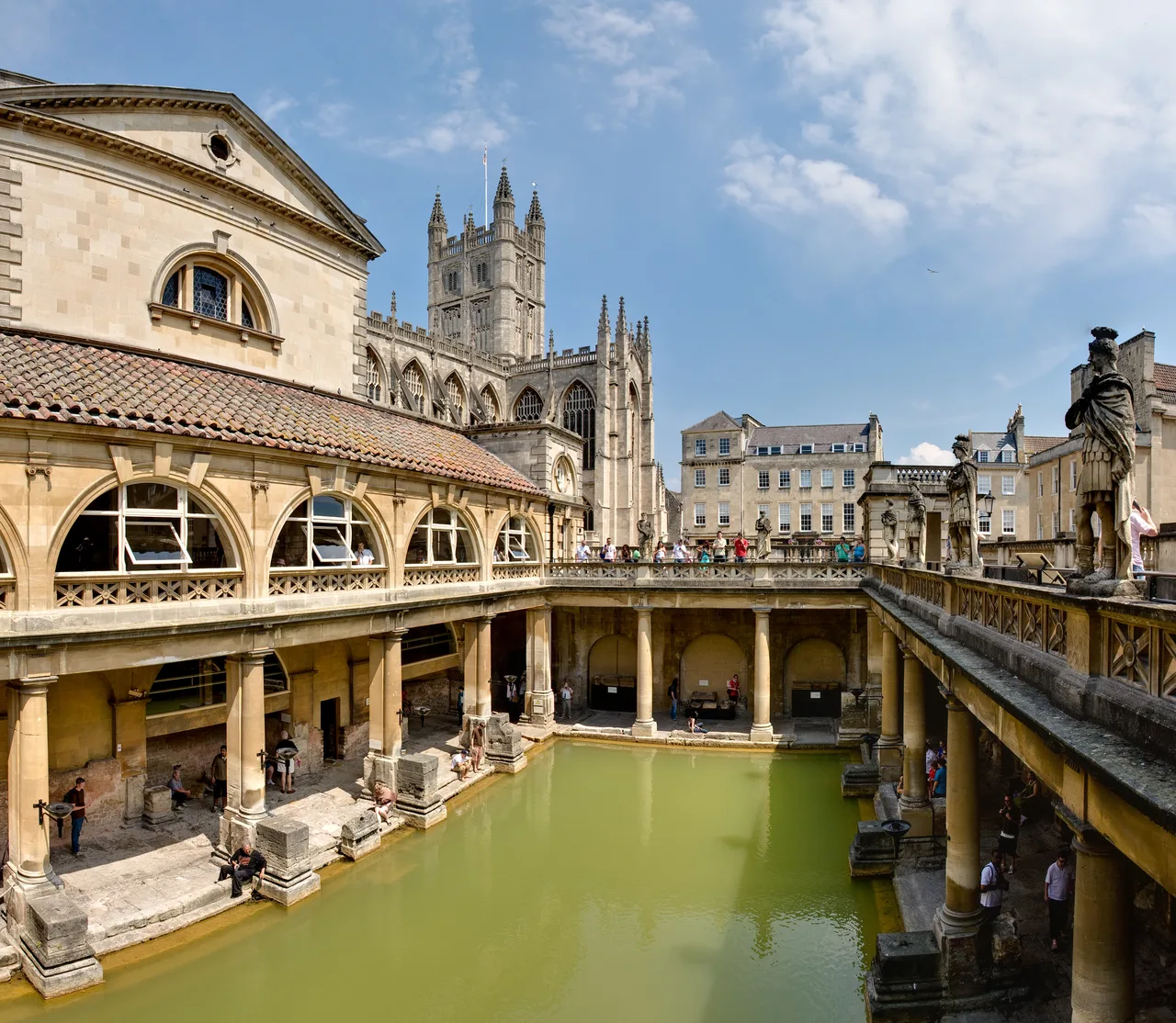
The Great Bath at Aquae Sulis (Bath), its lead lining original Roman work from the 1st century CE

Wikimedia Commons

Country Record

Longest Recorded History in United Kingdom

聖域UNESCO

Bath (Aquae Sulis)

Seyfi Cem Baskin

Aquae Sulis60 西暦 – 410 西暦

A Roman sacred bathing complex built over Britain's only hot spring, dedicated to the goddess Sulis-Minerva and in continuous use for four centuries — its lead-lined Great Bath, gilded bronze head of Minerva, and remarkable cache of cursing tablets preserved intact.

31
関心 64

所在地

イギリス

51.38°N · 2.36°W · ヨーロッパ

Spring temperature

45–46°C — Britain's only geothermal spring

Spring flow rate

~1.3 million litres per day

Curse tablets found

130+ lead defixiones — Britain's largest collection

Great Bath lead lining

Original Roman lead still in place, 1st century CE

UNESCO

World Heritage Site (City of Bath) since 1987

Gilded bronze Minerva head

Found 1727; finest Roman bronze from Britain

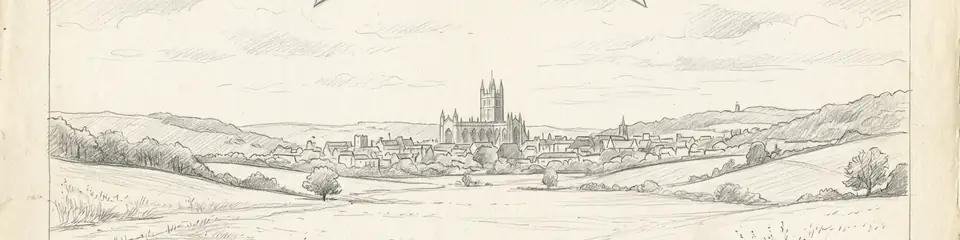
Graphite pencil sketch banner of Bath (Aquae Sulis)

“Aquae Sulis is the best-preserved Roman religious and bathing complex in northern Europe and the most complete example of the interpretatio romana (the Roman practice of identifying native deities with classical gods).”

所在地

概要

Bath lies in a curve of the River Avon in Somerset, England, where three natural hot springs emerge at a constant 45°C — the only geothermal springs in Britain. The Romans encountered a Celtic cult already established around the spring, worshipping the local goddess Sulis. They founded the settlement Aquae Sulis ('waters of Sulis') in the 60s CE, identified the local goddess with Minerva, and constructed a monumental bath-and-temple complex that functioned for over four centuries as the most elaborate spa facility in Roman Britain.

The centrepiece was the Sacred Spring: a massive lead-lined reservoir 12 m × 8 m, fed directly by the thermal waters at a rate of approximately 1.3 million litres per day. Around the spring the Romans built a temple precinct with a pediment bearing a carved Gorgon-Medusa face (with male rather than female features — a deliberate hybrid of Sulis and Minerva), a classical temple on a raised podium, and an altar. Adjacent to the precinct was the Great Bath: an open-air lead-lined bathing pool 24 m × 9 m, originally vaulted with a barrel ceiling, where bathers could swim in water heated to approximately 40°C. Additional heated rooms (caldarium, tepidarium, frigidarium) extended the complex, which grew substantially in the 2nd and 3rd centuries.

More than 130 pewter and lead curse tablets (defixiones) have been found in the spring — the largest collection in Britain. Pilgrims and visitors threw them into the spring after inscribing petitions to Sulis-Minerva, mostly requesting punishment of thieves who had stolen personal items. The tablets name individuals by full name, providing extraordinary evidence for the mixed Romano-Celtic population: Gaulish, Latin, and Celtic names appear together. The gilded bronze head of Minerva — found in 1727, before systematic excavation — is the finest piece of Roman bronze surviving from Britain.

重要性

Aquae Sulis is the best-preserved Roman religious and bathing complex in northern Europe and the most complete example of the interpretatio romana (the Roman practice of identifying native deities with classical gods). The cursing tablets are among the largest primary archives of ordinary Roman voices in existence: the thieves, stolen cloaks, and anxious petitioners inscribed on lead give names and grievances of people who otherwise left no trace in history. The Great Bath — its Roman fabric intact, with lead lining from the 1st century still in place — gives visitors the most direct physical experience of a Roman bathing complex available anywhere in Britain. Bath also demonstrates the therapeutic and devotional integration that characterized Roman religion: the spring was simultaneously a healing resource, a sacred space, and a social institution.

証拠と解釈

確立された事実と議論が続く事柄を区別する。

確立された事実

3
  • The lead-sheet lining of the Great Bath dates to the 1st century CE by thermoluminescence and historical context; the lead was mined in the Mendip Hills 30 km away, as confirmed by isotopic analysis matching Mendip ore signatures.
  • More than 130 curse tablets inscribed in Latin (and occasionally Celtic transliterated into Latin letters) have been recovered from the spring; the names on the tablets include Gaulish, Celtic, and Latin personal names, documenting a mixed provincial population.
  • The pediment gorgon head — with male features and a serpent beard — is unique in Roman iconography and is interpreted as a deliberate conflation of the local solar deity Sulis and the classical Gorgon-Medusa, reflecting the theology of Sulis-Minerva.

学術的推論

1
  • The complex appears to have been remodeled at least three times during the Roman period, with the roof of the Great Bath raised and rebuilt in the 3rd century; the vaulted roof collapsed, probably in the 5th century, filling the bath with rubble.

コミュニティ写真

あなたの体験を共有する

この遺跡を訪れたことがありますか?写真をアップロードして魅力を共有しましょう。

このページの引用方法

Atlas Anatolia. (60). Bath (Aquae Sulis). Atlas Anatolia. https://atlasanatolia.com/ja/site/bath-aquae-sulis

コンテンツはCC BY-SA 4.0ライセンスの下で提供されています — 再利用の際は出典表示が必要です。

出典

  • Roman Baths and Bathing — Fikret Yegül (1992)
  • The Temple of Sulis Minerva at Bath — Barry Cunliffe and Peter Davenport (1985)
  • Roman Baths Museumリンク

よくある質問

Bath (Aquae Sulis)はどこにありますか?

Bath (Aquae Sulis)はUnited Kingdomに位置しています。

Bath (Aquae Sulis)の年代はいつ頃ですか?

Bath (Aquae Sulis)はおよそ60 西暦 – 410 西暦のものとされています。

Bath (Aquae Sulis)はどの文明に関連していますか?

Bath (Aquae Sulis)はRoman, Celtic文明に関連しています。

Bath (Aquae Sulis)が重要な理由は何ですか?

Aquae Sulis is the best-preserved Roman religious and bathing complex in northern Europe and the most complete example of the interpretatio romana (the Roman practice of identifying native deities with classical gods).

Bath (Aquae Sulis)はユネスコ世界遺産ですか?

はい — Bath (Aquae Sulis)はユネスコ世界遺産に登録されています。