
Vai al contenuto
Atlas Anatolia
NotizieIce Age teeth in Sulawesi push betel-nut use back as far as 25,000 yearsRoman mosaic and Eros head uncovered in the basilica at Pompeiopolis, Kastamonu
The cylindrical Dhamekh Stupa at Sarnath, Uttar Pradesh, with carved Gupta-period stone banding

Wikimedia Commons (CC BY-SA 4.0)

Record mondiale

Known by the Most Names in History

ComplessoUNESCOIn evidenza

Sarnath

Seyfi Cem Baskin

सारनाथ500 a.C. – 1200 d.C.

The Deer Park northeast of Varanasi where the Buddha delivered the first sermon and founded the sangha. Ashoka’s lion capital, the Dhamekh Stupa, and sixteen centuries of monasteries were inscribed as a UNESCO World Heritage serial property on 25 July 2026.

31
Interesse 68

Posizione

India

25.38°N · 83.02°E · Asia

Event

First sermon (Dhammacakkappavattana) and founding of the sangha

Dhamekh Stupa

~43.6 m high, ~28 m diameter; Gupta carved drum

Lion capital

Ashokan pillar capital, excavated 1904–05; India’s State Emblem

UNESCO

Ancient Buddhist Site of Sarnath, 25 July 2026 (48 COM), criteria (iii)(vi), ref. 927

Components

Serial: Chaukhandi Stupa + excavated Deer Park (8.05 ha / 72.2 ha buffer)

Museum

Sarnath Site Museum, 1904 — India’s first site museum

Sarnath is where Buddhism becomes a community: the first sermon and the first disciples are the origin of the sangha, and the lion capital is the modern Indian state’s most visible ancient object.”

Posizione

Panoramica

Sarnath (Pali Isipatana; Sanskrit Rishipatana / Mrigadava, “Deer Park”) lies about 10 km northeast of Varanasi in Uttar Pradesh. Buddhist tradition places here the Dhammacakkappavattana — the Buddha’s first sermon after enlightenment at Bodh Gaya — and his meeting with the five ascetics who became the first sangha. The Buddha named it one of four sites of pilgrimage. Ashoka marked the park in the 3rd century BCE with a pillar whose four-lion capital, excavated in 1904–05, is now India’s State Emblem and is displayed in the Sarnath Site Museum (founded 1904, the country’s first site museum).

The standing monument most visitors photograph is the Dhamekh Stupa: a cylindrical brick-and-stone drum about 43.6 m high and 28 m across, its lower band carved with Gupta-period floral and geometric reliefs and eight niches. Alexander Cunningham (1835–36) emptied the nearby Dharmarajika Stupa in a search for relics; F. O. Oertel’s 1904–05 campaign recovered the lion capital; John Marshall (1907) and Daya Ram Sahni (1927–32) mapped monasteries, the Mulagandhakuti shrine, and votive stupas. After an 82-year gap, B. R. Mani’s ASI trenches of 2013–14 (reported in a 2025 Padmapani Lecture) documented a continuous sequence from pre-Mauryan layers in the 5th–4th centuries BCE through Shunga, Kushan, Gupta, and early medieval occupation until destruction in the 12th century CE. About 800 m south, the Chaukhandi Stupa — a Gupta brick mound given an octagonal tower in 1588 by Govardhan, son of Todar Mal, to commemorate Humayun — marks the traditional meeting with the five monks.
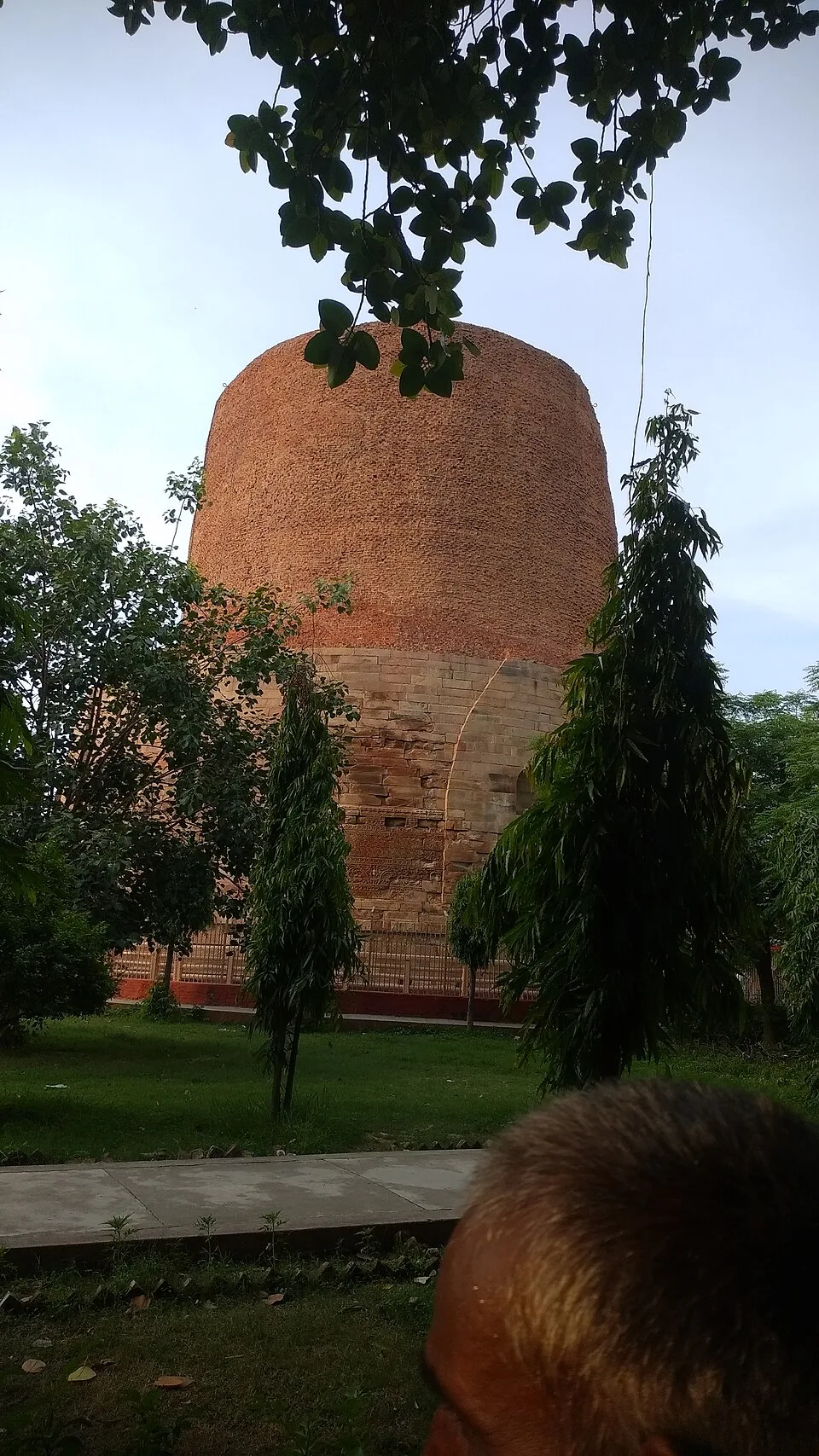
Dhamekh Stupa Sarnath Varanasi
Dhamekh Stupa Sarnath Varanasi | Deepakk8373 Official (CC BY-SA 4.0)
"These two extremes, O bhikkhus, are not to be practised by one who has gone forth from the world. There is a middle path… which leads to insight, to wisdom, to calm, to knowledge, to enlightenment, to Nirvana."
— Dhammacakkappavattana Sutta (the first sermon at Isipatana), Pali canon; Rhys Davids tradition

On 25 July 2026 the World Heritage Committee (48 COM, Busan) inscribed the serial property “Ancient Buddhist Site of Sarnath” under criteria (iii) and (vi), India’s 45th World Heritage listing (dossier 927; 8.05 ha core, 72.2 ha buffer). The two components are Chaukhandi and the excavated park (Dhamekh, Dharmarajika, Mulagandhakuti, Ashokan pillar, monasteries). The site had sat on the Tentative List since 1998; India submitted the 2025–26 nomination in January 2025, and ICOMOS evaluated it on the ground from 24–29 September 2025. ASI conservation of brick votive stupas was underway at inscription. Read it with Lumbini, Bodh Gaya, Sanchi, Nalanda, and Taxila for the rest of the early Buddhist landscape.
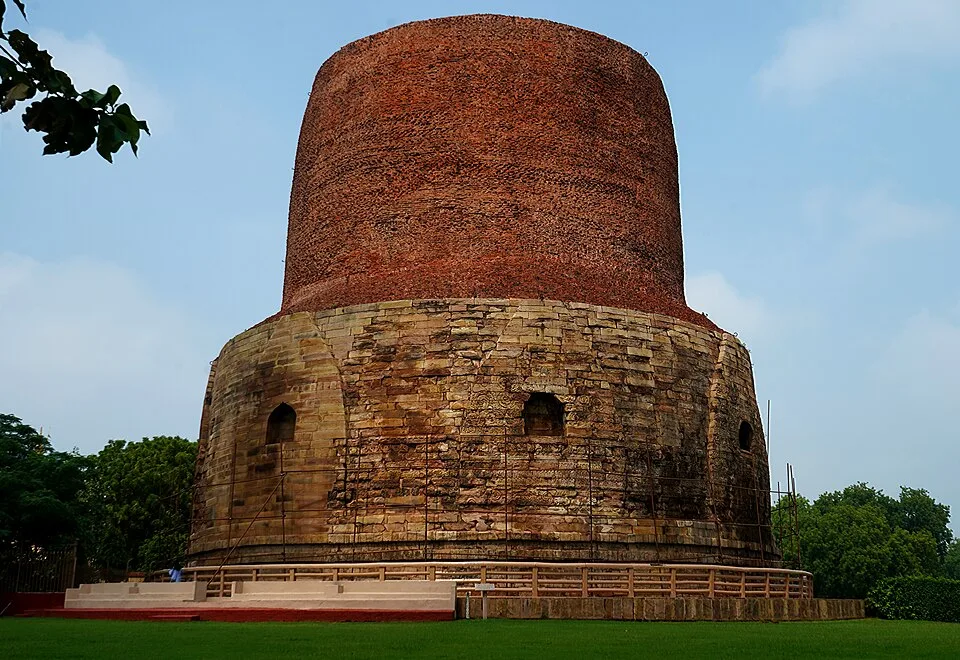
Dhamekh Stupa at Sarnath, Varanasi, India
Dhamekh Stupa at Sarnath, Varanasi, India | Dhruvaeng (CC BY-SA 4.0)

The 1931 Mulagandhakuti Vihara of the Maha Bodhi Society is a modern shrine beside the ruins, not the Gupta monastery of the same name. The exact brick that marks the first-sermon seat is debated — Cunningham favoured Dharmarajika; later piety clusters at Dhamekh — so the park as a whole, not a single stupa, is the archaeological unit UNESCO listed.

Perché è importante

Sarnath is where Buddhism becomes a community: the first sermon and the first disciples are the origin of the sangha, and the lion capital is the modern Indian state’s most visible ancient object. The 2026 World Heritage inscription, after a 27-year tentative listing, also makes the Deer Park a live search destination — three of the four life-of-the-Buddha pilgrimage sites are now UNESCO properties, with only Kusinara still outside the list.

Evidenze e interpretazione

Distinguere ciò che è ben consolidato da ciò che rimane dibattuto.

Fatti ben consolidati

3
  • Oertel’s 1904–05 excavation recovered the Ashokan lion capital and pillar fragments in situ relative to the pilgrimage park; the capital is the model for the State Emblem of India.
  • Mani’s 2013–14 ASI trenches demonstrate stratified occupation from the 5th–4th centuries BCE through the 12th century CE, matching the 16-century span cited in the 2026 World Heritage dossier.
  • UNESCO 48 COM 8B.17 (Busan, 25 July 2026) inscribed the serial property under criteria (iii) and (vi) after an ICOMOS evaluation mission on 24–29 September 2025.

Interpretazioni dibattute

1
  • Whether the first-sermon seat is better identified with the robbed Dharmarajika Stupa or with Dhamekh remains a matter of excavation history versus later piety; UNESCO treats the park as a whole.

Foto della comunità

Condividi la tua esperienza

Hai visitato questo sito? Carica le tue foto per aiutare gli altri a scoprirlo.

Come citare questa pagina

Atlas Anatolia. (500). Sarnath. Atlas Anatolia. https://atlasanatolia.com/it/site/sarnath

Contenuto con licenza CC BY-SA 4.0 — è richiesta l'attribuzione in caso di riutilizzo.

Fonti

  • Catalogue of the Museum of Archaeology at SarnathSahni, Daya Ram (1914)
  • Sarnath: A Critical History of the Place Where Buddhism BeganAsher, Frederick M. (2020)
  • UNESCO — Ancient Buddhist Site of SarnathCollegamento
  • PIB — Ancient Buddhist Site of Sarnath inscribed (25 July 2026)Collegamento

Domande frequenti

Dove si trova Sarnath?

Sarnath si trova in India.

A quando risale Sarnath?

Sarnath risale all'incirca al 500 a.C. – 1200 d.C..

Quali civiltà sono associate a Sarnath?

Sarnath è associato alla civiltà Mauryan, Gupta.

Perché Sarnath è importante?

Sarnath is where Buddhism becomes a community: the first sermon and the first disciples are the origin of the sangha, and the lion capital is the modern Indian state’s most visible ancient object.

Sarnath è un sito Patrimonio Mondiale dell'UNESCO?

Sì — Sarnath è iscritto nella lista del Patrimonio Mondiale dell'UNESCO.