
Aller au contenu
Atlas Anatolia
ActualitésIce Age teeth in Sulawesi push betel-nut use back as far as 25,000 yearsRoman mosaic and Eros head uncovered in the basilica at Pompeiopolis, Kastamonu
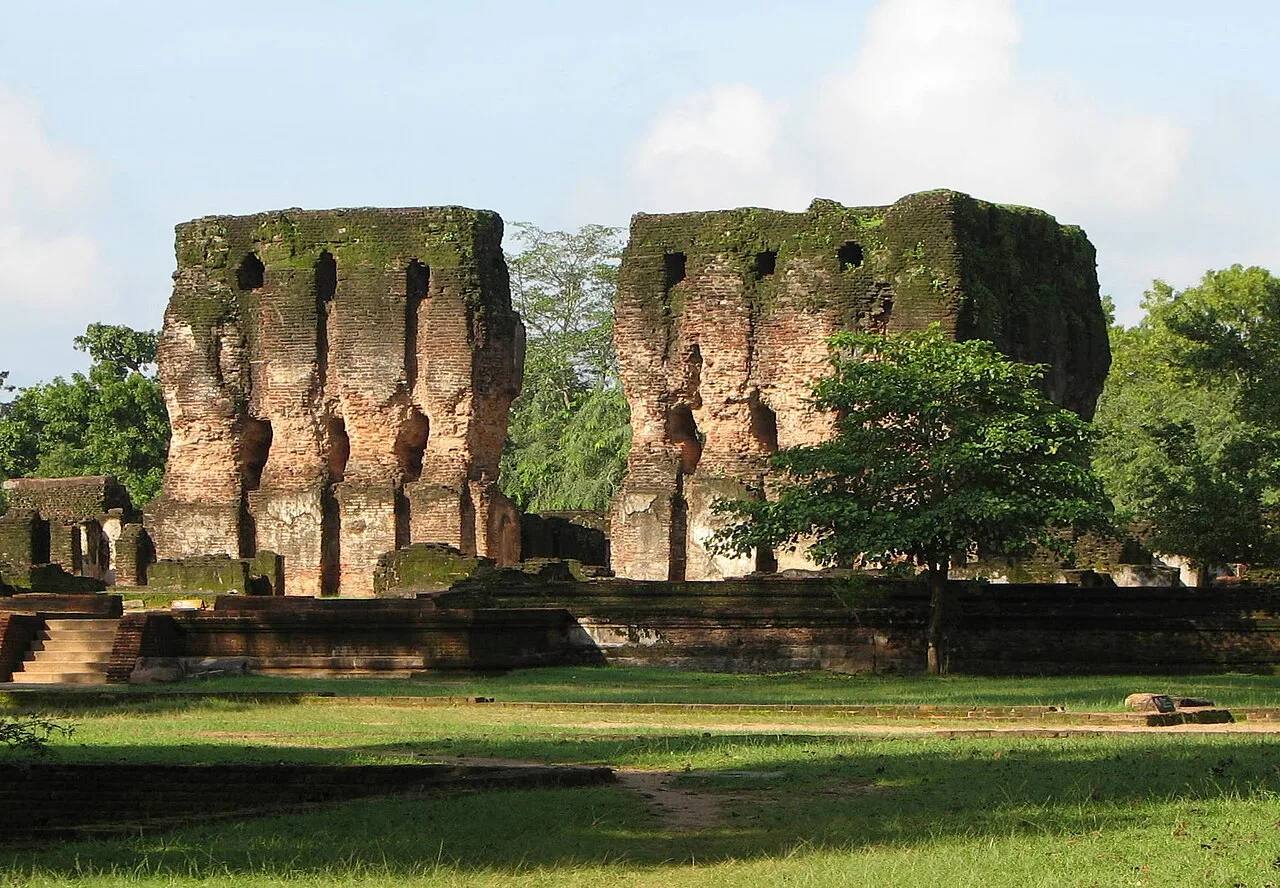
Ancient monuments of the royal city of Polonnaruwa, Sri Lanka

Wikimedia Commons

Country Record

Longest Continuously Occupied Site in Sri Lanka

CitéUNESCO

Polonnaruwa

Seyfi Cem Baskin

පොළොන්නරුව1017 apr. J.-C. – 1232 apr. J.-C.

The second great capital of ancient Sri Lanka, at its height in the 12th century a planned royal city of palaces, temples, and colossal Buddha statues set among vast irrigation reservoirs. Its serene rock-cut Buddhas at the Gal Vihara are among the masterpieces of Sinhalese and Buddhist art.

41
Intérêt 58

Localisation

Sri Lanka

7.94°N · 81.02°E · Asie

Capital

Royal capital of Sri Lanka, ~1070–1232 CE

Golden age

Under Parakramabahu I (r. 1153–1186) and Nissankamalla

Parakrama Samudra

Artificial reservoir ~2,500 ha, still irrigating today

Gal Vihara

Four Buddhas carved from one granite outcrop (incl. 14 m reclining)

Preceded by

Capital after Chola conquest of Anuradhapura (c. 993 CE)

UNESCO

World Heritage Site (1982)

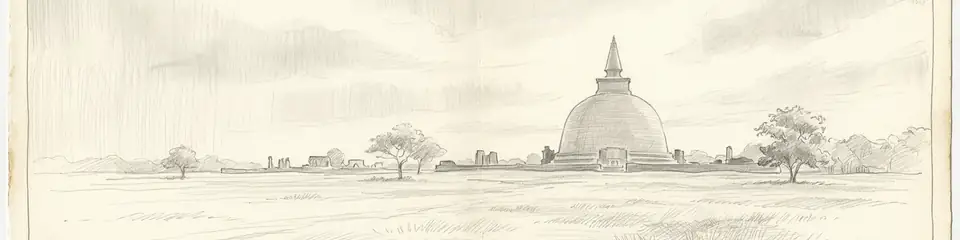
Graphite pencil sketch banner of Polonnaruwa

“Polonnaruwa is one of the great ancient capitals of South Asia and the second of Sri Lanka's two royal cities, preserving an exceptionally complete medieval Buddhist urban landscape of palaces, monasteries, stupas, and image-houses.”

Localisation

Aperçu

Polonnaruwa lies in the north-central plain of Sri Lanka, southeast of the earlier capital of Anuradhapura. After Anuradhapura was repeatedly attacked and finally taken by the South Indian Chola empire around 993 CE, the Cholas ruled the island from Polonnaruwa; when the Sinhalese king Vijayabahu I drove them out in 1070, he kept the city as his capital. Polonnaruwa then served as the royal capital of Sri Lanka for roughly two centuries, reaching its zenith under two great kings: Parakramabahu I (r. 1153–1186) and his successor Nissankamalla.

Parakramabahu I transformed Polonnaruwa into a planned and lavishly built city, enclosed by walls and centred on a great royal palace said by the chronicles to have had seven storeys and a thousand chambers. He is most famous, however, for an enormous public-works programme of irrigation. Declaring that "not even a little water that comes from the rain must flow into the ocean without being made useful to man," he had vast reservoirs (tanks) built or restored, the greatest of which, the Parakrama Samudra ("the Sea of Parakrama"), is an artificial inland sea covering some 2,500 hectares that still irrigates the surrounding farmland today.

The city is rich in religious monuments reflecting both Buddhism and the Hindu traditions introduced during Chola rule. They include the Vatadage (a circular relic house enclosing a stupa and seated Buddhas), the towering brick image-house of the Lankatilaka, the Rankoth Vehera stupa, and a cluster of Hindu temples (devales) with fine bronze sculpture. The most celebrated monument is the Gal Vihara: four large images of the Buddha — seated, two standing, and a great reclining figure some 14 metres long depicting the Buddha's passing into nirvana — carved from a single long granite outcrop, regarded as among the supreme achievements of Sinhalese sculpture.

After the death of Nissankamalla the kingdom weakened under renewed invasions and dynastic strife, and by the 13th century the capital was abandoned and the centre of Sinhalese power shifted southwest. The city was reclaimed by jungle and later cleared and conserved by archaeologists.

Pourquoi c'est important

Polonnaruwa is one of the great ancient capitals of South Asia and the second of Sri Lanka's two royal cities, preserving an exceptionally complete medieval Buddhist urban landscape of palaces, monasteries, stupas, and image-houses. Its hydraulic engineering — above all the immense Parakrama Samudra reservoir, still in use after eight centuries — represents one of the high points of the ancient Sri Lankan "tank" civilisation that mastered water management in a seasonally dry climate. The serene Buddha images of the Gal Vihara are masterpieces of Sinhalese and indeed of world Buddhist art. As a well-preserved, planned medieval capital it offers an unusually coherent picture of a flourishing Buddhist kingdom. It was inscribed as a UNESCO World Heritage Site in 1982.

Preuves et interprétation

Distinguer ce qui est bien établi de ce qui reste débattu.

Faits bien établis

4
  • The Gal Vihara Buddha images survive in situ, carved from a single granite outcrop, including a ~14 m reclining Buddha — directly attesting the height of Sinhalese sculpture.
  • The Parakrama Samudra reservoir survives and remains in use for irrigation, confirming the scale of the hydraulic works attributed to Parakramabahu I.
  • Hindu temples (devales) and bronze sculpture from the site evidence the Chola/South Indian influence introduced during the period of Chola rule before 1070 CE.
  • The city's history and royal building programmes are recorded in the Sri Lankan chronicle tradition (the Culavamsa), broadly corroborated by the surviving monuments.

Interprétations débattues

1
  • Details from the chronicles — such as the royal palace having seven storeys and a thousand rooms — are likely idealised; the original height and full plan of the palace are uncertain from the surviving brick remains.

Photos de la communauté

Partagez votre expérience

Avez-vous visité ce site ? Téléchargez vos photos pour aider les autres à le découvrir.

Comment citer cette page

Atlas Anatolia. (1017). Polonnaruwa. Atlas Anatolia. https://atlasanatolia.com/fr/site/polonnaruwa

Contenu sous licence CC BY-SA 4.0 — attribution requise en cas de réutilisation.

Sources

  • The Archaeology of South Asia — Coningham, Robin; Young, Ruth (2015)
  • The Rock and Wall Paintings of Sri Lanka — Bandaranayake, Senake (2006)

Questions fréquentes

Où se trouve Polonnaruwa ?

Polonnaruwa est situé à/en Sri Lanka.

De quand date Polonnaruwa ?

Polonnaruwa remonte approximativement à 1017 apr. J.-C. – 1232 apr. J.-C..

Quelles civilisations sont associées à Polonnaruwa ?

Polonnaruwa est associé à la civilisation Sinhalese.

Pourquoi Polonnaruwa est-il important ?

Polonnaruwa is one of the great ancient capitals of South Asia and the second of Sri Lanka's two royal cities, preserving an exceptionally complete medieval Buddhist urban landscape of palaces, monasteries, stupas, and image-houses.

Polonnaruwa est-il inscrit au patrimoine mondial de l'UNESCO ?

Oui — Polonnaruwa est inscrit sur la liste du patrimoine mondial de l'UNESCO.