
Aller au contenu
Atlas Anatolia
ActualitésIce Age teeth in Sulawesi push betel-nut use back as far as 25,000 yearsRoman mosaic and Eros head uncovered in the basilica at Pompeiopolis, Kastamonu
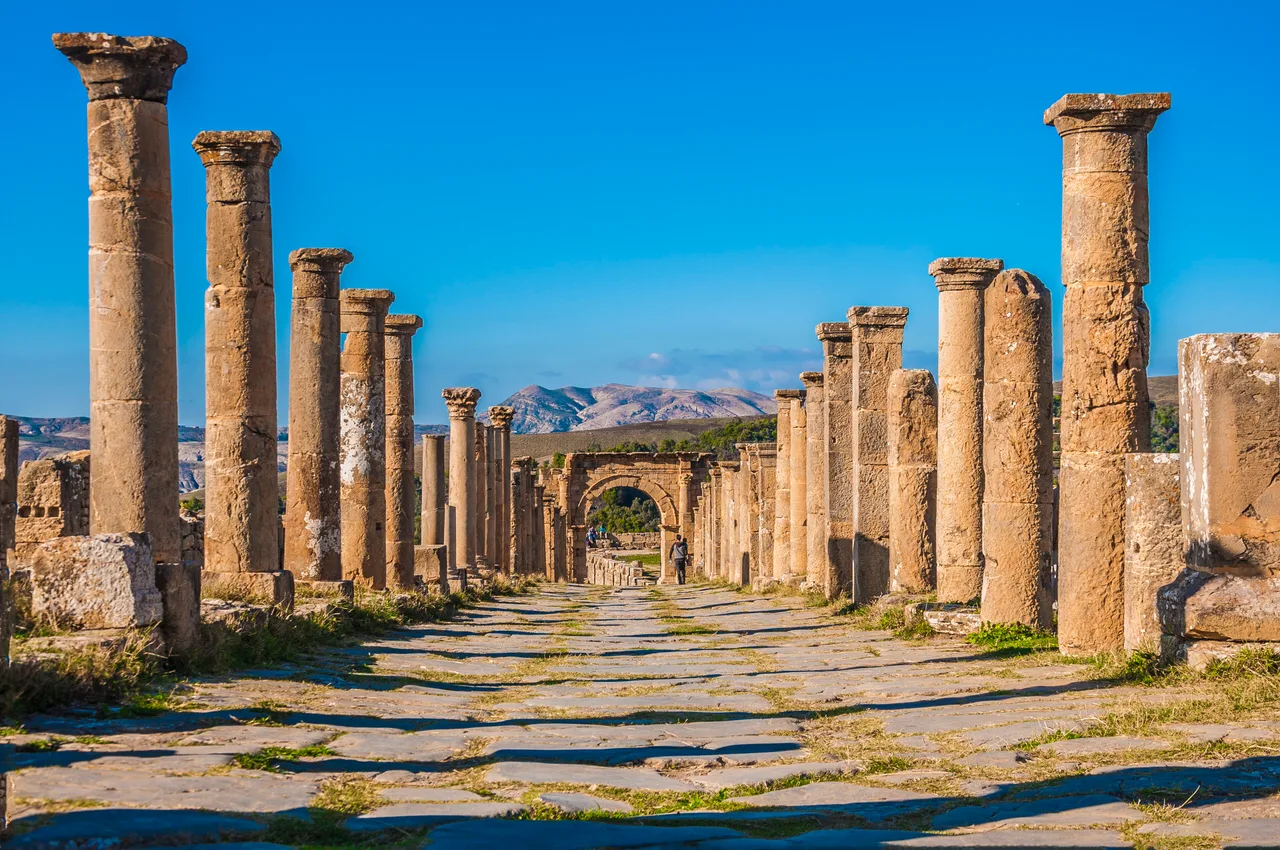
The Roman forum at Cuicul (Djemila), Algeria, with mountains behind

Wikimedia Commons

Country Record

Oldest City in Algeria

CitéUNESCO

Cuicul (Djemila)

Seyfi Cem Baskin

جميلة97 apr. J.-C. – 600 apr. J.-C.

A Roman mountain colony in the Aurès range of Algeria, Cuicul (modern Djemila) preserves one of the most harmonious Roman urban layouts in Africa — forum, capitol, triumphal arch, baths, and Christian basilicas set against a dramatic mountain backdrop. UNESCO inscribed it as a masterpiece of Roman town planning adapted to a highland setting.

21
Intérêt 48

Localisation

Sétif Province · Aurès Mountains · Algérie

36.31°N · 5.73°E · Afrique

Founded

Roman colony under Nerva, c. 97 CE

Setting

Aurès Mountains, ~900 m elevation

Highlight

Triumphal arch of Caracalla (216 CE)

UNESCO

World Heritage Site 1982

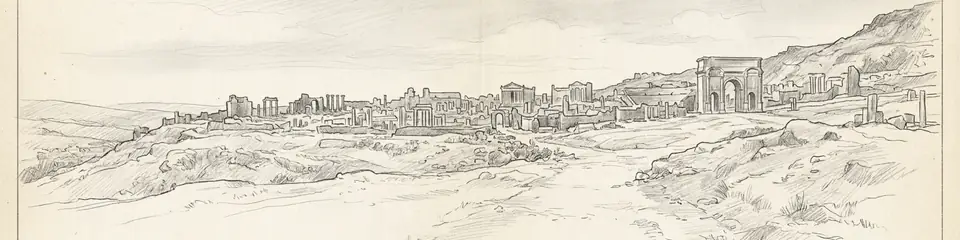
Graphite pencil sketch banner of Cuicul (Djemila)

“Cuicul demonstrates Roman urbanism away from the Mediterranean coast — essential for understanding how the empire integrated inland North Africa through colonisation and infrastructure.”

Localisation

Aperçu

Cuicul — the Roman name for what is now Djemila in northeastern Algeria — was founded as a military colony under Nerva around 97 CE, strategically placed in the Aurès Mountains at roughly 900 metres elevation. The city developed rapidly under the Antonine emperors into a prosperous mountain town serving the agricultural hinterland of the high plateau.

Unlike coastal cities shaped by port commerce, Cuicul's prosperity rested on grain, olive oil, and livestock from the surrounding fertile valleys. The urban plan is exceptionally coherent: a forum bordered by a capitol temple, basilica, and curia; a triumphal arch of Caracalla (216 CE); extensive baths; and later Christian basilicas including one of the finest mosaic-decorated churches in Roman Africa.
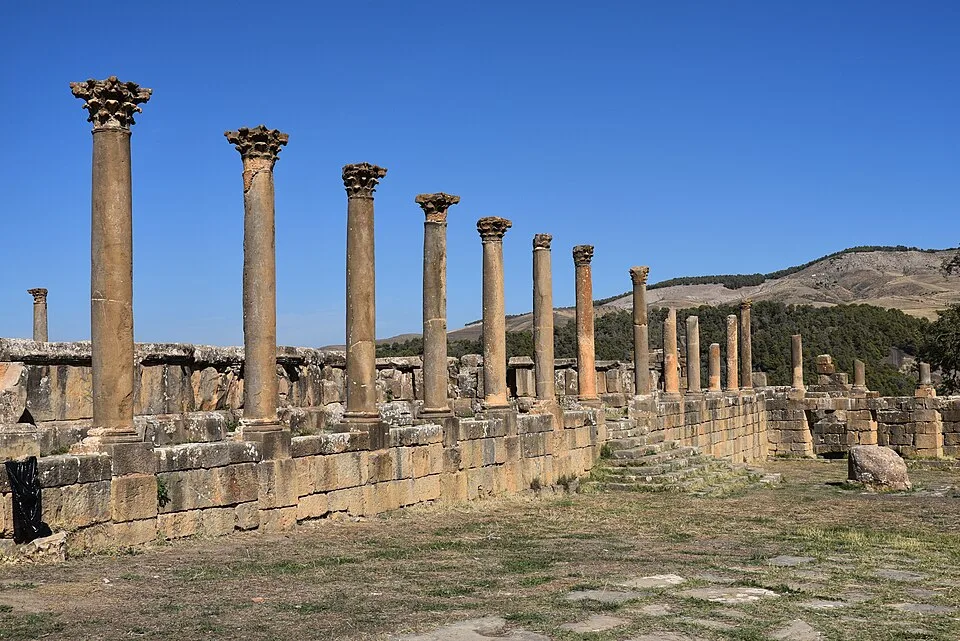
The Severan Forum, Cuicul (Djémila), Numidia, Algeria - 52664724020
The Severan Forum, Cuicul (Djémila), Numidia, Algeria - 52664724020 | Carole Raddato (CC BY-SA 2.0)
"Cuicul, founded as a colony under Nerva, rose to prosperity in the highlands of Numidia through the grain and olive oil of its hinterland."
— Albert Ballu, Les ruines de Cuicul (1911)

French archaeologist Albert Ballu excavated the site systematically from 1909, revealing mosaics now partly housed in the on-site museum. The city's mountain setting required terracing and adaptation of standard Roman urban models to sloping terrain — a case study in how imperial urbanism flexed to local geography.
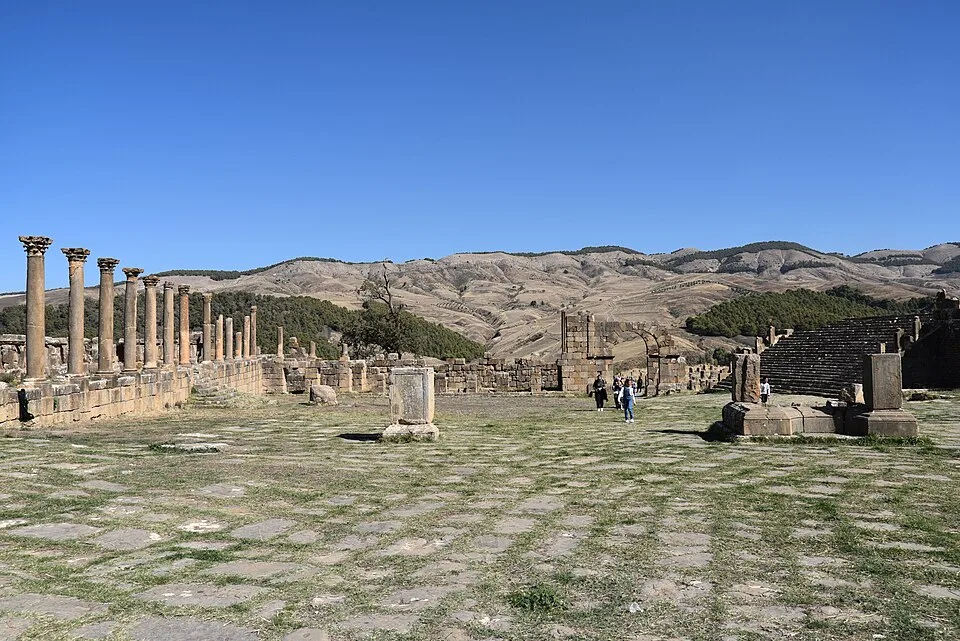
The Severan Forum, Cuicul (Djémila), Numidia, Algeria
The Severan Forum, Cuicul (Djémila), Numidia, Algeria | Carole Raddato (CC BY-SA 2.0)

Djemila was inscribed as a UNESCO World Heritage Site in 1982, recognised as an exceptional example of Roman town planning integrated into a mountain landscape.
Pourquoi c'est important

Cuicul demonstrates Roman urbanism away from the Mediterranean coast — essential for understanding how the empire integrated inland North Africa through colonisation and infrastructure. Its intact forum-capitol-basilica ensemble and triumphal arch provide one of the clearest readable Roman city plans in Algeria. The Christian basilica mosaics document the late antique transition in a region that would become central to North African Christianity and Donatist controversies.

Preuves et interprétation

Distinguer ce qui est bien établi de ce qui reste débattu.

Faits bien établis

2
  • The forum, capitol, and triumphal arch form a coherent 2nd–3rd century CE urban core.
  • Christian basilicas with mosaics document late antique religious transformation.

Inférences savantes

1
  • Mountain location implies economic reliance on highland agriculture rather than maritime trade.

Photos de la communauté

Partagez votre expérience

Avez-vous visité ce site ? Téléchargez vos photos pour aider les autres à le découvrir.

Récits liés

Comment citer cette page

Atlas Anatolia. (97). Cuicul (Djemila). Atlas Anatolia. https://atlasanatolia.com/fr/site/cuicul

Contenu sous licence CC BY-SA 4.0 — attribution requise en cas de réutilisation.

Graphique

Connexions avec des sites et récits associés.

Sources

  • Les ruines de Cuicul — Ballu, Albert (1911)
  • UNESCO — DjemilaLien

Questions fréquentes

Où se trouve Cuicul (Djemila) ?

Cuicul (Djemila) est situé à/en Sétif Province, Aurès Mountains, Algeria.

De quand date Cuicul (Djemila) ?

Cuicul (Djemila) remonte approximativement à 97 apr. J.-C. – 600 apr. J.-C..

Quelles civilisations sont associées à Cuicul (Djemila) ?

Cuicul (Djemila) est associé à la civilisation Roman.

Pourquoi Cuicul (Djemila) est-il important ?

Cuicul demonstrates Roman urbanism away from the Mediterranean coast — essential for understanding how the empire integrated inland North Africa through colonisation and infrastructure.

Cuicul (Djemila) est-il inscrit au patrimoine mondial de l'UNESCO ?

Oui — Cuicul (Djemila) est inscrit sur la liste du patrimoine mondial de l'UNESCO.