

Search Maya vs Aztec and the internet will hand you a scorecard: calendars, pyramids, sacrifice, gold. Add Inca and the same page usually pretends three societies, on two continents, with no shared language and almost no contact, were interchangeable “empires of the Americas.”
They were not. The Maya were a long sequence of city-states in the Mesoamerican lowlands and highlands. The Aztec — more precisely the Mexica and the Triple Alliance — ran a tribute empire from Templo Mayor in the Basin of Mexico for about a century. The Inca built Tawantinsuyu, a road-and-storehouse state centred on Cusco, in the Andes. Atlas Anatolia holds the sites. This page puts them side by side, then sends you into the map.
The short version
| Maya | Aztec (Mexica) | Inca | |
|---|---|---|---|
| Heartland | Yucatán, Petén, Chiapas, Honduras | Basin of Mexico | Andes from Ecuador into Chile/Argentina |
| Best-known capital | Many: Tikal, Calakmul, later Chichén Itzá | Tenochtitlan (Templo Mayor) | Cusco — not Machu Picchu |
| Peak you actually mean | Classic, c. 250–900 CE | 15th–early 16th century | 15th–early 16th century |
| Political shape | Rival dynasties, shifting alliances | Tribute empire over city-states | Centralised provincial administration |
| Spanish end | Staggered; some kingdoms into the 1690s | 1521 | 1532–1533 at Cajamarca / Cusco |
Classroom timelines that start all three in “ancient America, 300–1500” flatten a 1,500-year Maya Classic world into the same decade as Moctezuma. That is the first error this page exists to stop.
Maya, at the sites — city-states, not a single throne
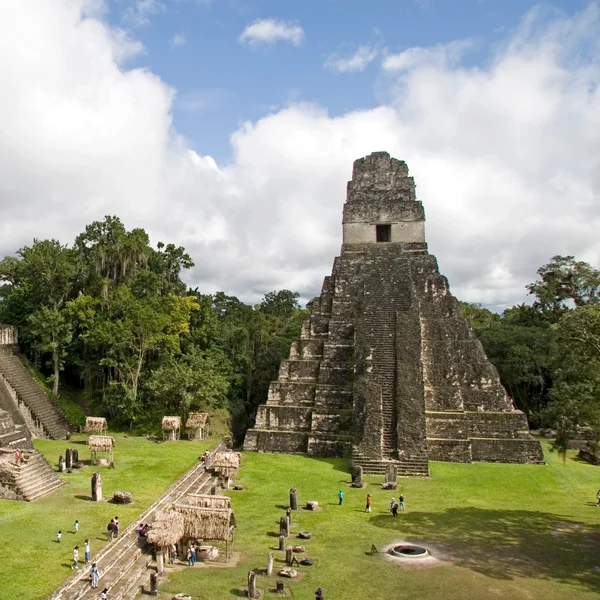
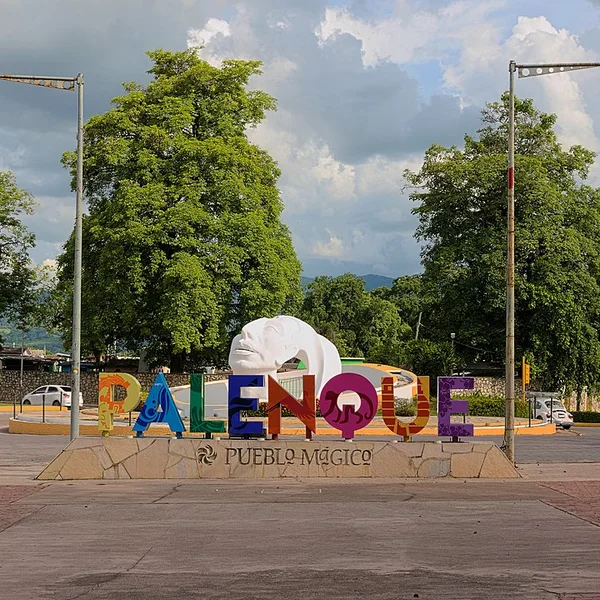
Walk Tikal and Calakmul as rivals, not as suburbs of one Maya capital. Classic inscriptions record wars, accessions, and captive-taking between dynasties. Palenque is a smaller western court with an unusually rich hieroglyphic and architectural programme around K’inich Janaab’ Pakal. Copán sits on the southeastern edge of that world. El Mirador is earlier: a Preclassic giant, already monumental before the Classic courts most tourists photograph.
Confirmed: Maya scribes used a logosyllabic script; the Long Count and a place-value zero are part of that record; southern lowland dynastic centres contracted sharply in the 9th century CE.
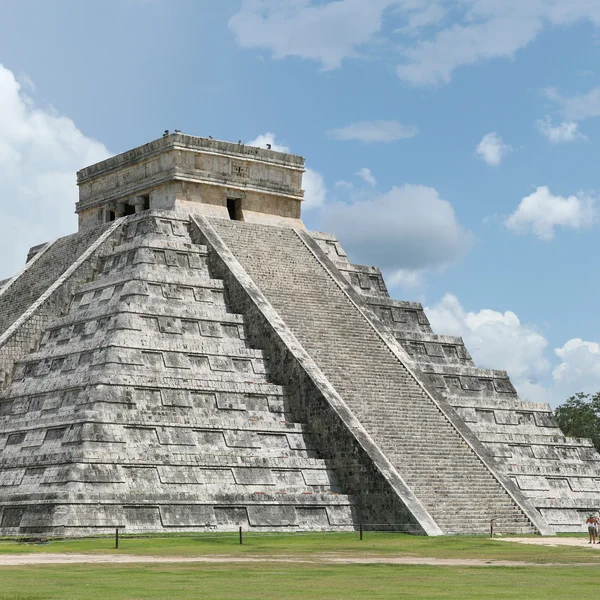
Debated / oversimplified: “The Maya disappeared.” Northern and highland communities continued. Chichén Itzá and Uxmal are Terminal Classic / Postclassic cities, not Aztec outposts. “Maya empire” is a modern shortcut. There was no single Maya emperor.
The 9th-century “collapse” is a real archaeological pattern — abandoned royal courts, slowed monument dedication — with competing explanations (drought, warfare, political fragmentation, trade shifts). Treat any single-cause YouTube version as a claim, not a result.
Guatemala
Tikal
Tikal, a preeminent Maya city in Guatemala, flourished from c. 400 BCE to 900 CE as a political, economic, and
Mexico
Palenque
A Classic Maya city in the Chiapas jungle whose Palace, Temple of the Inscriptions, and exquisite carved relie

Mexico
Calakmul
One of the two greatest Maya superpowers of the Classic period — the capital of the Snake (Kaan) dynasty, hidd

Honduras
Copán
Copán, a major Classic Maya city (426–822 CE) in western Honduras, is renowned for its sculptured stelae, hier
Mexico
Chichén Itzá
A major Maya-Toltec ceremonial center from 600–1200 CE, featuring the iconic stepped pyramid of Kukulcán and o

Guatemala
El Mirador
The Preclassic Maya megacity deep in Guatemala’s Petén — home to La Danta, one of the world’s largest pyramids

Mexico
Uxmal
A great Maya city in the Puuc hills of Yucatán, Mexico, and the finest expression of the ornate Puuc architect
Aztec, at the sites — a late empire, and a pyramid it did not build
The Mexica founded Tenochtitlan on an island in Lake Texcoco. The ceremonial heart that survives for archaeology is Templo Mayor: twin shrines to Huitzilopochtli and Tlaloc, rebuilt in stacked phases, excavated since 1978. That is Aztec state religion in stone and offering caches — not a generic “pyramid people” label.
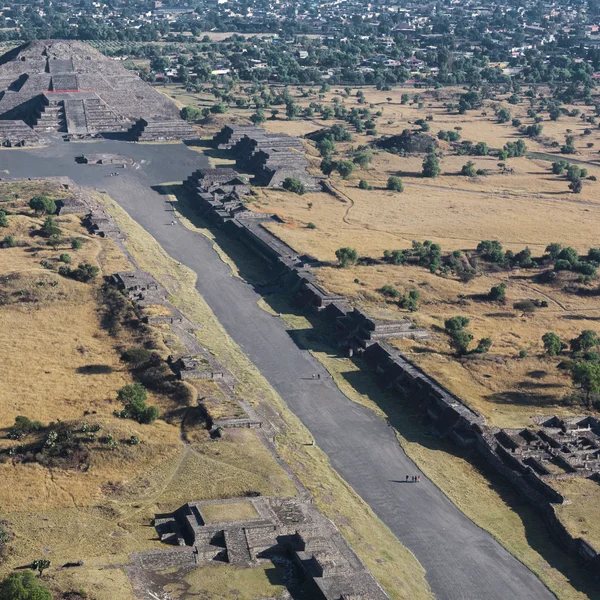
Teotihuacan is the trap. Street of the Dead, Pyramid of the Sun, Pyramid of the Moon: a Classic metropolis that peaked in the first half of the first millennium CE and was already in ruins when the Mexica rose. Aztec tradition later treated the empty city as a place of origins. They did not quarry those pyramids. Content farms that file Teotihuacan under “Aztec sites” are recycling a 19th-century mix-up.
Confirmed: The Triple Alliance extracted tribute across much of central Mexico in the late Postclassic; Nahuatl was the empire’s administrative language; Tenochtitlan fell in 1521.
Debated / oversimplified: “Aztecs invented the calendar the Maya used.” Mesoamerican calendrics are older and shared in family resemblance, not a Mexica patent. Sacrifice is archaeologically and textually attested; treating it as the only Aztec fact is a colonial cartoon, not an evidence rating.
Inca, at the sites — Cusco first, Machu Picchu second
Machu Picchu is the photograph. Cusco was the capital. Sacsayhuaman is the fortress-ceremonial complex above it. Hiram Bingham’s 1911 publicity made the ridge estate famous; Inca administration ran on roads, way-stations, and storehouses across vertical ecology — coast, highland, and Amazonian slope — not on one hidden city.
Confirmed: Tawantinsuyu expanded with extraordinary speed in the 15th century; fine ashlar and terrace agriculture are all over the heartland; the Spanish captured the political centre in the 1530s.
Debated / oversimplified: Machu Picchu as “the Inca capital.” It is best read as a royal estate associated with Pachacuti’s line. Khipu as a complete writing system equivalent to Maya glyphs remains argued; they were certainly accounting devices. Caral (Norte Chico, third millennium BCE) and Tiwanaku are not Inca. They are earlier Andean experiments the Inca later encountered, reused, or claimed. Chan Chan is Chimú, conquered by the Inca — another label mash to avoid.

Mexico
Templo Mayor
The principal temple of the Aztec capital Tenochtitlan, rebuilt seven times and now excavated beneath Mexico C
Mexico
Teotihuacan
Teotihuacan, the 'City of the Gods,' was a vast metropolis and ceremonial center in central Mexico, dominating
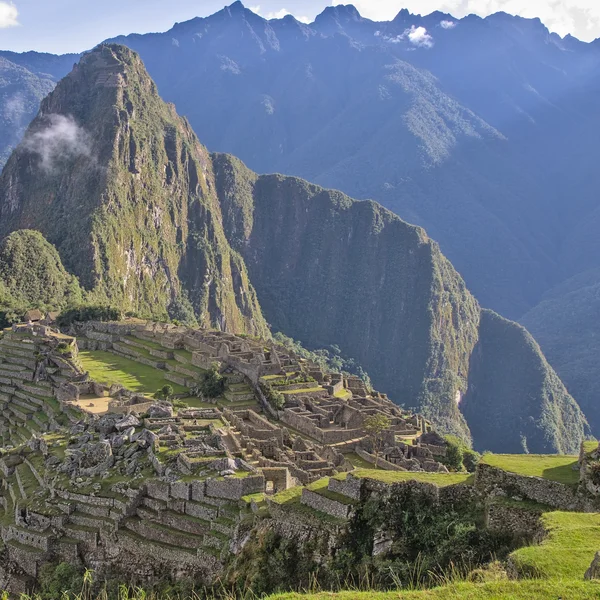
Peru
Machu Picchu
An Inca citadel built c. 1450 CE, Machu Picchu sits atop a mountain ridge in Peru. Abandoned during the Spanis
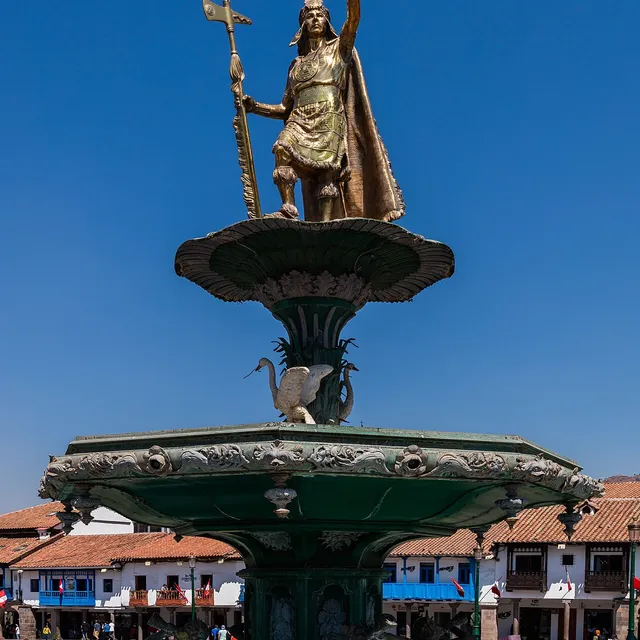
Peru
Cusco
The high-altitude capital of the Inca Empire — planned in the form of a puma, with Coricancha at its spiritual

Peru
Sacsayhuamán
A monumental Inca complex on the hill above Cusco, famous for three tiers of zigzagging defensive walls built
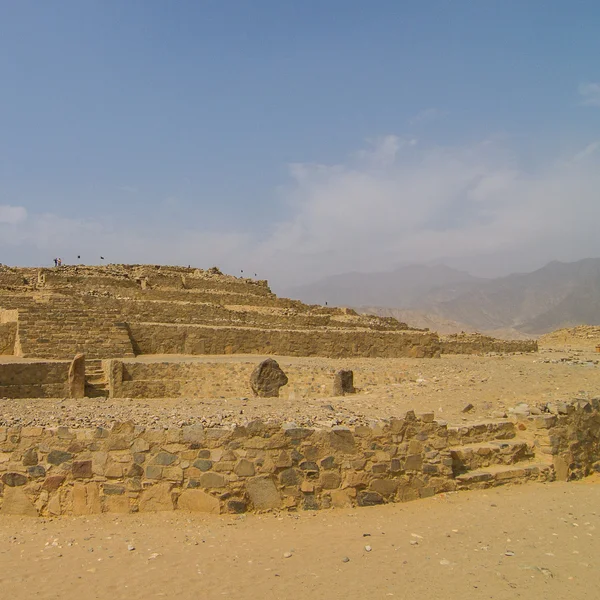
Peru
Caral
Caral, a 5,000-year-old urban center in Peru, features monumental pyramids and circular plazas, revealing comp

Bolivia
Tiwanaku
The monumental center of a pre-Inca Andean civilization (200 BCE–1000 CE) known for its colossal stone archite

Peru
Chan Chan
The largest pre-Columbian city in South America and capital of the Chimú Empire — a 20 km² adobe metropolis on
What is confirmed vs still mashed together
Maya, Aztec, and Inca were three names for one people
Maya Classic courts predate the Aztec and Inca empires by centuries
Teotihuacan is an Aztec capital
Machu Picchu was the Inca capital
Maya hieroglyphs are a true writing system
Inca khipu encoded full narrative literature
The Maya “vanished” in 900 CE
Aztec, Maya, and Inca states had no contact with each other
Why the comparison still matters
The search is real: Maya vs Aztec is a high-volume, low-difficulty query, and Maya vs Aztec vs Inca rides the same classroom intent. The SERP is full of undifferentiated listicles. The Atlas wedge is the same one that already works for Egypt vs Mesopotamia: name the sites, split Confirmed from Debated, put them on a map.
If you only remember one habit from this page: when a summary says “the Aztec pyramids at Chichén Itzá” or “the Inca capital Machu Picchu,” stop. Open the site page. Read the evidence block.
Explore next
- Live compare: Tikal vs Templo Mayor vs Machu Picchu
- Interactive map: Historical maps of the ancient world
- Civilization timeline: /timeline
- Related comparison: Ancient Civilizations Compared: Egypt vs Mesopotamia
- UNESCO context: UNESCO archaeological sites map
Last updated: September 2026


