
تخط إلى المحتوى
Atlas Anatolia
أخبارأسنان من العصر الجليدي في سولاويزي تدفع استخدام التنبول إلى ما يصل إلى 25,000 عاماكتشاف فسيفساء رومانية ورأس إيروس في بازيليكا بومبيوبوليس، كاستامونو
Courtyard and domes of the Blue Mosque (Sultan Ahmed Mosque), Istanbul

Wikimedia Commons (CC BY-SA 4.0)

Country Record

Known by the Most Names in Turkey

تراثمعبدمميز

Blue Mosque

Seyfi Cem Baskin

Sultanahmet Camii1609 م – 1617 م

The early 17th-century imperial mosque facing Hagia Sophia in Istanbul — six minarets, cascading domes, and Iznik tiles that earned it the nickname "Blue Mosque" — is among the most searched Ottoman monuments in Turkish, German, and English Wikipedia.

21
اهتمام 81

Built

1609–1617 CE under Sultan Ahmed I

Architect

Sedefkar Mehmed Aga (student of Sinan)

Minarets

Six — controversial at completion

Tiles

20,000+ Iznik ceramic tiles in prayer hall

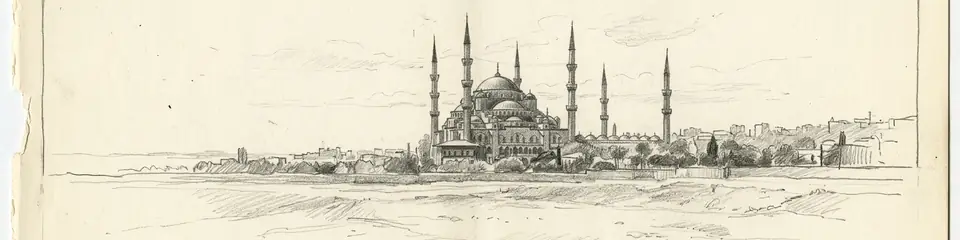
Graphite pencil sketch banner of Blue Mosque

“The Blue Mosque closes the arc from Byzantine dome architecture to Ottoman imperial mosque design — Mehmed Aga's answer to Hagia Sophia across the square.”

الموقع

نظرة عامة

The Sultan Ahmed Mosque stands on the historical peninsula of Istanbul, directly opposite Hagia Sophia and beside the Byzantine hippodrome. Sultan Ahmed I commissioned the building between 1609 and 1617 during a pause in Ottoman military expansion — a bold statement of piety when the empire could not match Selim II or Suleiman's conquests with new campaigns. Architect Sedefkar Mehmed Aga, a pupil of Sinan, synthesised his master's vocabulary with a cascade of domes and semi-domes around a central dome about 23 metres in diameter.

The interior owes its popular name to more than 20,000 Iznik tiles in turquoise and cobalt floral patterns on the lower walls and galleries. Stained glass (much restored) once flooded the prayer hall with coloured light. Six minarets caused controversy at completion — only the Mecca sanctuary had six at the time — resolved by adding a seventh minaret in Mecca. The mosque remains an active place of worship; visitors enter outside prayer times through the courtyard gate.

The complex (külliye) originally included a hospital, school, market, and the sultan's tomb. Ahmed I is buried in the türbe on the north side. Together with Hagia Sophia and the Basilica Cistern, Sultanahmet Square forms Istanbul's densest cluster of Byzantine and Ottoman superstars.

لماذا يهم

The Blue Mosque closes the arc from Byzantine dome architecture to Ottoman imperial mosque design — Mehmed Aga's answer to Hagia Sophia across the square. Its Iznik tile programme is a high-water mark of 17th-century ceramic production and a primary reason Istanbul dominates Turkish-language heritage search.

الأدلة والتفسير

التمييز بين ما هو راسخ وما لا يزال موضع نقاش.

حقائق راسخة

2
  • Ottoman foundation charters (vakfiye) and inscriptions date construction and name Ahmed I and Mehmed Aga.
  • Iznik tile batches match early 17th-century workshop styles documented in ceramic studies.

استنتاجات علمية

1
  • Six minarets were intended to rival or echo Mecca's sanctuary — inferred from contemporary court accounts.

صور المجتمع

شارك تجربتك

هل قمت بزيارة هذا الموقع؟ ارفع صورك لمساعدة الآخرين في اكتشافه.

كيفية الاستشهاد بهذه الصفحة

Atlas Anatolia. (1609). Blue Mosque. Atlas Anatolia. https://atlasanatolia.com/ar/site/blue-mosque

المحتوى مرخّص بموجب CC BY-SA 4.0 — يجب ذكر المصدر عند إعادة الاستخدام.

المصادر

  • A History of Ottoman Architecture — Goodwin, Godfrey (1971)
  • Turkish Ministry of Culture — Sultanahmet Mosqueرابط

الأسئلة الشائعة

أين يقع Blue Mosque؟

يقع Blue Mosque في Turkey.

كم يبلغ عمر Blue Mosque؟

يعود تاريخ Blue Mosque إلى حوالي 1609 م – 1617 م.

ما هي الحضارات المرتبطة بـ Blue Mosque؟

يرتبط Blue Mosque بحضارة Islamic / Medieval, Ottoman.

لماذا يعتبر Blue Mosque مهماً؟

The Blue Mosque closes the arc from Byzantine dome architecture to Ottoman imperial mosque design — Mehmed Aga's answer to Hagia Sophia across the square.

هل Blue Mosque موقع تراث عالمي لليونسكو؟

Blue Mosque غير مدرج حالياً في قائمة التراث العالمي لليونسكو.