
Skip to content
Atlas AnatoliaAtlas Anatolia
Illuminated columns reflected in water inside the Basilica Cistern, Istanbul

Wikimedia Commons (CC BY-SA 4.0)

Country Record

Oldest Complex in Turkey

HeritageComplex

Basilica Cistern

Yerebatan Sarnıcı527 CE – 1453 CE

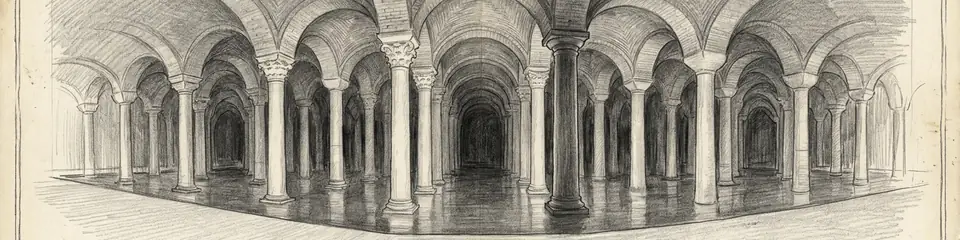
The vast Byzantine cistern beneath Istanbul's Sultanahmet — 336 marble columns reflected in dim water, including the famous Medusa-head bases — is one of Turkey's most searched underground monuments and a essential counterpoint to the mosques above.

21
Interest 75

Location

Turkey

41.01°N · 28.98°E · Europe

Built

6th century CE under Justinian I

Columns

336 marble columns in 12 rows

Capacity

~80,000 m³ stored water

Rediscovered

Petrus Gyllius, 1545

The Basilica Cistern reveals Byzantine Constantinople's hidden infrastructure — the water storage that made a million-person capital possible on a peninsula with limited freshwater.”

Location

Overview

The Basilica Cistern (Yerebatan Sarnıcı, "Sunken Cistern") lies a few metres below street level in Istanbul's Sultanahmet district, a short walk from Hagia Sophia and the Blue Mosque. Emperor Justinian I built it in the 6th century CE to store filtered water for the Great Palace and nearby buildings. The name "Basilica" comes from a public square that once stood above.

The chamber measures about 138 by 65 metres and can hold roughly 80,000 cubic metres of water. Three hundred thirty-six columns — mostly Ionic and Corinthian capitals recycled from earlier structures — rise from the floor in twelve rows. Two columns rest on carved Medusa heads, one inverted and one sideways, probably placed for size rather than superstition though legends flourish. Walkways installed in the 1980s let visitors circle the forest of columns above ankle-deep water stocked with carp.

Ottoman sultans maintained the cistern until modern pipes made it redundant; it was forgotten by many until the French scholar Petrus Gyllius rediscovered it in 1545. Today it is a museum and occasional concert venue. Its cool, mirrored darkness offers a radically different sensory experience from the sunlit domes overhead.

Why It Matters

The Basilica Cistern reveals Byzantine Constantinople's hidden infrastructure — the water storage that made a million-person capital possible on a peninsula with limited freshwater. Its spolia columns and Medusa bases document how Justinian's builders recycled the city's pagan and early Christian past into imperial utility.

Stay curious

New stories and sites, once a month. No spam.

Evidence & Interpretation

Distinguishing what is well-established from what remains debated.

Well-Established Facts

2
  • Byzantine brick stamps and hydrological connections link cistern to Justinian's palace water system.
  • Column capitals show reused Early Christian and pagan spolia from earlier Constantinople buildings.

Scholarly Inferences

1
  • Medusa heads placed for column height fit — apotropaic interpretation is popular but unproven.

More Photos

Museum Artifacts

Community Photos

Share your experience

Have you visited this site? Upload your photos to help others discover it.

How to cite this page

Atlas Anatolia. (527). Basilica Cistern. Atlas Anatolia. https://atlasanatolia.com/site/basilica-cistern

Content licensed CC BY-SA 4.0 — attribution required when reusing.

Sources

  • Byzantine ArchitectureMango, Cyril (1976)
  • On Buildings (De Aedificiis)Procopius (555)

Research Papers

Frequently Asked Questions

Where is Basilica Cistern located?

Basilica Cistern is located in Turkey.

How old is Basilica Cistern?

Basilica Cistern dates to approximately 527 CE – 1453 CE.

Which civilizations are associated with Basilica Cistern?

Basilica Cistern is associated with the Roman, Byzantine.

Why is Basilica Cistern important?

The Basilica Cistern reveals Byzantine Constantinople's hidden infrastructure — the water storage that made a million-person capital possible on a peninsula with limited freshwater.

Is Basilica Cistern a UNESCO World Heritage Site?

Basilica Cistern is not currently inscribed on the UNESCO World Heritage List.