Overview
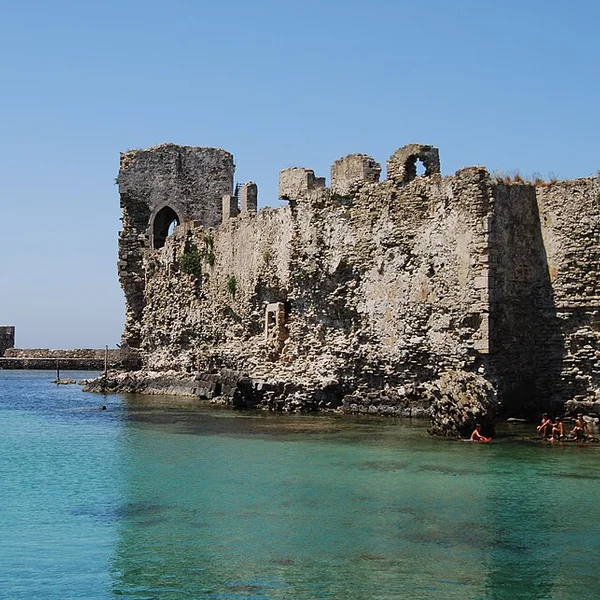
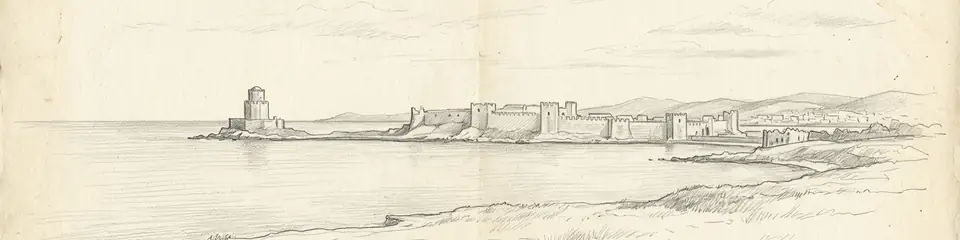
Methoni sits on a low promontory at the southwestern corner of Messenia, facing the Ionian Sea and the route to Italy. In the Middle Ages it was a prized Venetian "stalion", a supply station for ships bound to the Levant. The castle you see today, with its massive sea gate and octagonal Bourtzi tower on a rocky islet, took shape under Venetian rule between the 13th and 16th centuries, then passed to Ottoman hands until Greek independence.
The location mattered long before Venice. Ancient Methone exported wine and grain; classical sources mention the harbour in connection with Spartan and Athenian rivalries. The castle's limestone and poros stone walls incorporate spolia from earlier periods. Inside, Ottoman baths, churches, and houses trace a mixed community of merchants, soldiers, and sailors.
"The harbour of Methone lies open to the Ionian, a station for ships that round the Peloponnese or strike west toward Sicily."
— Paraphrase of ancient geographers on Messenian harbours
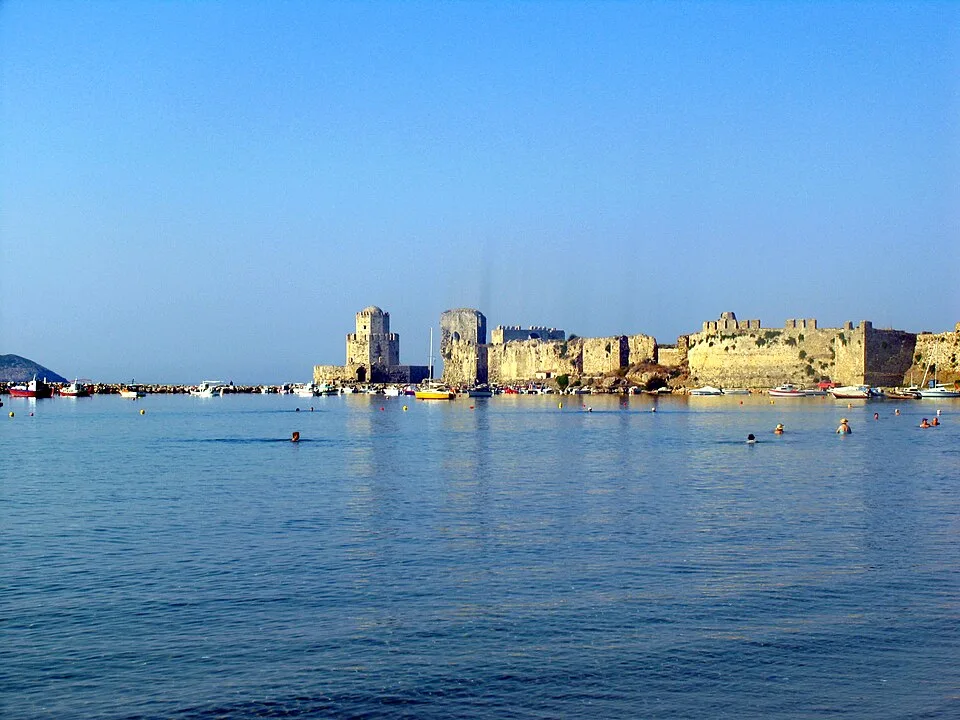
For Homeric geography, Methoni's coast belongs to the same Messenian world as Palace of Nestor and Voidokilia Bay. Travellers retracing Telemachus's journey from Pylos or Odysseus's imagined landfalls use Methoni as a practical base on the Ionian shore. Recent large-scale film productions have filmed along this coastline when they need fortified harbours and Aegean light without leaving Greece.
Walk the ramparts at sunset and the Bourtzi tower turns gold above the surf. Pair Methoni with nearby Koroni castle for a paired Venetian defence system UNESCO has considered as a serial nomination.