
Перейти к содержанию
Atlas Anatolia
НовостиЗубы ледникового периода на Сулавеси отодвигают использование бетеля на 25 000 лет назадРимская мозаика и голова Эрота обнаружены в базилике Помпейополиса, Кастамону
Hampi — India

Wikimedia Commons (CC BY-SA)

ГородЮНЕСКОИзбранное

Hampi

Seyfi Cem Baskin

ಹಂಪೆ1336 н. э. – 1565 н. э.

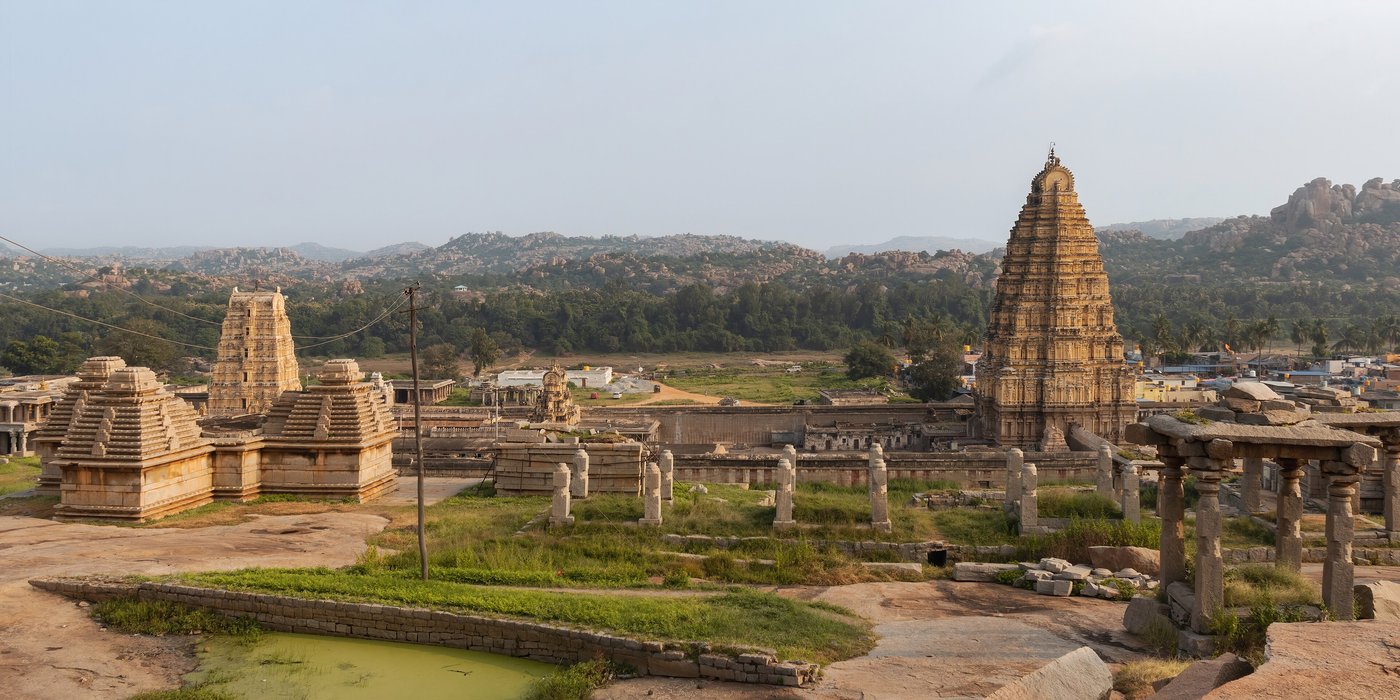
The ruined capital of the Vijayanagara Empire, Hampi’s sprawling temples and civic structures date from 1336 to 1565, embodying Dravidian architecture at its peak.

322
Интерес 78

Местоположение

Karnataka · Deccan Plateau · Индия

15.34°N · 76.46°E · Азия

Built

1336–1565 CE

Civilization

Vijayanagara Empire

Area

4,187 hectares (core zone)

First archaeological survey

1800 by Colin Mackenzie

Status

UNESCO World Heritage Site (1986)

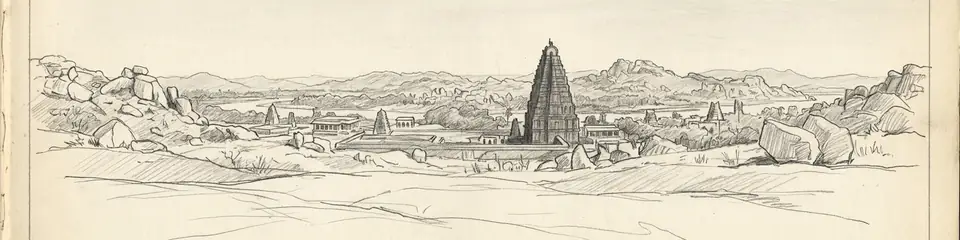
Graphite pencil sketch banner of Hampi

“As the seat of the last great Hindu empire in South India, Hampi represents a pivotal fusion of religion, statecraft, and art.”

Местоположение

Обзор

Historical Context

Hampi, located on the banks of the Tungabhadra River in Karnataka, served as the seat of the Vijayanagara Empire from its founding in 1336 by Harihara I and Bukka Raya. The city flourished especially under the Tuluva dynasty, reaching its zenith during the reign of Krishnadevaraya (1509–1529). Contemporary travelers such as Domingo Paes and Fernão Nunes left vivid accounts of a wealthy, cosmopolitan metropolis. The empire’s decline came after the catastrophic Battle of Talikota in 1565, when a coalition of Deccan sultanates sacked the city, leading to its abandonment.

Discovery and Research

Though never truly lost, the site gained modern scholarly attention in 1800 when Colonel Colin Mackenzie of the British East India Company produced the first systematic maps and drawings. In the late 19th century, Robert Sewell’s compilation of inscriptions and chronicles culminated in his 1900 book A Forgotten Empire, which sparked academic interest. Large-scale excavations began in the 1970s under the Archaeological Survey of India, while the Vijayanagara Research Project, directed by George Michell and John M. Fritz from the 1980s, documented over 1,600 structures using multi-disciplinary methods.
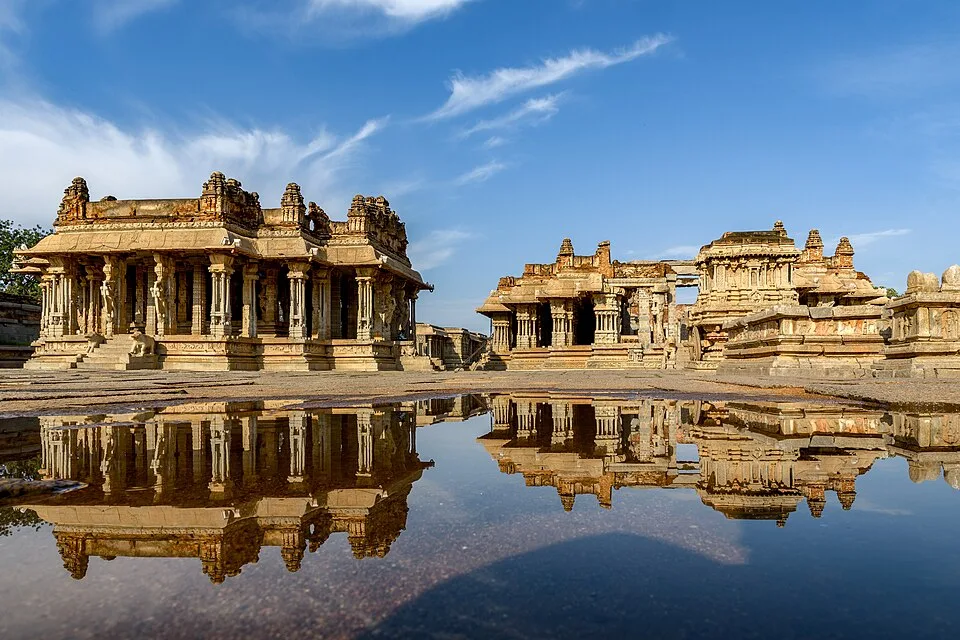
Hampi Vitthala Temple 3465
Hampi Vitthala Temple 3465 | Basavaraj M (CC BY-SA 4.0)
"The city of Bisnaga is as large as Rome and very beautiful to the sight. There are many groves within it, in the gardens of the houses, and many conduits of water. The king has palaces of great wealth, with much gold and many jewels."
— Domingo Paes, Portuguese chronicler at the court of Vijayanagara (Hampi), c. 1520

Architecture and Urban Layout

Hampi’s landscape is dominated by sacred and royal complexes. The Virupaksha Temple, dedicated to a form of Shiva, remains an active pilgrimage site with a towering gopuram. The Vittala Temple complex is renowned for its stone chariot and musical pillars that emit notes when struck. The Royal Centre contains the remains of palaces, audience halls, and the elaborate Lotus Mahal, blending Hindu and Islamic architectural elements. The city’s extensive fortifications, water tanks, and canal systems—some constructed from granite—indicate sophisticated urban planning that supported a dense population.
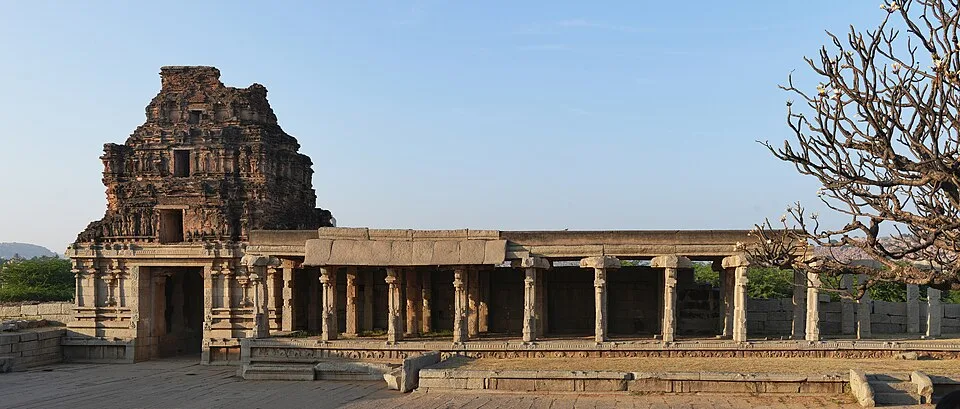
Hampi - Vittala Temple - Side Gopuram
Hampi - Vittala Temple - Side Gopuram | Ingo Mehling (CC BY-SA 4.0)

Art and Iconography

The temples and monuments at Hampi showcase intricate bas-reliefs, friezes depicting mythological themes, and sculpted columns characteristic of mature Vijayanagara style. The Hazara Rama Temple, for example, features extensive narrative panels from the Ramayana. The fusion of local Dravidian traditions with Deccani and sometimes Persianate motifs is evident in stuccowork and arched structures. Scholars debate the extent of Islamic influence, with some seeing it as a deliberate syncretism and others as a pragmatic adoption of forms without deep cultural integration.

Decline and Legacy

After the 1565 sack, Hampi was never reoccupied as a major urban center. The ruins lay for centuries as a historical palimpsest, gradually reclaimed by vegetation. Today, the site is protected as the Group of Monuments at Hampi, a UNESCO World Heritage property. It stands as a testament to the power and cultural efflorescence of the last great Hindu kingdom in South India, providing unique insights into pre-colonial urbanism, religion, and statecraft in the medieval Deccan.

Почему это важно

As the seat of the last great Hindu empire in South India, Hampi represents a pivotal fusion of religion, statecraft, and art. Its extensive remains offer a rare window into pre-colonial urbanism and the cosmopolitan culture of medieval Deccan. Designated a UNESCO World Heritage Site, it continues to yield insights into global trade networks and imperial ideologies.

Свидетельства и интерпретация

Различать, что хорошо установлено, а что остаётся предметом дискуссий.

Хорошо установленные факты

3
  • Hampi was the imperial capital of the Vijayanagara Empire, founded in 1336 CE.
  • The city was sacked and largely abandoned after the Battle of Talikota in 1565.
  • The Vittala Temple complex contains a stone chariot and so-called musical pillars that produce tones when struck.

Научные выводы

2
  • The city housed a cosmopolitan population, including foreign merchants from Persia and Portugal, based on traveler accounts and material culture.
  • Advanced water management systems, including canals and tanks, indicate large-scale agricultural support and sophisticated urban planning.

Спорные интерпретации

2
  • The exact population size at its peak remains contested, with estimates ranging from 200,000 to over 500,000.
  • The degree of Islamic influence on Vijayanagara architecture is debated, with scholars differing on whether it reflects deep syncretism or superficial adoption of forms.

Открытие и раскопки

Ongoing conservation and excavation

Под руководством Archaeological Survey of India

The ASI continues to stabilize monuments, conserve structures, and occasionally conduct rescue excavations, focusing on water systems and peripheral areas.

1800–1800

First modern survey

Под руководством Colin Mackenzie

Colonel Colin Mackenzie of the British East India Company conducted a detailed survey, producing maps, drawings, and descriptions of the ruins.

1880–1900

Historical research and compilation

Под руководством Robert Sewell

Robert Sewell gathered historical sources and inscriptions, publishing 'A Forgotten Empire' (1900), which brought scholarly attention to the Vijayanagara period.

1976–1985

Hampi Archaeological Project

Под руководством M. S. Nagaraja Rao (ASI)

The Archaeological Survey of India launched extensive excavations, particularly in the Royal Centre, uncovering palaces, baths, and platforms.

1980–1990

Vijayanagara Research Project

Под руководством George Michell, John M. Fritz

A multi-disciplinary team led by George Michell and John M. Fritz systematically documented over 1,600 structures and conducted regional surveys.

Фотографии сообщества

Поделитесь своими впечатлениями

Вы посещали это место? Загрузите свои фотографии, чтобы помочь другим открыть его для себя.

Как цитировать эту страницу

Atlas Anatolia. (1336). Hampi. Atlas Anatolia. https://atlasanatolia.com/ru/site/hampi

Материалы распространяются по лицензии CC BY-SA 4.0 — при повторном использовании указание авторства обязательно.

Источники

  • Verghese, A. (2004). Hampi (Monumental Legacy). — Anila Verghese (2004)
  • Fritz, J. M. & Michell, G. (2001). New Light on Hampi: Recent Research at Vijayanagara. — John M. Fritz, George Michell (2001)
  • Michell, G. (2004). Vijayanagara: Splendour in Ruins. — George Michell (2004)
  • Sinopoli, C. M. & Morrison, K. D. (1995). Dimensions of Imperial Control: The Vijayanagara Capital. American Anthropologist. — Carla M. Sinopoli, Kathleen D. Morrison (1995)
  • Morrison, K. D. (1995). Fields of Victory: Vijayanagara and the Course of Intensification. Contributions of the Archaeological Research Facility, UC Berkeley. — Kathleen D. Morrison (1995)
  • UNESCO World Heritage Centre – Group of Monuments at HampiСсылка

Часто задаваемые вопросы

Где находится Hampi?

Hampi находится в Karnataka, Deccan Plateau, India.

Сколько лет Hampi?

Hampi датируется приблизительно 1336 н. э. – 1565 н. э..

С какими цивилизациями связано место Hampi?

Hampi связано с цивилизацией: Vijayanagara.

Почему Hampi имеет важное значение?

As the seat of the last great Hindu empire in South India, Hampi represents a pivotal fusion of religion, statecraft, and art.

Входит ли Hampi в список Всемирного наследия ЮНЕСКО?

Да — Hampi включено в список Всемирного наследия ЮНЕСКО.