
Pular para o conteúdo
Atlas Anatolia
NotíciasIce Age teeth in Sulawesi push betel-nut use back as far as 25,000 yearsRoman mosaic and Eros head uncovered in the basilica at Pompeiopolis, Kastamonu
White plastered main keep and roofs of Himeji Castle, Japan

Wikimedia Commons (CC BY-SA 4.0)

Country Record

Longest Recorded History in Japan

FortalezaUNESCODestaque

Himeji Castle

Seyfi Cem Baskin

姫路城1333 d.C. – 1868 d.C.

Japan's finest surviving feudal castle — a white-plastered maze of keeps, gates, and moats in Hyogo Prefecture — draws enormous Chinese and English search traffic as the country's most complete "original" fortress and a UNESCO World Heritage Site since 1993.

21
Interesse 76

Localização

Japan

34.84°N · 134.69°E · Ásia

Main keep

Rebuilt 1601–1609 under Ikeda Terumasa

Nickname

White Heron Castle (Shirasagi-jo)

Conservation

Major restoration completed 2015

UNESCO

World Heritage Site (1993)

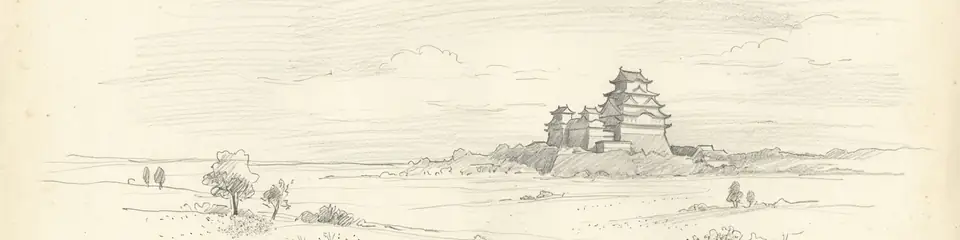
Graphite pencil sketch banner of Himeji Castle

“Himeji Castle is the best-preserved example of early 17th-century Japanese castle engineering — a wooden keep whose maze of gates and walls documents Tokugawa-era defensive thinking.”

Localização

Visão geral

Himeji Castle crowns Himeyama hill in Himeji City, Hyogo Prefecture, on the inland sea route between Kyoto and western Japan. A fortification existed from the 14th century; the present labyrinthine layout took shape under the warlord Toyotomi Hideyoshi in the 1580s and was completed in its iconic white form by the Tokugawa vassal Ikeda Terumasa in 1609. The main keep (tenshu) rises five storeys externally, seven internally, on a stone base with defensive loopholes, hidden floors, and maze-like passages designed to slow attackers.

The white plastered walls earned the nicknames "White Heron Castle" (Shirasagi-jo). Unlike many Japanese castles rebuilt in concrete after 1945, Himeji's wooden keep survived World War II bombing and a major conservation project (2009–2015) that re-coated plaster and replaced roof tiles without altering the Edo-period silhouette. The castle never saw a major siege; its value is architectural completeness rather than battle scars.

UNESCO inscribed Himeji as Japan's first castle World Heritage Site (1993). The adjacent Koko-en garden is a modern reconstruction of samurai villas. Together with Horyu-ji and Tōdai-ji, it represents a different chapter of Japanese heritage — feudal military architecture rather than Buddhist temples.

Por que isso importa

Himeji Castle is the best-preserved example of early 17th-century Japanese castle engineering — a wooden keep whose maze of gates and walls documents Tokugawa-era defensive thinking. Its survival through modern wars makes it the benchmark for authentic castle tourism in Japan, dominating search interest ahead of rebuilt sites like Osaka Castle.

Evidências e interpretação

Distinguir o que está bem estabelecido do que permanece em debate.

Fatos bem estabelecidos

2
  • Timber bearing marks and domain records date the present tenshu to the early Edo period.
  • Castle plan with spiral maze, murder holes, and stone-drop windows matches early 17th-century military manuals.

Inferências acadêmicas

1
  • Ikeda investment aimed to display loyalty and prestige to the Tokugawa shogunate after transfer to Himeji.

Fotos da comunidade

Compartilhe sua experiência

Você visitou este sítio? Envie suas fotos para ajudar outros a descobri-lo.

Como citar esta página

Atlas Anatolia. (1333). Himeji Castle. Atlas Anatolia. https://atlasanatolia.com/pt/site/himeji-castle

Conteúdo licenciado sob CC BY-SA 4.0 — atribuição necessária ao reutilizar.

Fontes

  • Japanese Castles 1540–1640 — Turnbull, Stephen (2003)
  • UNESCO — Himeji-joLink

Perguntas frequentes

Onde fica Himeji Castle?

Himeji Castle está localizado em Japan.

Qual é a antiguidade de Himeji Castle?

Himeji Castle data de aproximadamente 1333 d.C. – 1868 d.C..

Quais civilizações estão associadas a Himeji Castle?

Himeji Castle está associado à civilização Yamato Japan, Tokugawa.

Por que Himeji Castle é importante?

Himeji Castle is the best-preserved example of early 17th-century Japanese castle engineering — a wooden keep whose maze of gates and walls documents Tokugawa-era defensive thinking.

Himeji Castle é um Patrimônio Mundial da UNESCO?

Sim — Himeji Castle está inscrito na Lista do Patrimônio Mundial da UNESCO.